
Unlock the White House Watch newsletter for free
Your guide to what Trump’s second term means for Washington, business and the world
Key Takeaways:
- Elevated Geopolitical Risk & Market Volatility:Strategic miscalculations by major global powers in Ukraine and the Gulf are creating persistent instability, driving up risk premiums across energy markets, shipping, and supply chains, necessitating agile investment strategies amidst heightened volatility.
- Defense Sector Transformation & Tech Innovation:The demonstrated effectiveness of asymmetric warfare, leveraging drones and cost-effective interceptors, is fundamentally reshaping defense spending priorities, challenging the relevance of traditional military assets and signaling significant growth opportunities for companies in advanced defense technology and cyber warfare.
- Shifting Global Power Dynamics & Regional Realignment:As the influence of traditional hegemons wanes, particularly the U.S. in the Middle East, new regional powers and alliances are emerging, prompting investors to re-evaluate geopolitical risk maps, diversify portfolios, and prepare for a multi-polar world with altered trade routes and investment flows.
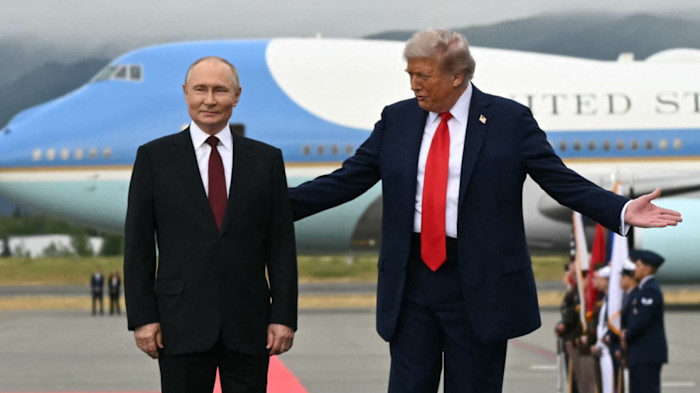
Understanding the intricate dance of global geopolitics is paramount for investors, particularly as the landscape shifts dramatically under the weight of strategic blunders. When Russia launched its full-scale invasion of Ukraine in 2022, President Vladimir Putin’s gamble on a swift victory proved to be a profound miscalculation, triggering unprecedented sanctions and commodities market volatility. Similarly, former President Donald Trump’s “Operation Epic Fury” three months ago, presumably a significant military engagement in the Gulf region, has echoed this pattern of hubris, creating its own complex web of economic consequences and market uncertainty.
Both leaders, in their pursuit of rapid strategic gains, underestimated the resilience of their adversaries and the long-term economic burden of their actions. Putin’s war has saddled Russia with crippling economic costs, capital flight, and a brain drain that will weigh on its growth potential for decades, despite its vast energy reserves. Trump’s intervention, too, is set to impose substantial financial strains on the U.S. treasury, diverting resources that could otherwise address domestic economic challenges or infrastructure needs. These are not merely political failures; they are case studies in how geopolitical missteps can fundamentally erode national wealth, elevate sovereign risk, and deter foreign direct investment. While both nations grapple with the fallout, the primary geopolitical and economic beneficiary of these self-inflicted wounds appears to be China, which quietly strengthens its position as a global hegemon, securing resources and expanding its sphere of influence while its rivals are distracted and weakened.
The argument from America’s hawkish right that Iran’s regime and Ukraine’s are incomparable misses the crucial point for financial markets: strategy is ultimately measured in real-world outcomes, not ideological purity. While one may be a theocracy and the other a democracy, the market responds to instability, supply chain disruptions, and the threat of regional escalation. Proponents of “Epic Fury” may argue it was provoked by the nature of Iran’s regime, just as some on the western far left and far right attribute the Ukraine war to “Nato Derangement Syndrome.” Both narratives, however ideologically twisted, overlook the fundamental truth: these were wars of choice, with immense, unquantifiable costs. The chasm between the intended purpose of these military operations and their actual results has created persistent market uncertainty, driving up risk premiums in critical sectors from energy to shipping, demonstrating that ideological motivations rarely align with sound economic strategy.
Neither Putin nor Trump can easily extricate themselves from the self-created traps. For Putin, the economic failure of his “special operation” is existential, leading to increased political risk within Russia and continued capital flight. His inability to acknowledge reality stems from a deep-seated fear for his grip on power, potentially leading to further irrational decisions that could prolong economic isolation and instability. Trump’s mental block, rooted in pride and political expediency, manifests in a refusal to acknowledge the significant costs and limited gains of “Epic Fury.” His eventual reaching of terms with a regime he claimed to have “obliterated” signifies a profound humiliation, undermining U.S. credibility and potentially cementing the influence of the very powers he sought to diminish, further complicating the geopolitical risk assessment for investors in the Middle East.
Paradoxically, some of the cards have fallen into the lap of Ukrainian President Volodymyr Zelenskyy. Ukraine’s ability to transform the battlefront into a “charnel house” for Russian forces—with casualty rates reportedly reaching 35,000 a month—highlights a grim but strategically significant reality: the high cost of conventional warfare against a determined, technologically innovative adversary. Ukraine’s capacity to strike deep inside Russia, targeting critical oil, factory, and infrastructure nodes up to 1,000km away, has direct implications for global energy prices and Russian industrial output. The fact that Putin had to appeal to Trump to secure a reprieve from Ukrainian drone attacks on Red Square during Victory Day parades underscores Ukraine’s growing leverage. Putin’s promise to insulate Russian citizens from the war’s costs has proven hollow; the escalating death toll and economic burdens are now widely felt, endangering his regime’s stability and perpetuating an environment of high political risk for investors in Russia.
Ukraine also holds an increasingly strong hand in the global defense technology market. Before the Pentagon rapidly depleted its stocks of missiles and battery defenses in the Gulf, Ukraine had already demonstrated a paradigm shift in warfare. Its ability to shoot down costly Russian missiles with dirt-cheap homemade interceptors has revolutionized the economics of war, fundamentally challenging the multi-billion-dollar budgets of traditional defense contractors. Iran, too, is not far behind, with its effective use of drones to threaten the Strait of Hormuz – a critical choke point for global oil supplies – having a direct, inflationary impact on energy markets and shipping insurance premiums. This paradigm shift suggests that vast spending on symbols of military prestige, such as aircraft carriers, may be increasingly wasteful, turning them into “floating white elephants” in a new era of asymmetric threats. Having been dismissed by Trump, Zelenskyy now presides over a deck of innovation that the Pentagon, and indeed global defense markets, are keen to acquire. This gives Ukraine substantial new leverage, both militarily and economically, positioning it as a key partner in future defense technology development and reconstruction efforts.
The geopolitical self-harm inflicted by Russia and America is strikingly comparable in its economic impact. Russia’s inability to subdue Ukraine represents the most expensive failed war in modern history, leading to an exodus of foreign capital, intellectual talent, and a fundamental restructuring of its trade relationships. By intimidating neighbors like Finland and Sweden, Putin has more than doubled the length of NATO’s direct border with Russia, entirely through his own doing, forcing increased defense spending across Europe and creating new market opportunities for defense contractors in those regions. Likewise, Trump’s expectation of installing a pliable new leader in Iran, akin to Venezuela, proved to be a fantasy. His failure to heed expert advice has perpetuated instability in a critical energy region, contributing to sustained higher oil prices and a heightened risk premium for investments across the Middle East. The long-term impact on U.S. influence and its ability to secure regional alliances carries significant implications for dollar strength and global trade agreements.
Many established schools of thought are being discredited, signaling a turbulent era for investment strategies reliant on predictable geopolitical frameworks. The notion from America’s political extremes that NATO is merely a U.S. plot to encircle Russia now appears particularly myopic given Russia’s self-inflicted isolation. Both the neoconservatives, for backing yet another ill-judged war of choice, and the “America Firsters,” for trusting Trump’s transactional approach, appear strategically naive, having contributed to market instability rather than U.S. advantage. Even great power realists, who typically thrive on analyzing strategic shifts, find themselves in a bind, struggling to fully account for the unpredictable actions of key players. While China undoubtedly gains from Putin and Trump’s blunders, the ultimate victors, in a significant recalibration of global power, appear to be agile medium-sized powers (with Israel being a notable, complex exception). These nations are demonstrating how to leverage innovation and strategic positioning to gain influence and resilience in a multi-polar world.
America’s long-standing sway over the Middle East is demonstrably broken, ushering in a new era where regional powers assert greater autonomy. Iran will likely emerge as a significant regional force that others, including Western companies, must eventually come to terms with, presenting both new market access challenges and opportunities in energy and infrastructure. Ukraine, conversely, will at minimum become a key partner of any post-U.S. NATO, benefiting from significant reconstruction investment and playing a crucial role in European security. In very different ways, Kyiv and Tehran are providing critical lessons to the world on how to challenge and diminish the influence of a global colossus. Taiwan, heavily reliant on a stable geopolitical environment for its critical semiconductor industry, is undoubtedly studying these lessons closely, understanding that the future of global supply chains and technological dominance hinges on these evolving power dynamics.
Market Impact:
The market ramifications of these intertwined geopolitical missteps are profound and multifaceted, compelling investors to reassess fundamental assumptions about global stability and economic growth. We should anticipate continued volatility in energy commodities, particularly oil and gas, as long as tensions persist in the Gulf and Eastern Europe, directly impacting consumer inflation, corporate input costs, and industrial output across the globe. The defense sector is poised for a significant transformation, with a clear pivot towards advanced, cost-effective technologies and counter-drone systems, presenting both substantial growth opportunities for innovative firms and potential headwinds for traditional defense contractors focused on legacy platforms. Furthermore, the erosion of predictable global power structures necessitates a rigorous re-evaluation of sovereign risk and emerging market exposure, especially in regions like the Middle East and Eastern Europe. Companies with complex global supply chains will need to invest heavily in resilience and diversification to mitigate the increasing threat of regional disruptions and trade route vulnerabilities. Ultimately, these events underscore a new era where geopolitical risk is not merely an external factor but a primary driver of market sentiment, capital allocation, and long-term investment strategy, demanding a highly adaptable and globally informed approach from all market participants.