

Apothecary Pharma recalls compounded tirzepatide vials distributed nationwide due to sterility concerns. Ashley Webster reports on the FDA classification of the recall and the North Carolina company’s production practices.
Key Takeaways for Investors:
- Private Label Risk & Brand Equity:The recall of Great Value fruit cocktail highlights the inherent brand risk associated with private label products for major retailers like Walmart. While offering higher margins, quality control lapses can directly impact consumer trust in the retail brand itself, potentially affecting sales and market perception in the competitive consumer staples sector.
- Supply Chain Vigilance & Regulatory Scrutiny:This incident underscores the critical importance of robust supply chain management and quality assurance for food producers and distributors. Investors are increasingly scrutinizing companies for their ability to mitigate risks related to product safety, with regulatory classifications like the FDA’s Class II recall indicating potential, albeit reversible, health consequences that can lead to operational disruptions and reputational damage.
- Broader Quality Control Challenges:Occurrences like this fruit cocktail recall, alongside other recent product withdrawals such as Apothecary Pharma’s tirzepatide and Walmart’s own Expert Grill brushes, suggest a broader landscape of supply chain and quality control vulnerabilities. These incidents, while varied in severity, collectively signal potential headwinds for companies in managing complex manufacturing and distribution networks, prompting investors to assess long-term resilience and compliance frameworks.
A major product recall impacting Walmart’s widely distributed Great Value brand is drawing investor attention to the critical intersection of private label strategy, supply chain integrity, and consumer trust within the competitive retail landscape. More than 44,000 cans of Great Value fruit cocktail have been recalled due to potential lead contamination, an incident that, while classified as Class II by the FDA, underscores ongoing vigilance required in food safety and quality control.
Pacific Coast Producers, the manufacturer, is pulling 1,836 cases of Great Value Fruit Cocktail in Fruit Juice from Concentrate, sold in 15-ounce cans, from shelves across seven states. Each case contains 24 cans, bringing the total to 44,064 units potentially affected by “elevated levels of lead,” according to the U.S. Food and Drug Administration (FDA).
For investors, this event extends beyond a simple product withdrawal; it touches upon the strategic importance of private label brands like Great Value to retailers. Walmart, like many of its peers, has heavily invested in developing its own brands to offer competitive pricing, differentiate its merchandise, and capture higher profit margins compared to national brands. The Great Value line is a cornerstone of this strategy, deeply embedded in the daily shopping habits of millions of consumers. A recall of this nature, even if the health risks are deemed temporary or remote by the FDA’s Class II classification, directly challenges the foundational promise of reliability and safety that underpins such brands.
The recalled items were distributed in Alabama, Arizona, Louisiana, New Mexico, Pennsylvania, Washington and Wyoming.(Charles-McClintock Wilson/NurPhoto via Getty Images, File)
The affected cans carry UPC 078742369570, lot code “6FCB 04 C2263” and a “Best If Used By” date of Sept. 1, 2027. Distribution of the recalled items spanned Alabama, Arizona, Louisiana, New Mexico, Pennsylvania, Washington, and Wyoming. While the geographical scope is limited, the potential for brand erosion and the costs associated with managing a recall can be substantial, extending beyond the immediate logistical expenses to include public relations efforts, potential legal liabilities, and the more intangible cost of diminished consumer confidence.
| Ticker | Security | Last | Change | Change % |
|---|---|---|---|---|
| WMT | NO DATA AVAILABLE | – | – | – |
The company initiated the recall on October 1st, with the FDA classifying it as a Class II recall on October 20th. For financial analysts and investors, the FDA classification is a crucial indicator. A Class II recall signifies that exposure to the product “may cause temporary or medically reversible adverse health consequences or where the probability of serious adverse health consequences is remote.” While less severe than a Class I recall, which involves serious adverse health consequences or death, a Class II classification still signals a significant breakdown in quality control and poses a reputational risk to both the manufacturer and the retailer whose brand is featured. It prompts questions about sourcing protocols, quality assurance testing, and overall supply chain oversight, which are increasingly important metrics for ESG (Environmental, Social, and Governance) conscious investors.
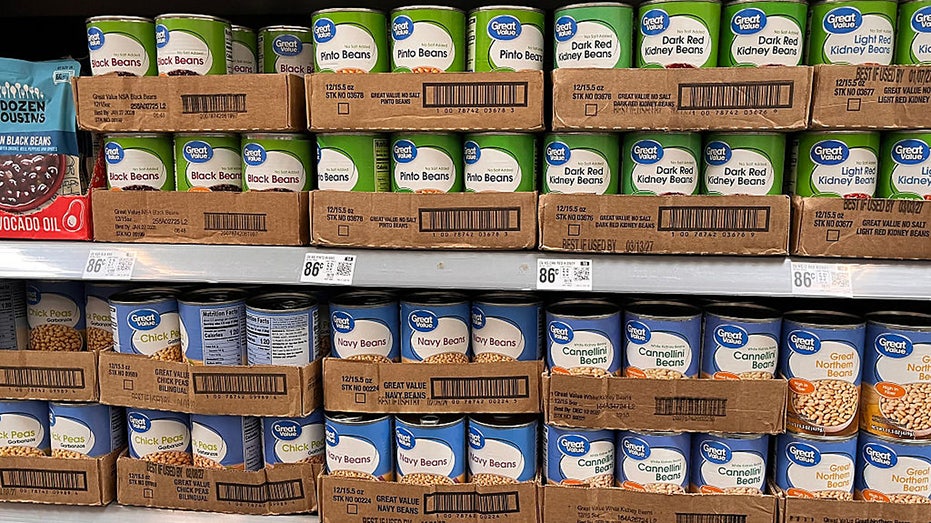
Canned goods at a Walmart supermarket(Ronaldo Schemidt/AFP via Getty Images, File / Getty Images)
The incident with the fruit cocktail is not isolated. Walmart recently faced another recall involving nearly 4.5 million Expert Grill brushes due over concerns that wire bristles could detach and contaminate food, according to the U.S. Consumer Product Safety Commission. Furthermore, the broader pharmaceutical sector has seen its own challenges, as highlighted by the Apothecary Pharma recall of compounded tirzepatide vials due to sterility concerns. These diverse recalls, across food, home goods, and pharmaceuticals, collectively paint a picture of the complexities and vulnerabilities inherent in today’s vast and interconnected supply chains. For a behemoth like Walmart, which manages an immense global network of suppliers and products, these incidents, even if minor in financial terms individually, represent a persistent operational challenge that can, over time, erode investor confidence if not managed effectively.
The financial implications for Pacific Coast Producers, a major fruit and vegetable processor, could be more pronounced than for Walmart. Smaller suppliers often bear a heavier burden from recalls, including direct costs of withdrawal, potential loss of contracts, and damage to their business reputation. For Walmart, the immediate financial hit from this particular fruit cocktail recall is likely to be negligible given its scale. However, the cumulative effect of such incidents on its private label strategy and overall brand equity bears watching. Maintaining trust in its private label offerings is paramount for Walmart’s continued growth and margin expansion, especially as consumers increasingly seek value-oriented options.
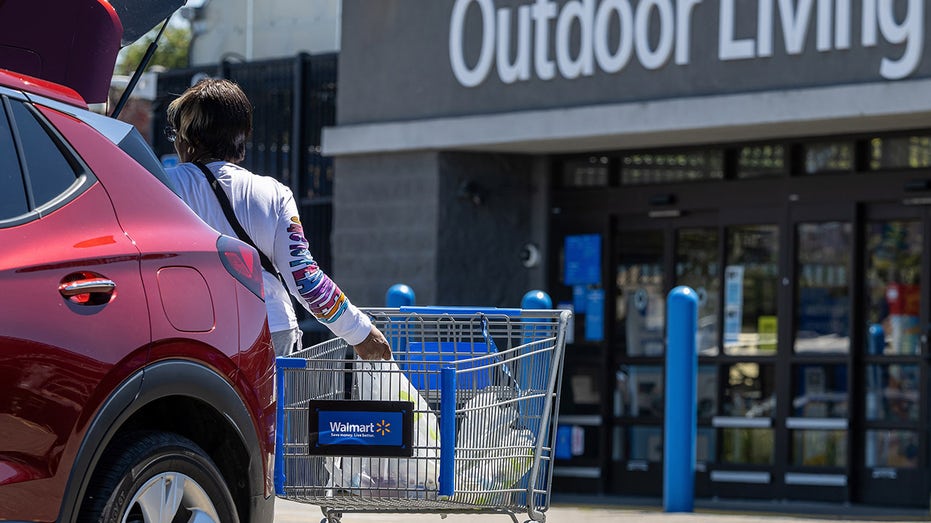
The company initiated the recall Oct. 1, and the FDA classified it as a Class II recall Oct. 20. (David Paul Morris/Bloomberg via Getty Images, File)
A spokesperson for Walmart could not immediately be reached by FOX Business for comment, leaving investors to weigh the implications based on available information and past precedent. The market will closely monitor how Walmart addresses this issue, not just in terms of logistics, but also in reassuring consumers about the safety and quality of its Great Value brand, a critical component of its market dominance.
FOX Business’ Brittany Miller contributed to this report.
Market Impact:
While the immediate financial impact of this Great Value fruit cocktail recall on Walmart (WMT) is likely to be marginal given its vast scale, the incident carries broader implications for investor sentiment within the consumer staples and retail sectors. It highlights the inherent reputational risk associated with private label strategies; sustained or frequent quality control issues in store brands could erode consumer trust, potentially impacting sales volumes and profit margins over the long term. Furthermore, this recall, alongside other recent product withdrawals across various categories, underscores the persistent challenges in global supply chain management and the increasing scrutiny by regulatory bodies like the FDA. Investors will be observing how major retailers and their suppliers enhance quality assurance protocols and communicate proactively, as effective risk mitigation and transparent responses are critical for maintaining brand equity and investor confidence in a market increasingly focused on ESG factors and supply chain resilience.