
Check out what’s clicking on FoxBusiness.com.
Key Takeaways:
- **Significant Financial Headwind:** Ford faces considerable direct costs from this recall of nearly 388,000 SUVs, including parts, labor, and logistical expenses, impacting short-term profitability and potentially warranting a reassessment of Q3/Q4 guidance.
- **Brand Erosion & Competitive Pressure:** The repeated nature of these recalls, especially for high-volume and luxury SUV models like the Explorer and Aviator, risks eroding consumer trust and market share in a fiercely competitive automotive segment.
- **Enhanced Regulatory Scrutiny:** This event, following other recent industry recalls, underscores increasing regulatory oversight from bodies like NHTSA, potentially leading to higher compliance costs and penalties across the automotive sector.
**DETROIT –** Ford Motor Co. (NYSE: F) is grappling with another significant product recall, announcing that nearly 388,000 of its popular Explorer and Lincoln Aviator SUVs are affected by a defect in the second-row easy-entry seating mechanism. This latest development is not merely a logistical challenge; it represents a material financial burden and a potential blow to brand equity in a highly competitive market, warranting close attention from investors and industry analysts.
The National Highway Traffic Safety Administration (NHTSA) detailed the recall, identifying 387,911 vehicles across certain 2020-2026 Ford Explorer and 2020-2027 Lincoln Aviator models. The core issue, as described by NHTSA, is a defect that could cause a second-row seat to tip or slide unexpectedly while the vehicle is in motion. This poses a serious safety risk, as a seat that moves without warning may not adequately restrain an occupant during a crash, significantly increasing the risk of injury.
From a financial perspective, the “no charge” remedy to vehicle owners means Ford will fully absorb the costs associated with parts, labor, and logistics. While the exact financial impact is yet to be disclosed by Ford, a recall of this magnitude – approaching 400,000 units – can easily run into the tens, if not hundreds, of millions of dollars. Conservatively estimating $100-$300 per vehicle for parts and labor, the total direct cost could range from $38.8 million to over $116 million. This excludes the indirect costs such as administrative overhead, potential legal fees if injuries were to occur, and the intangible cost of reputational damage.
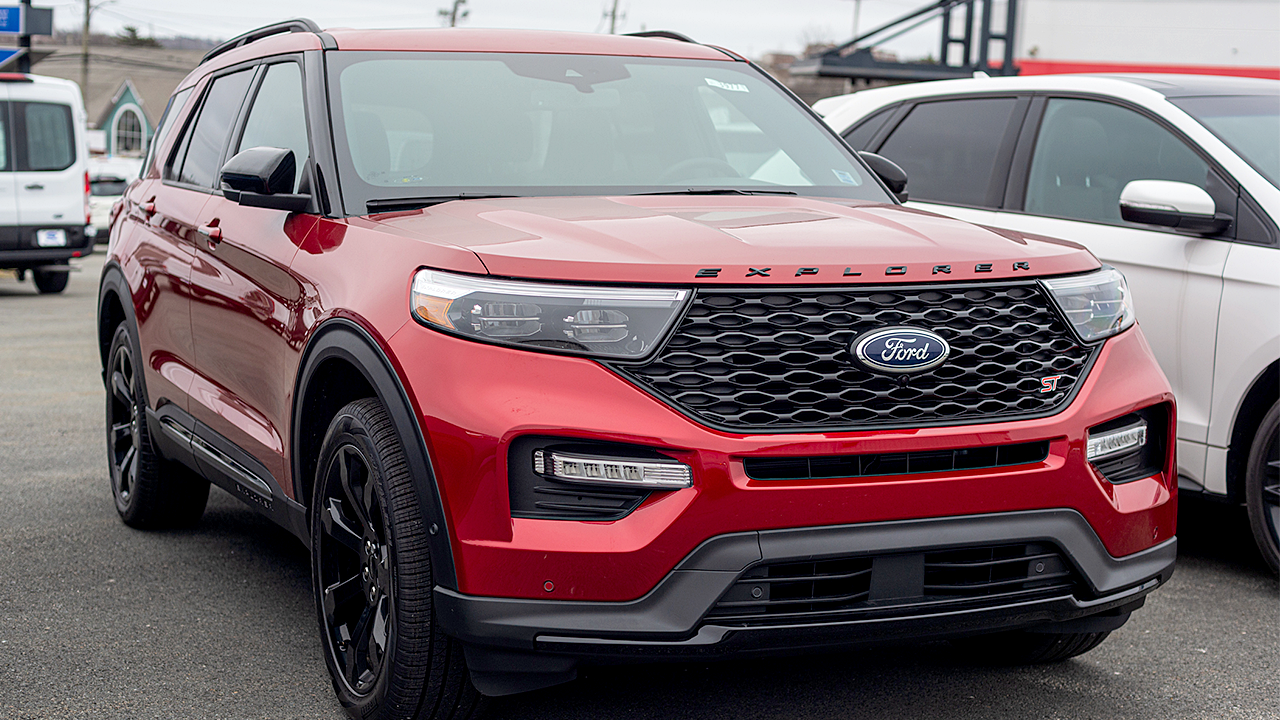
Ford is recalling nearly 388,000 vehicles over an issue with the second-row seating that could raise the risk of injury.(Getty Images / Getty Images)
“The switch for the easy-entry second-row outer seats may bind or stick, resulting in the seats unlatching, tipping, or sliding unexpectedly,” the agency explained. This technical detail, though seemingly minor, points to a potential quality control lapse in the component supply chain or assembly process. For a company like Ford, which operates on massive scales and thin margins, such widespread component failures can quickly erode profitability.
NHTSA’s notice also provided warning signs for owners, stating, “If the button is stuck in the down position, the customer may not be able to use the easy entry feature or return the seat to its normal position after using the easy entry feature.” This highlights not only a safety concern but also a significant inconvenience for consumers, which can negatively impact customer satisfaction scores and brand loyalty.
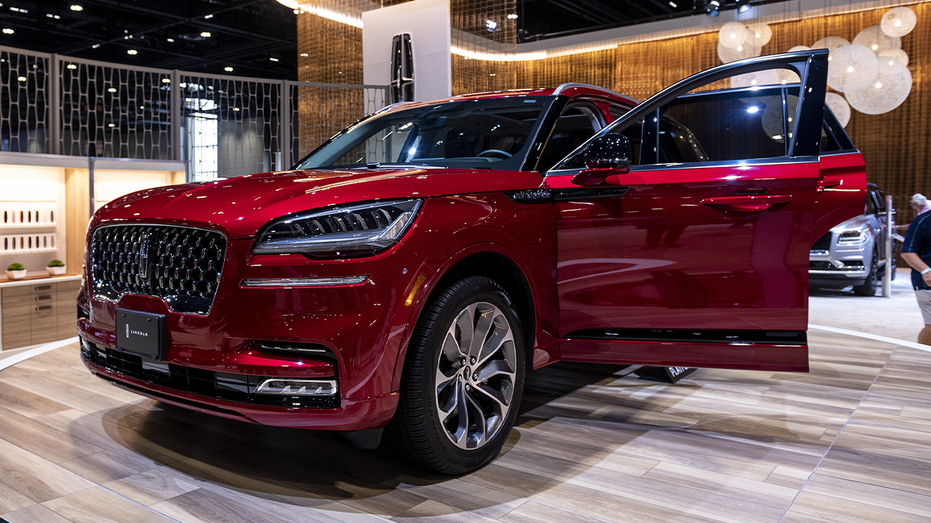
A total of 387,911 vehicles are affected by the recall.(Christopher Dilts/Bloomberg via Getty Images / Getty Images)
Further exacerbating the concern is the fact that Ford’s Critical Concern Review Group had identified 14 reports of unintended second-row seat movement as of June 16, 2026. Crucially, six of these reports involved vehicles that had already undergone a remedy under an earlier recall campaign, while eight were not covered by the previous action. This suggests a systemic, perhaps evolving, issue that may not have been fully addressed in prior fixes, raising questions about the thoroughness of Ford’s initial investigations and proposed solutions. While Ford stated it was not aware of any crashes or injuries related to this specific issue, the repeated nature of the problem, even after a previous remedy, could attract more stringent scrutiny from regulators and potentially lead to fines or further investigations.
This recall comes on the heels of other recent quality control challenges for the Dearborn automaker, including arecall of more than 110,000 Mustang vehiclesover windshield wiper and drivetrain defects. Such frequent recalls, affecting a broad range of models from core family SUVs to iconic sports cars, can cumulatively chip away at Ford’s formidable brand reputation and market share. In a highly competitive automotive landscape, where consumers have an abundance of choices from domestic and international manufacturers, quality issues can quickly steer buyers towards rivals like General Motors, Toyota, Honda, or European luxury brands for the Aviator.
The operational impact extends beyond direct financial costs. Ford’s extensive network of dealerships will need to allocate significant resources, including technician time and service bay capacity, to address these repairs. This can strain service departments, potentially leading to longer wait times for other customer maintenance and repairs, further impacting customer satisfaction. Moreover, diverting resources to address recall fixes could potentially impact the efficiency of other strategic initiatives, including Ford’s aggressive push into electric vehicles (EVs), though these recalls are for internal combustion engine (ICE) vehicles.
The NHTSA said the vehicles may have a defect that could prevent occupants from being properly restrained.(Jeff Kowalsky/Bloomberg via Getty Images / Getty Images)
The timing of owner notification letters further highlights the logistical complexities. While initial letters will be mailed out later this month, detailing the issue, a subsequent letter about the actual remedy is not expected until January. This delay could heighten consumer anxiety and prolong the period during which affected owners are driving potentially unsafe vehicles, increasing Ford’s risk exposure.
This incident serves as a stark reminder to investors about the ongoing challenges in automotive manufacturing, where product complexity, global supply chains, and intense regulatory scrutiny can lead to unforeseen financial liabilities and reputational damage. Automakers like Ford are under constant pressure to balance innovation and speed to market with rigorous quality control, a balance that, when faltered, can have significant repercussions on the bottom line and investor confidence.
CLICK HERE TO GET FOX BUSINESS ON THE GO
Market Impact:
The announcement of this substantial recall is likely to exert downward pressure on Ford’s stock (F) in the short term, as investors factor in the anticipated financial costs and potential long-term damage to brand perception. While Ford’s recent financial performance has shown resilience, this recall, coupled with previous quality issues, could lead analysts to re-evaluate their earnings forecasts and price targets for the automaker. Beyond Ford, this event contributes to a broader investor sentiment of caution across the automotive sector, particularly regarding quality control and regulatory compliance risks. Competitors, especially those in the SUV and luxury segments, might see a subtle shift in consumer preference if Ford’s brand equity is perceived to be diminishing. This ongoing narrative of recalls also underscores the increasing operational complexity and cost of maintaining quality in modern vehicles, a factor that will continue to influence valuations and strategic decisions throughout the industry.