
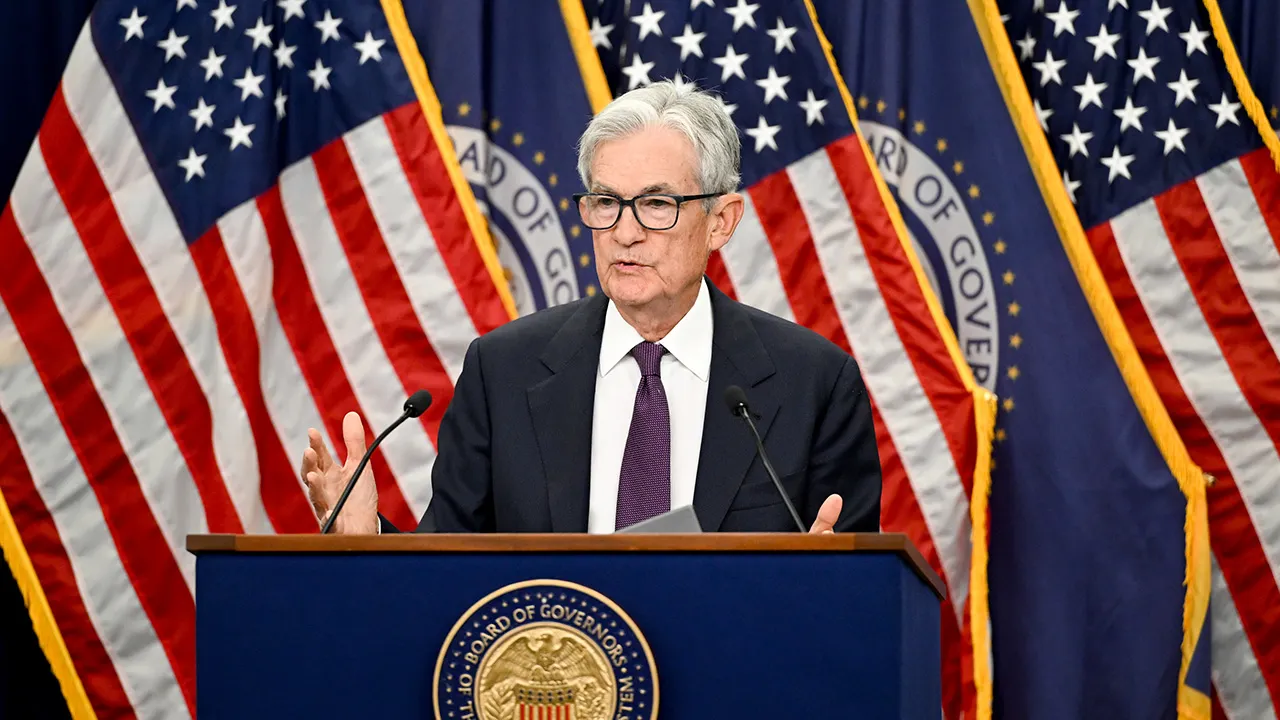
Citi Global Chief Economist Nathan Sheets reveals why the Fed is in wait-and-see mode on ‘The Claman Countdown.’
Key Takeaways for Investors:
- **Rates Held Steady Amidst Transition:** The Federal Reserve’s decision to maintain interest rates at 3.5%-3.75% aligns with market expectations, signaling a cautious, data-dependent approach as the economy navigates persistent inflation and robust employment. This stability provides a temporary anchor for asset valuations while investors anticipate future policy directions under new leadership.
- **Powell’s Continued Presence Creates Dual Dynamics:** Outgoing Chair Jerome Powell’s decision to remain a Fed Governor, while firmly denying any intent to be a “shadow chair,” introduces an experienced and known voice to the board during a critical leadership transition. This could offer perceived stability and continuity but might also lead to investor scrutiny for any subtle divergences from the incoming chair’s direction.
- **Reinforced Independence a Market Positive:** The resolution of a politically charged Justice Department investigation, which Powell claimed was a “pretext” to pressure the Fed, underscores the institution’s crucial independence. This perceived safeguarding of the central bank’s autonomy is vital for market confidence, as investors rely on monetary policy decisions being free from political influence, thereby mitigating a significant tail risk.
The Federal Reserve’s recent policy announcement and forthcoming leadership transition have sent ripples through financial markets, offering both continuity and new uncertainties for investors. Outgoing ChairJerome Powellconfirmed on Wednesday his intention to remain a member of the Fed’s Board of Governors after his chairmanship concludes next month. This development unfolded as the Senate Banking Committee advanced the nomination of his successor, former Fed Governor Kevin Warsh, and the Federal Open Market Committee (FOMC) unanimously voted to hold the benchmark interest rate steady at a range of 3.5% to 3.75%.
Powell’s decision to stay, alongside a critical policy decision and the backdrop of a resolved political challenge, creates a complex narrative for market participants assessing the future direction of monetary policy and the stability of the U.S. financial system.
FOMC Holds Rates Steady Amidst Economic Nuances
The FOMC’s decision to maintain the federal funds rate at its current range of 3.5% to 3.75% was largely anticipated by market participants, reflecting the central bank’s calibrated approach to managing inflation while supporting economic growth. This stability in rates comes at a critical juncture, with inflation data showing mixed signals and the labor market demonstrating resilience, yet some signs of cooling in specific sectors. For investors, the steady rate environment offers a degree of predictability, suggesting the Fed is content to observe the lagged effects of previous policy tightening rather than introduce new volatility through further rate adjustments.
Bond markets, in particular, often react to such signals. Stable rates can lead to a flattening of the yield curve or a slight recalibration of interest rate futures as traders adjust their expectations for future rate movements. The current rate range, while historically higher than the ultra-low rates seen in previous decades, is viewed by some analysts as a “neutral” stance, neither overly restrictive nor excessively accommodative. This allows the economy to absorb past adjustments without immediate, drastic shifts, providing a temporary sense of calm to equity and credit markets that thrive on stability.
Fed Chair Jerome Powell said he doesn’t plan to act like a “shadow Fed chair” and wants to help build consensus where he can.(Daniel Heuer/Bloomberg via Getty Images)
Powell’s Transition: A “Shadow Chair” or Institutional Continuity?
Powell’s announcement that he intends to continue serving as a member of theFed’s Board of Governorsfor a “period of time to be determined” has generated considerable discussion across financial news desks and trading floors. While he emphatically stated he would not act as a “shadow Fed chair” — a role he describes as something he would “never do” — the market’s perception of his continued presence is multifaceted. Powell explicitly stated, “There’s only ever one chair of the Federal Reserve Board. When Kevin Warsh is confirmed and sworn in, he will be that chair.” He intends to “keep a low profile as a governor” and be a “very constructive participant” in the decision-making process, supporting the new chair.
On one hand, his extensive experience and institutional knowledge, particularly given his close working relationship with former Chair Yellen and his two years with Chairman Bernanke, could provide a valuable anchor of stability during a period of transition, offering reassurance to investors wary of significant policy shifts. Having a veteran hand on the board, especially one who has navigated recent economic crises, might be seen as a source of continuity. On the other hand, the unprecedented nature of an immediate past chair remaining on the board, despite historical precedents like Marriner Eccles who served as Fed chair from 1934-1948 and remained a governor until 1951, could potentially create a dynamic where market participants scrutinize his every vote or statement, looking for subtle cues that might diverge from the new chair’s direction. This could introduce a layer of uncertainty regarding the cohesiveness of the Board of Governors, though Powell’s stated intention is to foster consensus and support the new chair’s agenda.
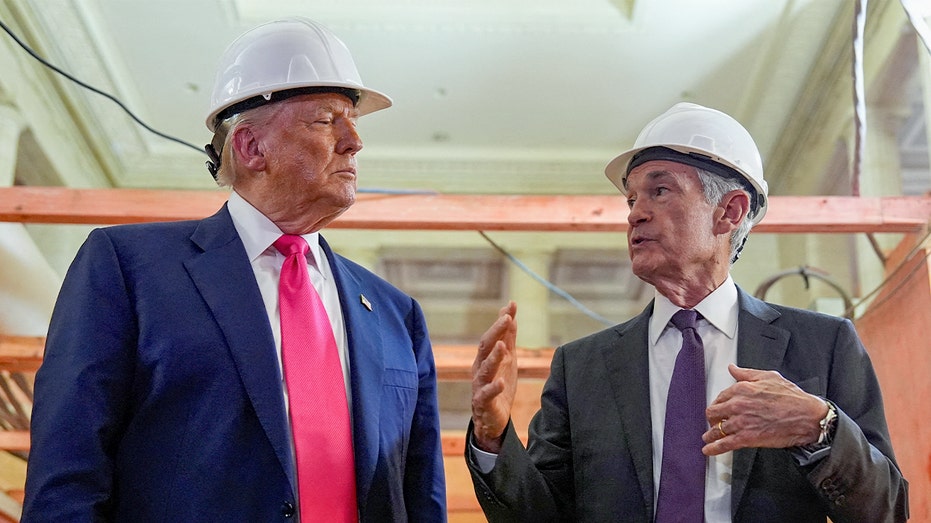
Powell said he will stay on as a member of the Fed’s Board of Governors until the investigation is closed with finality and transparency.(Kent Nishimura/Reuters)
Kevin Warsh: A New Era for Monetary Policy?
The advancement ofKevin Warsh‘s nomination by the Senate Banking Committee brings his potential leadership into sharper focus for financial markets. Warsh, a former Fed Governor, is widely perceived by many analysts as having a more hawkish lean than Powell, particularly concerning inflation control and a preference for a more rules-based approach to monetary policy. This perception is rooted in his past public statements and writings on economic policy, which often emphasize the importance of price stability and fiscal discipline.
Markets will be closely watching his confirmation process and initial statements for clues about his preferred strategies. A new chair with a potentially different philosophical approach could influence the composition of future FOMC votes, impacting expectations for future interest rate hikes or cuts, quantitative tightening, and overall monetary policy communication. Bond yields, particularly at the longer end of the curve, may react to these perceived shifts, with a more hawkish stance potentially driving yields higher as investors price in stricter inflation control. Equity markets, too, could adjust to the prospect of a different Fed leadership, with sectors sensitive to interest rates potentially experiencing greater volatility as the market recalibrates to a new monetary policy regime.
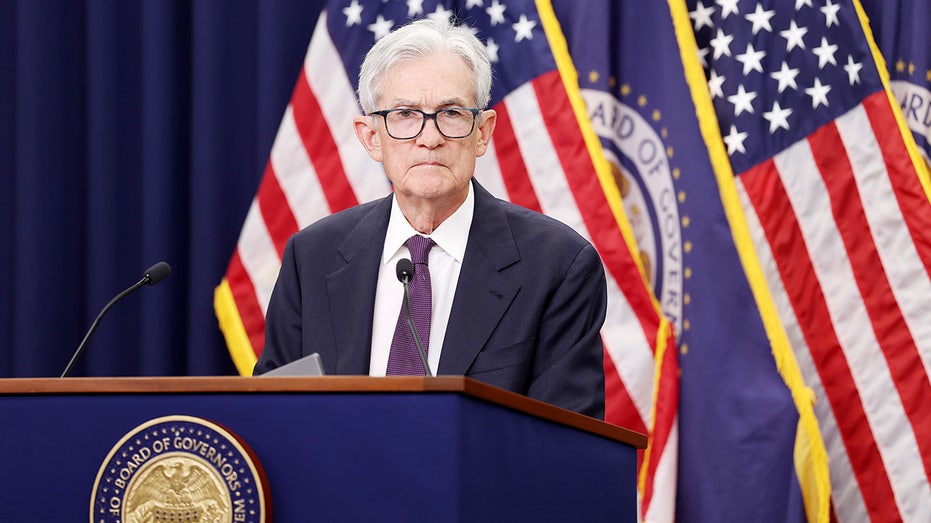
Powell said he planned to retire at the end of his chairmanship prior to the DOJ investigation.(Anna Moneymaker/Getty Images)
The Independence Imperative: DOJ Investigation and Market Trust
Central to Powell’s rationale for remaining on the board is the protection of the Federal Reserve’s independence, which he asserts was threatened by a politically motivated Justice Department investigation into a Fed renovation project. Powell stated he had planned to retire at the end of his chairmanship, but “the things that have happened, really in the last three months, left me no choice but to stay until I see them through.” The investigation, launched by theTrump administrationand described by Powell as a “pretext” to pressure him into cutting interest rates or stepping down, raised significant concerns among economists and market participants about the potential for political interference in central bank operations.
The perceived political targeting of the Fed chair directly undermines the institution’s credibility, which is paramount for effective monetary policy. Markets rely on the Fed’s ability to make decisions based solely on economic data, free from political pressure. Powell highlighted that these “legal actions by the administration are unprecedented in our 113-year history, and there are ongoing threats of additional such actions,” emphasizing the crucial role of Fed independence “for our economy, for the people that we serve.”
The Justice Department, through U.S. District Attorney for the District of Columbia Jeanine Pirro, announced it is dropping the criminal investigation and allowing the Fed’sinspector general, Michael Horowitz, to handle the matter. While Pirro stated she wouldn’t hesitate to “restart a criminal investigation should the facts warrant doing so,” and the DOJ informed Powell that it would only be reopened if the IG submits a criminal referral, this move offered a partial reprieve. However, the lingering threat of future actions, as highlighted by Powell, underscores the fragility of this independence. Any perception of political influence on the Fed can lead to increased market volatility, diminished investor confidence, and a weakening of the dollar, as global investors might seek safer havens if the integrity of the world’s most influential central bank is questioned. This saga highlights that the perceived integrity and autonomy of the Fed are as critical to market function as its actual policy decisions, forming part of the “absolute foundation of this amazing economy that we have,” as Powell noted.
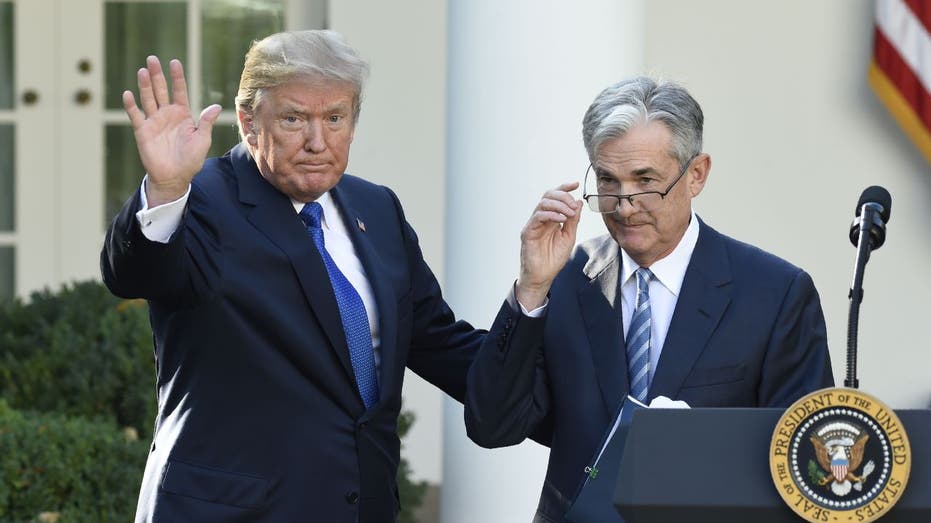
Trump picked Powell to serve as Fed chair starting in 2018, though he went on to repeatedly threaten to fire him for not cutting interest rates.(Saul Loeb/AFP via Getty Images)
Powell’s term as a member of the Fed’s Board of Governors runs until January 31, 2028. However, he emphasized he will leave when the investigation is “well and truly over with finality and transparency, and I’m waiting for that, and I will leave when I think it’s appropriate to do so.”
Market Impact
The confluence of a steady interest rate environment, a high-profile leadership transition, and the resolution of a significant challenge to the Fed’s independence creates a complex landscape for financial markets. The maintenance of rates at 3.5%-3.75% provides short-term stability, likely reinforcing current asset valuations while markets digest the implications of a new Fed chair. However, the anticipated shift in leadership from Powell to Warsh, potentially signaling a more hawkish orientation, could lead to increased volatility in bond markets, with long-term yields facing upward pressure as investors price in a potentially tighter monetary policy stance. Equity markets may exhibit a bifurcated response, with growth-oriented stocks potentially more sensitive to higher rate expectations, while value stocks might show resilience. The perceived safeguarding of the Fed’s independence, despite the recent political pressures, is a net positive for overall market confidence, underpinning the dollar’s stability and mitigating tail risks associated with political interference. Investors will closely monitor Warsh’s initial policy pronouncements and the composition of future FOMC votes for a clearer direction, with the potential for adjustments in asset allocation strategies as the new era of Fed leadership takes full effect.
GET FOX BUSINESS ON THE GO BY CLICKING HERE