
Key Takeaways:
- Tesla has opened pre-orders for its autonomous “Cybercab” for personal use, priced at $29,990 plus a monthly operational fee, with an estimated delivery in late 2026.
- Initial availability is limited to specific Texas cities and geofenced areas, although CEO Elon Musk promises eventual nationwide operation and a lower monthly subscription cost.
- This strategic move signals a significant pivot for Tesla, discontinuing the underperforming Cybertruck to focus production capacity on the Cybercab, reinforcing the company’s long-term vision for autonomous mobility.
Tesla’s Cybercab Rolls Out: A Glimpse into the Autonomous Future, With a Few Initial Roadblocks
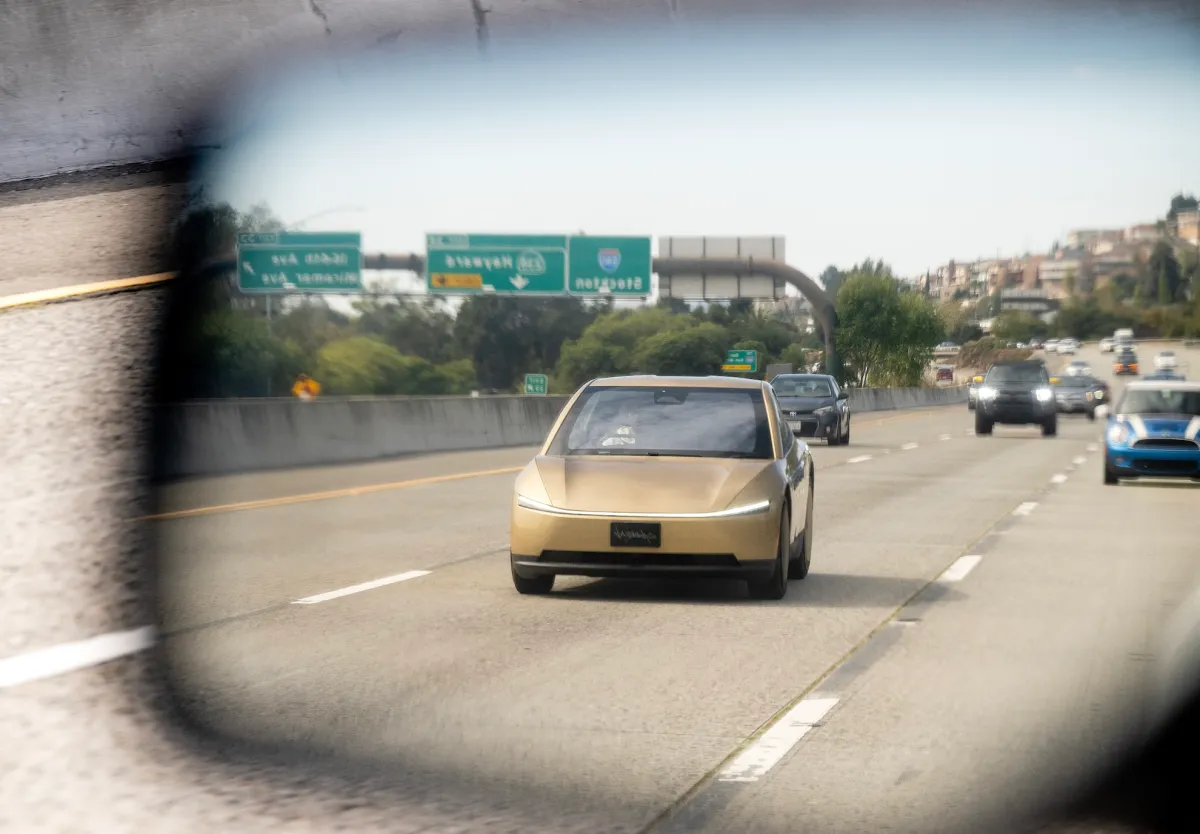
In a move that’s simultaneously exciting and characteristically opaque, Tesla announced late Friday evening that “select customers” now have the opportunity to pre-order its highly anticipated, autonomous “golden Cybercab” for personal use. The revelation, disseminated with minimal fanfare, quickly ignited a flurry of discussion as early adopters and tech enthusiasts delved into the fine print of the order page, uncovering a mix of ambitious promises and immediate limitations.
The Cybercab, a vehicle long teased as a cornerstone of Tesla’s future in autonomous urban transport, represents more than just a new product; it signifies a strategic reorientation for the electric vehicle giant. After years of touting Full Self-Driving (FSD) capabilities and envisioning a vast network of robotaxis, the personal-use Cybercab bridges the gap between those grand ambitions and tangible consumer offerings, albeit with significant caveats.
The Fine Print: Price, Puzzles, and Provisional Plans
Upon accessing the pre-order portal, as widely shared by prominent tech reviewer Marques Brownlee, several crucial details emerged that paint a more complex picture than a simple vehicle launch. The Cybercab carries a substantial price tag of$29,990. However, the upfront cost is just the beginning. Owners will also be subject to a monthly operating fee, initially set at$299, a subscription model that ties the vehicle’s functionality to an ongoing service.
Perhaps more significantly, the initial rollout is heavily restricted. Prospective buyers “must accept delivery” in a handful of designated Texas cities, a geographic constraint that immediately tempers expectations of broad availability. Furthermore, the Cybercab will only operate within “certain geofenced areas,” implying that its autonomous capabilities will not be universally accessible even within the delivery cities. The estimated delivery date, December 2026, also positions the Cybercab as a futuristic promise rather than an immediate solution, giving Tesla a considerable runway to refine its technology and navigate regulatory hurdles.
Musk’s Immediate Course Correction: Nationwide Vision and Price Adjustments
The immediate public reaction to these limitations, particularly from influencers like Brownlee, prompted a swift and characteristic response from Tesla CEO Elon Musk. Taking to social media, Musk directly addressed some of the concerns, offering a more expansive vision for the Cybercab’s future. He declared that the autonomous vehicle “will be available nationwide, as we receive regulatory approval,” suggesting that the initial Texas-centric and geofenced approach is a phased rollout rather than a permanent restriction.
Musk also acknowledged the sticker shock associated with the $299 monthly fee, stating it was “too high.” He suggested that the subscription cost “should match the cost of Tesla [Full Self-Driving] and connectivity for other models, which is more like ~$115/month.” This proposed adjustment, if implemented, would significantly alter the long-term ownership proposition, aligning it more closely with existing Tesla services and potentially broadening its appeal.
Further clarification regarding the geofencing came from Ashok Elluswamy, Tesla’s Director of Autopilot. Elluswamy explained that the Cybercab would work “unsupervised inside all the same geo locations as @robotaxi, just serving the owners’ needs.” This statement is critical, as it confirms the Cybercab will leverage the same underlying FSD and operational infrastructure as the envisioned Robotaxi network, but tailored for individual ownership rather than a shared ride-hailing service. This distinction is crucial for understanding how Tesla plans to scale its autonomous technology across different use cases.
A Strategic Pivot: From Cybertruck to Cybercab
The Cybercab announcement doesn’t exist in a vacuum; it arrives on the heels of another significant corporate decision. Tesla recently confirmed that it will cease Cybertruck production next year, reallocating the additional factory capacity to build more Cybercabs. This pivot is a stark admission of the Cybertruck’s struggles, which fell far short of projected sales and encountered numerous production challenges since its much-hyped debut.
The Cybertruck, with its radical design and ambitious promises, ultimately proved to be a niche product that struggled to find a mainstream market, particularly after its initial design concepts faced production realities. By shifting resources to the Cybercab, Tesla is making a clear bet on its autonomous future. This move underscores the company’s long-held belief that full autonomy, whether in personal vehicles or a dedicated robotaxi fleet, is the ultimate disruptor in the automotive industry. It’s a strategic play to double down on the technology that Musk believes will define Tesla’s long-term value, moving beyond traditional vehicle manufacturing to become a leader in mobility services.
The Road Ahead: Challenges and Opportunities
While the Cybercab pre-order marks a tangible step forward, numerous challenges lie ahead. Regulatory approval for widespread unsupervised autonomous operation remains a significant hurdle in many jurisdictions. The technology itself, despite continuous advancements in FSD, still needs to prove its absolute reliability and safety across diverse driving conditions before it can truly achieve “nationwide” availability. Public acceptance and trust in fully autonomous vehicles are also critical factors that will influence adoption rates.
However, the opportunities are equally vast. A successful Cybercab launch could redefine urban mobility, offering unprecedented convenience and potentially reducing traffic congestion and parking needs. For Tesla, it represents a new revenue stream, not just from vehicle sales but from high-margin recurring software subscriptions. The “personal use” model also offers a gentler entry point into the autonomous future compared to a fully shared robotaxi network, allowing consumers to grow accustomed to the technology within the comfort of their own vehicles.
{content}
The Bottom Line
Tesla’s Cybercab pre-order announcement is a bold declaration of intent, signaling the company’s unwavering commitment to an autonomous future and a decisive shift away from past product missteps. While initial restrictions and a still-evolving pricing model present immediate questions, Elon Musk’s promise of nationwide availability and a more competitive subscription fee points towards a vision of transformative urban mobility. The success of the Cybercab will not only validate Tesla’s decade-long investment in autonomous technology but could also set a new standard for how consumers interact with personal transportation in the decades to come, provided the company can deliver on its ambitious timeline and overcome the significant regulatory and technological hurdles ahead.
Source:{feed_title}