
The auditory content accompanying this piece is presented courtesy of the Air & Space Forces Association, which recognizes and supports our Airmen, Guardians, and their relatives. Further details can be accessed at afa.org
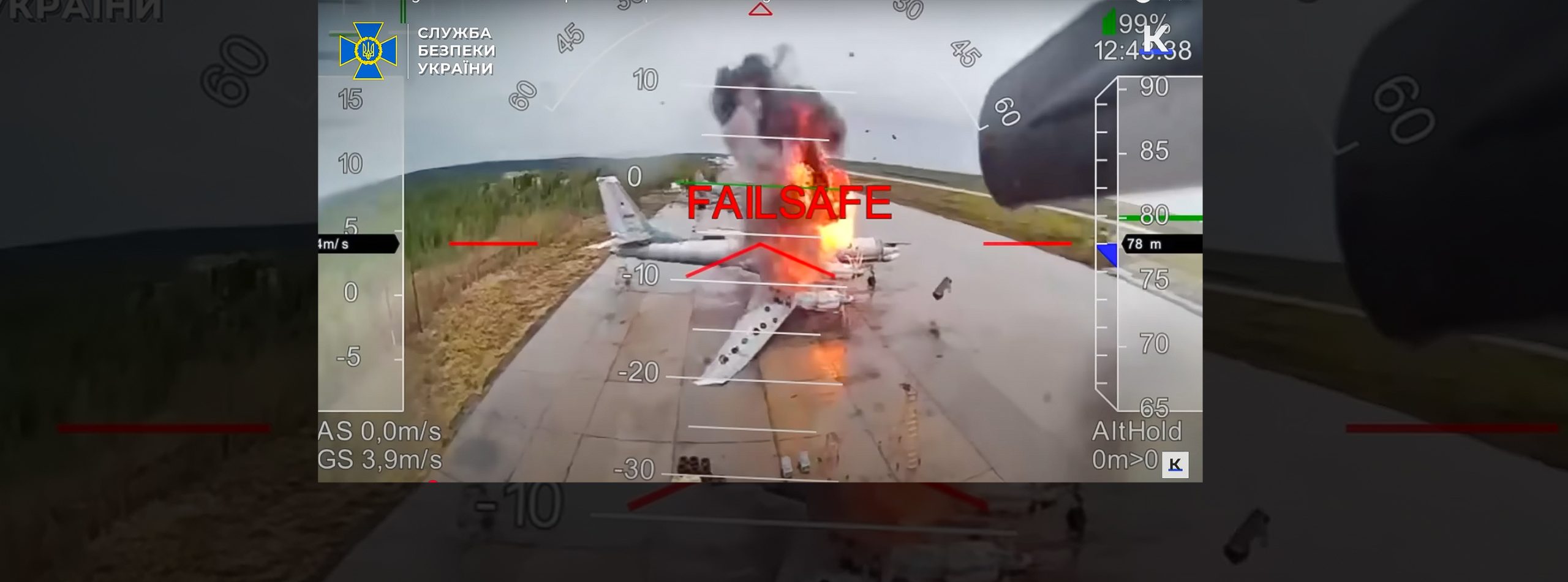
Procurement officials within the Air Force are actively seeking compact, readily transportable, single-use assault unmanned aerial vehicles (UAVs). These are intended to equip special operations personnel, enabling them to execute precision strike missions, viewed from a first-person perspective, much like the highly effective tactics employed by Ukraine against Russia.
According to a request for information (RFI) dated March 18 and published on Sam.gov, the Intelligence, Surveillance and Reconnaissance & Special Operations Forces Directorate of the Air Force Life Cycle Management Center indicated its engagement in market analysis. This research focuses on one-way attack drones capable of fitting into a backpack and dispensing fragmentation or penetrator-type ordnance onto objectives situated over 12 miles distant.
“Presently, the Air Force Special Operations Command and its specialized tactical detachments are without a dedicated first-person view (FPV) unmanned asset,” the RFI specifies. “Such a shortfall hinders the command’s capacity to utilize FPV platforms in particular operational contexts and constrains the establishment of uniform tactics, methods, and protocols, which are vital for contemporary, high-stakes warfare.”
Single-use assault UAVs are rapidly transitioning into a constant component of the U.S. armed forces’ inventory. Task Force Scorpion Strike—a recently formed drone unit created by U.S. Central Command—has deployed its Low-cost Unmanned Combat Attack System, or LUCAS, UAVs targeting Iranian objectives throughout Operation Epic Fury. These LUCAS UAVs represent a redesigned variant of the Iranian fixed-wing Shahed, possessing the ability to traverse approximately 500 nautical miles. Furthermore, the Air Force intends to establish an experimental operational detachment within the current year, which will act as a template for subsequent operational groupings assigned to deploy large numbers of single-use assault UAVs across hundreds of miles against comparable rivals like China.
Nevertheless, this latest RFI presents a subtle divergence for the Air Force, emphasizing exceptionally diminutive drones—the solicitation indicates the service seeks aerial vehicles weighing approximately 15 pounds apiece, with an ultimate target mass of five pounds per unit. Such single-use assault UAVs would possess the capacity to remain airborne for as long as 30 minutes, conveying a payload to ranges of around 20 kilometers, equivalent to over 12 miles.
These attributes would categorize the special operations UAVs at the lowest level of the Pentagon’s five-tiered classification framework, designated “Group 1.”
These UAVs would be operated through a portable device and also by means of the Android Team Awareness Kit, or ATAK, which is a tactical Android smartphone utilized by small ground combat units for accurate targeting, directional guidance, and disseminating combat zone data. Furthermore, the system would necessitate incorporating GPS and 4G/LTE/5G mobile network access.
Firms are granted until April 17 to submit their responses.
The Pentagon plans to allocate $1.1 billion across the subsequent 18 months for its Drone Dominance initiative, an undertaking initiated in December focused on evaluating and acquiring in excess of 200,000 UAVs of diverse dimensions by January 2028, as stated by Owen West, the Pentagon’s principal consultant for the program, during a congressional hearing on March 5.
A primary objective of the Drone Dominance initiative involves fostering a domestic U.S. sector centered on compact UAVs, thereby enabling their manufacture in larger quantities at reduced expense. During its preliminary stage, the program is disbursing roughly $5,000 per “Group 1” UAV, Travis Metz, the Drone Dominance program manager, informed the March 5 hearing, further remarking that “our aspiration is to achieve a cost below $2,000 for a single-use kamikaze attack drone by the culmination of this program.”
Ukraine has adeptly transformed commercially accessible Chinese UAVs into potent, single-mission assault armaments, comparable to those deployed during Operation Spiderweb against Russian strategic airbases. The United States is collaborating with Ukraine to disengage from Chinese supply networks and persuade Ukrainian specialists to transfer their UAV proficiency to the U.S.
“The globe’s most effective UAVs, both in combat effectiveness and manufacturing scalability, are found in Ukraine,” Metz stated. “A key objective of the [Drone Dominance] initiative involved persuading several of the world’s leading drone manufacturers to relocate their production here, thus providing an advantage to our military personnel.”
The auditory content accompanying this piece is presented courtesy of the Air & Space Forces Association, which recognizes and supports our Airmen, Guardians, and their relatives. Further details can be accessed at afa.org