
October 6, 2026
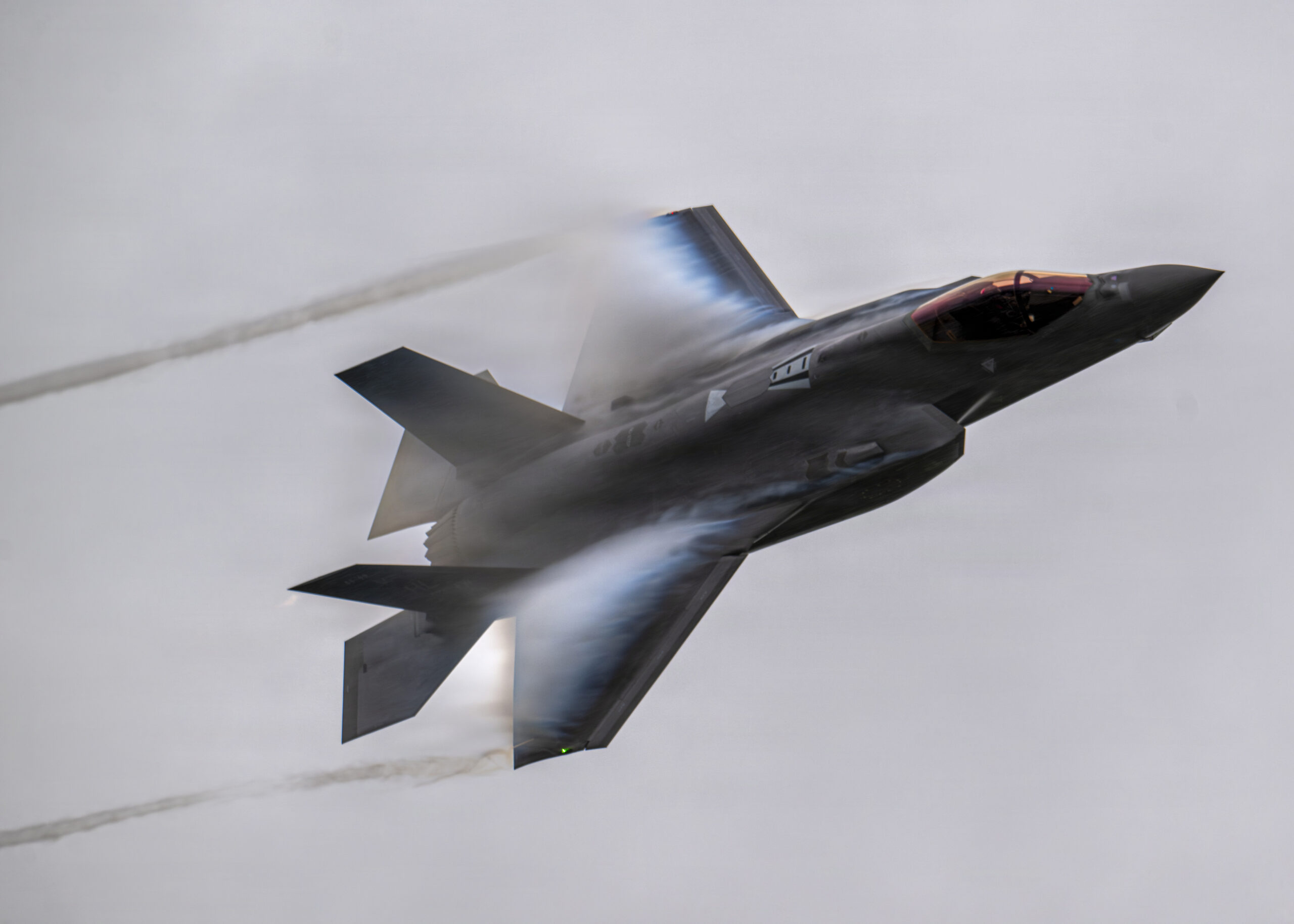
KINGSLEY FIELD, OREGON — The U.S. Air Force has officially confirmed Kingsley Field in Oregon as the future home for more than two dozen F-35 Lightning II fighter jets, marking a significant step in the modernization of the Air National Guard’s capabilities and the expansion of the Air Force’s fifth-generation pilot training pipeline. Air Force Secretary Troy Meink signed the record of decision on October 5, clearing the final administrative hurdle for Kingsley Field to host the service’s third F-35 formal training unit (FTU).
The announcement, made separately by the 173rd Fighter Wing at Kingsley Field and Representative Cliff Bentz (R-Ore.), concludes a multi-year selection process aimed at transitioning the base from its legacy F-15C and D fighter aircraft. The decision underscores a broader strategic shift within the Department of Defense towards integrating advanced combat aircraft and enhancing pilot readiness for future operational demands.
The initial F-35 aircraft are anticipated to commence arrivals in the summer of 2027. The full transition of the base’s operational and training infrastructure, however, is projected to unfold over “multiple years,” with the final aircraft expected to be in place by 2029, according to a recent environmental impact analysis report.
This decision represents a pivot from earlier Air Force plans for Kingsley Field. In 2020, the service had initially designated the base, which historically served as an F-15C/D training hub, to host an F-15EX Eagle II schoolhouse. This plan was subsequently re-evaluated within a few years, driven by evolving strategic priorities.
Air Force officials cited a growing strategic focus on the Indo-Pacific region and the imperative to deploy fifth-generation aircraft, such as the F-35, “as quickly as possible” as key factors in the reconsideration. Concurrently, the Air Force was adjusting its procurement strategy for the F-15EX, leading to a revised allocation of resources and platforms. Consequently, in May 2023, the U.S. Air Force announced its updated intention to establish an F-35 training unit at Kingsley Field instead of the previously planned F-15EX facility.
The re-designation necessitated an extensive environmental impact analysis process. This comprehensive assessment evaluates potential effects on air quality, noise levels, land use, water resources, and socio-economic factors within the affected communities. The Department of the Air Force issued its final report last month, paving the way for the record of decision. This formal document is a prerequisite for initiating the necessary construction and modifications of both new and existing facilities required to accommodate the advanced F-35 aircraft and their associated support infrastructure.
Initial projections from the 173rd Fighter Wing indicated an expectation of receiving 20 F-35s while maintaining current personnel levels. However, the subsequent environmental impact analysis report refined these figures, stating that Kingsley Field will ultimately receive 26 F-35 aircraft and see an addition of approximately 30 personnel to support the expanded mission. This increase reflects the specific requirements for training on and maintaining the F-35 platform.
Kingsley Field will become the third F-35 formal training unit within the U.S. Air Force, complementing existing schoolhouses at Luke Air Force Base in Arizona and Eglin Air Force Base in Florida. As the Air Force’s fleet of F-35s continues to grow, the demand for highly trained pilots is escalating. These FTUs serve as critical junctures where pilots receive airframe-specific training, mastering the intricate systems and operational procedures unique to the F-35, before being assigned to operational units globally.
Colonel Adam Gaudinski, commander of the 173rd Fighter Wing, emphasized the profound responsibility accompanying the new mission. “We are not simply receiving a new aircraft; we are taking on a mission that directly affects the Air Force’s ability to put combat-ready F-35 pilots into operational units,” Colonel Gaudinski stated. “Every pilot we graduate from Kingsley represents combat capability that can be delivered to an operational squadron. That is the responsibility we are accepting, and we are ready for it.” His remarks highlight the direct impact the training unit will have on national defense readiness and the strategic projection of air power.
Kingsley Field will join a growing network of bases hosting the F-35, becoming the 16th Air Force installation globally to receive the stealth fighter. This expansion includes Barnes Air National Guard Base in Massachusetts and Misawa Air Base in Japan, both of which welcomed their first F-35s earlier in 2026. This broader deployment underscores the F-35’s role as a cornerstone of U.S. and allied air power strategy.
Meanwhile, elsewhere in Oregon, the 142nd Wing at Portland Air National Guard Base has commenced receiving the F-15EX Eagle II aircraft, illustrating a diversified approach to modernizing air defense assets across the state and the Air National Guard as a whole.
F-35 Locations
Future locations in italic bold
| Base | State/Country | Component | First Aircraft Arrival | Mission |
|---|---|---|---|---|
| Edwards Air Force Base | California | Active | 2011 | Test |
| Eglin Air Force Base | Florida | Active | 2011 | FTU |
| Nellis Air Force Base | Nevada | Active | 2013 | Test/Aggressor |
| Luke Air Force Base | Arizona | Active | 2014 | FTU |
| Hill Air Force Base | Utah | Active | 2015 | Operational |
| Burlington Air National Guard Base | Vermont | Guard | 2019 | Operational |
| Eielson Air Force Base | Alaska | Active | 2020 | Operational |
| Royal Air Force Lakenheath | UK | Active | 2021 | Operational |
| Truax Field Air National Guard Base | Wisconsin | Guard | 2023 | Operational |
| Dannelly Field | Alabama | Guard | 2023 | Operational |
| Tyndall Air Force Base | Florida | Active | 2024 | Operational |
| NAS-JRB Fort Worth | Texas | Reserve | 2024 | Operational |
| Jacksonville Air National Guard Base | Florida | Guard | 2025 | Operational |
| Misawa Air Base | Japan | Active | 2026 | Operational |
| Barnes Air National Guard Base | Massachusetts | Guard | 2026 | Operational |
| Kingsley Field Air National Guard Base | Oregon | Guard | 2027 | FTU |
| Moody Air Force Base | Georgia | Active | 2030 | Operational |
| Homestead Air Reserve Base | Florida | Reserve | 2034 | Operational |
Why This Matters
The decision to base F-35 Lightning II fighter jets at Kingsley Field, Oregon, and establish it as the third formal training unit for the advanced aircraft, carries significant implications across national security, economic development, and strategic defense policy. This move is not merely an upgrade of military hardware but reflects a fundamental realignment of U.S. air power capabilities and training priorities in response to an evolving global security landscape.
Strategic Modernization and Global Power Projection:The F-35 Lightning II is a cornerstone of the U.S. Air Force’s modernization efforts, representing a qualitative leap in combat aviation with its stealth capabilities, advanced sensor fusion, and integrated network warfare systems. The establishment of a new F-35 FTU at Kingsley Field is crucial for accelerating the training of pilots proficient in operating this complex fifth-generation aircraft. As the Air Force phases out older platforms like the F-15C/D, ensuring a robust pipeline of F-35 pilots becomes paramount for maintaining air superiority and projecting credible deterrent capabilities globally, particularly in contested environments like the Indo-Pacific region. This region has become a focal point of U.S. defense strategy, necessitating a greater emphasis on advanced, survivable aircraft to counter potential adversaries.
Enhanced National and Regional Security:By increasing the capacity to train F-35 pilots, the U.S. Air Force reinforces its ability to rapidly deploy combat-ready squadrons wherever they are needed. Kingsley Field’s strategic location in the Pacific Northwest contributes to a dispersed and resilient defense posture across the continental United States. The introduction of F-35s, alongside the F-15EXs at Portland Air National Guard Base, enhances Oregon’s role in national defense, providing advanced air defense capabilities and contributing to the overall security architecture of the Western seaboard.
Economic Impact and Community Development:The transition to the F-35 mission at Kingsley Field represents a substantial long-term investment in the base and the surrounding Klamath Falls community. The arrival of 26 F-35s and an increase of approximately 30 personnel, coupled with the extensive infrastructure upgrades required—including new hangars, maintenance facilities, and flight simulators—will generate significant economic activity. This includes construction jobs, sustained employment for military and civilian personnel, and a boost to local businesses that support the base’s operations and personnel. The commitment to a major training mission also provides stability for the base’s future, ensuring its continued relevance for decades to come.
Evolution of the Air National Guard:The assignment of an F-35 FTU to an Air National Guard base like Kingsley Field signifies the increasing integration of Guard units into front-line defense capabilities. Traditionally, Guard units often operated older platforms or specialized support roles. Equipping them with cutting-edge F-35s and entrusting them with a critical training mission underscores their full partnership in national defense strategy and their readiness to operate the most advanced combat aircraft. This demonstrates the Air Force’s confidence in the Air National Guard’s professionalism and capacity to adapt to advanced technologies.
Technological and Operational Synergy:The F-35’s advanced capabilities extend beyond its combat prowess. Its data-sharing and sensor fusion abilities allow it to act as a vital node in a larger network, providing unparalleled situational awareness to other forces. Training pilots to fully leverage these capabilities is essential for future multi-domain operations. The establishment of a new FTU means more pilots will be trained in these sophisticated operational concepts, enhancing the synergy between air, land, and sea assets and preparing the Air Force for the complexities of modern warfare.
In summary, the designation of Kingsley Field as an F-35 formal training unit is a multifaceted development that bolsters U.S. air power, supports regional economies, and solidifies the Air National Guard’s role in future defense. It is a strategic move designed to ensure the U.S. remains at the forefront of aviation technology and pilot readiness in an increasingly complex and competitive global environment.