
Ministry of Defence Spending in Scotland Shows Job Growth in 2024/25
Official statistics released on Friday indicate that the United Kingdom’s Ministry of Defence (MOD) spending with industry in Scotland supported 12,200 direct jobs during the 2024/25 financial year. This figure represents an increase of 800 direct jobs compared to the preceding year, highlighting a notable expansion in defence-related industrial employment within Scotland.
The MOD’s expenditure with Scottish industry reached £2.16 billion over the period. When contextualized against Scotland’s estimated population, this spending equates to approximately £390 per person. The statistics also show that this industrial expenditure directly supported 560 jobs for every 100,000 people in full-time employment across Scotland, an increase from 520 jobs per 100,000 in the previous twelve months.
Beyond direct industry roles, the comprehensive figures account for a total of 26,300 jobs in Scotland supported by MOD expenditure. This broader total includes the 12,200 direct industry positions, along with 4,050 civilian staff working for the MOD in Scotland and 10,010 uniformed service personnel stationed in the country.
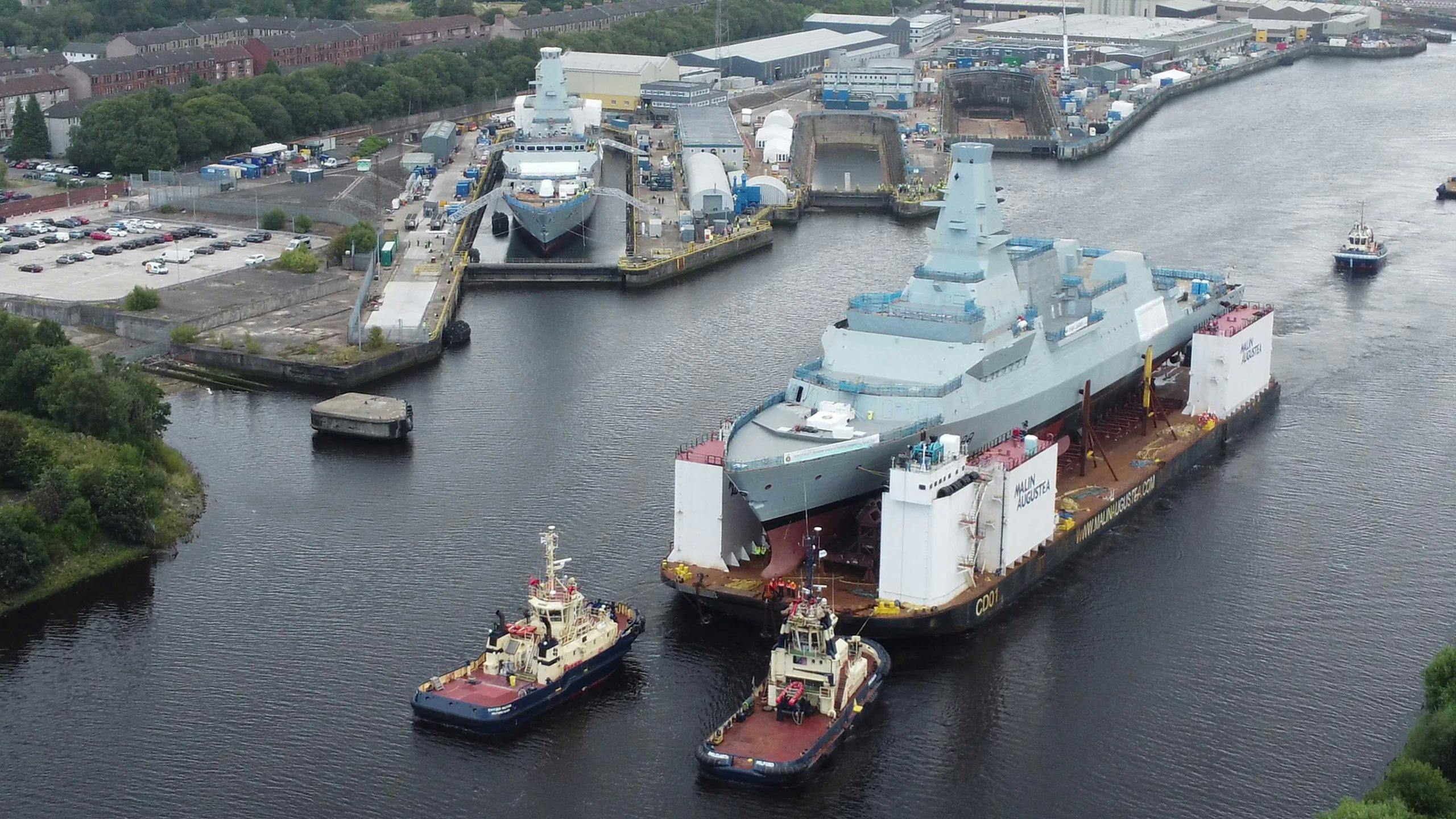
An analysis of the industrial job figures reveals that the shipbuilding and submarine sectors are the predominant contributors, accounting for 7,900 jobs. This represents a significant rise of nearly 18 per cent from the 6,700 jobs recorded in these sectors a year earlier. Other construction activities supported 800 jobs, while the manufacturing of weapons and ammunition, and the aircraft and spacecraft industries, each contributed 200 jobs to the total.
In statements responding to the publication of these figures, government officials emphasized the economic contribution of defence spending. Douglas Alexander, the Scottish Secretary, noted the £2.16 billion annual MOD spending in Scotland and its role in directly supporting the 12,200 jobs. He highlighted the UK Government’s investment in areas such as naval shipbuilding on the Clyde and at Rosyth, the nuclear deterrent and submarine support at HM Naval Base Faslane, and capabilities in cyber, space, advanced radar, and electronic warfare. Alexander stated that these investments aim to support employment and open career pathways for young Scots.
Luke Pollard, Minister for Defence Readiness and Industry, commented on the broader impact, suggesting that a rising defence budget is contributing to job creation across the UK. He characterized defence as a driver for growth and reindustrialisation, asserting that increased military readiness and capabilities are generating “good well-paid jobs nationwide.”
For context, MOD expenditure with industry across the entire United Kingdom amounted to £31.9 billion in the 2024/25 financial year, supporting an estimated 274,000 jobs nationwide. This indicates that Scotland accounts for approximately 6.7% of the total MOD industrial spending and 4.4% of the total jobs supported by MOD industry expenditure across the UK.
The MOD has highlighted specific investments that underpin the figures for Scotland. The Defence Investment Plan, for example, allocates £26 billion for naval base infrastructure across the UK, with £15.1 billion specifically earmarked for the regeneration of HM Naval Base Clyde. This substantial investment aims to modernize facilities and ensure the base remains operational for critical naval activities, including its role as home to the UK’s submarine fleet. Furthermore, the £10 billion Type 26 frigate deal with Norway is anticipated to sustain over 2,000 jobs and involve more than 100 Scottish businesses, over 50 of which are small and medium-sized enterprises (SMEs). The Type 26 Global Combat Ship programme, primarily based on the Clyde, is designing and building a new class of advanced anti-submarine warfare frigates for the Royal Navy and international partners.
It is important to note the methodology used for these statistics. The figures specifically measure jobs directly supported by MOD expenditure within Scotland, meaning jobs that are a direct result of contracts or employment directly placed by the MOD in Scotland. This approach differs from the population-based allocation of defence spending typically employed in the Government Expenditure and Revenue Scotland (GERS) figures, which were published last week. GERS provides an estimate of Scotland’s share of UK public sector revenue and expenditure, often allocating UK-wide spending proportionally based on Scotland’s population share. The MOD’s data, by contrast, tracks where its contracts and direct employment are physically located, offering a distinct perspective on the geographical distribution of its economic impact, rather than a notional allocation of a share of UK-wide spending.
Why This Matters
The sustained and increasing investment by the Ministry of Defence in Scotland carries significant implications across economic, strategic, and political spheres. Economically, the £2.16 billion expenditure and the support for 12,200 direct industry jobs, alongside thousands of civilian and military roles, represent a substantial contribution to Scotland’s economy. This is particularly vital for regions like the Clyde, which have historically relied on shipbuilding and heavy industry. The growth in defence sector employment, especially in specialized areas like naval shipbuilding and submarine construction, indicates a concentration of high-skilled manufacturing and engineering jobs, which are often well-compensated and contribute to a robust industrial base. Such investment helps to maintain and develop advanced manufacturing capabilities and supply chains, benefiting numerous small and medium-sized businesses that serve as contractors or suppliers within the defence ecosystem.
Strategically, Scotland plays a critical role in the UK’s defence posture. HM Naval Base Clyde at Faslane is home to the UK’s nuclear deterrent and submarine fleet, making it a cornerstone of national security. The substantial investment in its regeneration underscores its enduring strategic importance as a base for submarines and other naval assets. Furthermore, Scotland’s contributions to naval shipbuilding, advanced radar, cyber security, and electronic warfare capabilities are integral to the UK’s overall military strength and its ability to meet international defence commitments. The Type 26 frigates, for example, are a key component of the Royal Navy’s future surface fleet, providing advanced anti-submarine warfare capabilities crucial for maritime security operations globally.
Politically, these figures often become a point of discussion in the ongoing debate about Scotland’s place within the United Kingdom and the economic benefits of the union. Proponents of the union frequently highlight defence spending as a tangible benefit of Scotland’s integration into the UK, pointing to the jobs and investment it brings. Conversely, those advocating for Scottish independence often present alternative economic models or question the nature and allocation of defence spending, sometimes arguing for a different approach to defence policy and industrial investment for an independent Scotland. The explicit distinction drawn by the MOD between its direct expenditure figures and the population-based GERS figures is crucial in this political context, as it offers a different metric for assessing the economic ties between Scotland and the UK defence apparatus. Understanding these distinctions is vital for an informed public discourse on Scottish economic performance and its relationship with UK national policy.
Moreover, the focus on specific sectors like shipbuilding reflects broader industrial policy goals, including the potential for “reindustrialisation” as mentioned by Minister Pollard. Investing in high-tech defence manufacturing can stimulate innovation, foster technological advancements, and create long-term career opportunities, particularly for younger generations entering the workforce. However, this also implies a degree of economic reliance on government defence contracts, making these regions susceptible to shifts in defence policy or procurement priorities. The data thus provides a snapshot of a complex interplay between national security requirements, regional economic development, and evolving political dynamics within the United Kingdom, illustrating how defense spending is not merely a military expenditure but also a significant economic driver with wide-ranging societal impacts.