
Key Takeaways:
- Dual Life, Singular Vision:Michael Polansky, partner to Lady Gaga, is also the founder and CEO of Outer Biosciences, an AI and biology startup pioneering methods to sustain living human tissue outside the body for extended periods.
- Bridging Biotech and Business Acumen:Polansky’s journey from Harvard and Bridgewater to Sean Parker’s ventures, and then to leading Outer Biosciences, highlights a unique blend of financial and philanthropic expertise applied to complex scientific challenges.
- Revolutionizing Biological Research:Outer Biosciences addresses a critical bottleneck in life sciences by extending the viability of real human tissue from days to over a month, enabling more accurate, long-term experimentation for drug discovery and understanding human biology.
Michael Polansky: The Quiet Innovator Shaping Biotech, Beyond the Limelight
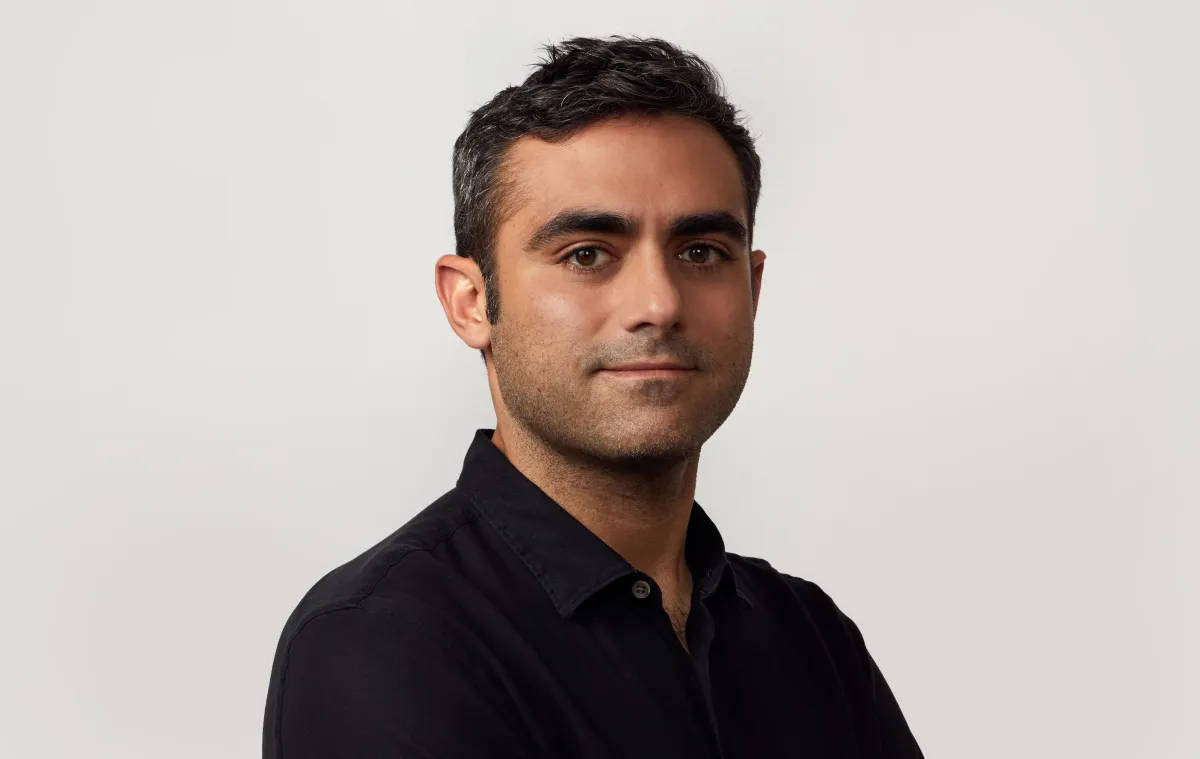
Michael Polansky presents a paradox. For someone operating at the nexus of high-stakes venture capital, groundbreaking biotech, and global celebrity, he is remarkably unassuming. Seated casually at a sun-dappled patio in Mill Valley, an affluent enclave north of San Francisco, Polansky – bespectacled, with a friendly demeanor and dark hair streaked with gray – exudes the quiet intensity of a dedicated academic. Yet, this is the man at the helm of Outer Biosciences, a buzzy AI and biology startup, and the creative, business, and romantic partner to Stefani Germanotta, known globally as Lady Gaga.
It’s a fascinating double life, seamlessly blending the worlds of cutting-edge scientific discovery with the demands of superstar celebrity. While one facet of his existence often places him in the glare of the public eye, the other has seen him quietly orchestrating a scientific endeavor that has spent years perfecting how to keep living human tissue viable outside the body for over a month – a feat that remained largely under wraps until now.
From Harvard to Silicon Valley: Forging a Path in Tech and Philanthropy
Polansky’s trajectory wasn’t a direct line to biotech innovation. He grew up in Minnesota, a world away from the fast pace of Silicon Valley, before matriculating at Harvard, where he immersed himself in applied mathematics and computer science, graduating in 2006. His post-collegiate career began at Bridgewater Associates, the renowned hedge fund. He describes his three years there as “a very unique place” and “a really good experience,” yet it wasn’t a calling that ignited his daily excitement.
His pivot to the West Coast was serendipitous. A chance encounter at a 2007 wedding in Minnesota reconnected him with a former neighbor, who happened to be Sean Parker’s assistant. Learning that Parker, the legendary co-founder of Napster and early Facebook executive, was seeking someone to work alongside him, Polansky, already contemplating a move west, seized the opportunity. A dinner in New York sealed their connection; Polansky “hit it off immediately” with Parker, leading him to quit Bridgewater the very next day and relocate to San Francisco.
His initial foray into the Valley’s venture ecosystem was as a principal at Founders Fund, a firm then spearheaded by its four original partners: Peter Thiel, Sean Parker, Luke Nosek, and Ken Howery. Sharing an office with another rising principal, Brian Singerman, Polansky recalls this period as “a really, really great experience.” When Parker decided to depart Founders Fund after gaining liquidity from his Facebook stock to establish his own family office, he brought Polansky with him. For years, Polansky meticulously ran Parker’s multifaceted interests, spanning business, investments, and philanthropy. This included playing a pivotal role in establishing the Parker Institute for Cancer Immunotherapy, where he continues to serve as executive director, until the COVID-19 pandemic prompted a significant shift in his life’s direction.
A Partnership of Purpose: The Genesis of Outer Biosciences and Haus Labs
That profound shift had everything to do with Stefani Germanotta. Polansky met her in late 2019 at one of Sean Parker’s birthday celebrations. The introduction, charmingly, came at the persistent urging of Germanotta’s mother, Cynthia Germanotta, who, as president of the Born This Way Foundation, had come to know Polansky through his philanthropic work. “She had said, you know, for months and months, ‘I want to set you up with my daughter,'” Polansky recounts, initially believing it to be a jest. It wasn’t. The moment their own mothers eventually met, he recalls with a laugh, “it all made perfect sense.” Their respective mothers are now close friends, underscoring the deep, intertwined nature of their lives.
Their relationship quickly evolved into a full partnership, both professionally and personally. This was vividly demonstrated during Lady Gaga’s most recent world tour, which commenced in July of last year and concluded in April. Polansky likens managing this massive undertaking, which involved an intricate operation across three 747s, to running “a 200-person startup that travels around the world every day.”
Beyond the global stage, their collaboration extends to Haus Labs, Germanotta’s innovative cosmetics brand. Unlike many celebrity endorsements, Germanotta famously built the business “on her kitchen floor,” as Polansky describes it, choosing to create an authentic brand rather than merely licensing her name. This El Segundo, California-based operation, with approximately 70 employees, is reportedly thriving, a testament to Germanotta’s entrepreneurial spirit, which Polansky enthusiastically praises. He beams as he speaks of her: “People really haven’t gotten to know a certain side of her publicly… She’s such a brilliant businessperson.” Germanotta’s involvement extends further, as she sits on the board of Outer Biosciences, fostering a collaborative synergy between the two companies. For instance, Outer Biosciences’ chief scientist, Kyung-Jin Jang, holds a position on Haus Labs’ scientific advisory board, and the companies have engaged in joint projects, illustrating a unique cross-pollination of science and beauty.
Outer Biosciences: Pioneering a New Frontier in Human Tissue Research
While Polansky is clearly a shrewd businessperson, he’s quick to note that he isn’t a scientist by training. His entry into the life sciences was “accidental,” he explains, spurred by over a decade immersed alongside Parker in the then “very fringe” field of cancer immunotherapy. This experience illuminated a fundamental frustration: the pace of innovation in biology and chemistry dramatically lagged behind software development. A primary reason for this disparity is the ethical impossibility of conducting direct, long-term experiments on living humans. The common scientific proxies – animal models, simplified cell cultures, or lab-grown organoids – often prove to be inadequate stand-ins for the complex behavior of a real human organ.
This critical bottleneck led Polansky to found Outer Biosciences in 2022, where he serves as CEO. The company adopted a fundamentally different approach. Instead of attempting to engineer a synthetic organ, Outer Biosciences focuses on sourcing human skin that would otherwise be discarded after surgery, predominantly plastic surgery procedures. This tissue is acquired through meticulously vetted non-profit and commercial biobanks and brokers, such as the National Disease Research Interchange and the Cooperative Human Tissue Network, both of which receive federal funding. Polansky emphasizes that these operations strictly adhere to “institutional review board oversight and documented donor consent.” He clarifies that Outer Biosciences pays fees to these suppliers on a cost-recovery basis, rather than outright purchasing tissue, and spent roughly two years establishing this intricate pipeline and the necessary protocols to receive living tissue “within hours” of surgery.
Donor privacy is paramount; every sample arrives at Outer Biosciences already de-identified upstream by the supplying organizations, stripped of names, contact information, and other direct identifiers. The true innovation lies in Outer Biosciences’ proprietary support system, which meticulously feeds the tissue nutrients and efficiently removes metabolic waste, dramatically extending its viable life well beyond the industry norm. This norm, Polansky notes, is typically a matter of days – just enough time to test for acute toxicity, but insufficient for observing slower, complex biological processes like collagen remodeling, pigmentation changes, or barrier repair, which unfold over weeks. Dermatologists, for example, routinely advise patients to expect changes over a period of weeks for precisely this reason.
Outer Biosciences’ system, in stark contrast, can sustain tissue for up to a month. Polansky states that the tissue retains its “day-zero architecture and preserves its day-zero epidermal, stromal and immune-associated molecular programs.” In simpler terms, tissue nurtured by the company for 30 days remarkably resembles its initial state, though not entirely indistinguishable. This extended viability opens up unprecedented opportunities. A clear example of what this additional time allows is the study of sunburn. Polansky highlights that Outer Biosciences’ researchers can now induce UVB damage in living human tissue in a controlled environment, observing its long-term effects and recovery in a way previously impossible.
The implications of this breakthrough are profound. By providing a platform for ethical, long-term experimentation on real human tissue, Outer Biosciences is poised to accelerate drug discovery, enhance our understanding of disease mechanisms, and potentially revolutionize fields from dermatology to regenerative medicine. It’s a testament to Polansky’s vision, bridging the gap between celebrity and scientific advancement with a quiet determination.
Bottom Line
Michael Polansky epitomizes a new breed of innovator: one who not only navigates the complex intersection of technology, finance, and philanthropy but also thrives in the unique ecosystem of global celebrity. With Outer Biosciences, he is not just building a company; he is laying the groundwork for a paradigm shift in biological research, promising to unlock deeper insights into human health by giving scientists an unprecedented window into living tissue. His journey underscores that true impact often stems from an unconventional path, proving that even the most high-profile partnerships can be a springboard for profoundly quiet, yet world-changing, scientific endeavors.
Key Takeaways:
- Outer Biosciences pioneers a unique approach combining AI with living human skin biopsies to rapidly discover new active ingredients for dermatology, moving beyond traditional, slow methods.
- The company operates a self-enforcing, closed-loop system where AI predicts chemical efficacy, living tissue validates, and results refine the AI, generating new candidates every six weeks.
- Rather than building a consumer brand, Outer Biosciences plans to license its discovered ingredients to beauty and pharma companies, leveraging collaborative research and a focus on data defensibility.
In the bustling, often opaque world of biotech, Outer Biosciences has been operating in near-total silence for years, a stealthy endeavor led by co-founder and CEO Andrew Polansky, a venture capitalist with a track record at firms like Matrix Partners and Charles River Ventures, and founder of the investing firm Hawktail. Now, the curtain is finally lifting on a company poised to revolutionize the discovery of active ingredients for skin health, blending cutting-edge artificial intelligence with an unprecedented use of real, living human tissue.
Forget the traditional, arduous routes of drug discovery, which often involve years of in vitro testing with cell lines or even animal models. Outer Biosciences has charted a different course, one that places genuine human biology at the heart of its innovation. The company’s core technology involves acquiring human skin biopsies – samples no larger than a pinky fingernail – and, crucially, keeping them alive and functionally viable for weeks. This living tissue then becomes a dynamic testing ground, a “human-in-the-loop” system that observes real biological responses to potential new ingredients, offering insights far beyond what synthetic models or isolated cells can provide.
The AI-Powered Biological Feedback Loop
The magic truly happens when this living tissue is integrated into Outer Biosciences’ sophisticated AI model. This isn’t just about applying AI to existing data; it’s about creating a novel, self-improving feedback loop. The AI model predicts which untested chemicals are likely to yield beneficial effects on specific skin functions. These predictions are then put to the ultimate test: they are run through the living human tissue system. The outcomes, whether validating or refuting the AI’s hypothesis, are meticulously measured and fed back into the model. This continuous cycle of prediction, biological validation, and data-driven refinement means the AI is constantly learning, improving its accuracy with each iteration.
Polansky describes their approach not as “healing” the skin in their lab, but rather as meticulously observing biological processes. The team can inflict a controlled, minor injury on a skin biopsy – such as a small cut – and then track the stress, inflammatory, and recovery-related responses over subsequent weeks. This information-gathering exercise allows them to witness an injury unfold and then precisely monitor the biological cascades that follow, providing a rich dataset for their AI to analyze.
From Brute Force to Breakthrough Speed
This integrated approach marks a colossal leap from the company’s early days. Polansky recalls a “brute force” era, where the team painstakingly mined scientific literature and collaborated with the National Cancer Institute to identify natural compounds, particularly from extreme environments. That phase, spanning roughly 18 months, yielded only a handful of promising leads. The addition of AI has been transformative: Outer Biosciences is now generating a new candidate compound approximately every six weeks. Currently, six leads are active in their pipeline, with dozens more “hits” logged, signaling an unprecedented pace of discovery in a notoriously slow industry.
This speed is particularly astonishing when one considers the current landscape of skin-active ingredients. While the informal definition of “active ingredient” might be broad, formally, the numbers are strikingly small. The FDA regulates 13 categories of over-the-counter skin drugs, encompassing approximately 120 to 130 approved active ingredients. Even when adding cosmetic ingredients backed by rigorous research, Polansky estimates that number barely reaches 200. This constrained universe presents a massive opportunity for Outer Biosciences to introduce genuinely novel and effective compounds to the market.
A Clear Path to Commercialization
Outer Biosciences is focused on discovering cosmetic ingredients, which sidesteps the lengthy and costly FDA drug approval process. Instead, their path to market involves two key steps: securing a standardized industry name for the ingredient, followed by safety testing under guidelines set by the OECD (Organisation for Economic Co-operation and Development). This Paris-based international body ensures that properly conducted studies in one member country are accepted across all 40-plus participating nations, streamlining the regulatory pathway.
Rather than building its own consumer brand, Outer Biosciences’ strategy is to license or sell its finished ingredients to established beauty or pharmaceutical companies. These partners will then formulate the ingredients into actual products – be it a serum or a cream – and bring them to market under their own labels. Polansky confidently states that four of Outer Biosciences’ current six leads are already on track for commercialization. In the interim, the company generates revenue through collaborative research partnerships, including work with a pharmaceutical company investigating cancer drug-induced skin rashes, and consumer beauty brands validating Outer Biosciences’ data against their product development needs.
Breaking the Silence and Navigating the Competitive Waters
With approximately $23 million raised to date from early backers including Wing Ventures, Initialized, and Polansky’s own Hawktail, the company now employs 19 people, with its operational hub just outside Cambridge, Massachusetts. After years of deliberate discretion, Polansky explains his decision to finally speak publicly: the accumulating data has provided the team with undeniable confidence. “Trying to do this in private is hard,” he admits, adding, “We kind of want to start working in public now.”
Outer Biosciences is not alone in the burgeoning field of AI-driven biological discovery. Competitors like Philadelphia-based Vivodyne, which builds lab-grown human organ tissue paired with predictive AI for preclinical drug testing, recently announced an impressive $80 million in funding. Other rivals are exploring various “organ-on-a-chip” and microphysiological systems. However, Polansky seems largely unfazed. Outer Biosciences distinguishes itself through its use of *real* human tissue, not synthetic constructs, a crucial differentiator that provides unparalleled biological fidelity.
Moreover, the data Outer Biosciences generates is entirely proprietary and doesn’t exist anywhere else. Unlike AI companies that train on vast, publicly available datasets from the “internet,” there is no equivalent “biology internet” to scrape. This unique data makes Outer Biosciences’ position highly defensible, albeit slower to build than traditional software-based AI startups. Their compute demands are also modest compared to training large language models, allowing all their AI work to run on-premise, a deliberate choice to ensure data security and prevent cloud-based vulnerabilities. This focus on “its own knitting” speaks to a strategic depth that prioritizes fundamental biological discovery.
The Future of Skin Biology Discovery
Whether Outer Biosciences ultimately evolves into a standalone commercial-ingredients business, primarily licenses its discoveries, or reorganizes around a single breakout compound remains an open question for Polansky. The team’s immediate, more critical goal is to cultivate a predictive model accurate enough to identify promising directions in skin biology without needing to physically run every single experiment. This would unlock a rate of discovery in dermatology that is currently unimaginable.
For now, the intricate work of transforming a promising compound into a tangible product – encompassing formulation, manufacturing scale-up, supply chain logistics, and extensive safety testing – is still handled by the same scientists who make the initial discoveries. Building out a dedicated product-development team, staffed with individuals experienced in bringing such innovations to market, is the next crucial step on their roadmap. As Polansky looks ahead, there’s a palpable sense of excitement. “I think it’s going to be fun,” he concludes, “to have people know that this is what we’ve been doing.”
Bottom Line:Outer Biosciences is leveraging a powerful fusion of real human tissue and advanced AI to create a paradigm shift in dermatological ingredient discovery. By bypassing traditional bottlenecks and focusing on a closed-loop, data-driven system, the company is poised to unlock a new era of effective skincare, offering beauty and pharma industries a pipeline of truly novel compounds and potentially redefining how we approach skin health innovation.
When you purchase through links in our articles, we may earn a small commission. This doesn’t affect our editorial independence.
Source:{feed_title}