
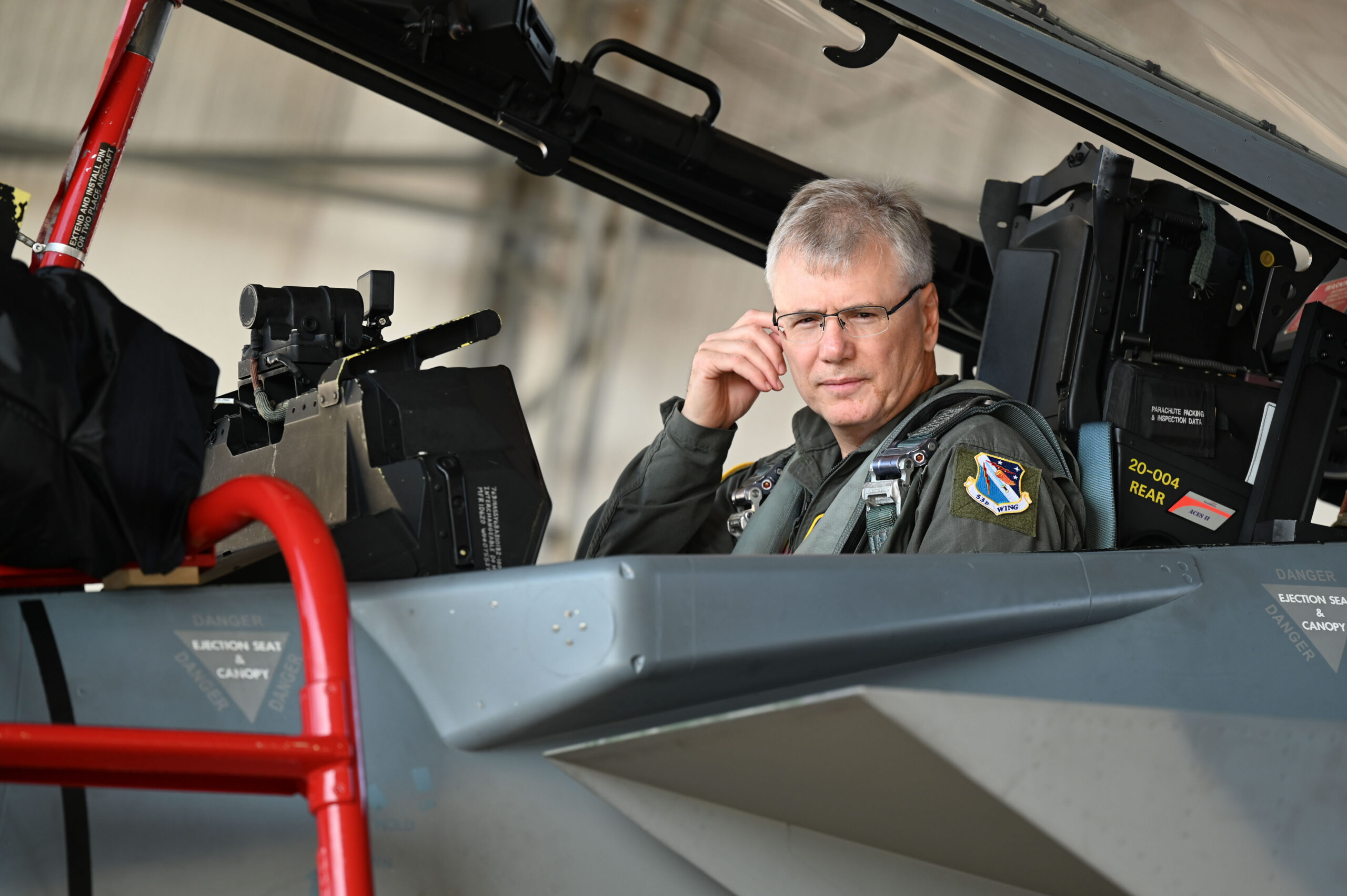
Secretary of the Air Force Troy Meink, now just over a year into his tenure as the 27th individual to hold the post, asserts that significant progress is being made across his primary strategic objectives. These include bolstering the readiness of the Air Force, modernizing its aging aircraft fleet, and expanding the capabilities and size of the relatively new Space Force.
In a June 26 interview with Air & Space Forces Magazine, Secretary Meink conceded the presence of ongoing challenges. However, he pointed to the proposed Fiscal Year 2027 (FY27) budget, currently under review by Congress, as evidence of the department’s advancements. While acknowledging that Congress may not approve the entirety of the Department of the Air Force’s (DAF) $338 billion request – which constitutes its portion of the broader $1.5 trillion defense proposal for FY27 – Meink conveyed optimism that both the Air Force and Space Force are now on a more favorable trajectory than in previous years.
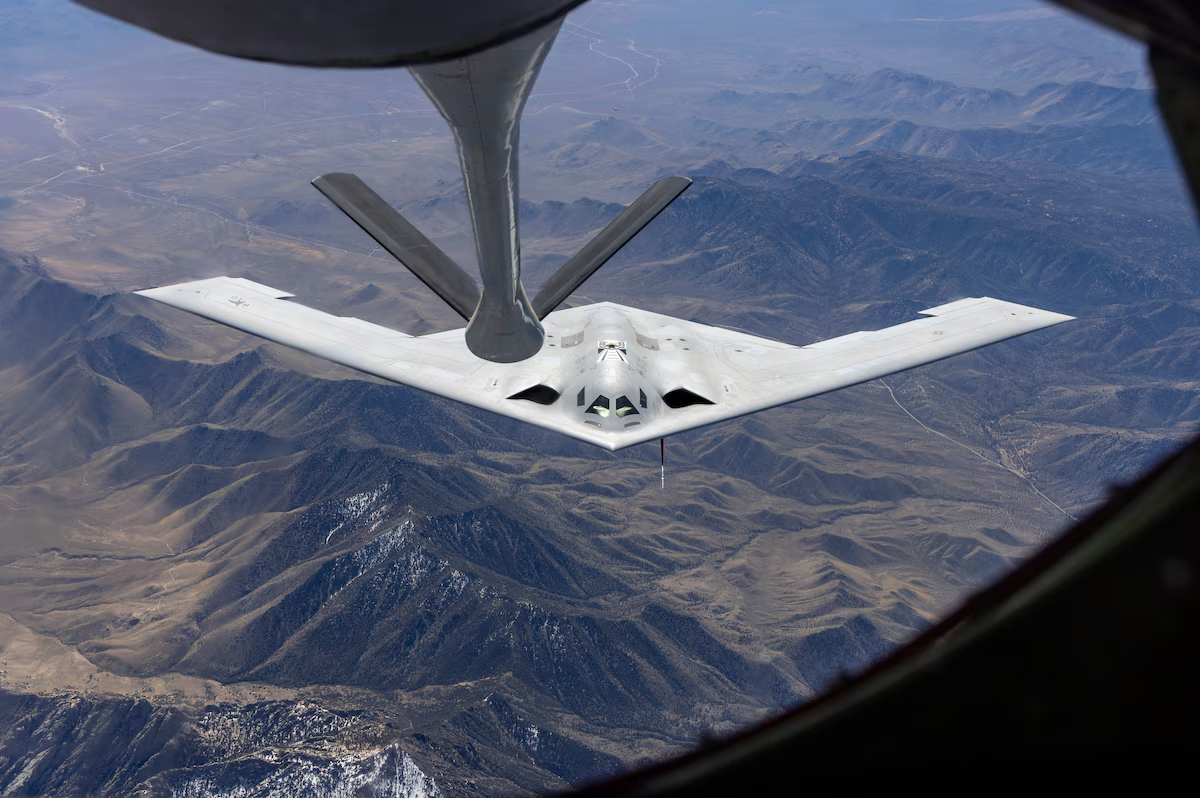
As tangible proof of this progress, he highlighted initiatives such as the planned doubling of the Space Force’s personnel over the next five years. Additionally, he cited the accelerated development timelines for key platforms, including the F-47 fighter, the B-21 bomber, and the burgeoning fleet of semi-autonomous Collaborative Combat Aircraft (CCA).
“We never get everything we want,” Meink remarked, reflecting on the realities of budget negotiations. “I’m hopeful that we’re going to get a lot more than we have maybe in the past, based on what we’re seeing.”
Both the Air Force and Space Force are actively implementing a comprehensive set of acquisition reforms, initially mandated by Defense Secretary Pete Hegseth in November of the previous year. A cornerstone of these reforms involves the empowerment of newly established “Portfolio Acquisition Executives” (PAEs). These executives are granted unprecedented decision-making authority spanning entire mission areas. To date, the Department of the Air Force has activated seven of the envisioned 27 PAE positions.
Secretary Meink elaborated on the scope of this delegated power: “We’ve delegated probably 90-92 percent of contracting authorities down into what we call these portfolio acquisition executives, so that they can make the decisions there, not only for contracting decisions, but also hiring decisions.”
Traditionally, many such decisions underwent extensive review and approval processes through multiple layers of command, sometimes reaching as high as the Secretary’s office. The current strategy aims to streamline this by eliminating redundant layers, simplifying requirements, and mandating modular, open-system architectures. This approach is designed to prevent long-term dependency on single vendors, a problem often referred to as ‘vendor lock-in.’ Furthermore, the strategy emphasizes the negotiation of multi-year acquisition agreements – all key areas of focus for Secretary Meink.
Despite these acquisition transformations and strategic shifts being relatively recent, in place for only about a year, Meink stated, “we’re already seeing the benefits and we’re seeing really good performance across the board.”
This progress, according to Meink, has been achieved despite the Department of the Air Force operating with its lowest budget, relative to the nation’s Gross Domestic Product (GDP), in the past two decades. He underscored that such chronic underfunding inevitably led to detrimental consequences.
“Corners have been cut,” he asserted, detailing the impact. “One of those corners was readiness—specifically, in areas like spare parts and essential equipment. Consequently, readiness levels plummeted.”
Illustrating this decline, then-Air Force Chief of Staff Gen. David Allvin reported in March 2025 at AFA’s Air Warfare Symposium that aircraft availability rates fell from 73 percent in 1994 to a mere 54 percent by 2024.
Meink confirmed that efforts are underway to rectify the reductions made to the maintenance force. He emphasized the critical need to address this staffing challenge proactively, particularly as new aircraft, such as the B-21 Raider, T-7A Red Hawk, and the FQ-42 and FQ-44 variants of Collaborative Combat Aircraft, are poised to join the fleet.
The DAF’s FY27 budget request aims to significantly enhance the department’s “foundational readiness investments.” Meink stated this includes a 34 percent increase in funding allocated for flying hours, weapon system sustainment, and related categories – a figure he has consistently highlighted in congressional hearings throughout the spring and summer.
Further bolstering readiness, an additional $67 billion has been included in the defense supplemental request presented to Congress last month, Meink noted. He conveyed optimism that legislators would approve both the core budget and these supplementary measures designed to strengthen readiness. Nevertheless, he cautioned that reversing years of under-investment would constitute “a long-term effort” for the department.
Modernizing
Both the Air Force and Space Force are confronting a critical modernization imperative. Current systems are not only aging but also demonstrate escalating vulnerabilities in contemporary threat environments. While the Air Force requires new hardware, the Space Force equally needs to evolve, transitioning towards a more distributed and proliferated space architecture. This strategic shift aims to enhance resilience and ensure space capabilities are less susceptible to adversarial attack or disruption.
In response, the Pentagon is actively advocating for expanded authority to enter into multi-year procurement (MYP) contracts. This would apply to a broad spectrum of assets, including new satellites, missiles, aircraft, and critical spare parts.
Secretary Meink explained that increased foresight for contractors regarding government demand would significantly improve their long-term planning. This predictability, he argued, would incentivize greater investment in expanding production capacity and adopting advanced manufacturing technologies.
“When the future is uncertain, it’s hard for industry to make those investments to either modernize their facilities or do what they need to do to get to the production capacity we need,” Meink stated, emphasizing the crucial role of MYP. “So those long-term deals are a huge part of that.”
He further elaborated that multi-year weapons orders are expected to facilitate fleet expansion, simultaneously driving down unit prices and theoretically allowing the services to acquire a greater quantity of essential equipment.
As part of efforts to replenish depleted stockpiles, Meink revealed that the Air Force is targeting a dramatic reduction in missile prices, aiming for a decrease of “a factor of 10,” which equates to up to 90 percent.
“Stable production is really important,” Meink stressed, criticizing the current paradigm. “Buying things one year at a time is really not a good way to buy stuff. Nobody does that in the commercial world.”
Acknowledging that the Defense Department has previously attempted, and often failed, to fully implement comparable reforms, Meink contended that the current initiative represents a distinct departure from past efforts.
He explained the differentiating factor: “We’re really taking those things that we know work, and we’re just applying them across the entire department, which has really never been done in any acquisition world. We’ve just decided we’re going to take what we know works and apply it everywhere, and so we are already seeing that decision process is going much more quickly.”
More of Everything
While acknowledging that expanding the fleets of both the Air Force and Space Force will necessitate both time and substantial resources, Meink expressed confidence that the DAF’s sharpened focus on production efficiencies would begin to show tangible results within the next few years.
Specifically for the Air Force, Meink projected that by approximately 2029, the service anticipates reaching the nadir of its declining fleet size, after which it expects a gradual but steady return to growth.
Why This Matters
The strategic priorities outlined by Secretary Meink — enhancing readiness, modernizing fleets, and expanding the Space Force — carry profound implications for U.S. national security and global stability. In an increasingly complex geopolitical landscape characterized by rising great power competition, particularly from China and Russia, a highly capable and technologically advanced Air Force and Space Force are indispensable for maintaining deterrence and projecting influence.
The drive to improve Air Force readiness addresses a critical concern: the ability of forces to respond effectively to crises. Years of underfunding have led to a significant decline in aircraft availability and maintenance capabilities, directly impacting operational readiness. Rectifying this through increased investment in flying hours, sustainment, and personnel is essential to ensure that U.S. airpower remains a credible force.
Modernization efforts, including the acceleration of next-generation platforms like the B-21 bomber, F-47 fighter, and Collaborative Combat Aircraft, are vital for maintaining America’s technological edge. Adversaries are rapidly developing advanced capabilities, making the replacement of aging and increasingly vulnerable U.S. systems a strategic imperative. The Space Force’s shift towards a more distributed and resilient architecture reflects the growing recognition of space as a contested domain, crucial for military operations, intelligence, navigation, and critical civilian infrastructure globally. Any disruption to space assets could have cascading effects on both national defense and daily life.
Furthermore, the acquisition reforms spearheaded by Secretary Hegseth and implemented by the DAF are aimed at improving efficiency and delivering better value for taxpayer money. Streamlining decision-making, promoting open systems, and advocating for multi-year procurement contracts are intended to reduce costs, accelerate delivery, and encourage industrial investment. Success in these reforms could lead to more effective defense spending, providing greater capability for the investment. Conversely, failure could prolong the challenges of outdated equipment and insufficient readiness, potentially eroding U.S. military superiority and inviting global instability.
WASHINGTON D.C. –The United States Department of the Air Force (DAF) is embarking on a significant modernization drive, aiming to increase production rates for key aircraft, expand its fleet of autonomous systems, and enhance space-based surveillance capabilities. These efforts are underpinned by substantial budget requests, signaling a strategic shift to counter fleet declines and adapt to evolving global threats.

According to Kristyn Jones, Assistant Secretary of the Air Force for Financial Management and Comptroller, the Air Force, in collaboration with Boeing, has already begun to accelerate production of the KC-46 Pegasus refueling tanker. Similar efforts are underway for the B-21 Raider stealth bomber and the F-15EX Eagle II fighter jet. Northrop Grumman, the prime contractor for the B-21, has received billions in additional funding from the Pentagon to boost production, with consideration given to establishing a second production line in Palmdale, California. Boeing is also expanding its F-15EX production facility in St. Louis, responding to the Air Force’s expressed desire to more than double the planned F-15EX fleet to 267 aircraft.
Lieutenant General David Meink, the Air Force’s Deputy Chief of Staff for Plans and Programs, highlighted the F-15 fleet as an example of where new acquisitions might soon balance out retirements. Older F-15C and D models are being sent to the “Boneyard” (a common term for aircraft storage and retirement facilities), while new F-15EX Eagle IIs are being introduced.
“It’s not going to be a massive growth in the number of F-15s we get out there, but we’re trying to get to production rates—again, with congressional support—that essentially we are matching or maybe exceeding the retirement rate,” Meink stated. “We’re not going to shrink. We’re not going to grow a lot, but we’re not going to shrink.”
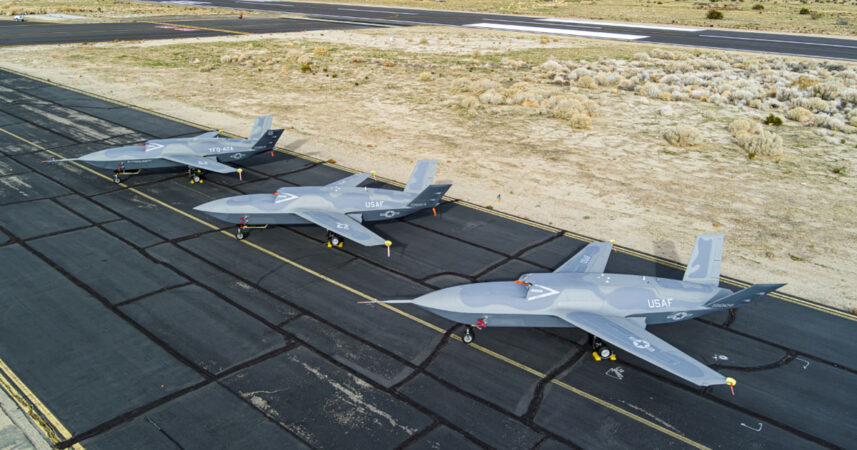
Beyond stabilizing the manned fighter fleet, Meink emphasized the role of Collaborative Combat Aircraft (CCAs) as a “force multiplier” due to their enhanced firepower and combat capabilities. In June, the Air Force awarded production contracts to General Atomics Aeronautical Systems and Anduril Industries for their CCA designs. Additionally, contracts were issued to three companies to develop mission autonomy software for these uncrewed platforms.
The Air Force’s objective is for CCAs to cost approximately one-third that of an F-35 fighter, aiming for a price point around $30 million per aircraft.
“When you tie CCAs with manned aircraft, the combat effectiveness goes up way more than just the cost would indicate,” Meink explained. “The combat power they bring forward, you can almost think about it as a fighter. That’s essentially what it is, it’s an autonomous fighter that still needs a manned aircraft to guide it and tell it what to do.”
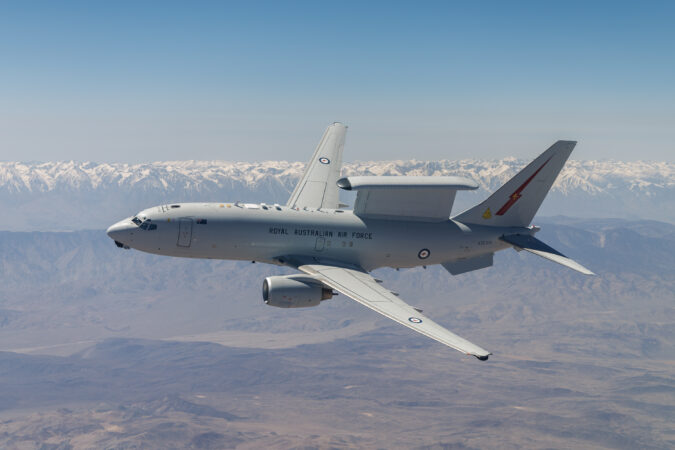
Another area of growing importance is Air-Moving Target Indication (AMTI), which involves tracking targets in the air. Meink pointed to “Operation Epic Fury” as demonstrating the critical need for a comprehensive, survivable battle management solution. The DAF’s strategy for achieving this includes both airborne and space-based capabilities.
The Air Force plans to field at least seven E-7 Wedgetail aircraft for airborne AMTI, though Meink did not specify the ultimate number the service might procure. Concurrently, the Space Force is investing in the necessary space-based sensing technology for AMTI from orbit. Meink also highlighted the potential to leverage allies who already operate E-7s, citing Australia’s participation in Operation Epic Fury as an example. The United Kingdom also flies the E-7.
“There are already international partners flying the E-7,” Meink said. “When we look at the number of platforms we need for any kind of conflict that we envision, … our international partners are … part of that. We expect E-7s to continue to be procured by some of our international partners.”
However, the U.S.’s evolving plans for the E-7 have influenced some allied decisions. On July 7, NATO announced its selection of Saab’s GlobalEye surveillance plane over Boeing’s Wedgetail to replace its aging AWACS fleet.
The path for space-based AMTI appears more defined. The Space Force’s fiscal 2027 budget request includes $7 billion for procuring satellites capable of tracking moving targets. SpaceX was awarded a $4 billion contract in late May to establish a constellation of AMTI satellites by 2028. Meink underscored the urgency of transmitting satellite data to air operators to provide a more complete battlespace picture. An additional $4 billion for space-based AMTI and the satellite-based Space Data Network (SDN) was included in the defense supplemental budget request submitted in June.
“You have to have that air picture, but you have to be able to get that air picture into every single cockpit,” Meink said. “And there’s a big push to deliver that on the space side of the house.”
The planned AMTI constellation aligns with the Space Force’s adoption of a more proliferated satellite architecture. The SDN, for which SpaceX is a primary contractor, envisions hundreds of satellites in low Earth orbit. The Space Force is also developing a missile warning and tracking fleet across both low Earth orbit (LEO) and medium Earth orbit (MEO) as part of the Pentagon’s “Golden Dome” missile defense program.
Meink indicated broad support from both Pentagon and Congressional leaders for expanding the Space Force’s satellite fleet and its personnel. The service’s $71 billion fiscal 2027 budget request represents a 124 percent increase over the previous year. Its research and development accounts are projected to grow to $40 billion, and its procurement funding to $19 billion—more than five times the amount requested in fiscal 2026.
“There’s a realization all the way up that some of the space systems that we’re talking about delivering or already delivering and delivering into the future are really some of the most critical [defense capabilities] across the board—and you see that in the budget submission,” he said. “That takes a Department of War-level decision to increase the budgets that much.”
Despite this support, many of the Air Force’s and Space Force’s top priorities depend on the passage of three distinct defense funding bills: a roughly $1 trillion defense appropriation bill, a $350 billion reconciliation bill, and a $67 billion supplemental bill largely intended to replenish arms and cover expenses related to the conflict in Iran.
The Air Force’s fiscal 2027 reconciliation request includes approximately $16 billion for critical programs, such as $2.3 billion for 14 F-35s and nearly $3 billion for missile and munition production. The Space Force’s $12 billion reconciliation request is predominantly allocated to Space-Based AMTI and the SDN.
Meink acknowledged this financial dependency, stating that navigating the appropriations process, like other challenges faced by the DAF, will necessitate flexibility and collaboration. “Flexibility is the key to airpower, right?” Meink quoted an Air Force mantra. “So, we’re going to have to maintain flexibility.”
Why This Matters
The modernization and expansion initiatives undertaken by the U.S. Department of the Air Force and Space Force represent a critical response to a rapidly evolving global security landscape. The focus on increasing production rates for strategic assets like the B-21 bomber, KC-46 tanker, and F-15EX fighter is vital for preventing further shrinkage of the manned fleet and maintaining a quantitative edge against potential adversaries. This is not merely about replacing older aircraft but ensuring the U.S. military retains a robust and technologically advanced conventional deterrent.
The significant investment in Collaborative Combat Aircraft (CCAs) signals a paradigm shift in air warfare. By integrating affordable, autonomous “loyal wingmen” with manned aircraft, the DAF aims to dramatically enhance combat effectiveness and survivability, extending the reach and reducing the risk to human pilots. This strategy could redefine how air combat is conducted, offering a more distributed and resilient force structure in contested environments.
Furthermore, the aggressive pursuit of Air-Moving Target Indication (AMTI) capabilities, both airborne (E-7 Wedgetail) and particularly space-based, addresses a critical need for comprehensive battlespace awareness. In an era of sophisticated missile threats and agile adversary forces, the ability to rapidly detect, track, and share information about moving targets across all domains is paramount for effective defense and offensive operations. The Space Force’s expanded budget and commitment to a proliferated satellite architecture for AMTI and missile defense reflect a recognition that space is increasingly a contested domain, and dominance there is essential for overall military advantage.
The substantial budget requests and the reliance on multiple funding bills highlight the immense financial commitment required for these strategic shifts. The outcome of these appropriation processes will directly determine the pace and scale of these modernization efforts. Delays or reductions could impact the U.S.’s ability to maintain its technological lead and respond to emerging threats. Ultimately, these initiatives are crucial for the United States to project power, deter aggression, and protect its interests and those of its allies in an increasingly complex and competitive international environment.