
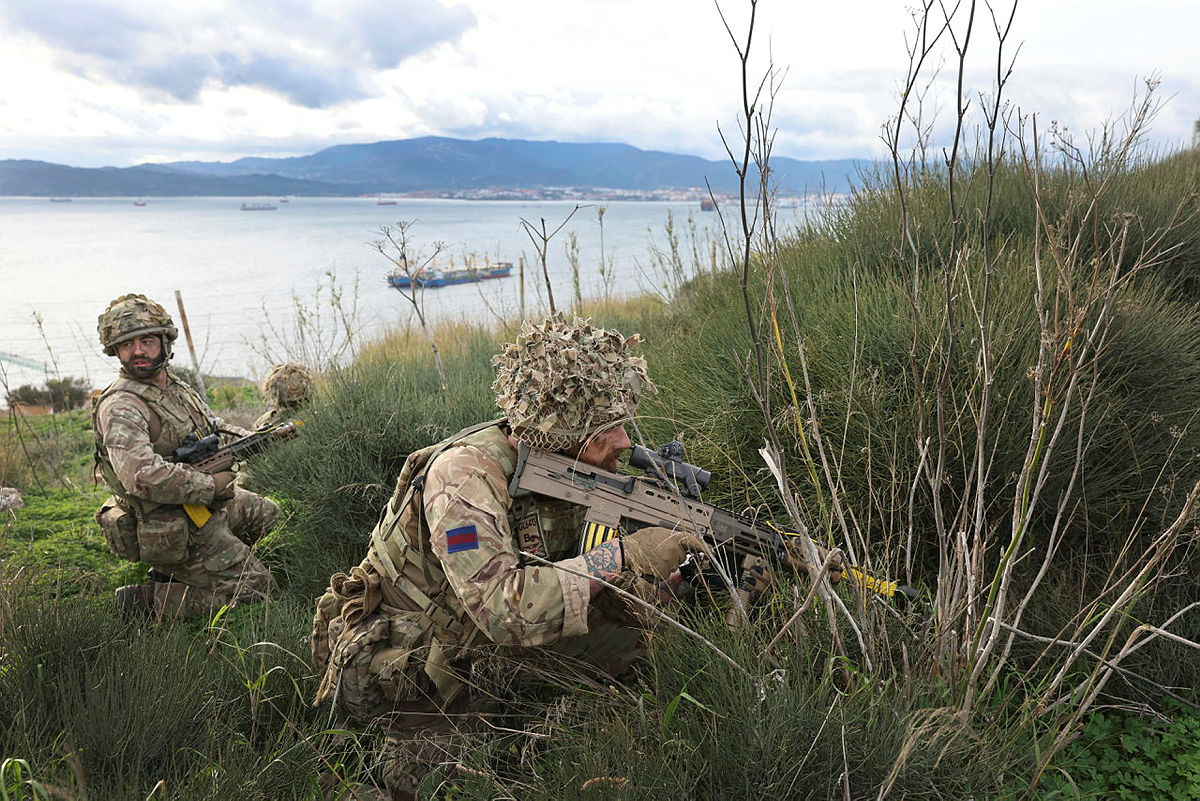
The National Security Funding Strategy should not disregard one of the most cost-effective alternatives accessible – it is time to significantly augment the UK’s auxiliary troops.
Global instability and unpredictability are on the rise. The most substantial confrontation in Europe following the Second World War, the conflict in Ukraine, has lately commenced its fifth year. Nations such as the UAE, once perceived as secure refuges, have faced aggression, and the UK outpost in Cyprus was assaulted for the initial occasion in four decades. Such instances illustrate that the benefits of peace, upon which increased expenditure on national public provisions has long depended, will be subject to mounting pressure. Therefore, when considering how to enhance military prowess, it is crucial that we achieve optimal return for each unit of currency invested.
Although large-scale hardware initiatives often capture public attention regarding military expenditure, we are overlooking a chance to substantially increase capability for a minimal expense. Effective dissuasion necessitates skilled staff who can conduct and maintain missions. Opponents must comprehend that we possess the capacity to rapidly expand our troop numbers should the necessity arise. The optimal method for achieving this, considering both expense and the availability of expert proficiencies, is to enhance auxiliary capability.
In the previous October, the bipartisan oversight body for public funds concluded that a significant problem with the UK’s F-35 combat aircraft initiative was “an acute scarcity of various categories of staff, comprising engineering experts, cybersecurity professionals, aviators, and certified flight trainers, which will not be addressed for numerous years”. High-speed aircraft have generally not been considered appropriate for auxiliary personnel, primarily due to the expense and intricacy of instruction. Nevertheless, we must explore novel approaches for integrating them into top-tier expert positions to address deficiencies, mirroring practices of our NATO partners. The United States employs personnel from its Air National Guard to operate high-speed aircraft. Furthermore, merely last year, a pact was concluded linking the Netherlands carrier KLM and the Netherlands Department of Defense to permit its civilian aviators to operate the F-35 in an auxiliary capacity.
Such a partnership, where greatly desired civilian expertise is utilized to enhance national defence, warrants examination with great scrutiny. This also holds for fields such as cybersecurity, mechanical design, or unmanned aerial vehicle pilots. In these areas, a permanent armed forces position will find it challenging to rival the civilian industry concerning remuneration, yet individuals still wish to contribute to strengthening our national defence. This is not at all concerning the lowering of benchmarks, but rather guaranteeing access to every accessible proficiency and aptitude to offer genuine breadth and resilience to our military.
Nonetheless, this objective appears distant from attainment. Notwithstanding a prominent pledge in the comprehensive defence assessment to augment the United Kingdom’s active auxiliary by one-fifth, the situation concerning auxiliary troops currently indicates minimal progress at best. In fact, the most recent data reveal a slight decrease in the quantity of auxiliary personnel, and a reduction in auxiliary service days. And this troubling information seems to elicit apathy from governmental officials. A latest assessment concluded that the administration “presently lacks financial resources or a comprehensive strategy” on how it will fulfill the pledges it has made related to auxiliaries, however limited they might be. And replying to a query I submitted in parliament, it was acknowledged that the Ministry of Defence fails to even administer or monitor overall expenditure on auxiliary forces.
This situation will prove unsurprising if one examines the finances. Ministry expenditure exceeded £60 billion in the previous year, but under 0.25 percent was directed towards compensating auxiliaries. Auxiliary remuneration totaled £135.3 million, with an additional £32.9 million earmarked for incentive payouts. Naturally, the Ministry of Defence budget is facing constraints, primarily due to escalating military expenditure inflation and the expenses of significant undertakings like the atomic initiative – which I firmly endorse. This has resulted in postponements for the anticipated National Security Funding Strategy. Nevertheless, considering such a minuscule fraction, I am convinced that government officials might adopt an alternative approach and significantly augment auxiliary ranks if they deemed it a paramount concern.
Hence, I am now advocating for a significant shift with a fresh pledge to expand twofold the size of our voluntary active auxiliary during the current legislative term. This is not an unrealistic notion. It would merely align us with the growth strategies of fellow NATO nations such as France, and still remain trailing many in the Nordic and Baltic regions where auxiliaries surpass permanent forces. As governmental officials are, one hopes, finalizing the long-postponed National Security Funding Strategy, they must ensure they do not disregard one of the most cost-effective alternatives available to them – a substantial growth of the UK’s auxiliary forces.
This piece reflects the viewpoint of the writer and does not strictly represent the stance of the United Kingdom Defence Journal. If you would like to contribute your own piece on this subject or any other, kindly consult ourcontribution directives