
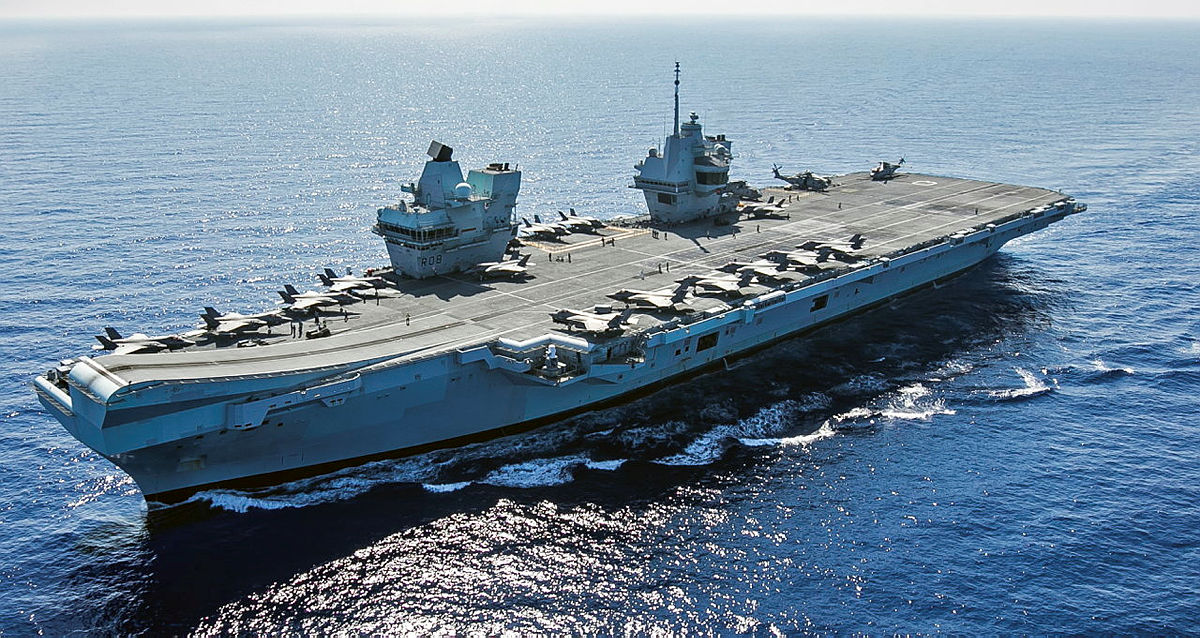
HMS Queen Elizabeth Deploys to Northern Europe for NATO Deterrence and Readiness Mission
HMS Queen Elizabeth, one of the Royal Navy’s formidable aircraft carriers, departed from Portsmouth Naval Base on Saturday, September 5th, at 6:20 PM, initiating a three-month operational deployment across the United Kingdom’s coastal waters and into northern European seas. With over 800 sailors embarked, the 65,000-tonne vessel’s mission is multifaceted, combining advanced warfighting training with its newly assumed role as NATO’s afloat command platform for the Allied Response Force.
This deployment is designed to significantly enhance NATO’s collective defence posture, readiness, and deterrence capabilities. Over the coming months, HMS Queen Elizabeth will operate alongside various allied naval forces, providing an essential environment for developing its crew’s proficiency in high-end naval operations. Crucially, it will also serve as a pivotal training ground for commanding a multinational force during a hypothetical crisis scenario, underscoring the UK’s commitment to multilateral defence cooperation.
The Royal Navy emphasized that the carrier’s intensive programme of training and operations is specifically tailored to strengthen collective security, improve interoperability with allied nations, and ensure a robust state of readiness across the alliance. This period marks a critical phase in the carrier’s operational cycle, aimed at solidifying its role as a key asset in international security efforts.
In July, HMS Queen Elizabeth assumed the significant responsibility of becoming NATO’s command ship for the Allied Response Force. This marks a notable first for a carrier of the Queen Elizabeth-class, highlighting the increasing integration of these advanced platforms into NATO’s strategic architecture. During the deployment, the ship will conduct comprehensive rehearsals on how an allied naval force would coordinate and operate seamlessly if NATO were required to respond to an emergent crisis, testing command and control structures in a dynamic maritime environment.
Captain Claire Thompson, Commanding Officer of HMS Queen Elizabeth, articulated the strategic importance of this deployment, stating, “We’ve returned from summer leave rested and ready for the next phase of our training. Sailing this autumn is a key milestone for both our NATO commitment, as the Afloat Command Platform and also on our journey back to the Royal Navy’s ‘very high readiness’ aircraft carrier, a duty we will resume from our sister ship HMS Prince of Wales in 2027.” Captain Thompson further highlighted the necessity of comprehensive training, noting, “Sailing with an embarked battle staff, integration and training is essential whilst relearning the skills required to conduct safe and effective aviation as we ensure that we are prepared to deliver operational activity at the heart of NATO should it be required.” This statement underscores the continuous evolution of naval warfare and the perpetual need for advanced training in complex, multinational aviation operations.
Beyond its NATO command duties, the carrier will undergo advanced training overseen by the Royal Navy’s Fleet Operational Standards and Training organization. This rigorous programme encompasses the full spectrum of modern naval warfare, from anti-submarine warfare to air defence and surface engagements. The training is a fundamental step in preparing HMS Queen Elizabeth for higher readiness states and its eventual return to the UK’s principal carrier role. This extensive preparation is slated to continue through 2027, including participation in major NATO exercises, before HMS Queen Elizabeth officially takes over from HMS Prince of Wales as the UK’s flagship and high-readiness strike carrier later that year, ensuring continuous operational availability of a carrier strike group.
The Royal Navy further highlighted the broader context of British contributions to NATO’s deterrence and defence across Europe. More than 1,000 UK personnel are currently serving in various NATO command posts, while Britain leads the Allied Rapid Reaction Corps (ARRC) from its headquarters in Gloucestershire. These contributions represent a significant commitment of personnel and expertise to the alliance’s operational capabilities and strategic planning.
Additional UK forces actively contribute to NATO’s forward presence, including an 800-strong battlegroup deployed in Estonia, reinforcing the alliance’s eastern flank. Furthermore, Royal Air Force Typhoon fighters are routinely deployed to defend NATO airspace over Romania, demonstrating a robust air policing capability. In the Baltic region, P-8 Poseidon maritime patrol aircraft and RC-135W Rivet Joint surveillance aircraft conduct critical intelligence, surveillance, and reconnaissance (ISR) operations, enhancing maritime domain awareness and providing vital information for allied forces.
The United Kingdom also assigns its nuclear deterrent to the defence of the Alliance, reaffirming its commitment to collective security at the highest strategic level. Under plans outlined in the Defence Investment Plan, the UK intends to integrate F-35A fighters into NATO’s Dual Capable Aircraft (DCA) nuclear mission, further strengthening NATO’s extended deterrence posture and ensuring the future flexibility of its air assets in potential strategic roles. This integration signifies a deeper level of interoperability and shared responsibility within the alliance regarding advanced defence capabilities.
In summation, HMS Queen Elizabeth’s autumn deployment is a critical exercise in balancing multiple strategic objectives. It combines the vital responsibilities of a NATO command platform with the rigorous process of returning the carrier and its crew to a state of very high readiness. Simultaneously, it maintains a tangible British carrier presence in strategically important northern European waters, directly contributing to NATO’s ongoing efforts to strengthen deterrence and enhance its capacity for rapid response to any emergent crisis, thereby reinforcing regional security and stability.
Why This Matters
The deployment of HMS Queen Elizabeth holds significant implications for international security, regional stability, and the future of naval power projection. Firstly, its role as NATO’s afloat command platform for the Allied Response Force underscores the critical importance of adaptable and mobile command and control capabilities in modern warfare. In an era of evolving geopolitical challenges, the ability to rapidly deploy and integrate multinational forces under a unified command structure is paramount for effective crisis response and deterrence. This deployment showcases NATO’s commitment to maintaining a robust and agile defensive posture, particularly in the strategically vital northern European maritime domain.
Secondly, this mission reinforces the United Kingdom’s standing as a leading naval power and a steadfast ally within NATO. The Queen Elizabeth-class carriers represent a substantial investment in the UK’s defence capabilities and its ability to project power globally. By taking on key NATO responsibilities, the UK demonstrates its willingness to bear a significant share of the alliance’s collective defence burden, strengthening transatlantic ties and reassuring allies. The continuous training and eventual rotation with HMS Prince of Wales ensure that the UK maintains a persistent and high-readiness carrier strike capability, a fundamental component of modern naval strategy.
Thirdly, the comprehensive training programme undertaken by the HMS Queen Elizabeth and its crew is vital for maintaining operational excellence and interoperability among allied navies. Modern naval warfare is increasingly complex, requiring highly trained personnel and seamless coordination between diverse platforms and nations. These exercises not only hone the skills of individual sailors but also test and refine the doctrines and procedures that enable effective multinational operations. This readiness is a key deterrent in itself, signalling to potential adversaries that NATO is prepared and capable of defending its interests and territory.
Finally, the broader context of UK contributions to NATO, including ground forces in Estonia, air assets in Romania, and advanced surveillance in the Baltic, coupled with the integration of F-35A fighters into NATO’s nuclear mission, illustrates a comprehensive approach to collective security. This holistic commitment, spanning conventional and strategic capabilities, strengthens NATO’s overall deterrent posture across all domains. In an environment marked by heightened geopolitical tensions, particularly in Europe, these sustained efforts are crucial for maintaining peace and stability, demonstrating that the alliance remains united, capable, and ready to respond to any threat.