
British Army to Host Largest-Ever Exercise Cambrian Patrol in 2026, Emphasizing Modern Warfare Adaptations
The British Army is set to conduct its most extensive Exercise Cambrian Patrol since its inception in 1959, with 140 patrols scheduled to participate in a rigorous two-day assessment across the challenging terrain of the Welsh mountains. The exercise, slated to run from October 2 to 13, 2026, has been significantly expanded to accommodate increased demand from both British military units and international partners, incorporating additional phases and patrols into its demanding programme.
This upcoming iteration will feature a diverse array of participants, including 75 patrols from the Regular Army, 15 teams from the Reserve forces, and 13 units representing University Officer Training Corps. Additionally, the exercise will host 35 international patrols and two combined teams comprising British Army personnel and international partners, underscoring its cooperative nature. More than 350 support personnel will facilitate the complex logistics and assessment of the event.
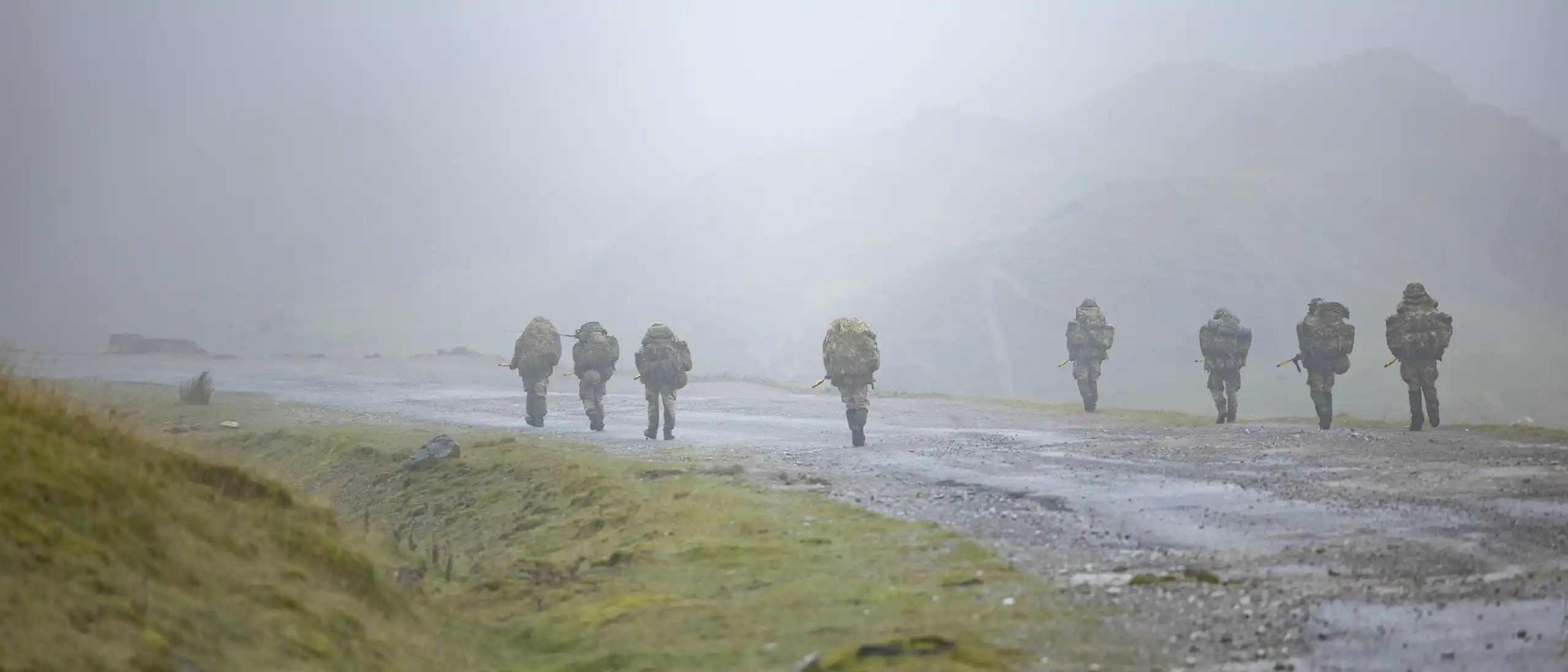
Each eight-person patrol will commence its journey near Builth Wells, following a meticulous equipment inspection at Beulah. Upon receiving their mission orders, teams will undertake battle preparation before embarking on a challenging trek of up to 40 miles. This journey, spanning approximately 48 hours, will traverse the rugged Welsh mountains, concluding at Sennybridge. Throughout the route, patrols will be rigorously assessed on their performance, competing for gold, silver, and bronze medals, or a completion coin, based on their execution of assigned tasks and adherence to military standards.
Major Darren Pridmore, Officer Commanding Exercise Cambrian Patrol 2026, articulated the core purpose of the exercise in a recent British Army news update. “This is all designed to test the skills that soldiers need to survive and fight on the modern battlefield,” Major Pridmore stated. He further emphasized its role as “a demanding assessment of leadership, resilience, tactical judgement and teamwork under pressure,” highlighting the multifaceted nature of the challenges presented to participants.
The exercise is overseen by the 160th (Welsh) Brigade on behalf of Commander Land Forces, with strategic training direction provided by the Director Land Warfare Centre. The curriculum for 2026 is comprehensive, encompassing a wide spectrum of military tasks critical for contemporary operations. These include casualty evacuation, intelligence gathering, artillery fire planning, vehicle recognition, simulated chemical, biological, radiological, and nuclear (CBRN) incidents, reconnaissance missions, navigating minefields, and executing attacks on enemy positions.
Significantly, organizers have intensified the focus on small-unit leadership. Junior officers and non-commissioned officers will be placed in scenarios demanding real-time tactical decision-making, requiring them to manage fatigue effectively while maintaining patrol momentum. The 2026 exercise has been meticulously adjusted to integrate lessons gleaned from contemporary conflicts, particularly acknowledging the increased prevalence of persistent surveillance and the widespread use of unmanned aircraft systems (UAS).
In a direct reflection of modern battlefield conditions, patrols will face tracking not only by ground forces but also by unmanned aerial systems. This necessitates that teams meticulously consider concealment techniques, optimal routes, and movement patterns while executing their assigned tasks. Mobility and survivability assessments will incorporate critical actions such as crossing the Forward Line of Own Troops (FLOT), conducting river crossings, and navigating simulated minefields during reconnaissance operations, mirroring realistic operational challenges.
Another crucial enhancement in the upcoming exercise is a greater emphasis on the collection and integration of battlefield information. Patrols will be tasked with utilizing various assets, including safe houses, static sensors, and unmanned aerial systems, to construct a comprehensive intelligence picture. This involves combining information gathered from multiple sources before accurately identifying and reporting targets, reflecting the demands of information-centric warfare.
Major Pridmore underscored the exercise’s evolution, stating, “We’ve preserved the spirit of Cambrian Patrol while adapting it to reflect the realities of contemporary conflict. From drones and persistent surveillance, to intelligence integration and CBRN readiness, this year’s exercise better reflects the challenges soldiers can expect to face on operations.” This forward-looking approach ensures the training remains relevant to the dynamic nature of global security threats. Chemical, biological, radiological, and nuclear readiness will receive heightened scrutiny, with teams assessed on their equipment preparedness and their ability to sustain operations within a simulated contaminated environment.
These modifications are part of a broader British Army initiative to align training with current battlefield conditions, where small units increasingly encounter continuous observation, pervasive drone usage, and an imperative to synthesize information from distributed sensors. Major Pridmore further elaborated on this adaptive strategy, noting, “The battlefield is evolving rapidly and success increasingly depends on close collaboration between operators, innovators and industry. Cambrian Patrol provides a unique opportunity to bring those communities together, helping us adapt faster, exploit emerging technologies and maintain operational advantage.”
International participation remains a cornerstone of the event, with 35 overseas patrols joining British teams. Cambrian Patrol has historically served as a vital platform for foreign armed forces to test their troops against British units in arduous terrain, simultaneously exposing participants to diverse tactical methods and operating procedures. Major Pridmore affirmed the importance of this international dimension: “The United Kingdom does not fight alone. Future operations will be conducted alongside allies and partners, making interoperability and mutual understanding essential.”
The exercise is set against the backdrop of the Brecon Beacons area of Wales, where the inherent challenges of weather, elevation, and vast distances significantly augment the tactical assessments faced by the teams. Patrols must relentlessly execute military tasks while enduring the physical strain of carrying their equipment across the demanding route and operating with limited rest. Upon completion of the field phase, teams undergo a detailed debriefing and reporting process, leading to a comprehensive assessment of their overall performance and the final determination of medal standards.
Why This Matters
Exercise Cambrian Patrol 2026 represents a critical benchmark in military training and preparedness for the British Army and its international partners. Its expansion and modernization are not merely about increasing participant numbers but reflect a profound strategic adaptation to the rapidly evolving landscape of global warfare. This exercise directly addresses the lessons learned from recent conflicts, where the pervasive use of drones, persistent surveillance, and complex information warfare have redefined combat. By integrating these elements into simulated scenarios, the British Army is ensuring its forces are trained for the realities, rather than the assumptions, of future battlefields.
For the British Army, this means fostering a generation of soldiers and leaders who are not only physically resilient but also technologically adept and strategically flexible. The emphasis on small-unit leadership, tactical decision-making under duress, and the seamless integration of intelligence from diverse sources are vital for operating effectively in disaggregated, high-intensity environments. For its allies and international partners, participation in Cambrian Patrol offers an invaluable opportunity to enhance interoperability, standardize procedures, and build mutual understanding. In an era where multinational coalitions are the norm for addressing complex security challenges, the ability to operate cohesively is paramount. This shared experience in a demanding environment strengthens alliances and ensures that partner nations can effectively collaborate when called upon.
Furthermore, the exercise serves as a crucible for testing and refining the adoption of new technologies. The inclusion of UAS tracking, advanced sensor integration, and focus on CBRN readiness pushes the boundaries of current military doctrine and equipment. This collaborative environment involving “operators, innovators, and industry” is crucial for accelerating technological exploitation and maintaining a strategic operational advantage against potential adversaries. Ultimately, Cambrian Patrol 2026 is more than just a demanding military exercise; it is a clear signal of commitment to military excellence, adaptability, and collective security in a complex and unpredictable world, directly contributing to deterrence and global stability by ensuring highly trained, interoperable forces are ready for any contingency.