
According to the Royal Navy, its forces have tracked Russian naval and commercial vessels passing near British waters. This effort forms part of a broader NATO monitoring initiative across the North Atlantic.
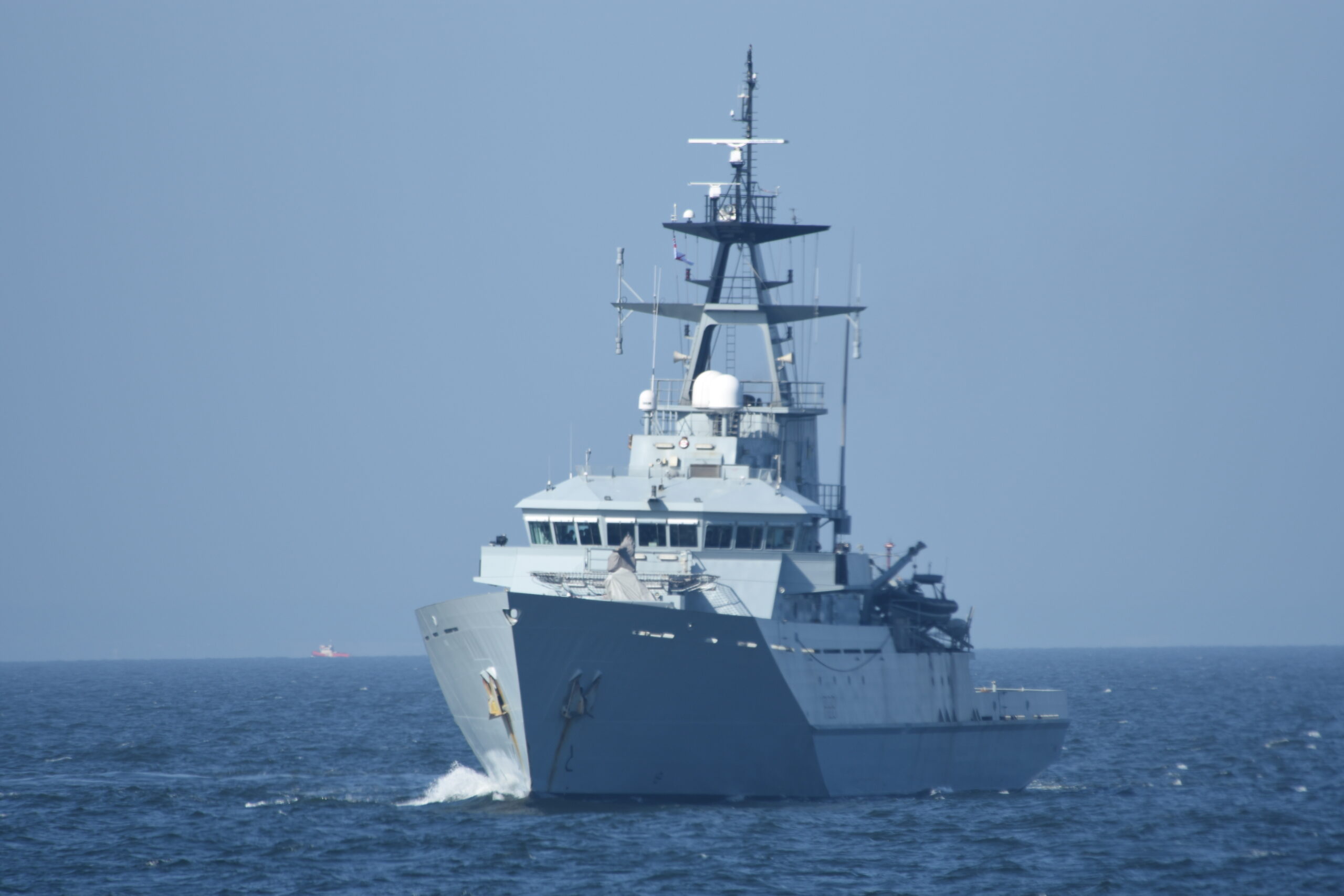
The coastal surveillance ship HMSTyne, operating from Portsmouth, along with a Wildcat helicopter from 815 Naval Air Squadron, were assigned to track the Russian Navy’s Ropucha-class amphibious assault vesselAleksandr Otrakovskyand the commercial shipSparta IV. Their mission involved observing the Russian vessels’ journey across the Atlantic, through the English Channel, and into the North Sea.
The Wildcat helicopter performed a reconnaissance mission over the Channel to offer supplementary oversight, while HMSTyneutilized its integrated sensors and radar technology to follow the ships’ progress, as reported by the Royal Navy.
HMSCutlassof the Royal Navy’s Gibraltar Squadron first encountered the vessels as they traversed the Strait of Gibraltar. Following this, a friendly naval vessel pursued them northward, before HMSTynesubsequently took over observation responsibilities in the Atlantic entry points to the Channel.
Soon after, a second operation commenced when HMSTyneand a Wildcat helicopter were re-tasked to observe an additional Russian Ropucha-class amphibious vessel,Aleksandr Shabalin, accompanied by the freight shipMV Sabetta, as they proceeded westward across the English Channel.
John Healey, the Secretary of Defence, remarked that this undertaking underscored the UK’s sustained attention to observing Russian activities. He stated:“I am gratified by the accomplishments of our outstanding Armed Forces in safeguarding Britain – both near British shores and during international assignments.”
He further stated:“Even as our UK forces operate in the Middle Eastern region to defend British citizens, concerns, and our allies, this operation conveys a message to Putin: we are observing you. Perilous unselective assaults from Iran will not divert our attention from discouraging Russian aggression and assisting Ukraine. We are prepared to observe, discourage, and safeguard our nation.”
Lieutenant Commander Matt Cavill, HMSTyne’s Second-in-command, affirmed that the task comprised a segment of the UK’s standard naval protection activities. He added:“Preserving the safety of our island country is crucial for guaranteeing our ability to establish a worldwide influence.”
He further remarked:“Such undertakings are essential to showcase determination, safeguard our seas, and acquire information to facilitate forthcoming endeavors.”
Commander James Woods, Unit Commander of 815 Naval Air Squadron, noted that the assignment emphasized the preparedness of maritime air squadrons assisting naval protection duties. He stated:“This deployment showcased the expertise, rapidity, and efficacy that 815 Naval Air Squadron contributes to undertakings domestically and internationally.”
He further explained that the Wildcat helicopter offers continuous observation and naval attack capacities. He concluded:“Wildcat continues to be a powerful sea attack system, ensuring a clear and ongoing visibility in the maritime domain.”