
Babcock Details Vision for Hybrid Navies: Autonomy Under Authority to Counter Evolving Threats
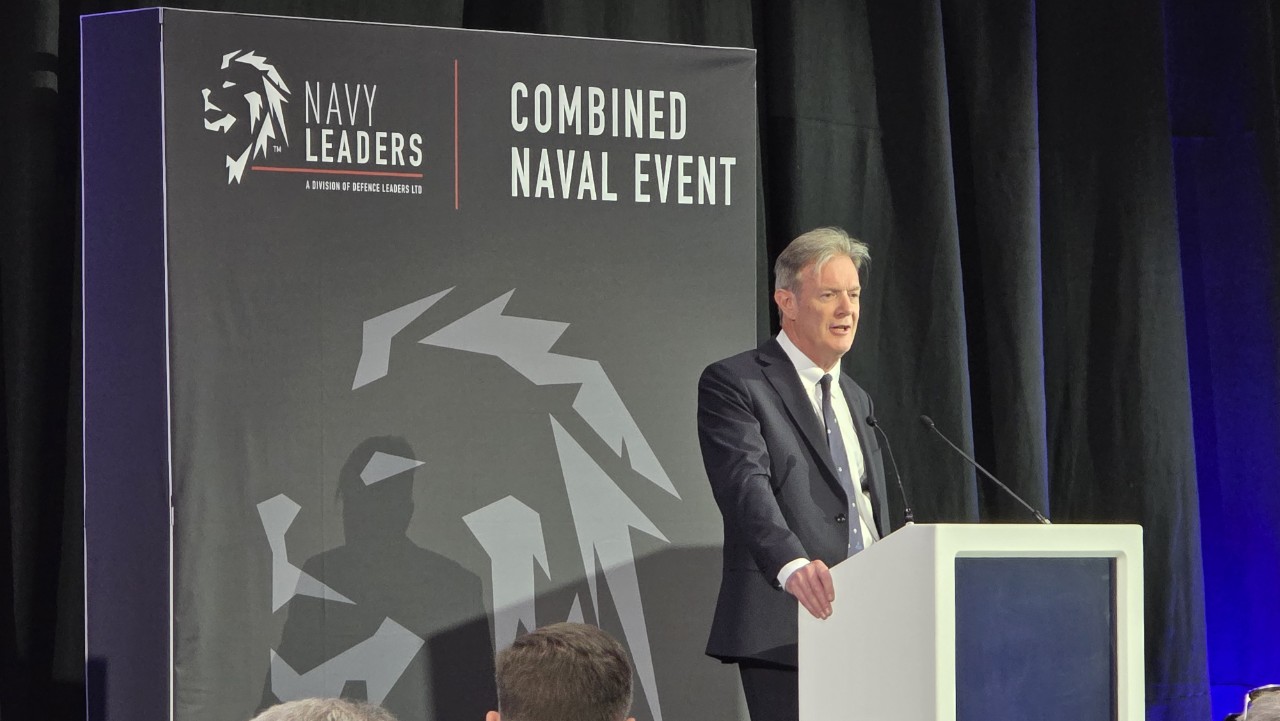
[Date], [City]– The future of naval warfare hinges on a critical distinction between different forms of autonomy, according to a recent speech outlining shipbuilding and defense giant Babcock International’s vision for a “hybrid fleet.” The company, through its representative, emphasized that true strategic advantage lies in “autonomy under authority,” a concept central to its proposed “Armor Force” solution.
The core principle, as articulated by the speaker, a senior figure within Babcock, draws a sharp line between “disconnected autonomy” and “commanded autonomy.” In commanded autonomy, humans retain unwavering responsibility for “intent, authorisation, escalation and accountability,” while machines contribute crucial attributes such as “persistence, speed, distribution, and decision support.” The speaker stressed that “autonomy without command is vulnerability. Autonomy under authority is advantage,” positioning this controlled approach as essential for modern defense strategies.
The urgency for this paradigm shift, Babcock argued, is undeniable. Modern conflict zones are providing “irrefutable evidence” that low-cost, distributed systems can effectively “probe, persist, and saturate,” exposing vulnerabilities in traditional force structures. These threats often operate at a pace that far outstrips conventional procurement cycles, making it impossible for allied navies to simply “grow a bigger fleet quickly enough.” The speaker, drawing on personal experience, highlighted the years-long process of building traditional naval vessels, a timeline incompatible with the rapid evolution of contemporary threats. “There is quite simply more need at that pace than the traditional programmes can fulfil,” he noted.
Babcock’s proposed hybrid fleet is not intended as a replacement for existing naval programs but rather as a vital complement. “It’s important to remember this is an and, not an or. These are in addition to our existing programmes,” the representative clarified. The strategic rationale behind this approach is clear: to achieve “advantaged outcomes with scale, persistence, and data, not platforms alone.”
- Scale:Distribution allows for “affordable mass,” leading to more sensors, enhanced presence, increased decision points, and a greater number of dilemmas for potential adversaries.
- Persistence:Uncrewed systems possess the ability to maintain continuous coverage and extend watch times in ways that human crews simply cannot match.
- Data:The ability to collect, process, and act on information with superior speed will be the determining factor in setting the operational tempo.
Babcock’s industrial solution, “Armor Force,” stands for the Autonomous and Remote Maritime Operational Response Force. This concept, which the speaker revealed he began designing during his tenure in the Royal Navy, was officially announced by Babcock in December 2025. It represents an intricate architecture of disaggregated systems and platforms designed for independent operations, seamlessly connected through advanced digital capabilities.
The comprehensive “Armor Force” solution integrates several key components: a Type 31 frigate, specifically configured to serve as a Common Command Vessel (CCV); large uncrewed surface vessels (USVs) capable of autonomous operation or remote control; and modular, containerized Persistent Operational Deployment Systems (PODS) designed for rapid capability deployment and mission autonomy. The critical layer for autonomy and mission orchestration is provided by Arondite’s Cobalt Operating System, which unifies both crewed and uncrewed platforms into cohesive fleets, commandable from either sea or shore. For its large USV element, the architecture incorporates HII’s Romulus family of uncrewed surface vessels. A foundational aspect of Armor Force is its construction on open and allied standards, ensuring interoperability and interchangeability are central to its operational framework.
The Common Command Vessel is positioned as the centerpiece of this hybrid force. This crewed ship is envisioned to direct a sprawling network of uncrewed systems and modular payloads. Visuals presented during the speech depicted the Arrowhead 140 frigate in this crucial role, commanding various uncrewed surface vessels designated for Bastion, Shield, and Strike missions. “A high-value crewed ship becomes a common command vessel able to command a distributed force of uncrewed systems, modular payloads and mission packages at sea or from ashore under sovereign control,” the speaker explained. He further clarified that this reframes the value of the warship, stating, “The ship is not diminished, the ship is multiplied, because it can direct far more sensing and effect than it can carry organically, and each ship becomes a task force, one that is reconfigurable depending on the task.”
The development of Armor Force is grounded in three core realities:
- Integration trumps invention:True advantage arises from cohesively linking platforms, sensors, and command into a single, unified system, rather than focusing solely on individual new inventions.
- Spiral development beats long cycles:An agile approach with annual capability uplifts, refreshable payloads, and modular integration allows forces to field, learn, and continuously improve, departing from slow, traditional procurement timelines.
- Sovereign control and coalition interoperability must coexist:Nations must maintain their authority and control while simultaneously contributing effectively to coalition operations, without requiring bespoke re-engineering for every joint mission.
The speaker cautioned against a simplistic approach of merely “bolting uncrewed systems onto legacy concepts.” Such an approach, he warned, would only create “new seams, new cyber surfaces, new training burdens, and the risk of coordination failures.” He stressed that “the hybrid navy is not simply a proposal to buy more drones,” but a fundamental rethinking of naval architecture and operations.
Regarding sovereignty, Babcock presented it as a practical, rather than purely rhetorical, concern. “Sovereignty is not just about who owns the hull,” the representative clarified. It fundamentally resides in the command and withdrawal architecture, the software assurance regime, cyber resilience, mission data integration pathways, and the system’s through-life adaptability. Governments, he emphasized, will need to be able to “know who was responsible for an effect in an alliance context.”
Beyond standard interoperability, the speaker passionately advocated for “interchangeability” – a concept he described as his “favourite.” While interoperability is likened to “talking on the same radios,” interchangeability denotes “the ability to move capability seamlessly between allies and partners.” He painted a vivid picture of this in action: “Imagine a Norwegian uncrewed surface vessel being resupplied and redeployed from a Royal Navy platform in support of a wider NATO task, or a Danish crewed platform controlling a Royal Navy uncrewed platform with weapons targeted by a Dutch controller. This is interchangeability in action, creating deeper coalition resilience.”
In conclusion, Babcock’s representative underscored the imperative that “hybrid and autonomous fleets cannot wait.” He asserted that the navies that will succeed are those capable of faster integration, quicker adaptation, and more extensive and resilient collaboration with allies. The demand for such capabilities, he stated, “is already there and it is beyond what the current model can fulfil alone.” Successfully implementing this vision, he concluded, would lead to “stronger deterrence, more resilient fleets, and a more credible allied maritime posture for the decade ahead.”
Why This Matters
Babcock International’s “Armor Force” concept represents a significant proposition for the future of global naval power and international security. Its emphasis on “autonomy under authority” addresses a critical debate within defense circles regarding the ethical and practical deployment of uncrewed systems, ensuring human oversight remains central to strategic decision-making and accountability. This approach seeks to unlock the benefits of advanced technology – scale, persistence, and data-driven operations – while mitigating risks associated with fully autonomous systems.
The urgency articulated by Babcock reflects a wider geopolitical reality: traditional naval expansion is too slow and costly to counter rapidly evolving, asymmetric threats. By proposing a “hybrid fleet” that complements existing assets, the concept offers a pathway for allied nations to enhance their maritime capabilities without abandoning long-term shipbuilding programs. This could lead to a fundamental shift in naval doctrine, procurement strategies, and defense spending priorities globally, with a greater focus on integrated systems, modularity, and rapid development cycles.
Furthermore, the strong emphasis on “interoperability” and “interchangeability” among allies highlights a crucial aspect of modern coalition warfare. The ability for nations to seamlessly share and control assets, as illustrated by Babcock, could significantly deepen military alliances like NATO, fostering greater resilience and a more unified response to shared security challenges. This vision suggests a future where national navies operate as truly interconnected forces, enhancing collective deterrence and crisis response capabilities in an increasingly complex maritime domain.