
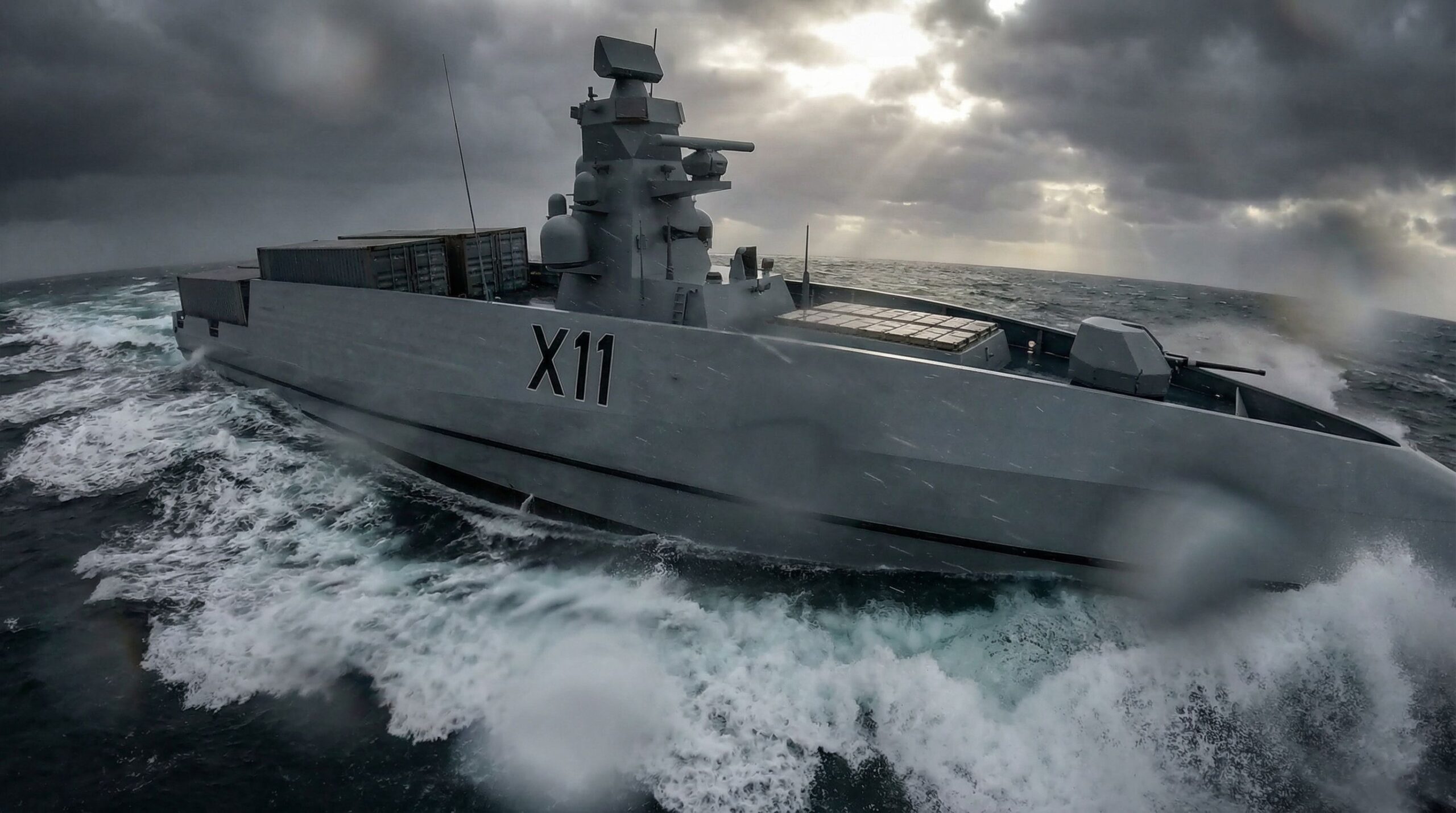
United Kingdom Royal Navy Shifts Fleet Strategy Towards Uncrewed Vessels and Common Combat Ships
The United Kingdom’s Royal Navy has unveiled a significant transformation in its future fleet strategy, as detailed in the new Defence Investment Plan. This plan marks a departure from a previously envisioned generation of large, crewed destroyers and frigates, instead opting for a core of six Common Combat Vessels (CCVs) to serve as command hubs, complemented by an expanding fleet of uncrewed platforms. While optimists suggest this move could invigorate British shipbuilding by spreading work across more yards, the ultimate impact remains to be seen amidst crucial details that are still undefined.
The Royal Navy’s strategic pivot to a hybrid fleet model leaves a critical figure undetermined: the precise number of vessels it will actually acquire. The Defence Investment Plan explicitly commits to at least six Common Combat Vessels and outlines a new family of uncrewed platforms – designated as Type 91, 92, 93, and 94. These uncrewed assets are designed for diverse roles, including missile carriage, submarine hunting, and advanced sensor deployment. However, the plan notably refrains from specifying a definitive quantity for this uncrewed fleet, leaving future budgets and operational requirements to dictate its ultimate scale.
This revised strategy directly replaces two previously anticipated crewed shipbuilding programmes. The Type 83 destroyer, intended to succeed the current six Type 45 destroyers from the late 2030s, has been cancelled. Similarly, the Type 32 frigate, which was planned to augment the eight Type 26 and five Type 31 frigates already under construction, has also been dropped. In their stead, the Navy will acquire the six Common Combat Vessels. These CCVs are envisioned as the central command platforms for the uncrewed fleet. On paper, this represents a shift from a generation of approximately eleven large and complex warships to six command ships and a potentially much larger number of smaller, uncrewed platforms.
Fewer Warships, but Many More Hulls
For the British shipbuilding industry, the implications of this trade-off are subject to interpretation depending on how the impact is measured. The construction of eleven frigates and destroyers would have entailed substantial steel tonnage and thousands of skilled jobs, predominantly concentrated at major naval shipyards like those on the Clyde and at Rosyth. In contrast, the uncrewed vessels are designed to be smaller, less expensive, and considerably simpler in construction, each requiring only a fraction of the tonnage and labour of a frigate. Measured by total tonnage and man-hours, a fleet comprising six command ships and a swarm of drones would likely not equal the scale of the crewed programme it replaces. However, this assessment changes significantly when the metric shifts to the sheer number of hulls produced and the broader range of shipyards potentially capable of participating.
The principle of simplicity is central to the argument for broader industrial participation. During the competition to define the requirements for the cancelled destroyer programme, one British shipbuilder publicly presented a concept in 2025. This concept paired a large air-warfare command ship with smaller, either lean-crewed or entirely autonomous sensor and effector vessels. The key innovation was the assertion that these smaller vessels could be constructed at a wide array of shipyards, extending well beyond the two primary yards currently building the Royal Navy’s frigates.
If this industrial model proves viable, a future fleet dominated by uncrewed platforms could distribute manufacturing work to commercial and second-tier shipyards, which historically rarely receive warship orders. This distribution of work has the potential to sustain a more diverse industrial base and foster a more consistent pace of construction, in contrast to the intermittent orders associated with a handful of highly complex hulls.
How Many Drone Ships Would It Take?
Regarding the potential size of this uncrewed fleet, the Defence Investment Plan provides no definitive total. Nevertheless, the Royal Navy has offered a conceptual template. The First Sea Lord has described the hybrid operational model as a Type 26 frigate operating in conjunction with two uncrewed escorts, while an uncrewed submarine drone conducts operations beneath the surface. Furthermore, the First Sea Lord has expressed an ambition to see the first uncrewed escort ships deployed alongside Royal Navy warships “within the next two years.”
Taking this described flotilla as the fundamental operational unit, the Royal Navy is projected to possess nineteen crewed surface combatants once the Common Combat Vessels enter service: the eight Type 26 frigates, the five Type 31 frigates, and the six new Common Combat Vessels. Based on the conventional naval planning assumption that approximately one-third of a fleet is typically deployed at sea at any given moment, this would imply roughly six of these crewed vessels would be on active deployment simultaneously. If each of these deployed crewed vessels were screened by the two uncrewed escorts described by the First Sea Lord, it would necessitate twelve uncrewed surface vessels at sea. This figure could rise to eighteen if three escorts were assigned per crewed vessel. Applying the same one-in-three rule for the availability of the uncrewed escorts themselves suggests a standing force of approximately thirty to sixty uncrewed surface hulls.
It is important to note that the “one-in-three” availability assumption is a significant driver of these projected numbers and could fluctuate. Uncrewed vessels are theoretically designed for extended periods at sea without the need for crew rotation, which could reduce the total number of hulls required. Conversely, as early designs and unproven technologies, these platforms might initially require more frequent maintenance and repair, which would necessitate a larger standing force to maintain deployment levels.
The flotilla template, however, does not fully account for the diversity of the four uncrewed types, which are not interchangeable escorts. Three of these are surface ships: the Type 91, envisioned as a dispersed missile magazine; the Type 94, designed for aerial surveillance with a radar; and the Type 92, described as an underwater sensing platform but understood to be a surface sloop that hunts submarines using towed sonar arrays in support of frigates. It is these three surface types that the flotilla screen calculations primarily consider.
Only the fourth type, the Type 93, operates beneath the surface. This is an extra-large uncrewed submarine derived from the Excalibur programme, intended to operate alongside crewed attack submarines. Its scale is determined not by the number of frigates deployed but rather by the strategic objective of maintaining control over extensive maritime barriers, such as the North Atlantic. Therefore, the Type 93 adds to the surface fleet figures rather than being contained within them. When the Type 93s and the sensor gliders already being integrated into the fleet are factored in, the total number of uncrewed platforms could comfortably reach into the sixties.
The government’s own statements support this ambition, listing the Type 91 to 94 platforms and committing that “in the 2030s, we will expand the numbers of the above platforms and bring at least six Common Combat Vessels into service as the brain of a networked Maritime Air Defence system.” The upper bounds of this ambition are even more substantial; the minister responsible for naval procurement has previously spoken of a Royal Navy numbered in the hundreds, with the majority being uncrewed. This grander figure, however, has been met with considerable skepticism, particularly given the service’s historical challenges in consistently ordering even a modest number of autonomous minehunters.
The strategic direction of this shift is also supported by recent operational analysis. A Navy-wide wargame conducted late last year reportedly demonstrated that a hybrid force structure could approximately treble the missile capacity of a task group. Furthermore, even the more conservative, flotilla-driven estimates, if built within the UK, would represent one of the larger naval hull construction programmes undertaken by the country in a generation.
Where the Hulls Get Built
The optimism surrounding the potential benefits for British shipbuilding is contingent on several critical conditions that are not yet firmly established. The most significant of these is the origin of the hull construction. One of the competing industrial concepts considered for these uncrewed vessels proposed basing their designs on overseas shipbuilders, which would mean a substantial portion of the metalwork would be manufactured abroad. Under this scenario, the British contribution would primarily be concentrated in the integration of systems and autonomy. It is also important to acknowledge that a significant portion of the overall value in these advanced platforms is likely to reside in the sophisticated combat systems and autonomous technologies, meaning the shipyards responsible for welding the hulls might only capture a fraction of the total economic benefit.
Another pertinent question concerns the actual “simplicity” of these hulls. Assessments suggest that the larger surface types could measure eighty to one hundred metres in length and displace a couple of thousand tonnes. Such dimensions position them closer to a small warship than to the inexpensive, easily mass-produced drone implied by the term, even if the dedicated sonar sloops prove to be smaller. Of the four uncrewed types, only the Type 93 underwater vehicle would flow to specialist submarine supply bases, not to commercial yards. This leaves three surface types that, in principle, more commercial yards could undertake. This aspect of the plan offers the most direct potential benefit for British shipbuilding, provided that firm orders materialize and the construction work is performed domestically. Crucially, all these projections depend on orders that do not yet exist, as the Defence Investment Plan describes its figures as indicative, commits only to a minimum of six Common Combat Vessels, and defers the specific numbers for uncrewed platforms to future budgetary cycles. This occurs against a recent historical background of ambitious defence plans being announced and subsequently quietly scaled back.
None of these caveats, however, negate the inherent opportunity. If the Royal Navy proceeds with building the flotillas it has described, and crucially, if these are constructed within Britain, the hybrid fleet strategy could indeed result in a greater number of hulls being built across a broader range of shipyards than the traditional crewed ships that have been cancelled. This remains true even if each individual uncrewed vessel is smaller and less expensive than the warships now being set aside. The extent to which the Navy capitalizes on this opportunity will become evident in the order books over the coming years, as the currently open figures in the plan are either translated into tangible contracts with British yards or allowed to recede.
Why This Matters
The Royal Navy’s Defence Investment Plan represents more than just a procurement adjustment; it signals a profound strategic shift with wide-ranging implications for global naval doctrine, industrial capabilities, and geopolitical power dynamics. Firstly, it positions the United Kingdom at the forefront of a global trend towards integrating uncrewed systems into core naval operations. Major navies worldwide are grappling with the challenges of maintaining readiness, projecting power, and managing costs, and the UK’s hybrid fleet model could serve as an influential blueprint for others seeking to leverage autonomous technologies for enhanced capabilities and potentially reduced crew requirements.
Secondly, the plan carries significant economic and industrial weight for the United Kingdom. The pivot from a few large, complex warships to a potentially larger number of simpler, smaller vessels could either revitalize or fragment the domestic shipbuilding industry. If managed effectively, it could spread work beyond traditional naval yards, fostering regional economic growth and diversifying the skilled workforce. Conversely, if substantial portions of design or construction are outsourced, the domestic industrial benefit could be limited, impacting long-term sovereign capabilities and technological independence. The success of this strategy hinges on actual contracts being awarded to British yards, ensuring the flow of investment and job creation aligns with the national strategic objective of a robust defense industrial base.
Thirdly, this strategic evolution reflects a calculated gamble on future naval warfare. The reported trebling of missile capacity in task groups through hybrid forces suggests a focus on distributed lethality and resilience. Uncrewed vessels, operating as dispersed magazines, sensor nodes, and submarine hunters, could enhance a fleet’s ability to operate in contested environments, sustain operations for longer periods, and present a more complex target array to adversaries. This shift could redefine the concept of naval power projection, emphasizing network-centric capabilities over sheer tonnage of individual platforms. However, it also introduces new challenges related to cybersecurity, command and control of autonomous systems, and the reliability of unproven technologies at scale.
Finally, for the UK’s allies and potential adversaries, this move alters the strategic calculus. A Royal Navy that is leaner in crewed capital ships but potentially much larger in overall hull count, with advanced autonomous capabilities, presents a different kind of challenge and partnership opportunity. It underscores the UK’s commitment to technological innovation in defense and its adaptability in a rapidly changing security landscape, where traditional naval threats are evolving and new domains like cyber and space are increasingly critical. The successful implementation of this plan will demonstrate the viability of a new generation of naval power, influencing defense investments and strategic planning far beyond British shores.