
UK Parliamentary Report Highlights Diminished US Commitment to European Security, Questions NATO’s Article 5 Efficacy
A recent inquiry by the United Kingdom’s House of Commons Defence Committee has raised significant concerns about the future of American engagement in European security, particularly in the Arctic region. The committee’s findings suggest that the United States may no longer be a reliable security partner for Europe to the extent previously assumed, and that NATO’s foundational collective defence clause, Article 5, is considered “functionally moribund” in the American context by some experts.
Chaired by Tan Dhesi, the Labour Member of Parliament for Slough, the committee investigated the broader implications of evolving American foreign and defence policy for the security of the High North. This critical region, encompassing the Arctic, is gaining increasing strategic importance due to climate change opening new maritime routes and access to resources, alongside heightened geopolitical competition.
In response to these assessments, Tan Dhesi emphasized the need for a strategic re-evaluation: “Our report calls for the government to reassess the JEF’s role and consider whether it should focus more on countering threats in the High North, particularly if the UK has to plan for uncertainty over US support for NATO. The UK’s presence in the Baltics, particularly in Estonia, may need to be bolstered to offset the effects of any greater JEF focus on the High North.” The Joint Expeditionary Force (JEF) is a high-readiness force comprising ten Northern European nations, designed to respond to crises.
Professor David Blagden of the University of Exeter presented compelling testimony to the committee, directly addressing the perceived shift in US priorities. He stated, “we can talk about the formal aspects of withdrawal or not but, functionally, you would probably say Article 5 in the American sense is pretty much moribund at the moment now anyway. No one really believes that the Americans are riding to the rescue if there were some situation in the Baltic states.” This stark assessment underscores a profound erosion of confidence in the practical application of NATO’s core principle – that an attack on one member is an attack on all.
The committee’s report meticulously outlines how the American 2026 National Defense Strategy (NDS) signals a clear pivot towards an “America First” approach. The NDS prioritizes four key lines of effort: defending the United States homeland, deterring China in the Indo-Pacific region through overwhelming strength, increasing burden-sharing with allies and partners, and supercharging the American defence industrial base. Crucially, the committee found that “none of these suggest a return to greater engagement in Europe’s defence over the medium term, including the High North.” Furthermore, where the Arctic is mentioned in the US strategy, it is primarily in relation to the defence of the American homeland, rather than broader European security interests.
This strategic redirection is not merely a matter of political rhetoric, according to expert testimony. The committee was informed that even in the hypothetical scenario of a future US President being a staunch “Atlanticist” – someone deeply committed to transatlantic ties, akin to a “Eisenhower 2.0” – the United States would likely lack the material capacity to revert to its historical role in European and High North defence. This limitation stems largely from the US perception that the highest likelihood of a major conflict lies in East Asia, specifically between 2027 and 2035, necessitating a focused allocation of resources to that theatre.
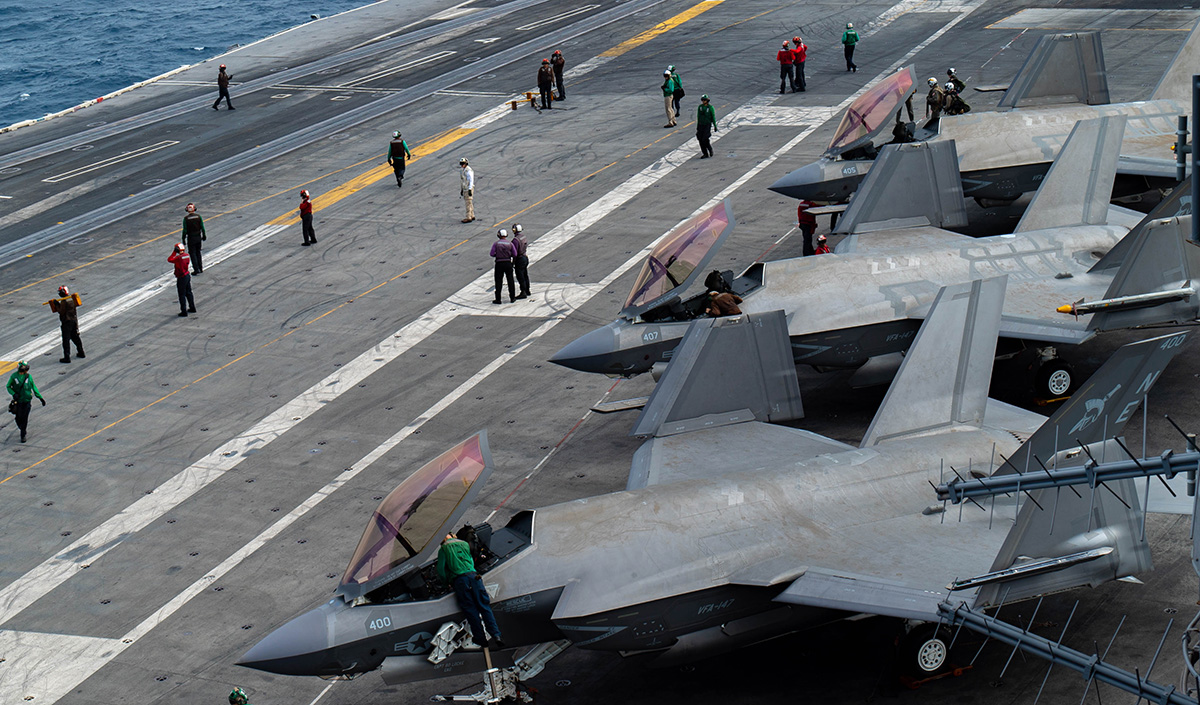
Concrete evidence of this potential shift includes reported plans to reduce the number of American troops stationed in Europe. While approximately 80,000 US personnel are currently deployed across the continent, plans suggest cuts of between 25,000 and 40,000 troops. This is despite existing congressional provisions in the FY2026 National Defense Authorization Act which restrict reductions below 76,000 personnel. The report also warns that these troop reductions could be followed by significant future cuts in key military assets, including fighter jets, strategic bombers, destroyers, submarines, tanker aircraft, and armed drones, further diminishing American military presence and capabilities available for European defence.
The financial implications for European nations seeking to compensate for this potential withdrawal are substantial. Analysis by the Kiel Institute, cited in the report, estimates that replacing American military capabilities with European-sourced weaponry would necessitate an additional annual investment of €50 billion over the next decade. This figure highlights the immense scale of the military assets the US currently provides and the significant financial burden that would fall upon European allies in their absence.
Professor Blagden further underscored the precarious position of the UK and other European nations, stating: “The caveat, though, to all that glass-half-full stuff is that the UK, for years and years, has been generating SDSR-type documents in which we talk about how far we lean on allies. It has ultimately reached the point where the greatest of those allies has suddenly become unreliable… We cannot just say, ‘We lean on an ally for this. We lean on an ally for that.’ When it comes to the High North, the UK is the major power now. The American cavalry is not about to ride over the horizon and save our fecklessness.” His comments emphasize a historical reliance on the US that now requires a radical re-evaluation, pushing the UK to assume a more prominent, self-sufficient role in areas like the High North.
Witnesses from the Ministry of Defence provided a nuanced perspective, drawing a distinction between American capabilities and American commitments. Brigadier Jeremy Lamb, Head of Euro-Atlantic Security at the department, explained that on the capabilities front, the United States is actively communicating to NATO allies what assets “we [America] intend not to offer in the future. That is what we think a more European NATO looks like.” Regarding commitments, Brigadier Lamb clarified that what the US is discussing pertains to “basing; it is not necessarily what they will make available to the SACEUR (Supreme Allied Commander Europe) in a crisis.” This distinction suggests that while US forces might remain physically present in Europe, their readiness and availability for operational deployment under NATO command in a crisis scenario could be significantly curtailed.
In conclusion, the UK Defence Committee’s report presents a stark assessment of the evolving transatlantic security landscape. It urges the UK government and its European partners to confront the reality of potential US disengagement and to proactively develop more robust, self-reliant defence strategies, particularly in strategically vital regions like the High North.
Why This Matters
The findings of the UK Defence Committee report carry profound implications for global security, the future of NATO, and the strategic calculations of nations worldwide. Here’s why this matters:
1. Shifting Global Power Dynamics and NATO’s Future:The potential reduction in US commitment to European security signals a significant shift in global power dynamics. For decades, the US has been the primary guarantor of collective security in Europe through NATO. If Article 5 is indeed perceived as “functionally moribund” in the American sense, it fundamentally undermines the alliance’s core deterrence mechanism. This could lead to a ‘two-tiered’ NATO, where the US focuses on the Indo-Pacific and European members are largely left to defend themselves, potentially weakening the alliance’s overall coherence and effectiveness against new and existing threats from adversaries like Russia.
2. Increased European Responsibility and Defence Spending:European nations will face immense pressure to significantly increase their defence spending and enhance military capabilities to fill the void left by a diminished US presence. The estimated €50 billion annual cost to replace American capabilities highlights the scale of this financial burden. This will require difficult budgetary choices and greater intra-European defence cooperation, potentially through initiatives like the EU’s PESCO (Permanent Structured Cooperation) or strengthening forces like the JEF. Failure to adequately invest could leave Europe vulnerable.
3. Enhanced Risk in the High North and Baltics:The report specifically highlights the High North as an area where the UK and Europe must become more self-reliant. This region is critical for maritime routes, energy resources, and strategic military positioning, especially as climate change makes it more accessible. Reduced US engagement here, coupled with increased Russian and Chinese activity, could heighten geopolitical tensions and risks of miscalculation. Similarly, the Baltic states, geographically vulnerable and sharing borders with Russia, face heightened security risks if the credibility of US Article 5 intervention is doubted.
4. UK’s Strategic Role and Defence Review:For the United Kingdom, the report necessitates a fundamental reassessment of its defence posture, particularly its Strategic Defence and Security Review (SDSR) and the role of the Joint Expeditionary Force. The call to refocus the JEF on the High North and bolster UK presence in the Baltics indicates a potential pivot in British defence priorities. The UK, long a key US ally, must now consider a future where it is the “major power” in regions like the High North, requiring greater leadership, investment, and strategic autonomy.
5. Deterrence and Stability:A perceived weakening of NATO’s collective defence capability and US commitment could embolden revisionist powers. If adversaries believe that US intervention is unlikely or that European responses would be insufficient, it could increase the risk of aggression or coercive tactics in Europe’s neighbourhood. This directly impacts regional and global stability, potentially leading to a more volatile and unpredictable international environment.
6. Economic and Political Ramifications:Diverting substantial funds to defence spending will have economic consequences, potentially impacting social programs or other investments within European nations. Politically, it could lead to renewed debates about European integration, the role of the EU in defence, and the future of transatlantic relations. The report serves as a wake-up call, demanding urgent and concerted action from European leaders to secure their own future.