
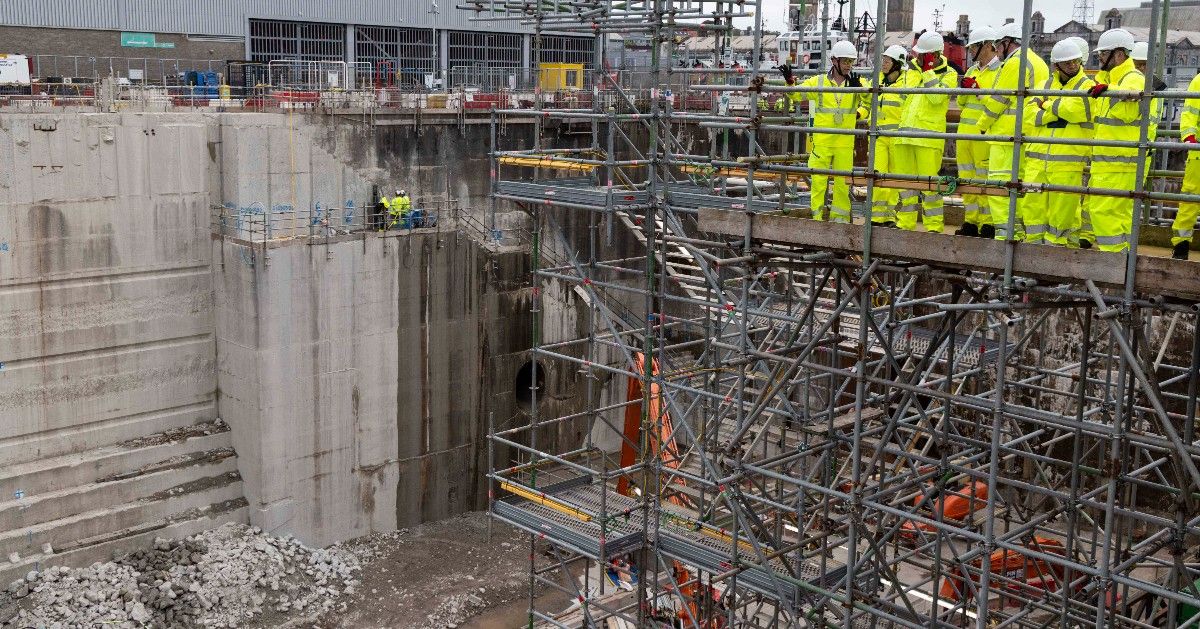
First Sea Lord Inspects Critical UK Submarine Maintenance Operations at Devonport Naval Base
Plymouth, UK – The First Sea Lord, General Sir Gwyn Jenkins, recently conducted an official visit to Babcock International’s Devonport site in Plymouth, a pivotal facility for the Royal Navy’s submarine fleet. The visit focused on reviewing ongoing work critical to ensuring the availability and operational readiness of the UK’s nuclear-powered submarines.
During his inspection, General Jenkins toured various programmes and facilities across the extensive site, engaging with teams from both Babcock International and the wider Naval Base. Babcock highlighted that the visit underscored the collaborative operational environment essential for the work performed at Devonport, which integrates its Major Nuclear Capital Programmes with its Naval Nuclear business activities.
Babcock International characterizes its operational philosophy at Devonport as centered on “lifetime engineering.” This approach aims to create a seamless connection between the land-based infrastructure it develops and the ongoing maintenance and operational readiness of submarines at sea. The company’s teams are involved in a wide spectrum of activities, from complex routine maintenance tasks to significant, generational infrastructure investments. Babcock emphasizes its crucial role in maintaining the mission-readiness of the UK’s submarine fleet, both currently and into the future.
The First Sea Lord’s visit occurs at a time when the health and operational capacity of the UK’s submarine enterprise are under considerable scrutiny. Reports indicate that the availability of the Astute-class hunter-killer submarines remained low throughout 2025. Data from that period showed that the five operational boats collectively managed approximately 300 days at sea. In December 2025, General Sir Gwyn Jenkins publicly acknowledged that the long-standing strategic advantage enjoyed by allied naval forces in the Atlantic Ocean is diminishing, describing the current margin as “narrow.” This highlights significant concerns regarding the Royal Navy’s capacity to meet its operational demands and maintain its strategic position.
Devonport Naval Base is central to efforts aimed at addressing these pressures. It stands as the largest naval base in Western Europe and is the United Kingdom’s sole facility capable of undertaking deep maintenance and refitting of the Royal Navy’s nuclear-powered submarines. Thousands of engineers, technicians, and defence specialists are employed daily at the site, working to maintain these critical national assets and ensure the fleet is prepared for deployment. The intricate nature of nuclear submarine maintenance requires highly specialized skills and facilities, making Devonport indispensable to the UK’s defence capabilities.
The contractual framework for these critical services recently underwent adjustment. Following the conclusion of the five-year Future Maritime Support Programme contract on March 31, 2026, Babcock International entered into a six-month bridging agreement with the Ministry of Defence. This interim arrangement was designed to ensure uninterrupted continuity of naval base operations and vital support services for the nuclear submarine fleet. Reports suggest that a new, long-term agreement between Babcock and the Ministry of Defence is currently in the advanced stages of negotiation, which would provide greater stability and planning certainty for future operations.
Significant investments are also being made in Devonport’s infrastructure to bolster its capabilities. A substantial £750 million contract, awarded to Babcock, is dedicated to delivering extensive upgrades to existing facilities. This project includes the construction of a new dock, enhanced logistics facilities, and modernized support buildings. These improvements are designed to facilitate ongoing base maintenance periods and complex deep maintenance projects for both current and future classes of submarines, including the critical process of nuclear defueling. The modernization ensures the base can adapt to evolving submarine technologies and operational requirements.
Complementing these upgrades, a separate £200 million refurbishment of 9 Dock was completed in 2024. This specific project was undertaken to enhance the Royal Navy’s capacity for maintaining the Vanguard-class submarines. The Vanguard class forms the backbone of the UK’s Continuous-At-Sea Nuclear Deterrent (CASD), making its maintenance and readiness of paramount importance to national security.
Why This Matters
The First Sea Lord’s visit to Devonport and the ongoing work at Babcock International are fundamentally important for several interconnected reasons, impacting national security, international relations, economic stability, and technological advancement.
National Security and Deterrence:The UK’s nuclear submarine fleet, particularly the Vanguard-class submarines, underpins its Continuous-At-Sea Nuclear Deterrent (CASD). This deterrence capability is a cornerstone of the nation’s defence policy and plays a critical role in global stability. Any issues with submarine availability or maintenance directly threaten the credibility and reliability of this deterrent. The First Sea Lord’s concerns about the “narrowing margin” in the Atlantic highlight a strategic vulnerability that robust maintenance and operational readiness at Devonport aim to counter. Maintaining a credible submarine fleet is vital for projecting power, protecting maritime interests, and responding to evolving geopolitical threats.
Geopolitical Context:The Atlantic Ocean is a strategically vital area, particularly in the context of increased naval activity by potential adversaries. The First Sea Lord’s comments underscore the competitive nature of modern naval power and the necessity for the Royal Navy to maintain its edge. The UK’s submarine fleet contributes significantly to NATO’s collective security, participating in surveillance, intelligence gathering, and deterrence operations. Ensuring these submarines are mission-ready is not just a national imperative but also a commitment to international alliances.
Economic Impact and Industrial Capability:Devonport Naval Base is a major industrial hub, employing thousands of highly skilled engineers, technicians, and support staff. The substantial investments, such as the £750 million and £200 million contracts, represent significant government spending that supports regional employment and sustains a critical national industrial capability. This ensures that the UK retains the expertise and infrastructure necessary to maintain its advanced nuclear submarine fleet domestically, reducing reliance on external support and bolstering sovereign defence capabilities. The stability offered by long-term contracts is essential for workforce planning, training, and retaining specialized skills.
Future Naval Readiness and Technological Advancement:The upgrades to Devonport’s infrastructure, including new docks and facilities, are not merely about maintaining existing submarines but also about preparing for future generations of naval assets. This forward-looking investment ensures that the UK can continue to operate and maintain increasingly complex and technologically advanced submarines. It reflects a commitment to long-term strategic planning and adaptation to future defence requirements, safeguarding the Royal Navy’s operational effectiveness for decades to come.
In essence, the activities at Devonport, as overseen by the First Sea Lord, are not just about fixing submarines; they are about sustaining a foundational element of the UK’s national security, upholding its international commitments, and investing in its strategic industrial future.