
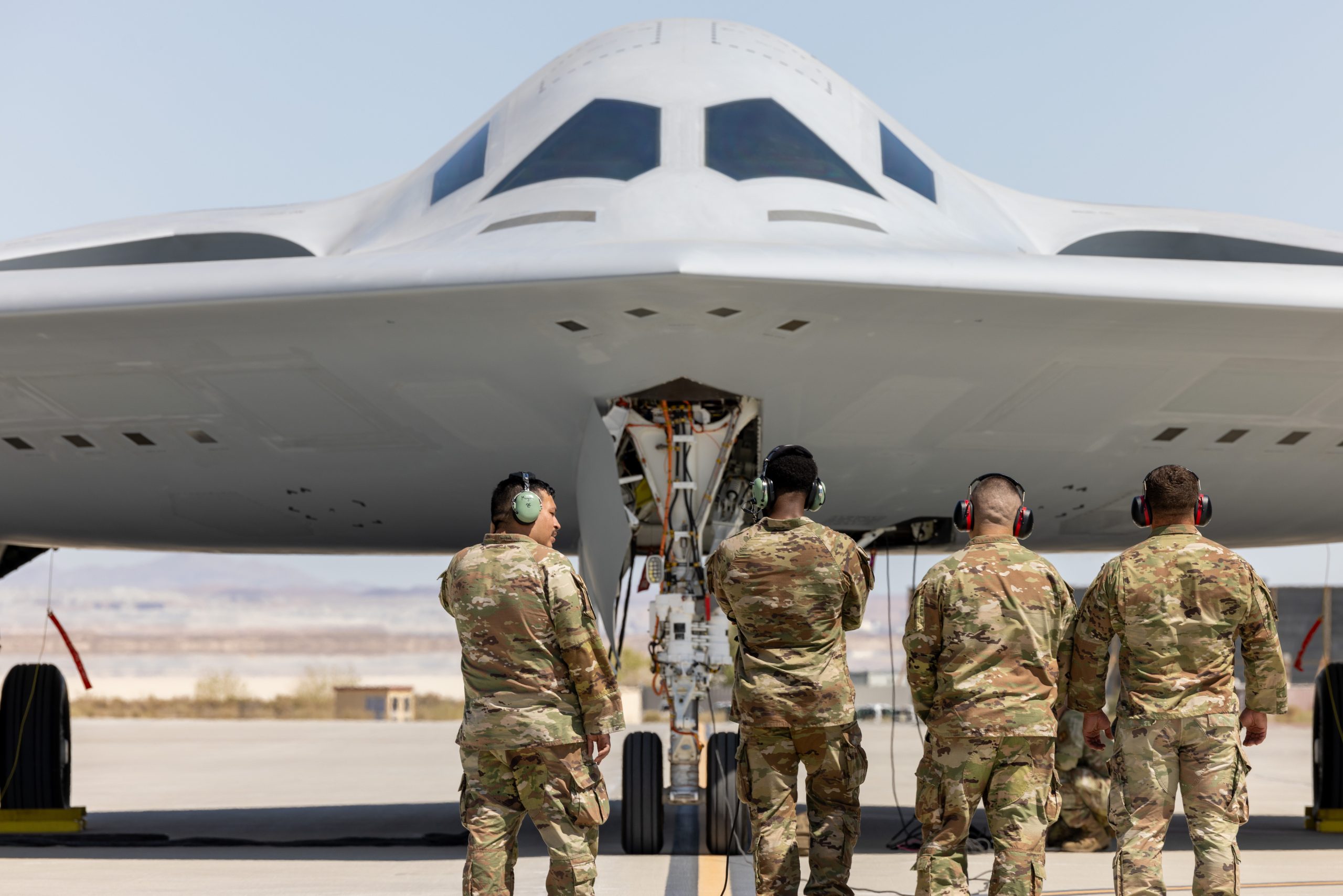
The United States Air Force has finalized its decision that the forthcoming B-21 Raider stealth bomber will be operated by a two-pilot air crew. This pivotal announcement also includes a new initiative to integrate experienced non-pilot aircrew, specifically Weapon System Officers (WSOs) and Combat Systems Officers (CSOs), into the B-21 pilot force through a specialized transition program. This move aims to leverage existing expertise while ensuring the bomber’s operational readiness.
The establishment of a dedicated program for WSOs and CSOs to retrain as pilots marks a strategic shift in personnel management for the Air Force. These officers, currently performing critical roles in various combat aircraft, will undergo pilot training and subsequently be assigned to fly the B-21, ensuring a robust and experienced pool of aviators for the nation’s newest long-range strike asset.
Manufactured by Northrop Grumman, the B-21 Raider represents the next generation of strategic stealth bombers, designed to enter operational service in 2027. Embodying a distinctive flying-wing design, similar to its predecessor the B-2 Spirit, the B-21 is engineered to deliver both conventional and nuclear payloads. While official plans initially called for a fleet of at least 100 aircraft, Pentagon leadership has increasingly indicated a potential expansion of this number, with projections suggesting a fleet size of 145 or more to meet future global demands and strategic deterrence requirements.
The decision regarding the B-21’s crew configuration puts an end to earlier speculation that the aircraft might operate with a single pilot and one weapon system officer. Reports in defense publications such as Defense Daily and Aviation Week had previously cited recommendations for such a configuration from Gen. Thomas A. Bussiere, who was then leading Air Force Global Strike Command. However, the Air Force ultimately opted for a two-pilot crew, a configuration deemed more suitable for the bomber’s demanding long-range strike missions.
This two-pilot arrangement is crucial for missions that can extend over extremely long durations, often exceeding a full day. For instance, bomber types that the B-21 is set to eventually replace, such as the B-1B Lancer and B-2A Spirit, have historically executed missions lasting up to 37 hours roundtrip from the continental U.S. to distant targets. These older aircraft types also utilize two pilots per crew, allowing for essential rotation, rest, and sleep periods during extended operations to mitigate crew fatigue and maintain peak performance and safety. A single-pilot configuration would present significant physiological and operational challenges for such endurance flights, potentially compromising mission effectiveness and safety in highly contested airspaces.
Currently, two “production-representative” B-21 bombers are actively engaged in test flight missions at Edwards Air Force Base in California. At least one of these test aircraft is slated to be transferred to Ellsworth Air Force Base in South Dakota in early 2027, coinciding with the standing up of the first operational B-21 unit. This phased deployment will allow for continued testing and integration as the program transitions from development to full operational capability.
While the precise number of B-21 pilots required is still being determined by the Air Force, available data provides some insight into the potential scale. As of the end of 2025, there were 497 personnel holding the bomber pilot Air Force Specialty Code (AFSC) for a fleet of 141 bombers, resulting in an approximate ratio of 3.5 pilots per aircraft. Given that all existing Air Force bomber types utilize a two-pilot crew, and the Air Force has confirmed that B-21 pilots will share the same “11B” AFSC as other bomber pilots, maintaining a similar ratio would necessitate at least 350 B-21 pilots for a projected fleet of 100 aircraft. This figure would climb proportionally if the fleet expands to 145 or more.
Pilots retain their Air Force Specialty Code regardless of whether they are currently assigned to flying billets, and this single code encompasses pilots across all stages of their career progression. Previous plans to retire the B-1 and B-2 fleets sooner would have naturally facilitated the transition of experienced pilots from those platforms to the B-21. However, with both the B-1 and B-2 now scheduled to remain in service for approximately another decade, the strategy of drawing from experienced Weapon System Officers and Combat Systems Officers emerges as an efficient method to rapidly build up the B-21 pilot force. This approach also serves as a critical talent retention mechanism, preventing highly skilled personnel from leaving the service as other aircraft, like the F-15Es, face retirement or fleet reductions.
The Air Force articulated the strategic imperative behind this initiative: “To maximize the lethality and survivability of the Raider, it is imperative to retain the deep tactical and combat experience currently residing within the WSO and CSO communities.” The service further emphasized that “This deliberate talent management strategy secures the future of global strike capabilities, ensuring the Air Force remains postured to execute extended duration, long-range strike missions in highly contested environments.” This highlights the value placed on the specific operational and tactical knowledge held by these experienced aircrew members.
Weapon System Officers are typically drawn from communities operating multi-crew aircraft such as the B-1, B-52, and F-15E. In these roles, WSOs are responsible for operating the aircraft’s complex weapon systems, managing sensors, and assisting pilots with critical situational awareness and defensive operations. The Air Force intends to retire its B-1 fleet by the late 2030s, and has previously sought to retire more than half of its F-15E fleet, though Congress has thus far prevented such significant reductions. While the F-15EX is slated to ultimately replace the F-15E and features a two-seat cockpit, it is designed for potential single-pilot operation, which remains the Air Force’s current operational plan for that platform.
Combat Systems Officers, on the other hand, also operate sophisticated weapon systems but frequently serve as mission commanders for specialized electronic warfare and navigation systems. Their expertise is particularly vital in environments where advanced electronic countermeasures and precise navigation are critical to mission success.
The Air Force has indicated that eligible WSOs and CSOs will receive further specific details regarding the transition program to fly the B-21 through their respective command channels, outlining the application process, training curriculum, and timeline for this career-changing opportunity.
Why This Matters
The U.S. Air Force’s decision on the B-21 Raider’s crew configuration and pilot sourcing carries significant implications for national security, defense strategy, and personnel management. The commitment to a two-pilot crew underscores the complex and demanding nature of strategic long-range strike missions, particularly in an era of renewed great power competition. Ensuring crew endurance and operational effectiveness over multi-day missions is paramount for penetrating sophisticated air defenses and delivering payloads anywhere in the world. This choice reinforces the B-21’s role as a vital component of the nuclear triad and a versatile platform for conventional deterrence.
Furthermore, the innovative strategy to transition experienced Weapon System Officers and Combat Systems Officers into B-21 pilots is a critical talent management initiative. It addresses the challenge of building a new bomber pilot force rapidly while simultaneously retaining invaluable combat experience within the service. As older fleets like the B-1 and F-15E are phased out, this program prevents a brain drain of highly skilled aircrew, channeling their deep tactical and operational knowledge into the Air Force’s most advanced platform. This move helps maintain continuity in global strike capabilities and ensures that the B-21 will be flown by individuals already steeped in the complexities of modern air warfare, ready to operate in highly contested environments from its projected entry into service in 2027. It highlights the Air Force’s adaptive approach to manning and training in a dynamic geopolitical landscape where long-range projection and deterrence remain central to U.S. defense policy.