
Editor’s Note: This story was updated Oct. 9 with additional information.
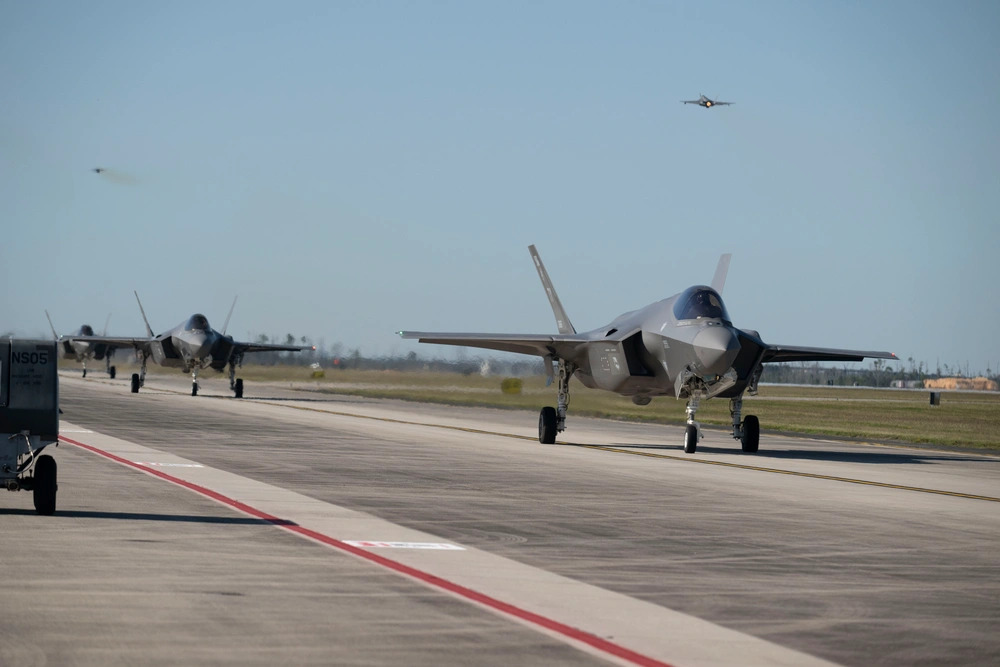
The United States Air Force has initiated the evacuation of a significant number of its advanced aircraft, including F-35 Lightning II stealth fighters, AC-130J Ghostrider gunships, and MC-130J Commando II special operations transport planes. This action is a proactive measure ahead of Hurricane Isaias’ anticipated landfall over the northern Gulf Coast this weekend, with the storm rapidly intensifying in the Gulf of Mexico.
Severe weather events, particularly major hurricanes, pose substantial threats to Air Force installations. Such storms can endanger personnel, inflict extensive damage on critical aircraft and infrastructure, and render runways unusable. Protecting these high-value assets and ensuring the safety of military personnel and their families are paramount concerns for military leadership.
As of Oct. 8, multiple Air Force bases across Florida and Mississippi have begun relocating their airworthy fleets. These strategic evacuations involve a range of specialized aircraft designed for various combat and support roles.
Tyndall Air Force Base in Florida, which suffered catastrophic damage from Hurricane Michael in 2018, commenced the movement of its aircraft, including F-35s assigned to the 325th Fighter Wing, on Oct. 8. A base spokesman confirmed that some aircraft were airborne by morning, though the situation remained dynamic regarding the total number of planes to be evacuated. Citing operational security, the wing declined to disclose the destination of the relocated aircraft. The base had elevated its status to Hurricane Condition 2 on Oct. 8, indicating that destructive winds of 58 miles per hour or greater were possible within the next 24 hours. Access to the installation was consequently restricted to mission-essential personnel, residents, and other authorized individuals, with non-essential facilities like childcare centers, the fitness center, and the commissary gradually closing throughout the day.
Hurricane Isaias has significantly strengthened in the Gulf of Mexico, with the National Hurricane Center reporting maximum sustained winds nearing 120 miles per hour on the morning of Oct. 9, classifying it as a Category 3 hurricane. The latest advisories predict Isaias will reach or maintain major hurricane strength upon making landfall late on Oct. 9. The storm is expected to impact portions of Alabama, Georgia, and the Florida panhandle, with a high probability of isolated tornadoes. Forecasts indicate hurricane-force winds could extend up to 100 miles inland from the coast. Furthermore, the region is bracing for 4 to 8 inches of rainfall, with localized totals potentially reaching 15 inches across the Florida panhandle and Big Bend area, raising concerns about widespread flooding.
Eglin Air Force Base, another critical installation in Florida, also executed a comprehensive aircraft evacuation plan on Oct. 8. Airworthy aircraft, including those assigned to the 96th Test Wing, the 53rd Wing, and the 33rd Fighter Wing, were flown to safer locations. Aircraft deemed non-flyable or undergoing maintenance were secured within hangars designed to withstand severe weather conditions. In response to the escalating threat, civilian authorities in the Eglin region issued evacuation orders for some residents. Colonel Chris Keithley, Eglin’s commander, subsequently issued a limited evacuation order for service members, Department of Defense employees, and their dependents residing in specific areas of Okaloosa County, Florida. This order authorizes reimbursement for evacuation travel and prohibits their return until officially directed. Essential services at Eglin, such as the 96th Medical Group Hospital and pharmacies, were closed, though emergency operations, labor and delivery, and inpatient services remained operational.
Colonel Keithley emphasized the rationale behind these measures, stating, “The safety of our Airmen, their families, and our community is our highest priority. As we prepare for the potential impacts of Hurricane Isaias, we are taking proactive steps to protect our people and aircraft entrusted to our care. Relocating our aircraft is a deliberate decision that reflects our responsibility to be good stewards of taxpayer resources while preserving our ability to execute the mission.”
Hurlburt Field, Florida, home to the Air Force Special Operations Command, heightened its alert status to Hurricane Condition 3 on Oct. 7, restricting base access to mission-essential personnel. A spokesperson confirmed that the base’s 1st Special Operations Wing had commenced flying its AC-130s and MC-130s to Little Rock Air Force Base in Arkansas. Additionally, the wing commander mandated the evacuation of approximately 1,000 residents living in privatized military housing by 5 p.m. on Oct. 8. While Hurlburt officials do not anticipate storm surge damage to housing structures, the primary concern is that rising water levels could inundate a critical station, thereby disrupting vital wastewater, sewage, and potable water services for the community.
Further west, the 403rd Wing at Keesler Air Force Base in Mississippi also moved its aircraft on Oct. 8 as Hurricane Isaias approached. A vital component of this wing, the 53rd Weather Reconnaissance Squadron, famously known as the Air Force Reserve Hurricane Hunters, continues its critical reconnaissance missions into Isaias. Operating from Kelly Field in Texas, these specialized flights gather essential atmospheric data that is relayed to the National Hurricane Center, significantly enhancing the accuracy of storm tracking and intensity forecasts.
The Air Force’s meticulous hurricane preparedness protocols are largely informed by past devastating events. Nearly eight years ago, Tyndall Air Force Base was severely impacted by Hurricane Michael, a Category 5 storm that made landfall on Oct. 10, 2018. Aircraft that could not be evacuated in advance, including F-22 Raptor fighters, sustained damage, with some rendered irreparable, as hangars failed. Numerous buildings suffered what the Air Force described as “catastrophic” damage, necessitating years of recovery and reconstruction. Tyndall’s F-22 operations were temporarily relocated to Eglin before finding a permanent home at Joint Base Langley-Eustis, Virginia. Similarly, in March 2019, Offutt Air Force Base in Nebraska experienced extensive flooding due to a “bomb cyclone” and rapid snowmelt, submerging dozens of buildings and large sections of its flightline, which also required the evacuation of several aircraft. These historical precedents underscore the necessity of robust pre-storm measures to safeguard military assets and personnel.
News Editor Greg Hadley contributed to this report.
Why This Matters
The proactive evacuation of military aircraft and personnel ahead of severe weather events like Hurricane Isaias is a critical undertaking with far-reaching implications for national security, economic responsibility, and operational readiness. This swift response by the U.S. Air Force highlights several key areas of significance:
Protecting Strategic National Assets:The F-35 Lightning II, AC-130J Ghostrider, and MC-130J Commando II are among the most advanced and expensive aircraft in the U.S. inventory. These assets represent billions of dollars in taxpayer investment and are vital for maintaining air superiority, special operations capabilities, and global power projection. Protecting them from potential destruction or severe damage due to hurricanes ensures that the nation’s defense capabilities remain intact and ready for deployment without costly and time-consuming replacements.
Ensuring Operational Readiness:Military bases in the Gulf Coast region, such as Tyndall, Eglin, and Hurlburt Field, are strategically important for training, testing, and deploying air power. If these bases were to suffer catastrophic damage, and their aircraft were destroyed, it would significantly degrade the Air Force’s ability to conduct critical missions, train new pilots, or respond to national and international crises. Evacuating aircraft preserves this readiness, allowing operations to resume swiftly once the threat has passed, often from alternative locations.
Stewardship of Taxpayer Resources:The cost of replacing or repairing damaged advanced military aircraft and infrastructure is astronomical. Hurricane Michael’s impact on Tyndall AFB, for example, resulted in billions of dollars in damage. The decision to evacuate aircraft, though complex and costly in itself, is a responsible financial decision aimed at minimizing potential losses and ensuring efficient use of public funds. It reflects a strategic approach to asset management in the face of predictable natural threats.
Personnel Safety and Morale:Beyond hardware, the safety and well-being of military personnel and their families are a top priority. Evacuation orders for base residents and the closure of non-essential services underscore the commitment to protecting human life. Maintaining high morale and minimizing disruption to military families are essential for sustaining a strong and effective fighting force.
Lessons Learned and Adaptation:The meticulous planning and execution of these evacuations are direct consequences of lessons learned from past disasters, notably Hurricane Michael and the Offutt AFB floods. These events underscored the vulnerability of military installations to extreme weather and spurred improvements in hurricane preparedness protocols, infrastructure resilience, and disaster response strategies. The ongoing flights of the Hurricane Hunters also highlight the continuous scientific effort to improve weather forecasting, which is critical for timely and effective military and civilian preparedness.
Broader Implications for Climate Resilience:As climate change potentially increases the frequency and intensity of extreme weather events, the U.S. military’s strategies for protecting its vast global infrastructure and assets will become even more crucial. These evacuations serve as a tangible example of how military forces are adapting to and preparing for a future with heightened environmental challenges, ensuring that national defense capabilities remain robust despite an evolving climate.