
United States Special Operations Forces Acquire Advanced Respiratory Protection System from British Manufacturer
The United States Department of Defense has placed an order with British manufacturer Avon Protection for its innovative MITR (Mission-Integrated Tactical Respirator) respiratory system, designated for use by its special operations forces. This procurement underscores a strategic move to enhance the protection and operational effectiveness of elite military personnel in diverse and hazardous environments.
The order encompasses the MITR-M1 half mask and the MITR-PG1 powered goggle, forming a comprehensive and modular personal protective equipment (PPE) solution. Included in the acquisition are specialized particulate and riot filters, alongside integrated helmet and communication accessories, ensuring seamless integration with existing tactical gear and operational protocols.
Avon Protection’s rationale for the MITR system centers on addressing the limitations of traditional full-face respirators in dynamic tactical situations. The company posits that while full-face respirators offer robust protection, they are often more comprehensive than required for most operational scenarios, and critically, can be slower and more cumbersome to don under pressure. The MITR system, by contrast, offers a scalable approach, protecting the eyes, nose, and mouth separately, allowing operators to rapidly adjust their level of protection based on evolving mission requirements and threat assessments.
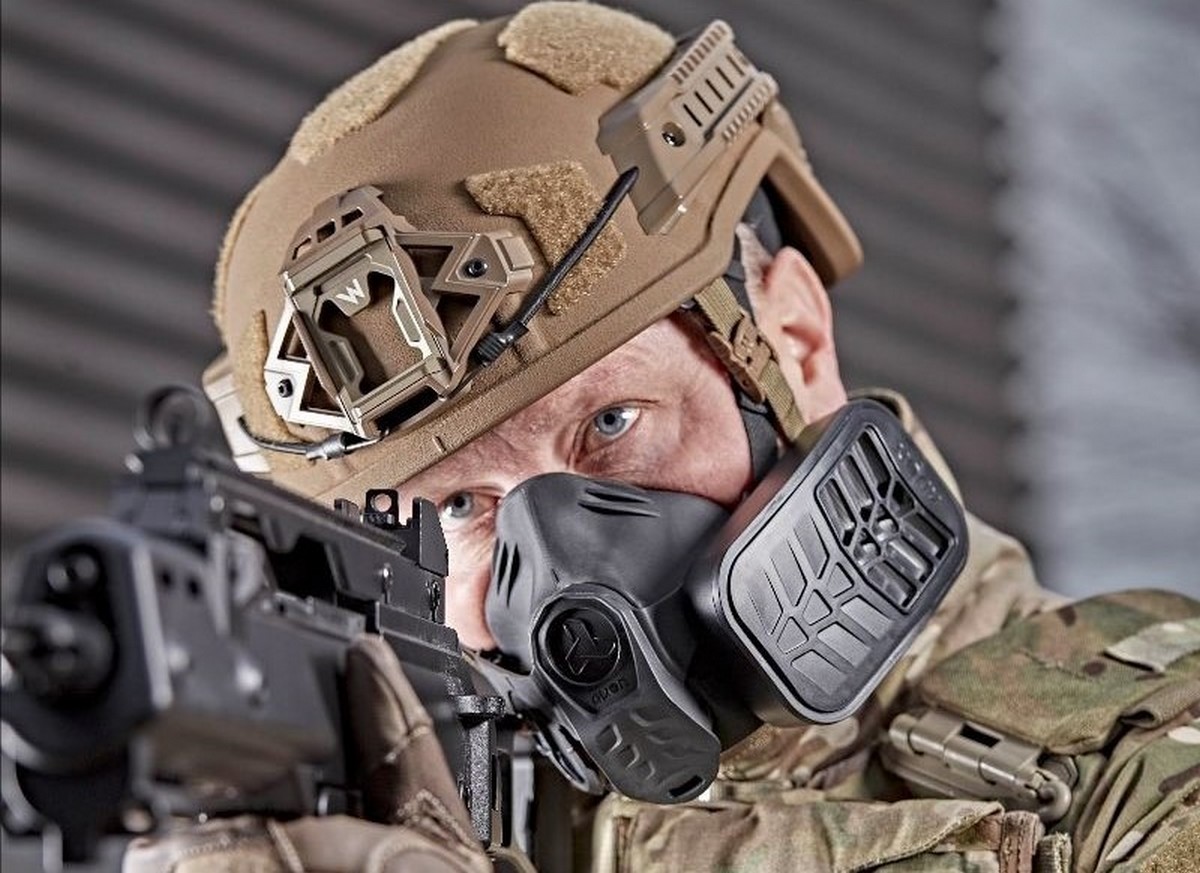
The MITR-M1 half mask has received NIOSH (National Institute for Occupational Safety and Health) certification, a crucial validation of its protective capabilities. Its design features a flush-fitting, curved profile specifically engineered to preserve weapon sighting, a critical factor for maintaining combat effectiveness. For communication clarity in high-stress environments, the mask incorporates voice amplification. Furthermore, it is designed to clip directly to a combat helmet via a dedicated mount kit, enabling operators to don the mask quickly without the need to remove their helmets, thus saving valuable time in critical moments.
Complementing the half mask, the MITR-PG1 powered goggle is engineered for optimal performance and user comfort. It features a constant air-purging system that actively resists fogging, a common and dangerous impediment to vision in demanding conditions. The goggle’s design ensures compatibility with standard combat helmets and night vision systems, integrating seamlessly into the special operator’s existing suite of equipment without compromising functionality or situational awareness.
Both the particulate and riot filters supplied with the system meet the stringent NIOSH P100 standard, guaranteeing the removal of more than 99.97 percent of harmful airborne particulates. This level of filtration is vital for protecting operators from dust, aerosols, and other microscopic threats encountered in various operational settings. The riot filter further enhances protection by incorporating an activated carbon layer, specifically designed to absorb and neutralize riot agent vapors, thereby protecting personnel during civil disturbance operations or in environments contaminated by chemical irritants.
Steve Elwell, President of Avon Protection, highlighted the collaborative effort behind the system’s development. “This award culminates nearly four years of working collaboratively with end-users developing a solution that meets their mission requirements,” Elwell stated. He emphasized the significance of securing the U.S. Department of Defense as a customer, noting it “demonstrates continued focus on protecting the health of personnel, both in the short-term and the long-term.”
Elwell further elaborated on the long-term benefits of the MITR system. “For tactical operators, MITR is not just about protection during today’s mission, it is about reducing lifetime exposure to hazardous particulates that can contribute to long-term health issues and helping ensure those who serve remain healthy long after their careers end.” This perspective underscores a growing recognition within military procurement of the long-term health implications of occupational hazards for service members. He concluded by stating, “This award represents an important step in bringing this capability to a wider community of users,” suggesting potential broader adoption beyond special operations forces.
The United States is the second member of the “Five Eyes” intelligence alliance to adopt the MITR-M1 system, following Canada’s procurement in May. The Five Eyes alliance, comprising Australia, Canada, New Zealand, the United Kingdom, and the United States, shares intelligence and often collaborates on defense procurement and interoperability standards, making this joint adoption a significant indicator of the system’s perceived value and effectiveness.
Avon Protection operates as a key division of Avon Technologies, specializing in chemical, biological, radiological, and nuclear (CBRN) protection products. The company boasts a significant global presence, with its CBRN protection equipment reportedly in use by over four million individuals worldwide. Headquartered in Melksham in Wiltshire, United Kingdom, Avon Protection maintains manufacturing and development facilities globally, including the facility in Cadillac, Michigan, from which the MITR announcement was datelined, highlighting its international operational footprint.
Why This Matters
The acquisition of Avon Protection’s MITR system by U.S. special operations forces represents a notable development with implications spanning operator safety, military doctrine, and international defense collaboration. This move is not merely a purchase of new equipment; it signifies a strategic investment in the well-being and operational effectiveness of elite military personnel.
Enhanced Operator Safety and Health:For special operations forces, who routinely operate in high-threat, unpredictable environments—ranging from urban combat zones with particulate matter to chemical or biological threat scenarios—advanced respiratory protection is paramount. The MITR system’s NIOSH P100 certification and riot agent filtration offer robust protection against a wide array of airborne hazards. Critically, the emphasis on reducing “lifetime exposure to hazardous particulates” addresses a growing concern within military health. Past conflicts have highlighted the long-term health consequences, such as respiratory illnesses and cancers, faced by veterans exposed to environmental contaminants like burn pits or industrial pollutants. This procurement reflects a proactive approach to mitigating such risks for current and future operators, acknowledging that protection extends beyond the immediate mission to long-term health outcomes.
Optimized Operational Effectiveness:The modular and scalable nature of the MITR system directly addresses the dynamic requirements of special operations. Traditional full-face respirators can impede communication, situational awareness, and the speed of action crucial in fast-moving engagements. By offering separate, adaptable protection for eyes, nose, and mouth, the MITR allows operators to maintain agility and responsiveness. Features like weapon sighting preservation, voice amplification, helmet-compatible donning, and anti-fogging goggles are not just conveniences; they are critical elements that enhance an operator’s ability to communicate, navigate, and engage threats effectively without compromising their safety or the mission.
Advancement in Military Personal Protective Equipment (PPE):This acquisition signals a continued evolution in military PPE, moving towards more specialized, ergonomic, and adaptable solutions. It underscores a trend where military forces are seeking equipment that integrates seamlessly with existing platforms (helmets, night vision) and provides flexible protection levels, rather than a one-size-fits-all approach. The four years of collaborative development between Avon Protection and “end-users” highlight the importance of direct feedback from operators in shaping future defense technologies, ensuring that equipment is not only technically advanced but also practical and effective in real-world scenarios.
Interoperability and Allied Cooperation:The fact that the U.S. is the second “Five Eyes” nation to adopt the MITR-M1, following Canada, carries significant weight. The Five Eyes alliance is built on shared intelligence and close military cooperation. Joint procurement or adoption of key equipment like the MITR system can enhance interoperability between allied forces, simplify joint training exercises, and potentially streamline logistics and maintenance across partner nations. This shared endorsement suggests a collective assessment of the system’s superior capabilities and a move towards greater standardization among critical allies.
Impact on the Defense Industry:For Avon Protection, this U.S. Department of Defense contract represents a significant commercial success and validation of its CBRN protection expertise. It solidifies the company’s position as a leading provider of advanced respiratory systems for elite military forces globally. Such high-profile contracts can drive further innovation, attract additional customers, and strengthen the company’s market standing within the competitive defense technology sector. It also highlights the global nature of defense procurement, with British innovation serving the needs of U.S. forces.