
UK Ministry of Defence Seeks Advanced Recovery System for Autonomous Underwater Vehicles
The United Kingdom’s Ministry of Defence (MoD) has initiated a search for a sophisticated system designed to recover autonomous underwater vehicles (AUVs) that have become disabled at sea. This requirement, outlined in a recent market engagement notice, specifies a capability to lift craft up to seven metres in length and three tonnes in weight.
The market engagement notice, published on August 18, 2026, serves as an initial step in the procurement process, allowing the MoD to gauge industry interest and capabilities. While not a commitment to a full procurement, it signals a clear operational need. Estimated contract dates for the successful system are projected to run from February 1, 2027, to February 1, 2029. A formal tender notice is anticipated around October 31, 2026, with potential delivery of the system falling within the 2026/27 financial year, contingent upon securing necessary funding, approvals, and managing lead times.
The impetus for this procurement stems from the current reliance on improvised arrangements for AUV recovery. The MoD notice explicitly states the new system is intended “to provide the Ministry of Defence with a safer, more controlled and lower-risk method of recovering AUVs during non-standard or emergency recovery operations.” This system is envisioned to operate either independently or in conjunction with a vessel’s existing crane infrastructure. Crucially, it must be compatible with a diverse array of ships, accommodating varying deck layouts, freeboards (the distance from the waterline to the main deck), and crane configurations to ensure broad operational flexibility across the Royal Navy fleet.
A primary driver for this new capability is enhanced safety and operational resilience. The department articulated that the system “is intended to reduce reliance on improvised recovery arrangements and improve operational resilience where the primary recovery system is unavailable or unsuitable.” Furthermore, the system is designed to “reduce personnel exposure at the vessel edge, help mitigate the risk of person overboard incidents, and reduce the likelihood of damage to the AUV or host vessel.” This highlights a proactive approach to address inherent risks associated with manual or ad-hoc recovery methods in dynamic maritime environments.
Operational scenarios outlined in the notice emphasize the demanding conditions under which the system must perform. The MoD is particularly interested in “solutions that are simple to rig, transportable, recoverable in challenging maritime conditions, and support emergency recovery scenarios where the AUV has suffered propulsion, communications, navigation or power-system failures.” Recovering an uncrewed submersible that has lost critical functions presents significant challenges; a craft without propulsion cannot maintain station, one without communications cannot be remotely guided, and a three-tonne object moving unpredictably in a swell poses substantial hazards to both recovery personnel and the host vessel. Historic practices, involving improvised tools such as poles, lines, and grapples, are precisely the methods the MoD seeks to replace with a purpose-built, safer alternative.
Beyond its core recovery function, the system must meet stringent standards for operational use. It is required to be suitable for repeated deployment in the harsh maritime environment, necessitating robust construction and resistance to corrosion and wear. Suppliers are expected to provide comprehensive certification, detailed operating instructions, maintenance information, and inspection requirements. The MoD has also expressed interest in bundled services, including long-term maintenance and support, training options for naval personnel, and transparent information regarding the average lead time from order placement to delivery.
The procurement falls under common procurement vocabulary (CPV) codes relevant to uncrewed underwater vehicles and broader marine equipment. Notably, the notice explicitly identifies this opportunity as particularly suitable for small and medium-sized enterprises (SMEs) as well as voluntary, community, and social enterprises (VCSEs), indicating an effort to foster broader industry participation and potentially tap into innovative solutions from a diverse supplier base. No formal supplier engagement events are planned at this stage; interested parties are directed to submit expressions of interest via email by September 18, 2026.
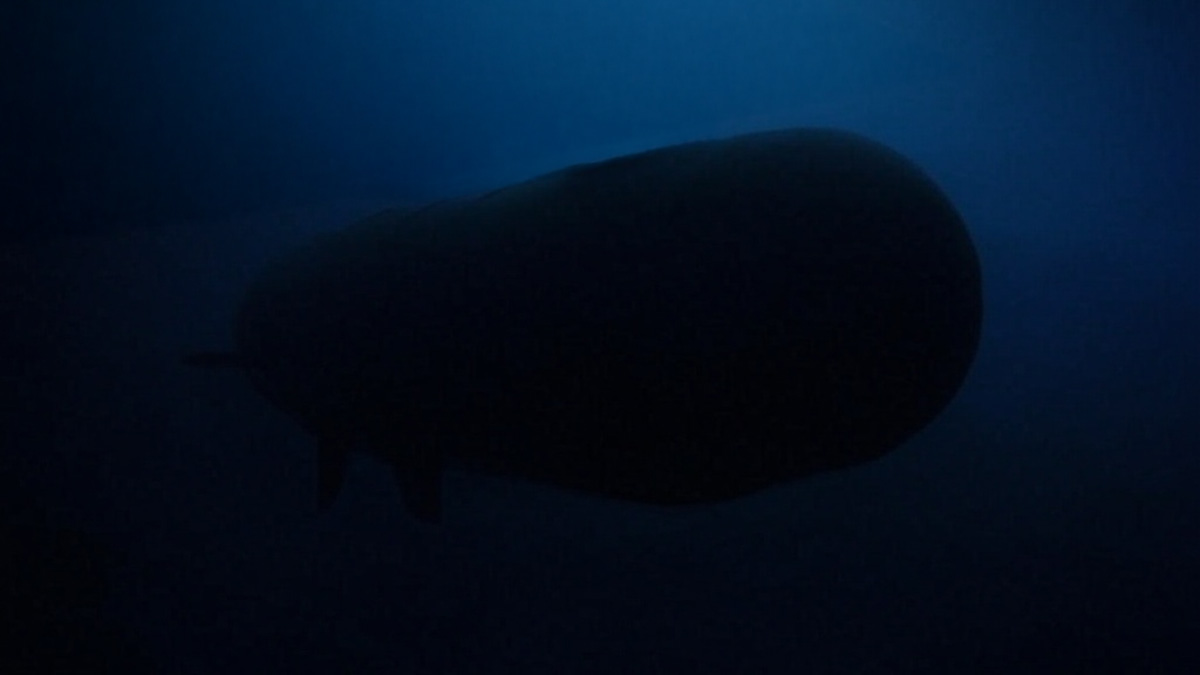
The specified size envelope for the AUVs (up to seven metres and three tonnes) points towards the larger end of the Royal Navy’s expanding uncrewed underwater fleet. The service has been progressively integrating and experimenting with AUVs, particularly in autonomous mine countermeasures systems. This expansion also includes trials with extra-large uncrewed submersibles, such as the Cetus, constructed by MSubs of Plymouth. The strategic context for this capability was further cemented by the Strategic Defence Review of 2025, which articulated an intention to pair crewed submarines with uncrewed vehicles. This strategic pairing is aimed at enhancing capabilities for monitoring critical areas like the North Atlantic and bolstering the protection of vital undersea infrastructure, such as communication cables and energy pipelines. The MoD’s notice, however, includes a standard disclaimer, stating that its issuance does not constitute a commitment to carry out any procurement.
Why This Matters
The UK Ministry of Defence’s pursuit of a dedicated AUV recovery system signifies a crucial step in the Royal Navy’s modernization and adaptation to evolving maritime warfare doctrines. This initiative is not merely about acquiring new equipment; it reflects a deeper strategic commitment to integrating autonomous underwater capabilities effectively and safely into future naval operations.
Firstly, it underscores the increasing reliance on AUVs for a range of critical missions. As naval forces worldwide invest heavily in uncrewed systems, AUVs are becoming indispensable tools for intelligence, surveillance, and reconnaissance (ISR), mine countermeasures (MCM), and potentially anti-submarine warfare (ASW). The Royal Navy’s expansion into such systems, including larger platforms like Cetus and the stated intent to pair AUVs with crewed submarines for North Atlantic monitoring and infrastructure protection, highlights their strategic value. A robust recovery system ensures these high-value assets can be retrieved and redeployed, maximizing their operational availability and minimizing financial losses from accidental damage or loss.
Secondly, the emphasis on safety is paramount. Current improvised recovery methods pose significant risks to naval personnel, including the potential for person overboard incidents in challenging sea conditions, and also risk damage to the sophisticated AUVs themselves or the host vessel. By transitioning to a purpose-built, safer, and more controlled recovery process, the MoD is prioritizing the well-being of its personnel while simultaneously protecting costly and strategically important military assets. This focus on safety and resilience is a hallmark of professional naval operations and contributes to overall fleet readiness.
Thirdly, the requirement for a system capable of operating in “challenging maritime conditions” and recovering AUVs with critical failures (propulsion, communications, navigation, or power) speaks to the demanding environments in which these vehicles are expected to operate. From the turbulent waters of the North Atlantic to complex coastal zones, the ability to recover disabled vehicles reliably is vital for sustaining continuous operations and ensuring that operational tempo is not interrupted by equipment failures. This enhances the Royal Navy’s operational resilience and its capacity to project influence in contested underwater domains.
Finally, by actively seeking solutions from small and medium-sized enterprises (SMEs) and voluntary, community, and social enterprises (VCSEs), the MoD is fostering innovation within the UK’s defence industrial base. This approach can lead to more agile development, cost-effective solutions, and strengthen the domestic supply chain for cutting-edge maritime technologies. In a broader geopolitical context, where competition for undersea dominance is intensifying, the development and deployment of advanced AUV recovery capabilities are essential for the UK to maintain its technological edge and secure its national interests in the maritime domain.