
The auditory content of this piece is presented by the Air & Space Forces Association, recognizing and assisting our Airmen, Guardians, and their families. Discover more at afa.org
On March 24, officials from both the technology sector and defense organizations indicated that the industry’s quest for orbital AI data hubs holds potentially profound implications for military space operations. This development could facilitate swifter data exchange among spacecraft in various orbital paths and bolster sensing and targeting systems for Golden Dome and associated capabilities.
During the preceding twelve months, numerous firms have unveiled intentions to eventually deploy data processing facilities in orbit. Google, in November, revealed “Project Suncatcher,” anticipating the commencement of launching experimental spacecraft designed to constitute a data hub by 2027. Last month, SpaceX disclosed its plan to seek authorization from the Federal Communications Commission for deploying a network comprising one million spacecraft, purposed to serve as an in-orbit data processing facility.
Additional prominent technology companies, including NVIDIA, Blue Origin, OpenAI, and the nascent firm StarCloud, have similarly proposed this concept. They present it as an alternative to the expansive traditional data processing hubs proliferating across the nation, which accommodate numerous computing and networking equipment racks and consume considerable electricity and water for cooling to fuel the rapid expansion of cloud computing and AI. While these data centers vary in dimensions, they may encompass vast tracts of land, often hundreds of acres, and consequently interfere with regional provisions of power and water.
Orbital data processing facilities, though possibly circumventing issues related to energy and water usage, would nonetheless relocate the space sector’s processing demands from terrestrial locations to orbit. This would position computational capabilities nearer to satellites, consequently diminishing delays incurred during data transfer. As data flows more rapidly, defense personnel would be able to accelerate strategic determinations.
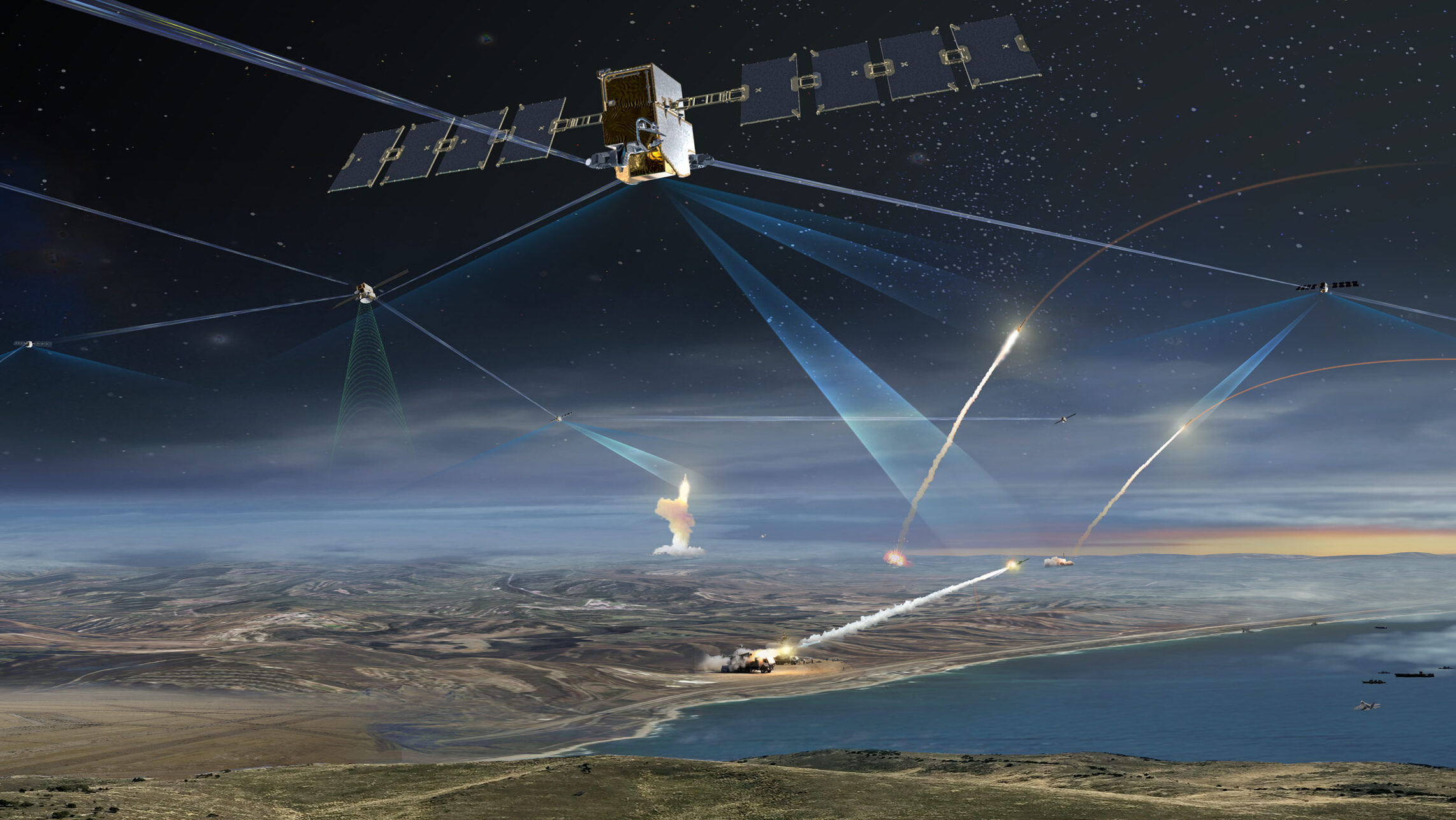
While the Pentagon aims to broaden its system of detectors, spacecraft, and interdiction devices to activate Golden Dome’s missile defense system, data delay represents a substantial constraint. Greater durations required for data transmission among detectors, strategists, and effector units equate to reduced time available for a strategist to pinpoint, confirm, and react to prospective missile dangers.
James O’Brien, who heads the U.S. Space Command’s worldwide satellite communications and spectrum unit, stated that in-orbit processing capability is vital for ensuring Golden Dome’s functionality, as well as for deploying multi-orbital satellite networks for additional operations. Addressing a panel at the Satellite Conference in Washington, D.C., on March 26, O’Brien remarked that though certain operations have relocated to low Earth orbit to achieve quicker data transfer rates, orbital processing might diminish delays for spacecraft situated more distantly from Earth, specifically within medium Earth orbit or geosynchronous orbit.
“It is challenging to surpass that reduced delay and elevated data volume capacity,” he stated. “If they can mitigate delays at the geosynchronous orbital path, we may witness a more significant surge in that specific orbital strategy, compared to merely an expansive LEO framework.”
When queried about the necessity of orbital computational power for Golden Dome, O’Brien responded, “I envision no viable alternative.”
“We are discussing a series of operations that imperatively requires the transmission of vital data,” he stated. “Any measure that diminishes such delays is indispensable for those operations.”
Matt Sieber, Kymeta’s director of strategic sales for Department of Defense programs and requirements, articulated that with the progression of threats and as China and Russia advance agile hypersonic projectiles, processing capabilities will need to be situated nearer to the periphery—specifically, where detection occurs, within the cosmos.
“The menace we endeavor to counteract has also transformed,” he commented. “When considering agile dangers or hypersonic menaces requiring extremely swift data refreshment, the entire structural design undergoes a fundamental reversal, rendering an orbital foundation imperative.”
The auditory content of this piece is presented by the Air & Space Forces Association, recognizing and assisting our Airmen, Guardians, and their families. Discover more at afa.org