
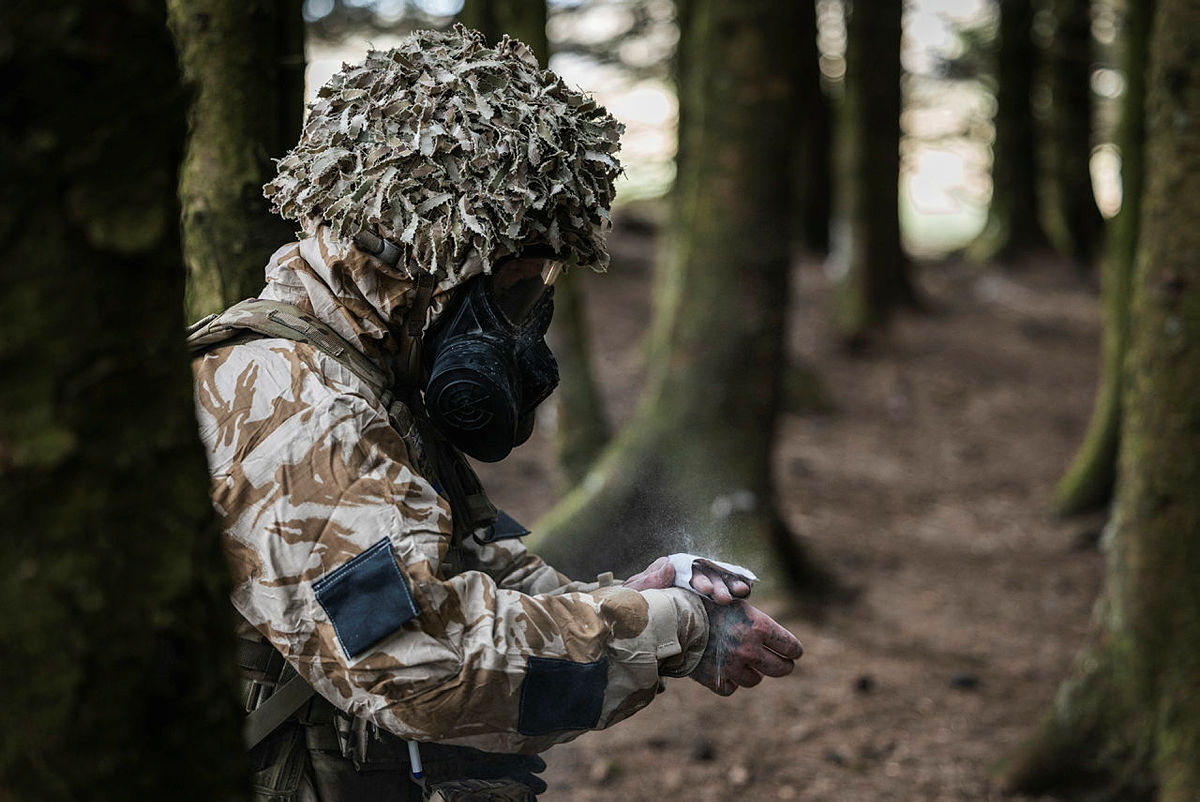
UK Outlines £39 Million Support Contract for Critical Chemical, Biological, Radiological, and Nuclear Defense Capabilities
The United Kingdom’s Ministry of Defence is preparing to allocate an estimated £39 million for a crucial support contract aimed at maintaining its array of equipment designed to detect chemical, biological, radiological, and nuclear (CBRN) threats. This strategic financial commitment, identified through a pipeline notice issued by Defence Equipment and Support (DE&S), underscores the nation’s ongoing dedication to robust defense and national security infrastructure against a spectrum of modern hazards.
This pipeline notice serves as an advance warning to industry, a standard procedure designed to provide potential suppliers with ample time to prepare for an upcoming tender process. It is distinct from a formal competition, signalling future intent rather than an immediate procurement opportunity. The tender notice itself is not expected to be published until approximately June 15, 2027. Following this, the contract is projected to commence on April 1, 2028, and run for an initial period until March 31, 2033. Importantly, the notice indicates the possibility of an extension, potentially pushing the commitment through to March 31, 2038, thereby establishing a ten-year duration for this vital support framework. Such long lead times are characteristic of complex defense procurements, allowing industry to organize specialized teams, secure necessary supply chains, and invest in relevant expertise.
The core objective of this substantial investment is to secure comprehensive in-service support for the UK’s counter-CBRN capabilities. These capabilities are essential for the detection, identification, and monitoring of a wide array of CBRN threats, ranging from industrial chemical spills and biological pathogens to radioactive materials and potential nuclear incidents. In practical terms, the support contract will encompass a broad spectrum of services. This includes the precise calibration of sensitive detection instruments, routine preventative maintenance, and rapid repair services across a diverse suite of specialized equipment. Furthermore, the contract will facilitate the acquisition of new capital equipment to upgrade or replace existing systems, ensuring technological currency, alongside the provision of essential consumables necessary for the ongoing operation of these critical tools.
The pipeline notice specifically highlights two key capabilities that this support contract is designed to sustain. The first is the Counter-CBRN Reconnaissance and Exploitation Team. This highly specialized unit is tasked with forward deployment into potentially contaminated zones to conduct initial surveys, assess the nature and extent of contamination, and collect samples for detailed analysis. Their work is critical in providing accurate, real-time intelligence that informs response strategies and ensures the safety of personnel and the wider public. The second capability is the Biological Surveillance and Collector System. As its name suggests, this system plays a pivotal role in monitoring the environment for the presence of airborne biological agents, offering an early warning mechanism against potential biological attacks or outbreaks, and contributing to both military force protection and public health security.
The nature of CBRN detection equipment necessitates a level of precision and reliability that sets it apart from many other types of military hardware. Unlike a weapon system, which might still function imperfectly, a CBRN sensor that has drifted out of its calibrated tolerance is not merely inefficient; it can be dangerously misleading. A faulty sensor might provide false negatives, indicating no threat when one is present, or false positives, triggering unnecessary alerts and resource deployment. Both scenarios carry significant risks, potentially leading to catastrophic consequences in a real-world CBRN incident. Consequently, the classifications detailed in the pipeline notice heavily emphasize specialized services such as calibration for a wide range of equipment, the intricate repair and maintenance of gas-detection apparatus, and the upkeep of complex military electronic systems and associated electrical distribution infrastructure. This focus distinctly differentiates it from the procurement of a “platform,” such as vehicles or aircraft, highlighting the intricate, precision-dependent nature of maintaining effective CBRN defense.
Why This Matters
This £39 million support contract for the United Kingdom’s CBRN detection capabilities is far more than a routine procurement; it is a critical investment with profound implications for national security, public safety, and international stability. In an increasingly complex global environment, the threats posed by chemical, biological, radiological, and nuclear agents remain a paramount concern, emanating from state actors, non-state terrorist groups, and the potential for accidental releases from industrial or scientific facilities.
Firstly, from a national security perspective, maintaining cutting-edge CBRN detection and response capabilities is fundamental to protecting the UK’s armed forces. Troops deployed in conflict zones or on peacekeeping missions must be equipped to operate safely and effectively in environments where such threats might exist. Reliable detection systems are vital for force protection, enabling commanders to make informed decisions and mitigate risks to personnel. Domestically, these capabilities are equally crucial for safeguarding the civilian population. In the event of a terrorist attack involving CBRN agents or an accidental hazardous material release, the ability to rapidly detect, identify, and monitor the threat is paramount for effective emergency response, evacuation, and decontamination efforts, directly impacting lives and public health.
Moreover, the emphasis on precise calibration and ongoing maintenance underscores the highly technical and sensitive nature of CBRN defense. Unlike many other defense assets, the reliability of CBRN sensors is absolute; even slight inaccuracies can have devastating consequences. This contract ensures that the UK’s existing equipment remains fully operational, accurate, and up-to-date, providing trusted intelligence when it matters most. By also including provisions for new capital equipment and consumables, the contract guarantees that the UK’s capabilities will evolve with emerging threats and technological advancements, rather than becoming obsolete.
The long-term nature of this contract, potentially extending to a decade, reflects a strategic, forward-looking approach to defense planning. It signals a sustained commitment to these critical capabilities, providing stability and certainty for the defense industry, which can then invest in specialized skills, research, and development. This, in turn, supports highly skilled jobs and fosters technological innovation within the UK. Furthermore, a robust national CBRN defense posture enhances the UK’s standing and credibility on the international stage, allowing it to contribute effectively to multilateral counter-proliferation efforts, participate in international incident response, and uphold global security norms. In essence, this contract is a proactive measure against a persistent and evolving threat, safeguarding the nation’s integrity, its people, and its strategic interests for the foreseeable future.