
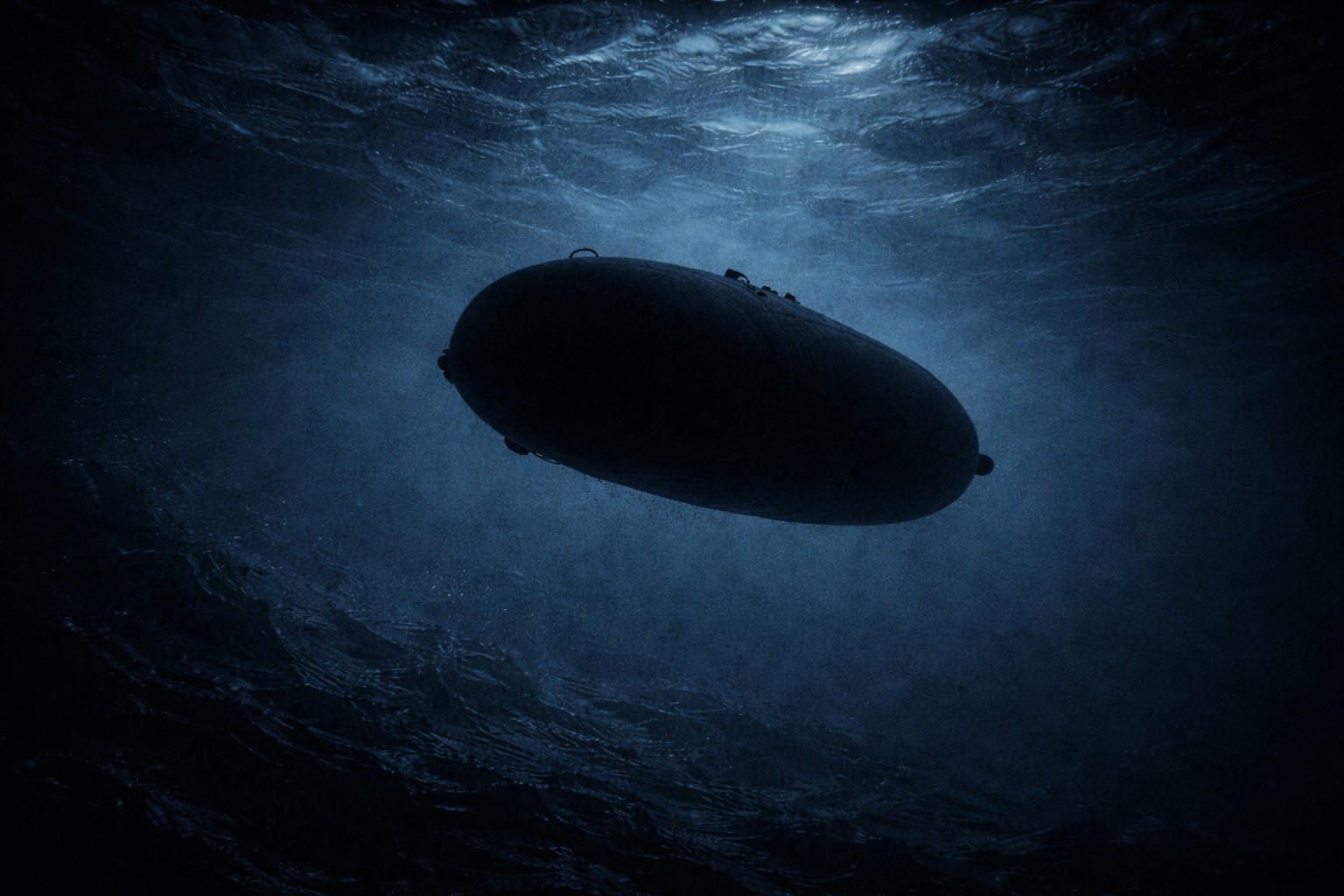
NATO Launches Ambitious Undersea Network Initiative Led by Britain
London, UK – NATO has embarked on its most significant undersea domain awareness initiative since the Cold War, a program aimed at creating a unified, interoperable network for underwater operations. Britain is leading this ambitious effort, which seeks to integrate frigates, uncrewed underwater vehicles (UUVs), surface relay nodes, and satellite links into a cohesive system, as announced at the Apex Europe conference in London on Wednesday.
Commodore David Burton, who directs NATO’s anti-submarine warfare (ASW) Smart Defence Initiative and advises the Royal Navy on the AUKUS second pillar, provided a clear articulation of the challenge this new Allied Underwater Battlespace Mission Network is designed to overcome. He stated, “We’re trying to deliver an Internet of Things in the underwater landscape. The problem is we’ve got lots of things and no internet.”
The unique physics of the ocean presents formidable challenges for communication and data exchange, making the undersea battlespace fundamentally different from land, air, or even space domains. Unlike radio waves that propagate effectively through air, sound waves are primarily used for underwater communication, which are subject to limitations such as absorption, refraction, and scattering, significantly limiting range and bandwidth. This inherent difficulty in connecting disparate assets has historically hindered comprehensive underwater situational awareness. The new program endeavors to overcome these limitations by federating a wide array of assets, including bottom-mounted sensors, uncrewed underwater vehicles, uncrewed surface vessels (USVs), and air vehicles, all working in conjunction with conventional warships.
Commodore Burton underscored the critical need for NATO to proactively shape this technological evolution rather than passively observe it. He warned, “The growth in uncrewed systems is exponential, and the challenge as an alliance is, do we sit back and allow that to happen and to take shape? And if we do so, I think there’s only one thing we can guarantee, and that is that we won’t be interoperable.” The rapid proliferation of diverse uncrewed platforms, if left to individual national or commercial development, risks creating a fragmented ecosystem where systems cannot communicate or share data effectively, severely undermining collective defense capabilities.
A fundamental architectural shift underpins this initiative: moving from a reliance on a small number of very large, conventional assets to a very large number of smaller, more distributed assets. This transition represents a paradigm change for naval operations, promising enhanced resilience, broader coverage, and potentially more cost-effective solutions. However, integrating such a vast and diverse array of systems requires a robust and standardized framework.
The concept of “open architecture” is central to this framework, though Burton emphasized that the term alone is insufficient. “People blandly talk about open architecture, but the truth is we need something that truly is open and something that we can test and validate against. And that’s the piece of the jigsaw that’s missing,” he explained. This necessitates not just open specifications but a verifiable environment to ensure compliance and functionality. Similarly, mere “standards alone are not good enough. We need to be able to validate them, and that’s the test and reference environment.” This validation process is crucial to ensure that systems from different nations and manufacturers can seamlessly integrate and operate together.
The program currently boasts twelve sponsoring nations, with an expectation to expand to fifteen. Participating countries include Australia, Canada, Denmark, France, Germany, Italy, the Netherlands, Norway, Portugal, Spain, Sweden, the United Kingdom, and the United States. Finland, Belgium, and Greece are either joining or observing the initiative. Key organizational stakeholders also include NATO’s maritime research centre and Maritime Command, ensuring alignment with alliance-wide strategic objectives.
Industry collaboration is facilitated through the Mangrove consortium, led by Saab Kockums, which comprises ten partners. British involvement is substantial, with Saab UK, BlueBear, S2IX, and the University of Plymouth contributing alongside international partners such as Fincantieri’s IDS, CETENA, FlySight, GraalTech, and Miraya. This broad engagement from both defense and academic sectors is crucial for fostering innovation and developing cutting-edge solutions.
The program has already made significant progress, with the reference architecture delivered earlier this year. It has now transitioned into a second phase, valued at over thirty million euros, dedicated to building and validating the critical test and reference environment. This phase is projected to run until 2028, with the ultimate goal of codifying the architecture as an alliance-wide standard, ensuring enduring interoperability across NATO members.
Validation of the system’s capabilities will occur through a series of at-sea trials and operational experiments. Key events on the calendar include REPMUS 27 in Portugal, which will serve as a major anchor for trials, and Dynamic Mongoose 27, focusing on operational integration in the North Atlantic. Additionally, Task Force X Arctic will conduct high-latitude uncrewed underwater operations in the High North next July, with interim events scheduled for November and February. While acknowledging the importance of these exercises, Burton noted the growing challenge posed by their sheer number. “Everywhere we look, there are operational experiments popping up. This is a big drain on industry, and we really have to orchestrate these to maximise the impact of them,” he stated, while also recognizing them as valuable opportunities for companies to demonstrate their capabilities.
Why This Matters
This NATO initiative to establish an “Internet of Things” in the undersea domain represents a critical strategic shift with far-reaching implications for global security and naval warfare. In an era of increasing great power competition, the undersea battlespace has become a vital arena for strategic advantage. Submarines are crucial for both deterrence and power projection, while vast networks of critical underwater infrastructure, including data cables, pipelines, and energy links, are increasingly vulnerable to disruption or sabotage. A unified and interoperable undersea network provides NATO with unprecedented levels of domain awareness, enabling earlier detection of threats, improved anti-submarine warfare capabilities, enhanced mine countermeasures, and the ability to protect vital underwater assets.
The program addresses a pressing need for technological superiority and collective defense. Adversaries, particularly Russia and China, are actively investing in advanced submarine capabilities and seabed warfare, posing significant challenges to NATO’s maritime security. By standardizing and integrating diverse uncrewed systems and sensors, NATO aims to create a resilient, distributed, and highly capable network that can operate effectively across vast ocean areas, from the North Atlantic to the High North. This not only improves operational efficiency but also enhances the alliance’s deterrence posture by presenting a more formidable and cohesive defense. Furthermore, the emphasis on “open architecture” and validated standards ensures that the system is future-proof, adaptable to new technologies, and allows for broad participation from allied industries, fostering innovation and reducing reliance on single-source solutions. The success of this program will underpin NATO’s ability to maintain maritime superiority and safeguard its members’ security in the critical and challenging underwater environment for decades to come.