
U.S. Space Command (SPACECOM) is on schedule to relocate 200 personnel from its provisional headquarters in Colorado Springs, Colorado, to Huntsville, Alabama, by the end of this year. This move is part of a multiyear transition plan to establish SPACECOM’s permanent headquarters in Huntsville, a decision that has seen accelerated progress since its reaffirmation by President Donald Trump last year, reversing a previous directive by President Joe Biden to maintain the command in Colorado.
Since President Trump’s announcement on September 2 last year, SPACECOM has advanced rapidly towards its goal of relocating its entire 1,800-personnel workforce to Huntsville by 2031. Over 100 personnel have already transitioned from Peterson Space Force Base in Colorado to temporary facilities at Redstone Arsenal in Alabama, primarily including intelligence professionals and other key operational functions. Command officials anticipate that approximately half of SPACECOM’s workforce will be based in North Alabama by 2028.
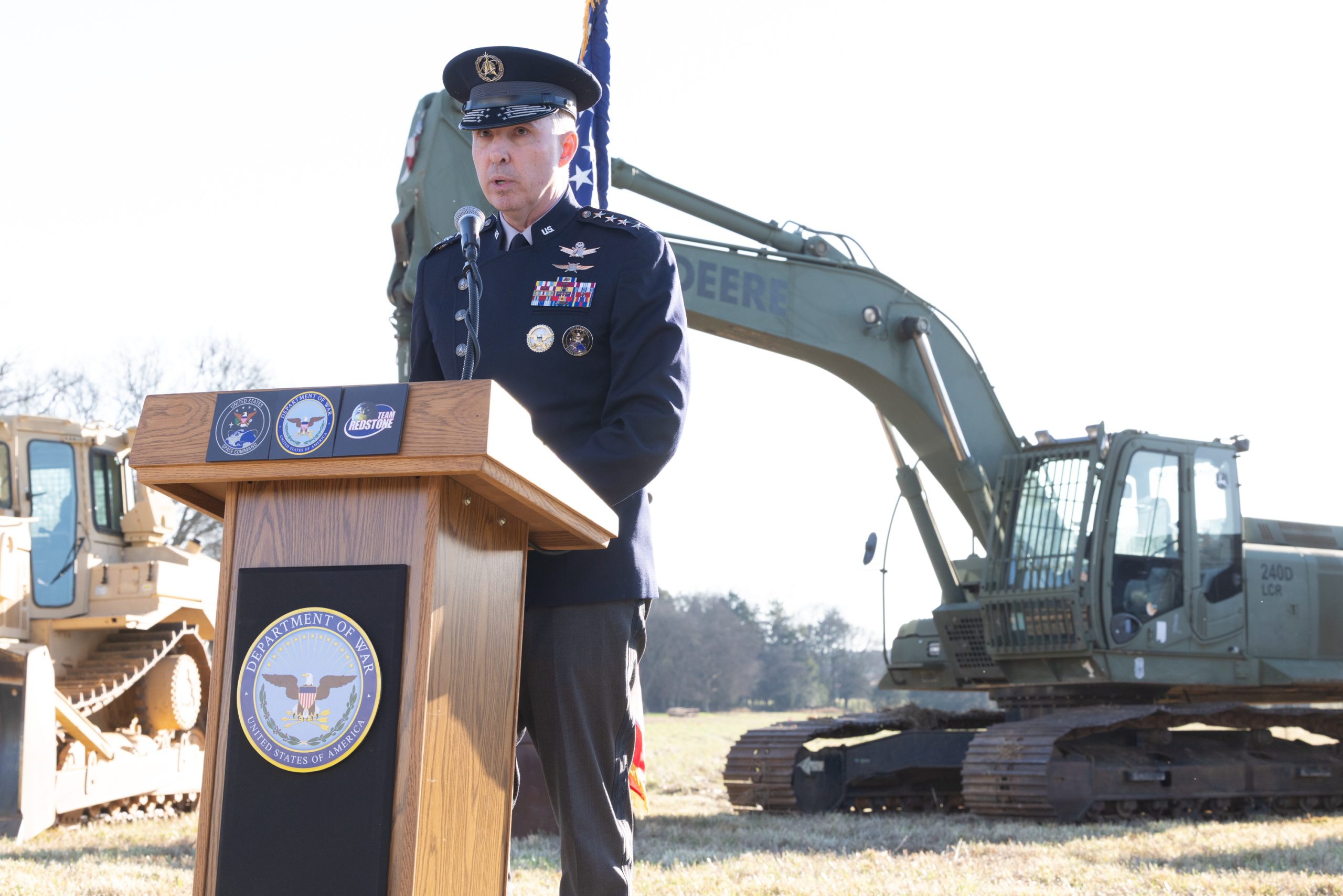
During a recent press tour of SPACECOM’s interim facilities at Redstone Arsenal, General Stephen Whiting, Commander of U.S. Space Command, underscored the command’s commitment to the relocation. “Since the president announced on the [Sept. 2] last year that we were moving our headquarters here to Redstone, we have been moving with speed and enthusiasm to get established,” Gen. Whiting stated on August 13. He emphasized that despite the complexities of the move, SPACECOM has continued to meet all its day-to-day mission requirements, supporting both the joint force and the nation.
Gen. Whiting spoke to reporters at the future site of the command’s first-ever purpose-built operations hub. This facility is designed to integrate space operators and international partners into a single, cohesive location. The Pentagon’s fiscal year 2026 budget includes $951 million dedicated to the design and initial military construction phases of this significant project. SPACECOM anticipates breaking ground at the 64-acre site next year, with an estimated move-in date by 2032. The development of a facility tailored specifically to SPACECOM’s unique operational demands is expected to represent a substantial improvement over current arrangements.
Since its reestablishment in 2018, SPACECOM has operated from a disparate collection of buildings spread across several miles, forming its provisional headquarters in Colorado. Even in its initial incarnation from 1985 to 2002, the command lacked a dedicated, purpose-built headquarters. Gen. Whiting highlighted the transformative potential of the new facility, stating, “To get this facility is going to be an incredible accelerant to our mission. It’s going to take a lot of work and effort to get it right.” This dedicated infrastructure is expected to significantly enhance the command’s efficiency, collaboration capabilities, and overall effectiveness in executing its critical space mission.
Purpose-Built Headquarters: Addressing Unique Operational Needs
Redstone Arsenal already hosts a diverse array of military and government entities, including the Missile Defense Agency, the Army’s Space and Missile Defense Command, and a significant FBI presence. However, SPACECOM marks the first combatant command to be based on the installation. Unlike many of Redstone’s existing organizations, which often focus on weapons development, research, and engineering, SPACECOM is an operations-focused combatant command. Its mission necessitates the seamless integration of partner agencies across the Department of Defense, the intelligence community, and allied militaries, which inherently brings distinct communication, security, and operational requirements that differ from the installation’s traditional occupants.
Colonel Raymond Ruscoe, Deputy Director of SPACECOM’s “Redstone Transition Team,” acknowledged the inherent difficulties associated with the relocation and construction efforts. “There’s absolutely nothing easy about any of this,” Ruscoe told reporters, emphasizing the complexity. He elaborated on the challenge of integrating the command’s unique operational footprint into an existing base structure: “We’re trying to shoehorn our operation into a base that was not built for what we are looking to do, and then we’re trying to build probably one of the most complex and expensive military construction projects that has happened in a really long time.”
Despite these challenges, the transition plans are reportedly progressing on schedule, aided by special authorities granted to the command to expedite the process. Col. Ruscoe underscored the pace of the effort: “We’re not just running with scissors in our hands—we’re running fast with scissors in both of our hands, and nobody has told us to stop yet. Nobody has said the expectations that we are pushing the envelope in either personnel or facilities is outside the realm of the possible.” This indicates a high level of urgency and support for the project’s rapid execution.
A further challenge for the command involves managing ongoing headquarters operations across two geographically separated installations—Colorado and Alabama—and a total of seven distinct facilities during the transition period. SPACECOM has developed experience functioning within temporary workspaces over the past several years due to the prolonged political debate and shifting directives from Congress, the Department of Defense, and three successive presidential administrations regarding its permanent headquarters location. Despite this familiarity, maintaining mission continuity and effective command and control remains a significant hurdle during the phased relocation. To mitigate these issues, Gen. Whiting confirmed that SPACECOM is equipping its temporary workspaces with advanced collaboration tools designed to support geographically dispersed operations and ensure seamless communication.
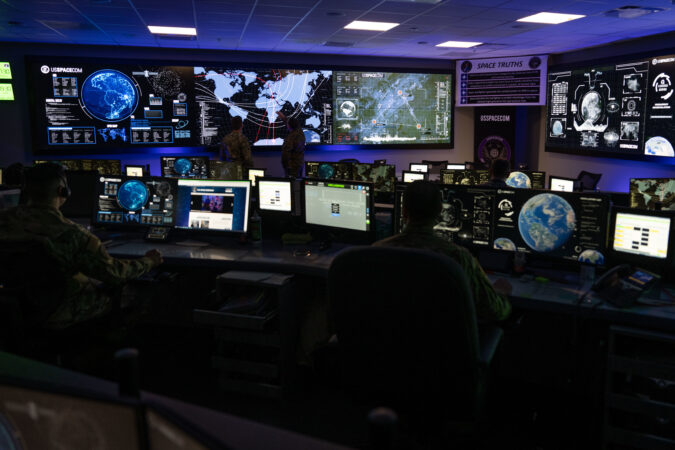
As the commander, Gen. Whiting regularly travels to Huntsville, making the trip at least every six weeks, a frequency he expects to increase as the transition progresses. He clarified that his primary home base must align with the location of the command’s Joint Operations Center (JOC), which serves as SPACECOM’s main command-and-control node. The JOC is not slated to relocate to Huntsville until the permanent facility is completed in 2031. Consequently, the commander will remain based in Colorado until that pivotal move occurs, ensuring continuity of strategic oversight.
Relocating Personnel: Incentives and Community Preparedness
While it is still premature to determine the exact number of personnel who will ultimately choose to relocate from Colorado to Alabama, SPACECOM officials and local community leaders in Huntsville have expressed encouragement regarding the number of personnel who have already committed to the move. To facilitate this transition, U.S. Space Command has implemented measures to incentivize its civilian personnel, offering both relocation and retention bonuses to those who volunteer to transfer to the new headquarters location. Gen. Whiting articulated the command’s strategy in February at AFA’s Warfare Symposium: “I’ve said to our civilian workforce, I want to make this decision as difficult as it can be for them because we’re putting our money where our mouth is that we need their expertise to sustain our mission.” This approach aims to retain critical institutional knowledge and operational experience during the relocation.
Michael Ward, Senior Vice President of Government and Public Affairs at the Huntsville/Madison Chamber of Commerce, reported on efforts by his team to meet with Space Command personnel in Colorado Springs. He indicated that these interactions have revealed enthusiasm among personnel for the upcoming move. Ward noted that individuals are frequently impressed upon learning about Huntsville’s established quality of life and robust education system, which have developed over decades of sustained growth since Redstone Arsenal’s establishment in 1941. The city’s extensive experience hosting other significant federal government agencies, including NASA’s Marshall Space Flight Center, Army Materiel Command, the Missile Defense Agency, and the FBI (which is projected to relocate an additional 4,000 personnel to the region in the coming years), means that Huntsville generally possesses the necessary housing, utilities, and broader infrastructure to effectively manage an influx of new residents. Furthermore, the region offers a range of cultural and recreational attractions designed to draw newcomers.
Ward emphasized Huntsville’s preparedness for such large-scale transitions. “This is not our first rodeo,” he stated. “This is something that we’ve been planning for and anticipating for a long time. … I think we’re pretty well positioned.” This long-standing experience positions Huntsville to effectively integrate SPACECOM and its personnel, supporting the command’s mission and contributing to regional development.
Why This Matters
The relocation of U.S. Space Command’s headquarters to Huntsville, Alabama, carries significant implications for national security, economic development, and strategic policy. As the command responsible for protecting U.S. interests in space, ensuring freedom of action in the space domain, and delivering space capabilities to the joint force, the efficiency and stability of SPACECOM’s operations are paramount in an increasingly contested space environment.
**National Security and Operational Efficiency:** A purpose-built headquarters facility will provide SPACECOM with a dedicated, state-of-the-art command and control node. This consolidation of space operators and international partners into a single location is expected to dramatically improve decision-making, enhance collaboration, and accelerate mission execution. In an era marked by growing threats from peer and near-peer competitors in space, the ability to operate with speed and precision is critical. The current operational environment, split across multiple temporary facilities and even two states, presents inherent challenges to seamless coordination and rapid response. This move aims to rectify those inefficiencies, fortifying the U.S.’s strategic advantage in space.
**Economic and Regional Impact:** For Huntsville, Alabama, the arrival of SPACECOM represents a substantial economic boost, reinforcing its identity as a nexus for military, aerospace, and technological innovation. The influx of 1,800 personnel, along with their families, will stimulate local housing markets, retail sectors, and service industries. Huntsville’s existing infrastructure, developed over decades of hosting federal agencies like NASA, the Missile Defense Agency, and the FBI, suggests a preparedness to absorb this growth. Conversely, Colorado Springs, which has temporarily hosted SPACECOM, faces the economic and social adjustments associated with the command’s departure. This highlights the profound economic impact that major military installations have on their host communities.
**Strategic Policy and Stability:** The saga of SPACECOM’s headquarters selection, involving reversals by successive presidential administrations, underscores the political dimensions inherent in such high-profile military decisions. While the final decision to move to Huntsville has been made and is now being executed with “speed and enthusiasm,” the initial back-and-forth created uncertainty and potential disruption for the command. Establishing a permanent, purpose-built headquarters provides much-needed long-term stability, allowing SPACECOM to fully focus on its critical mission without the distraction of persistent relocation debates. This stability is essential for developing and retaining a highly specialized workforce and fostering robust interagency and international partnerships vital for future space operations. The move positions the U.S. to better adapt to emerging threats and technological advancements in the complex and rapidly evolving domain of space.