
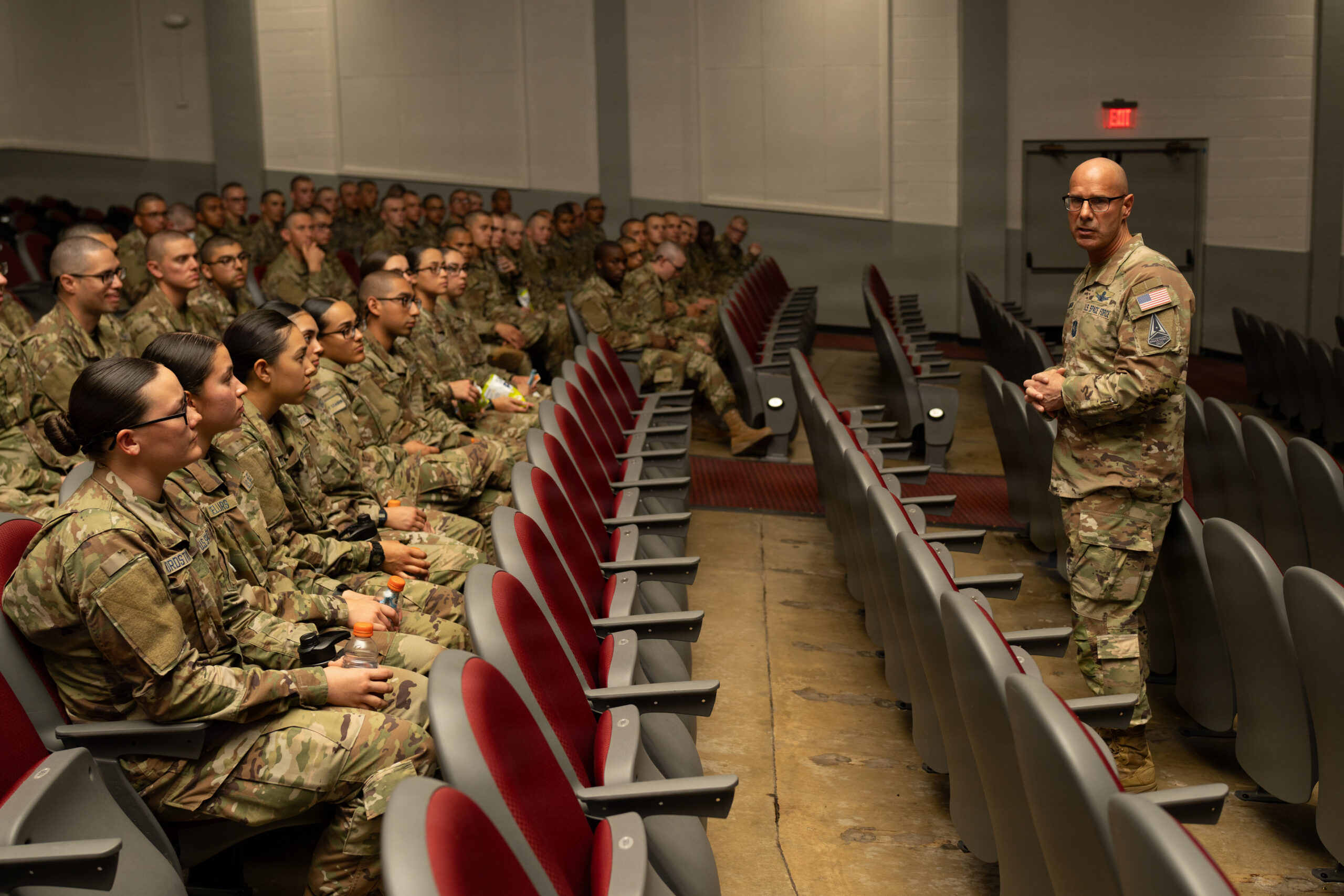
NATIONAL HARBOR, Md.—The U.S. Space Force (USSF) is embarking on a significant expansion, aiming to more than double its uniformed and civilian personnel by fiscal year 2031. This ambitious growth plan, recently detailed by senior leaders at the Air & Space Forces Association’s Air, Space & Cyber conference, goes beyond earlier public discussions of merely “doubling” the service’s size.
Currently, the Space Force comprises fewer than 11,000 uniformed Guardians and approximately 5,000 civilian employees. Under the new strategy, the service intends to increase its uniformed personnel to 25,000 and its civilian workforce to 12,500 by FY2031. This represents a combined increase of approximately 134 percent over its current strength. While Brig. Gen. Christopher Fernengel, former director of plans and programs on the Space Staff, had previously outlined these figures, public discourse often centered on an assumption of reaching 20,000 uniformed Guardians by 2030, a target now superseded by the higher goals.
Lt. Gen. David N. Miller Jr., the Space Force’s top planner and Deputy Chief of Space Operations for Strategy, Plans, Programs, and Requirements, reaffirmed these elevated numbers during a panel discussion at the conference. He also suggested that even these substantial targets might not fully meet the service’s evolving requirements. “As much as I know we need 25,000 Guardians in the next five years, as much as I know we need about 12,500 civilians in the Space Force in the next five years, the actual requirement, I could argue, is more,” Miller stated.
The Strategic Imperative for Growth
Space Force leaders cite new and expanding missions as the primary drivers for this personnel increase. The service is developing capabilities to launch numerous new satellites designed to track both air and ground targets. Concurrently, it is investing heavily in “space control,” which encompasses the ability to protect U.S. and allied assets in space while holding adversaries’ space capabilities at risk. This focus on space control was underscored by Air Force Secretary Troy Meink’s revelation at the conference that the Space Force possesses on-orbit space control weapons, marking the first public acknowledgment of such a capability.
Chief Master Sergeant of the Space Force John F. Bentivegna emphasized that this expansion is necessary because the service is not reducing any of its existing operational commitments. “Doubling the size just makes sense given all the things we have to do,” Bentivegna commented. “Even though we’re operating effectively today with just under 11,000 Guardians, we need more.”
Lt. Gen. Gregory Gagnon, head of Combat Forces Command, further elaborated that the planned growth in personnel is actually outpaced by the projected increase in equipment and systems. He noted that his command currently controls 33 to 50 percent more satellites than it did two years ago. Looking ahead, Gagnon projected a “fivefold increase” in the amount of “kit” in outer space within the next three years, with the budget funding in place to support over 500 percent more command and control responsibilities. This significant increase in assets necessitates a proportional, if not greater, increase in the human workforce to manage and operate them.
Gagnon highlighted the escalating demand for space capabilities from various military commands. He reported that all six geographic combatant commands are seeking assistance from the Space Force. To address this rising demand, approximately two-thirds of the planned personnel growth will be allocated to generating “more combat crews and more force elements” to support these commanders globally.
Strategic Recruitment and Integration
Despite the ambitious growth targets, Space Force officials express confidence in their ability to attract sufficient talent. The service has consistently met its recruiting goals since its inception and has even had to decline thousands of interested applicants and interservice transfers. This strong interest has led Bentivegna and other leaders to characterize the Space Force’s approach not as “recruiting” but as “scouting” for new members.
However, Deputy Chief of Space Operations for Personnel Katharine Kelley stressed the importance of a strategic and “sustainable” approach to growth. Simply adding a large number of new Guardians at the lowest ranks could disrupt the service’s grade structure and promotion system. “It is arguably easier to just say, ‘I need this many new Guardians,’” Kelley observed. “It is much harder to say, ‘I need to seed all of that talent inside the service that already exists and not create an imbalance in an up-or-out promotion system.’”
To mitigate potential imbalances, the Space Force is exploring various methods for bringing in personnel with diverse experience levels. These include direct commissioning, which allows civilians with relevant space expertise to join at higher ranks and grades. Additionally, the service recently opened its application window for interservice transfers from the Army, Navy, Air Force, and Marine Corps for fiscal year 2027. This strategy aims to ensure a balanced force structure that can accommodate the influx of new personnel effectively.
Bentivegna noted that the demographic makeup of the Space Force is expected to evolve with this expansion. Traditionally, the Space Force has had a higher proportion of officers to enlisted personnel compared to other services. While it is unlikely to reach the ratios of the Air Force or Marine Corps, the upcoming growth is projected to favor enlisted personnel. “We’re going to grow more enlisted than we are going to grow officer,” Bentivegna explained. “I think just a couple years ago it was almost a flat 50/50. Now we’re 53 percent enlisted, and I think that will continue to grow.”
Scaling the Training Pipeline
The rapid expansion will place significant demands on the Space Training and Readiness Command (STARCOM). Maj. Gen. James E. Smith, head of STARCOM, outlined the substantial increases in training requirements. For 2027 alone, STARCOM is projected to train:
- Three times as many total Guardians as in 2026, increasing from 1,000 to 3,000.
- Twice as many enlisted personnel, rising from 700 to 1,400.
- Four times as many officers, growing from 400 to 1,600.
Smith described this rapid scaling as “a huge, huge scaling problem.” In response, STARCOM has moved to add approximately 75 new instructors across its various schools and courses. While the Space Force will continue to rely on the Air Force for certain support functions, Smith emphasized the critical need for STARCOM to simultaneously foster a distinct “Guardianship” identity and ensure that all training remains Space Force-centric.
Why This Matters
The U.S. Space Force’s ambitious plan to significantly expand its personnel by 2031 carries profound implications for global security, technological advancement, and international relations.
Global Security and Deterrence:This expansion is a direct response to the increasing militarization of space and the growing threats from strategic competitors like China and Russia. A larger, more capable Space Force aims to bolster U.S. deterrence in orbit, protect critical satellite infrastructure that underpins both military operations and civilian life, and ensure the United States maintains its strategic advantage in a domain vital for national defense. The public acknowledgement of on-orbit space control weapons further signals a robust posture to safeguard U.S. interests and potentially counter adversarial actions in space.
Economic and Civilian Impact:Space assets are integral to the global economy, supporting everything from GPS-dependent transportation, logistics, and agriculture to satellite communications, weather forecasting, and financial transactions. The Space Force’s ability to secure these assets directly contributes to global economic stability and fosters confidence in the reliability of space-based services. Investment in space capabilities also drives job creation and economic growth within the aerospace and defense sectors.
Technological Advancement and Innovation:The demand for expanded space capabilities necessitates significant investment in cutting-edge technologies. This includes advancements in satellite design, propulsion systems, artificial intelligence for data analysis and autonomous operations, advanced cybersecurity measures, and materials science. Such research and development not only strengthen national security but also generate spin-off technologies that can benefit civilian industries and accelerate scientific progress across various fields.
International Relations and Alliances:The robust growth of the Space Force signals a firm U.S. commitment to maintaining freedom of action in space. This can strengthen alliances, as partner nations may increasingly rely on U.S. capabilities for their own space security. However, it also raises complex questions regarding the future of arms control in space and the potential for an arms race, requiring delicate diplomacy to establish norms of behavior and prevent conflict in this critical domain.
Future of Warfare:The Space Force’s expansion underscores the recognition of space as a distinct and increasingly vital warfighting domain. This shift will influence military doctrines and strategies worldwide, highlighting the need for capabilities to operate in, from, and through space. The ability to control and protect space assets will be a decisive factor in future conflicts, making the Space Force’s growth a key indicator of evolving military priorities.
WASHINGTON D.C. –The United States Space Force is embarking on a significant expansion of its personnel and capabilities, necessitating a substantial overhaul of its training, testing, and physical infrastructure. High-ranking officials recently detailed the service’s ambitious plans to equip its growing force of “Guardians” with the skills and facilities required for evolving space missions, emphasizing a strategic investment in the future of space defense.
Maj. Gen. James E. Smith underscored the urgency of developing a robust talent pipeline to meet future operational demands. “We’ve got to create more Guardians,” Smith stated, emphasizing the need for personnel to possess “the right skill sets to execute these new missions.” This initiative reflects a broader recognition of space as an increasingly contested domain, demanding specialized expertise beyond traditional military roles.
Advancing Space Training and Testing Capabilities
A critical component of this expansion focuses on enhancing the service’s test and training infrastructure, a priority inherited from former Chief of Space Operations Gen. B. Chance Saltzman. Maj. Gen. Smith highlighted a key deficiency: “There are some pieces still missing in our recipe. One of them is a fully constructed live, virtual, and constructive environment in order to do both tests, but also to do training.”
A live, virtual, and constructive (LVC) environment is essential for modern military readiness, particularly in complex domains like space. A “live” component involves actual hardware and personnel operating in real-world scenarios, while “virtual” elements integrate human operators interacting with simulated systems. The “constructive” aspect refers to computer-generated forces and simulations interacting with each other, often without direct human involvement, to model large-scale conflicts or system behaviors. Integrating these three elements allows for realistic, scalable, and cost-effective training and testing that can simulate the complexities of orbital mechanics, cyber threats, and potential adversarial actions in space.
To address this critical gap, the Space Force issued a request for proposals in March for a new physical test and training range. This range is envisioned to integrate a mix of ground-based and space-based systems, designed to identify and rapidly address near-term deficiencies in existing test and training capabilities. Such a dedicated range would provide a controlled environment to experiment with new technologies, validate operational tactics, and train Guardians in scenarios that closely mimic potential future conflicts, from satellite reconnaissance to counter-space operations.
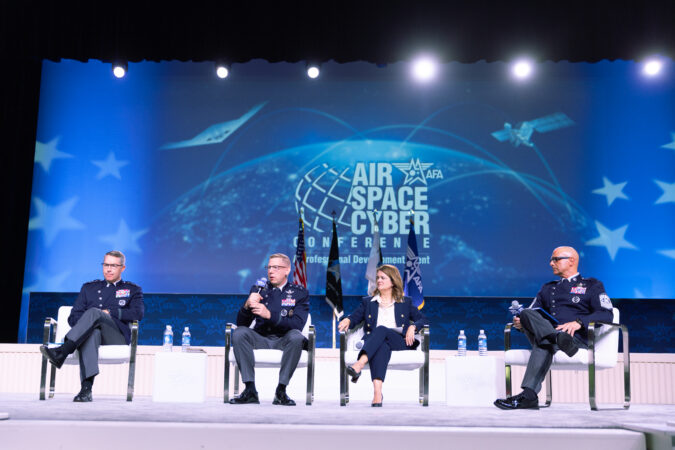
Photo by Jud McCrehin, Air & Space Forces Association
Addressing Infrastructure Shortfalls with Record Investment
Beyond training, the Space Force faces what Assistant Deputy Chief of Space Operations for Installations and Logistics Kathryn Kolbe described as “significant infrastructure shortfalls.” These needs span a wide range of facilities, from command and control centers to housing and specialized laboratories, all necessary to support a rapidly expanding force and its increasingly complex missions.
To address these challenges, the service has proposed its largest-ever investment in Military Construction (MILCON) for the fiscal year 2027 budget. “If appropriated, we would receive $2.2 billion,” Kolbe confirmed, outlining a substantial commitment to laying the physical groundwork for the Space Force’s future.
Nearly half of this proposed budget, approximately $1 billion, is earmarked for the construction of four new space operations centers. These centers are crucial for the command, control, and execution of space missions, encompassing everything from satellite constellation management to intelligence gathering and threat response. Expanding these facilities would enhance redundancy, improve operational efficiency, and provide necessary capacity for the growing number of space assets and missions.
Additionally, the Space Force is seeking an undisclosed, classified amount for five new tactical electronic warfare (EW) centers. Electronic warfare in space involves a range of capabilities, including jamming adversary communications or navigation signals, protecting friendly satellite links, and developing countermeasures against hostile electronic attacks. The classified nature of these centers underscores their strategic importance in maintaining a competitive edge in a contested space environment.
Billions of dollars have also been invested in upgrading infrastructure at critical launch sites, specifically Cape Canaveral Space Force Station, Florida, and Vandenberg Space Force Base, California. These investments aim to support an increased tempo of launches, accommodate diverse payload types, and facilitate closer integration with commercial space partners, crucial for rapid satellite deployment and replenishment capabilities.
However, large-scale construction projects inherently take time, while the Space Force’s personnel growth is accelerating. Recognizing this temporal mismatch, Kolbe explained, “In the meantime, we’re building temporary facilities for our operational units, for our training units, and for other requirements as they arise, as we plan, program, design, and construct our long-term facilities and infrastructure.” These interim solutions are vital to ensure that new Guardians have immediate access to necessary workspaces and training environments as permanent structures are being developed.
Why This Matters
The U.S. Space Force’s strategic investments in personnel development, advanced training environments, and critical infrastructure are more than just bureaucratic exercises; they are foundational to maintaining national security and global stability in the 21st century. As space increasingly becomes a domain of competition and potential conflict, the ability to operate effectively, deter aggression, and defend vital assets is paramount.
Firstly, the focus on developing “Guardians” with the “right skill sets” directly addresses the evolving nature of threats in space. From sophisticated cyber attacks on satellite systems to the proliferation of anti-satellite weapons by rival powers, the challenges in space are complex and constantly shifting. A highly trained and adaptable workforce is essential for safeguarding critical national infrastructure, including GPS, weather forecasting satellites, communication networks, and intelligence-gathering assets that underpin both military operations and civilian life.
Secondly, the push for a robust “live, virtual, and constructive” training environment and dedicated physical ranges signifies a recognition that real-world preparedness cannot be achieved through theoretical knowledge alone. Simulating intricate orbital dynamics, adversarial tactics, and multi-domain operations allows for experimentation with new strategies and technologies in a controlled yet realistic setting. This reduces risks in actual conflict, accelerates capability development, and ensures that Space Force personnel are proficient in operating cutting-edge systems under pressure. The absence of such comprehensive training environments would leave the U.S. vulnerable to adversaries who are actively investing in their own space warfare capabilities.
Finally, the substantial military construction budget and the development of new space operations centers, tactical electronic warfare centers, and launch infrastructure are vital for supporting the physical and operational footprint of a growing space force. Without adequate facilities, the ability to command and control assets, process intelligence, conduct electronic warfare, and rapidly launch or replenish satellites would be severely hampered. These investments ensure that the Space Force has the physical capacity to manage its expanded responsibilities, guaranteeing operational resilience and the ability to project power or respond to contingencies in space. The interim use of temporary facilities highlights the urgency of these needs and the commitment to rapid expansion.
In essence, these efforts collectively represent a critical investment in the future of U.S. national security, aiming to solidify its leadership in space, deter potential adversaries, and protect the vast array of economic and strategic benefits derived from a secure and accessible space domain for all nations.