
This article’s auditory content is presented by the Air & Space Forces Association, commemorating and assisting our Airmen, Guardians, and their households. Discover further information at afa.org
AURORA, Colo.—The Space Command is temporarily halting all defense launches utilizing United Launch Alliance’s Vulcan launch vehicle, as authorities probe a recent irregularity which they indicate might require “several months” to rectify.
Consequently, deployment schedules for a GPS III satellite, intended to launch on the novel rocket next month, are uncertain, as stated by Col. Eric Zarybinsky, the executive officer overseeing guaranteed space access.
“I will seek every possible adaptation to ensure the swift delivery of combatant capabilities,” Zarybinsky informed journalists at AFA’s Air Warfare Symposium held here. “I possess various instruments at my disposal for that purpose, but until this irregularity is fully resolved, we will not be dispatching National Security Space Launch operations via Vulcan.”
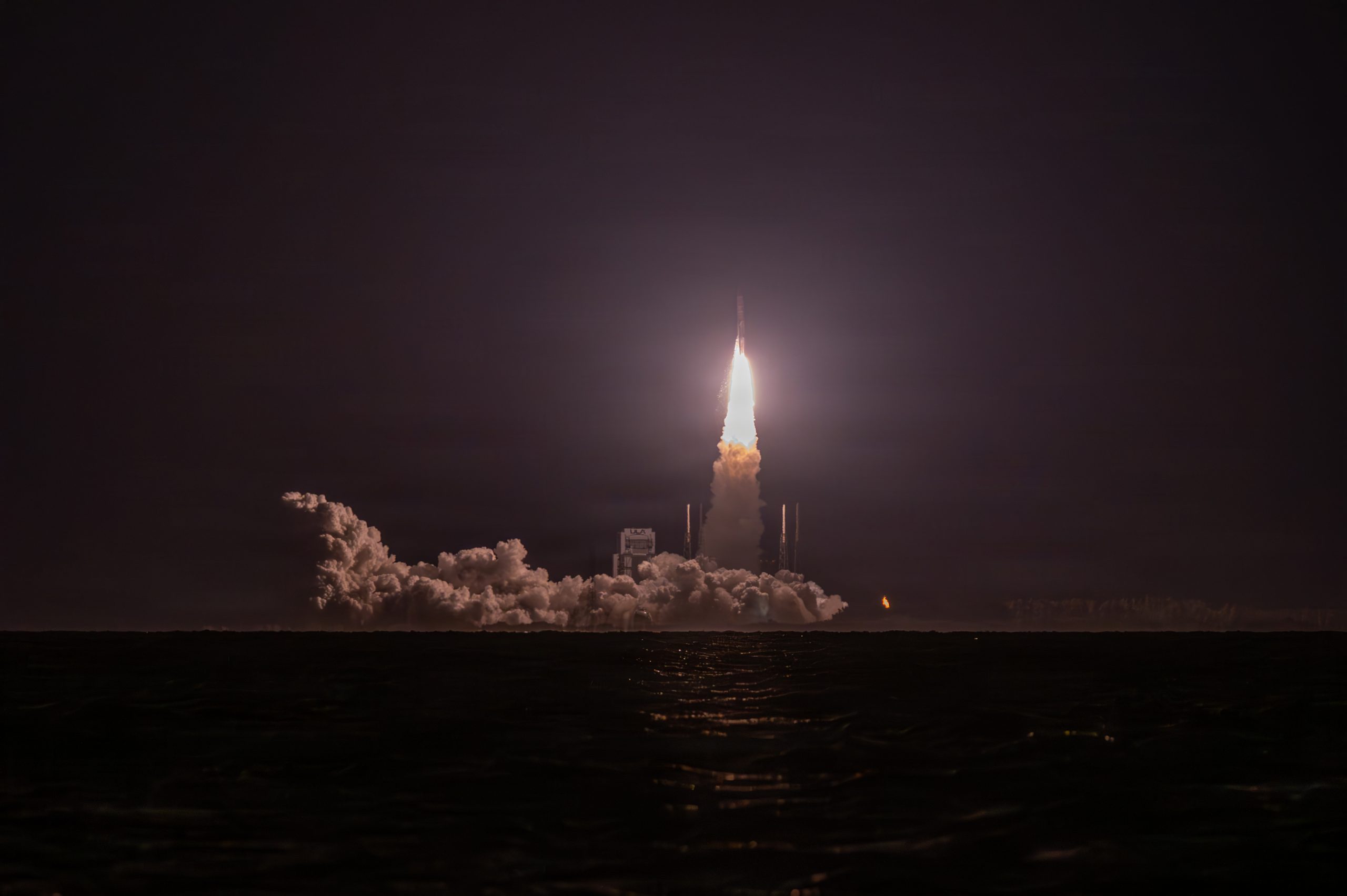
The irregularity took place on Feb. 12 during the Space Force’s USSF-87 operation, transporting two satellites for the service’s Geosynchronous Space Situational Awareness Program and a training and demonstration satellite that Combat Forces Command intends to utilize for instructing Guardians in executing maneuver operations. Despite the successful lift-off, ULA detected a problem concerning one of the craft’s four solid rocket boosters subsequent to launch. Gary Wentz, the company’s Vice President for Atlas and Vulcan programs, subsequently described it as a “notable operational irregularity.”
The irregularity might bear resemblance to a problem ULA encountered during a Vulcan trial launch in October 2024, when a nozzle on its second-stage accelerator fractured mid-flight, though authorities have not verified a connection. That unfortunate incident led to substantial postponements in Vulcan’s approval for carrying national security payloads, an accomplishment finally reached last March.
Vulcan was slated to dispatch seven national security payloads this current year. Apart from the GPS III mission, the Space Force’s inaugural Next-Generation Overhead Persistent Infrared satellite is anticipated to launch in May.
Zarybinsky indicated his group is assessing various alternatives for deploying military and intelligence payloads into orbit, but has not yet initiated any shifts of payloads to alternative launch vehicles—whether ULA’s Atlas V or SpaceX’s Falcon 9.
The Space Force possesses recent expertise in reassigning missions between SpaceX and ULA rockets via an initiative designated Rapid Response Trailblazer. The service has conducted two RRT missions, both concerning GPS III satellites.
Col. Andrew Menschner, SSC’s deputy commander, informed journalists that owing to GPS satellites being authorized for launch on various providers’ rockets, relocating those payloads is simpler.
“The capacity to transition from one provider to another exists for those craft, which is simply not the case for some other categories of vehicles,” he conveyed to reporters during a Feb. 25 briefing.
ULA failed to promptly reply to an inquiry seeking further specifics regarding the progress of its inquiry. The irregularity represents a hindrance for the company, which is emerging from a demanding 2025. Even with an intention to perform 20 launches last year, with 10 using Vulcan, it only launched six times, and merely once via Vulcan. Subsequently, in January, its Chief Executive Officer Tory Bruno, who supervised Vulcan’s evolution, abruptly declared his departure from the firm to join Blue Origin, a direct rival.
Company executives disclosed to journalists earlier this month their aspiration to reach a turning point this year, deploying Vulcan approximately 18 to 22 times. During a briefing merely days prior to the USSF-87 launch, ULA’s provisional CEO John Elbon stated that the company is “intensely concentrated” on augmenting Vulcan’s launch frequency in 2026.
“We possess a queue of more than 80 missions, coupled with a robust pledge from our board of directors dedicated to propelling us into the future,” Elbon remarked on Feb. 10. “We are simply assured of the promising future awaiting us.”
This article’s auditory content is presented by the Air & Space Forces Association, commemorating and assisting our Airmen, Guardians, and their households. Discover further information at afa.org