
Investigation Uncovers Elaborate Military Impersonation on TikTok
London, UK –An investigation by the UK Defence Journal has exposed a sophisticated online deception involving a man who falsely claimed to be a former Royal Marines colonel, highlighting the ease with which convincing but fabricated military careers can be constructed on social media platforms like TikTok. The case of Cameron Nell, who presented an invented eight-year service history culminating in a senior commissioned rank, reveals how genuine military details, manipulated photographs, and plausible narratives can mislead a public unfamiliar with the intricacies of military life.
The investigation uncovered multiple TikTok accounts operated by Mr. Nell, which portrayed him as a Royal Marines colonel who served between 2012 and 2020. His alleged career included deployments with elite units such as 40 Commando and 42 Commando, and participation in a long list of genuine military operations and exercises. This detailed, yet ultimately false, narrative drew the attention of individuals with firsthand knowledge of the Armed Forces, many of whom had already begun to question the claims before the UK Defence Journal’s involvement.
The Anatomy of a Fabricated Career
The foundation of Mr. Nell’s deception lay in his ability to weave together authentic military information with a fictitious personal history. Publicly available details such as operation names, unit histories, photographs of serving personnel, and military terminology were meticulously gathered and integrated into his online persona. For an audience without military experience, the resulting presentation carried a significant degree of credibility.
Specifically, Mr. Nell’s accounts claimed he had passed out with “Troop 139” in 2012, deployed on Operation Herrick in Afghanistan in 2013, and participated in Operation Gritrock and Operation Shader in 2014. Subsequent claims included involvement in exercises such as Platinum Lion, Black Alligator, Operation Ruman, Albanian Lion, and Green Dagger. The use of these genuine operation and exercise names provided an immediate veneer of authenticity, making it difficult for an untrained eye to discern the falsehoods.
Further enhancing the illusion, his posts frequently featured Royal Marines insignia and the Corps motto,Per Mare, Per Terram(By Sea, By Land). He variously described himself as a Royal Marine, commando, veteran, and colonel, and proudly used the nickname “Bootneck,” a well-known term for a Royal Marine.
One version of his life story stated he was born in South Africa in 1996, moved to Britain at age five, joined the Royal Marines in 2012 after leaving school, and retired in 2020 as a colonel. He even claimed to be the “youngest colonel in British history.” This rapid career progression — from school-leaver to senior commissioned officer in approximately eight years — immediately raised red flags for anyone familiar with military service. Achieving the rank of colonel typically requires decades of service, progressing through multiple junior and field officer ranks, and accumulating extensive command, staff, and leadership experience.
Expert Scrutiny Uncovers Discrepancies
The UK Defence Journal, with assistance from serving personnel and veterans, meticulously deconstructed Mr. Nell’s claims. Experts examined the claimed sequence of deployments, the specific terminology used, and the unit references. They also traced photographs and identified genuine military materials that had been incorporated into his fabricated narrative. While many of the surrounding elements were real, the central claim of his service was definitively proven false through independent checks via official channels.
The inconsistencies extended beyond the improbability of his rapid ascent through the ranks. Sources familiar with military life and with Mr. Nell himself reported that answers to basic questions about units, weapons, medals, training, and deployments often changed over time. Initially, information was sometimes described as classified, only for different explanations to be offered later when pressed for details. This evasiveness further fueled suspicion among those with military backgrounds.
The Role of Manipulated Imagery
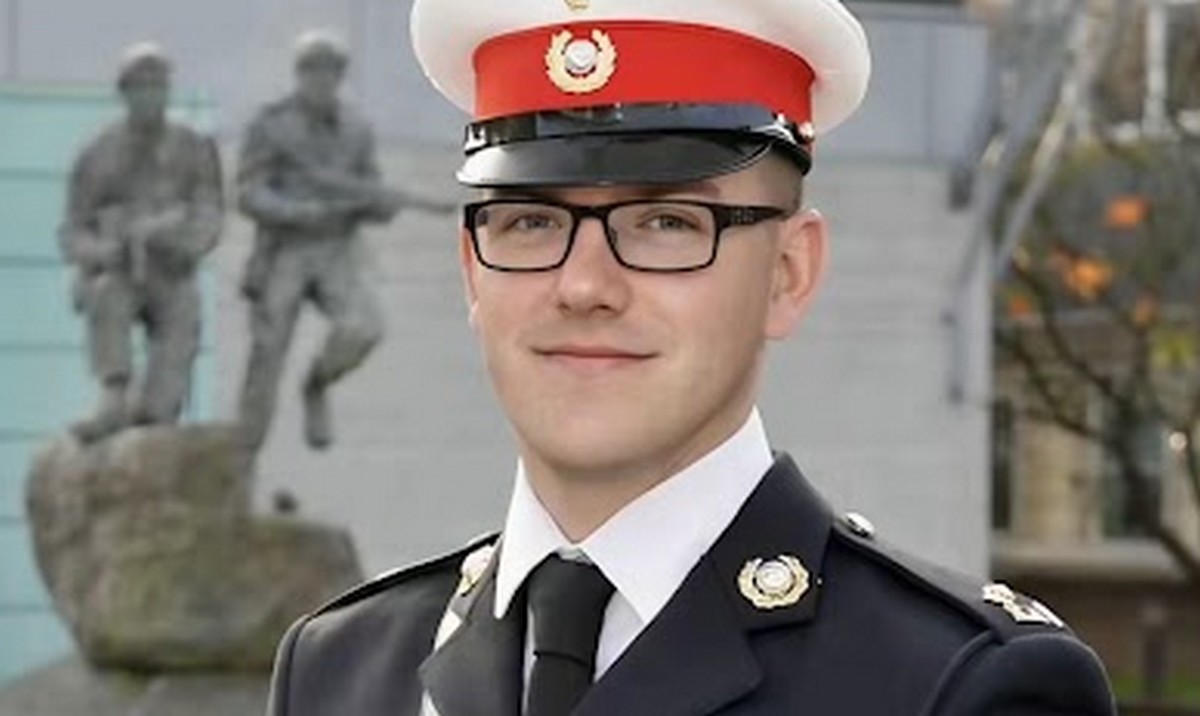
A significant element of the deception involved digitally manipulated photographs. One striking example was a TikTok post showing what appeared to be Mr. Nell in military uniform, captioned: “This was me 6 years ago in 2020 as a Colonel the year that I left the Royal Marines.” The investigation revealed that the military photograph itself was authentic, but Mr. Nell’s face had been digitally superimposed over the original serviceman’s, leaving the genuine uniform, equipment, and background intact. TikTok itself flagged the post with a “Contains AI-generated media” label, though this might be easily overlooked by casual viewers.
This method of manipulation highlights how easily a convincing visual narrative can be created. The viewer sees a real uniform, a real setting, and a real military context, making the fabricated individual appear genuine. Such imagery, combined with the detailed but false biographical information, contributed significantly to the perceived credibility of the accounts.
Previous Admissions and Enduring Deception
Evidence seen by the UK Defence Journal indicates that Mr. Nell had previously acknowledged and apologized for making false military claims. Despite these prior admissions, substantially similar claims later reappeared online. This history suggests that the behavior was not a result of a simple misunderstanding of ranks or incorrect use of terminology, but rather a deliberate pattern of deception, though the motivations for its recurrence remain unclear.
The Human Cost of Fabricated Stories
The consequences of Mr. Nell’s elaborate falsehoods became particularly stark and distressing when his claims intersected with real-life tragedies. For one individual, the deception transcended the realm of a mere “Walter Mitty” case – a term often used for people who falsely claim military service or heroism – when Mr. Nell spoke about a real deployment that included the death of someone personally known to them.
A source, whose identity and specific connection to the deceased have been withheld to protect their privacy, provided the UK Defence Journal with a detailed account of the incident. According to the source, Mr. Nell discussed the death as part of his claimed operational experience, placing himself directly within the events and describing them as something he had personally witnessed and encountered. For the listener, this was not an abstract story or a name from an old casualty list; it was about a person they knew and whose loss they had grieved. This act of appropriating a real tragedy for personal validation caused significant distress and highlighted the deeply personal and harmful impact that such fabrications can have on individuals connected to the genuine events.
Why This Matters
The case of Cameron Nell and his fabricated military career on TikTok is more than just an isolated incident of online deception; it underscores several critical issues in the digital age:
- Erosion of Trust and Integrity:False claims of military service, often termed “stolen valor,” directly undermine the honor, sacrifice, and integrity of genuine service members and veterans. They cheapen the genuine experiences of those who have served and can cause profound offense to military communities and their families.
- Vulnerability of Social Media to Disinformation:This incident demonstrates how easily individuals can construct elaborate fake identities and narratives on social media platforms. The blend of genuine public information with fabricated personal details creates a convincing illusion that can be difficult for the average user to detect, even with platform-provided disclaimers like “AI-generated media” labels.
- Challenges of Online Verification:The case highlights the ongoing challenge of verifying identities and claims made online. While experts with specific knowledge were able to expose the falsehoods, the broader public often lacks the tools or expertise to critically assess such detailed narratives, making them susceptible to manipulation.
- Psychological and Emotional Harm:Beyond general deception, the specific act of appropriating a real-life tragedy, particularly the death of a service member known to another individual, demonstrates the potential for significant emotional and psychological harm. Such actions move beyond mere embellishment into a realm of profound disrespect and callousness that can reopen wounds and inflict new trauma.
- The Need for Critical Media Literacy:In an increasingly digital world, this story serves as a potent reminder of the importance of critical media literacy. Users must be encouraged to question sources, cross-reference information, and be aware of the sophisticated techniques used to create convincing but false online personas.
As social media continues to evolve, the distinction between reality and fabrication becomes increasingly blurred. The Nell case is a stark illustration of the ease with which a false narrative can be built and the very real consequences that can ensue when such deceptions intersect with the lives of those touched by genuine service and sacrifice.
A recent investigation by the UK Defence Journal has uncovered a case of alleged military impersonation on social media, involving a man who reportedly fabricated a career as a senior Royal Marines officer. The individual, identified as Mr. Nell, is accused of using multiple TikTok profiles to present himself as a serving or retired Colonel, claiming specific ranks, deployments, and operations. The investigation escalated when the journalist conducting the inquiry reported receiving threats of violence from Mr. Nell, leading to a police investigation.
The core of the allegations centers on Mr. Nell’s online persona, which included photographs reportedly altered with artificial intelligence to superimpose his face onto images of genuine military personnel. These altered images, combined with detailed narratives of service, were used across several TikTok accounts to cultivate a convincing, albeit false, military background. The UK Defence Journal conducted a thorough verification process, contacting official military sources and veterans’ organizations, all of whom confirmed that Mr. Nell had no record of service in the Royal Marines, nor was he affiliated with the veterans’ groups he claimed.
The fabricated career details, including references to specific ranks and deployments, created a narrative that, according to the UK Defence Journal, could evoke strong reactions from individuals with genuine military experience. The report highlights how such invented careers can clash with the authentic memories and experiences of those who have served, leading to a sense of betrayal and anger among the veteran community.
Extensive Reach of Unverified Claims
Despite one of the primary TikTok profiles having a relatively modest following of approximately 490 followers and 1,800 likes at the time of examination, the reach of Mr. Nell’s claims was significantly wider. Individual posts observed by the UK Defence Journal had garnered substantial viewership, with figures ranging from roughly 13,000 to nearly 29,000 views. This indicates that even accounts with a small direct following can achieve considerable visibility through TikTok’s algorithms and user engagement.
The account operator also utilized TikTok LIVE, a feature that allows creators to interact with their audience in real-time and potentially receive virtual gifts, which can be converted into monetary value. Material reviewed by the UK Defence Journal suggested that financial support was being encouraged or accepted in connection with the account’s activities. While the exact amount of money, if any, received by Mr. Nell, and whether any contributions were made under the belief of his military service, remains unestablished, the potential for financial exploitation is a significant concern.
These audience figures underscore the challenge of verifying online identities and claims. An individual encountering one of these videos or livestreams could be presented with a comprehensive and seemingly authentic portrayal of a senior military officer – complete with uniforms, named operations, and personal service stories – without immediate access to information that could expose the fabrication.
Furthermore, Mr. Nell’s accounts reportedly claimed affiliations with several veterans’ organizations. Upon contact from the UK Defence Journal, these groups unequivocally confirmed that Mr. Nell held no official association or membership with them.
TikTok’s Platform Policies and Actions
Following its investigation and verification of the falsity of Mr. Nell’s Royal Marines career claims, the UK Defence Journal engaged with TikTok regarding its platform rules concerning such accounts. TikTok responded by confirming that it had removed accounts found to be in breach of its community guidelines, specifically those related to impersonation.
The social media giant’s Community Guidelines explicitly prohibit behavior intended to spam or mislead users, encompassing both general spam and impersonation accounts. The platform also has policies against attempts to defraud or scam its community members. TikTok reported that during the first quarter of 2026, 93.6 percent of videos removed for misleading or attempting to manipulate users were identified and taken down proactively before being reported to the company by users.
Despite the initial removal of the primary account, the activity did not cease immediately. Subsequent profiles emerged, reportedly carrying substantially the same Royal Marines identity and continuing to present their operator as a former Royal Marine Colonel. However, at the time of reporting, the UK Defence Journal indicated that it could no longer locate accounts associated with Mr. Nell actively operating on TikTok.
Response from Mr. Nell
In adherence to journalistic standards, the UK Defence Journal provided Mr. Nell with a right of reply prior to publication, offering him an opportunity to present evidence, correct inaccuracies, or explain his position. When directly questioned about the use of artificial intelligence to superimpose his face onto photographs of military personnel, Mr. Nell responded, “No comment.” He later inquired, “How am I faking if I have proof of my service?”
The UK Defence Journal requested to review any proof of service Mr. Nell claimed to possess; however, none was provided. When informed that his service and rank claims had been thoroughly checked and found to be false, he maintained, “But they are not false.”
Mr. Nell was afforded another opportunity to provide a statement for publication before the exchange concluded. His final response reiterated his claims: “Yes I will say I’m proud that I served 8 years in the Royal Marines and I’m proud to call my self a Royal marine and I’m proud of my rank of colonel I achieved.” This statement, consistent with his initial assertions, was again unaccompanied by any supporting evidence.
Threats Against the Investigating Journalist
After the original TikTok account associated with Mr. Nell disappeared, he reportedly located and followed the personal Facebook profile of the journalist investigating the story. Subsequently, he made contact through another TikTok account, once more presenting himself as a Royal Marine Colonel. The journalist explicitly requested that Mr. Nell cease contact.
Despite this request, further messages reportedly followed. After the request was made explicit, Mr. Nell sent the journalist a message stating, “I’ll beat you up.” Upon being informed that this threat would be reported to the police, he allegedly sent another message threatening a “knuckle sandwich.” A subsequent message from Mr. Nell read, “This is why no one likes journalists.”
At this point, the UK Defence Journal terminated direct communication with Mr. Nell. While a right of reply ensures fairness in reporting, it does not obligate a journalist to continue correspondence with an individual who begins issuing threats. The messages were retained as evidence and subsequently reported to Avon and Somerset Police.
Police Investigation Initiated
Avon and Somerset Police have since provided an official statement to the UK Defence Journal, confirming that “A report has been received that a man had been harassed and threatened in online messages. Enquiries are being carried out into this matter.”
The ongoing police investigation specifically pertains to the threats and harassment directed at the journalist and is distinct from the allegations concerning the authenticity of Mr. Nell’s military career claims.
Prior to these direct messages, public material from Mr. Nell’s accounts had also caused concern. One post reportedly stated: “Think twice before sending death threats and threatening to kill a civilian with a Royal Marine background because you will lose your careers and your life.” Another post displayed an armed and masked military-style figure accompanied by the text: “I came into this world covered in blood, Don’t mind going out the same way, fear no man. Only God.” While these public posts were not initially treated as direct threats by the UK Defence Journal when viewed in isolation, the private message “I’ll beat you up,” sent directly to the investigating journalist after a clear request to cease contact, was regarded differently and reported to authorities.
Why This Matters
This incident highlights several critical issues in the digital age, impacting national security, social trust, and public safety. Firstly, the fabrication of military service, often referred to as “stolen valor,” is a profound insult to those who have genuinely served and sacrificed for their country. It diminishes the honor associated with military service and can erode public trust in both veterans and military institutions. For real veterans, encountering individuals who falsely claim their experiences can be deeply upsetting and disrespectful, potentially causing psychological distress and undermining the camaraderie that is vital to the military community.
Secondly, the case underscores the significant challenge of verifying online identities and information. Social media platforms, with their vast reach and often limited identity verification processes, can be fertile ground for deceptive practices. The use of advanced tools like AI to manipulate images makes it even harder for the average user to distinguish between genuine and fraudulent content. This vulnerability can lead to the spread of misinformation, the erosion of factual reporting, and a general decline in trust in online interactions.
Thirdly, the potential for financial exploitation through these fabricated personas raises serious concerns. If individuals are encouraged to provide financial support, such as virtual gifts on live streams, under false pretenses of military service, it constitutes a form of fraud. This not only victimizes those who donate but also misdirects resources that might otherwise go to legitimate veteran support organizations.
Finally, the threats made against the investigating journalist are a stark reminder of the dangers faced by those who seek to uncover and report the truth. Journalists play a crucial role in holding individuals and institutions accountable, and intimidation tactics undermine the fundamental principles of a free press. Ensuring the safety of journalists is paramount for maintaining transparency and informing the public about important societal issues, including online deception and fraud. The police investigation into these threats emphasizes the seriousness with which such actions are viewed, reinforcing the importance of protecting individuals who are performing their professional duties.

Scrutiny Reveals False Military Service Claims in Digital Age
In a world increasingly shaped by digital platforms, the phenomenon of individuals fabricating military service records, often referred to as “stolen valor” or by the informal terms “Walter Mitty” or “Walt” within military communities, continues to draw attention. While some instances of invented careers may appear outlandish and invite ridicule due to inconsistencies such as impossible ranks, incorrectly displayed medals, or fabricated unit deployments, the issue carries a significant and often painful dimension when these claims infringe upon the genuine experiences of real service personnel.
The appropriation of real-world events and personal sacrifices, particularly the experiences of those who have faced combat or witnessed loss, represents a profound ethical concern. One documented instance involved a source recounting the distress caused by hearing the death of an individual personally known to them woven into another person’s purported operational history. This example underscores why such fabrications elicit a response far more potent than mere irritation at someone falsely claiming military affiliation. The events and individuals invoked to lend credibility to a fabricated narrative are not fictional; they represent real people and real trauma.
The motivations behind constructing such an identity, or returning to it after previous false claims have been disproven, often remain unclear. In the case of Mr. Nell, whose claims were examined, the underlying reasons for his actions are not publicly known. It is important to note that the UK Defence Journal is aware of additional documented matters pertaining to Mr. Nell’s past; however, these have been deliberately excluded from this report as they are not pertinent to establishing the authenticity of his military claims, the manner in which they were presented online, or the outcome of their verification. For ethical and safety considerations, readers are urged not to attempt to contact or harass Mr. Nell.
The Evolving Challenge of Verification in a Digital Landscape
A notable aspect of contemporary cases involving false military claims is the diminished effort now required to construct a seemingly plausible, yet ultimately fictitious, military history. The proliferation of publicly accessible information, including details of military operations, readily available photographs, and the ability to emulate military terminology, facilitates the creation of narratives that can appear convincing upon a superficial review. Furthermore, advanced image manipulation tools can generate visuals that, to the untrained eye, might lend unwarranted authenticity to these claims.
The true challenge arises when these claims are subjected to rigorous verification. In the specific instance discussed, the process of debunking involved multiple layers of scrutiny. Individuals with genuine military experience identified inherent inconsistencies in the presented narrative. Old photographs were meticulously traced to their original contexts, timelines of alleged service were cross-referenced against official records, and central claims were independently verified through established official channels. This comprehensive approach is vital, as the initial impact of such claims can be widespread.
By the time a detailed verification process concludes, thousands of individuals may have already encountered the fabricated account, and certain claims may have disseminated far beyond the original, potentially smaller, follower base of the individual. While false claims of military service are not a new phenomenon, social media platforms have significantly amplified their reach and velocity. Modern image manipulation technologies, alongside the ease of accessing information, provide a level of polish and apparent detail that was once considerably more difficult to achieve. A seemingly comprehensive service history can now be rapidly assembled, and an image purporting to show an individual in uniform may convey substantially less genuine information than it once did.
This evolving digital landscape underscores the critical importance of careful and thorough verification. Such scrutiny is particularly essential when the claims involve actual military units, verifiable operations, and events that continue to hold profound significance for those who genuinely participated in them. In the case under review, the claimed Royal Marines career did not withstand this rigorous examination. As of the time of this report, the UK Defence Journal could not locate any active online accounts associated with the individual on TikTok that were previously used to propagate these claims.

Why This Matters
The phenomenon of individuals fabricating military service records, commonly known as “stolen valor,” extends far beyond a simple act of deception. Its implications are multifaceted, affecting individuals, communities, and the broader societal understanding of military service.
Firstly, and most significantly, it causes profound emotional distress and insult to genuine veterans and their families. Those who have served, particularly in combat zones or under arduous conditions, carry indelible experiences. When someone falsely claims to share these experiences, or worse, appropriates the real stories of heroism, sacrifice, or loss endured by others, it can feel like a desecration of their service and the memories of fallen comrades. It can reopen old wounds and foster a deep sense of betrayal among a community built on trust, shared experience, and integrity. The act undermines the very meaning of military honor and the sacrifices made.
Secondly, these false claims erode public trust. When the authenticity of military service can be so easily faked and disseminated, it can sow seeds of doubt about the credibility of those who truly have served. This erosion of trust can impact public perception of veterans’ organizations, military charities, and even the respect afforded to uniformed personnel. It creates a climate where genuine heroism and sacrifice might be met with skepticism, a disservice to all who contribute to national defense.
Thirdly, this issue highlights a broader challenge in the digital age: the spread of misinformation and disinformation. The ease with which convincing, yet false, narratives can be constructed using publicly available information and digital tools underscores the urgent need for critical thinking and robust verification processes online. As image and text generation technologies advance, distinguishing fact from fiction becomes increasingly complex, impacting not just military claims but a wide array of public information.
Finally, for journalism, cases of stolen valor emphasize the critical role of diligent fact-checking and responsible reporting. It requires media outlets to not only expose falsehoods but also to educate the public on the methods of verification and the ethical considerations involved. By meticulously scrutinizing claims and providing objective accounts, journalism contributes to maintaining the integrity of public discourse and honoring the genuine service of military personnel. Upholding integrity in reporting such cases helps to protect the legacy of those who have truly served and reinforces societal values of honesty and respect.