

A new report from a prominent think tank advocates for a substantial increase in U.S. drone and munition stockpiles, citing the potential for a military confrontation with China over Taiwan. However, other defense experts suggest the report’s emphasis on affordability may overlook critical nuances in military strategy and capability.
The report, titled “Drones, Missiles, and the U.S. Munitions Shortage: The Role of Affordable Mass in a Taiwan Conflict,” was released on September 18 by the Center for a New American Security (CNAS). Authored by Philip Sheers and Stacie Pettyjohn, the document argues for an expanded inventory of long-range weapons designed to strike Chinese military targets, thereby thwarting any attempt to take control of Taiwan.
Sheers and Pettyjohn highlight a significant disparity between the anticipated number of targets the United States would need to engage in such a conflict and its current, diminishing munitions stockpiles. This depletion is attributed, in part, to ongoing global commitments and the use of such weapons in various theaters.
“In a U.S.-China conflict over Taiwan that is likely to become protracted, the inventory depth and disruption that lower-cost systems can provide will be invaluable to reversing U.S. disadvantages and stopping China from achieving its operational objectives,” the authors state, underscoring the report’s central premise.
To address this perceived gap, the CNAS report recommends a dual approach: maintaining stockpiles of high-end, advanced missiles while simultaneously mass-producing inexpensive drones and munitions. The latter, it suggests, could be used to overwhelm a Chinese attack through sheer volume. Further recommendations include:
- **Multiyear Funding and Contracts:** Implementing long-term funding and contractual agreements to enable manufacturers to expand weapons production capacity, facilitating the Pentagon’s efforts to rebuild its strategic reserves of long-range missiles.
- **Investment in Affordable Weapons:** Prioritizing funding for the development and production of low-cost, long-range anti-ship and land-attack weapons to rapidly fill existing inventory shortfalls.
- **Standardized Components:** Encouraging the use of common, standardized components across different airframe designs to reduce manufacturing costs and accelerate production scaling.
- **Integrated Drone-Missile Systems:** Pairing inexpensive drones with more advanced missiles to serve as decoys or initial strike platforms, thereby exhausting enemy air defenses.
- **Design Simplicity:** Emphasizing easily manufacturable designs over complex, potentially over-engineered systems to expedite production and deployment.
- **Congressional Engagement:** Establishing regular updates and briefings for Congress on these critical defense issues to ensure legislative support and oversight.
In response to growing concerns over munitions readiness, both the White House and the Pentagon have initiated measures this year to boost production, particularly focusing on lower-cost weapon systems.
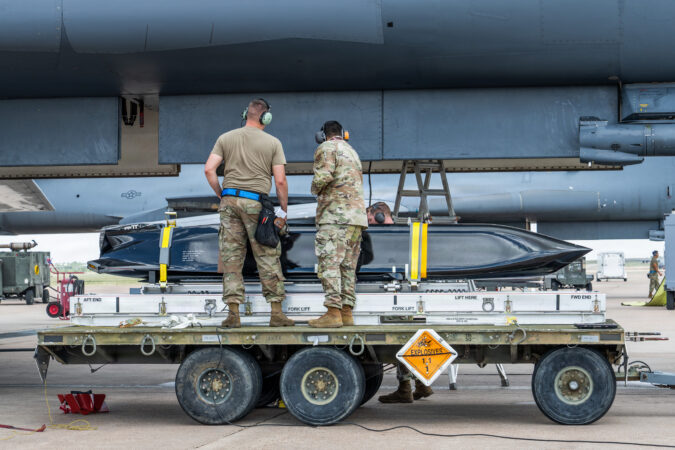
Notably, in July, the Pentagon announced multiyear framework agreements with defense contractors Anduril, CoAspire, and Zone 5 Technologies. These agreements are aimed at mass-producing missiles for the U.S. Air Force. This was followed by a September 17 announcement that Lockheed Martin would increase production of the AIM-260 Joint Advanced Tactical Missile.
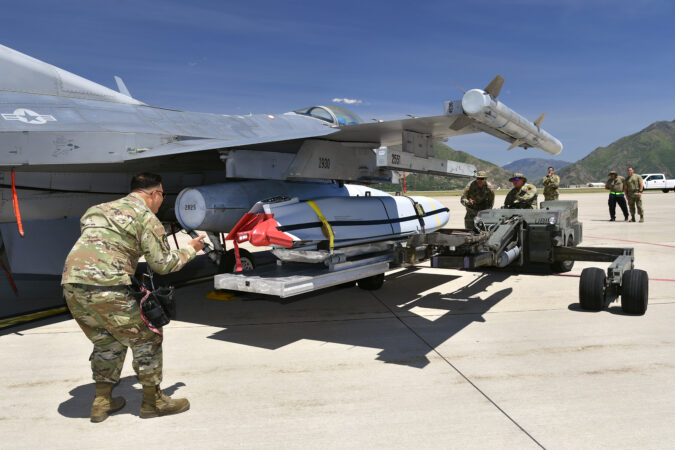
The former initiative is part of the U.S. Air Force’s broader Family of Affordable Mass Missiles (FAMM) program, which was introduced in the fiscal year 2026 budget proposal. The FAMM program projects a significant ramp-up in production, targeting 5,300 missiles annually by 2028 and nearly 8,000 missiles per year by 2031. The current five-year budget allocation for FAMM exceeds $12 billion, intending to procure close to 27,000 missiles.
However, the CNAS report’s emphasis on affordability has drawn critical commentary from other defense analysts. Retired Air Force Col. Mark Gunzinger, now affiliated with AFA’s Mitchell Institute for Aerospace Studies, acknowledged the necessity of increasing munitions but cautioned against a singular focus on simply “cheaper weapons.”
“It should not be about buying cheaper weapons; it should be about how to optimize cost per effect in the battlespace,” Gunzinger told Air & Space Forces Magazine. He argued that the Air Force must pursue an asymmetric fighting strategy, maximizing the impact of each strike regardless of the specific munition or platform used. Gunzinger suggested a balanced approach to weapon and platform development and procurement, avoiding extreme trade-offs.
While acknowledging the high cost of precision-guided, specialized weapons such as the Long-Range Anti-Ship Missile and the platforms that deploy them, and recognizing the role of lower-end, short-range munitions for stationary targets, Gunzinger warned against allowing price to unduly compromise capability.
“Now you’ve got something that, ‘OK, you hit a price point, but is it going to survive long enough to do its mission?’ Gunzinger questioned. “Is it going to be able to shoot its weapon before it dies?” This perspective highlights the risk of acquiring weapons that may be cost-effective but ultimately ineffective in a contested environment.
A Numbers Game and Strategic Scope
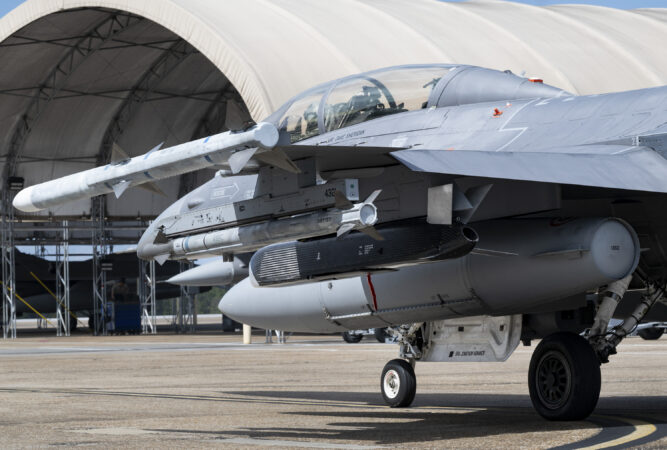
The CNAS report’s operational and tactical focus is primarily on countering a People’s Liberation Army (PLA) invasion of Taiwan through strikes against PLA naval vessels, such as destroyers and amphibious assault ships, and by targeting airfields in the vicinity of the Taiwan Strait. Critically, the report does not outline a strategy for striking targets within the Chinese mainland interior.
This omission is a significant point of concern for Gunzinger. “The paper focuses on denying a PLA joint island landing campaign without considering strategic attacks to deny sanctuaries to the PLA and collapse China’s ability to maintain the offensive,” he stated. Gunzinger argued that this narrow focus risks reducing a potential conflict over Taiwan to merely “a force-on-force math problem,” centered on the number of weapons and aircraft required to attack PLA forces situated in the Taiwan Strait and coastal China, potentially becoming a mere “numbers game.”
Furthermore, Gunzinger highlighted that the approximately 500-nautical-mile limit of most currently affordable strike options undermines the CNAS report’s conclusion that increased mass alone will ensure victory. He elaborated that China possesses sophisticated capabilities to project both outer and inner rings of airborne and sea-based air defense sensors and shooters, designed to defend its cross-Strait forces and operations.
Consequently, Gunzinger contends that deploying non-stealthy drones to approach the Chinese coastline to launch affordable missiles would likely result in significant losses of both the aircraft and their payloads. “This would likely result in losses of the aircraft and their weapons,” he warned, concluding with a stark assessment: “We win part of the battle… They win the war.”
Why This Matters
The debate surrounding U.S. munitions stockpiles and defense strategy for a potential conflict over Taiwan carries profound geopolitical, economic, and technological implications. Taiwan, a self-governing democracy, holds a pivotal role in the global economy as a leading producer of advanced semiconductors. Any military action against Taiwan could trigger a global economic crisis, disrupting critical supply chains and potentially leading to widespread instability.
This discussion highlights a critical juncture in U.S. defense planning. It reflects a broader strategic challenge for the Pentagon: how to balance the acquisition of highly advanced, often expensive, military systems with the need for a sufficient quantity of munitions to sustain a protracted conflict against a peer adversary. The calls for “affordable mass” indicate a recognition that sheer technological superiority may not be enough if a nation cannot sustain combat operations due to depleted inventories. This strategic shift could redefine future defense budgets, procurement priorities, and the very nature of military readiness.
Moreover, the push for increased production of drones and missiles underscores a renewed focus on deterrence and readiness in an increasingly complex security environment. Ensuring that the U.S. military possesses adequate stockpiles is crucial for deterring potential aggression and demonstrating the capacity to defend its interests and allies. The significant financial investments proposed, with billions allocated to missile programs, will have a substantial impact on the defense industry, creating jobs and stimulating research and development in new weapon technologies. This also signals an ongoing technological competition, where innovation in cost-effective, mass-producible systems could become as vital as cutting-edge, high-tech weaponry in future conflicts.
Rethinking Military Strategy: Beyond Numerical Superiority
As geopolitical tensions persist and military conflicts evolve, experts are increasingly scrutinizing traditional approaches to warfare. One prevailing view suggests that reliance on a “numbers-on-numbers” strategy – simply matching or exceeding an adversary’s capabilities in terms of quantity – may lead to prolonged stalemates rather than decisive outcomes. This perspective is gaining traction in analyses of current conflicts, such as the ongoing Russia-Ukraine war, and in discussions regarding potential future scenarios involving major global powers.
Retired Navy Cmdr. J. Michael Dahm, currently a senior fellow for aerospace and China studies at the Mitchell Institute, argues that merely generating mass in military force does not inherently guarantee strategic success. In an interview with Air & Space Forces Magazine, Dahm articulated that while a quantitative advantage might keep an adversary off balance, it may not compel them to act in a desired manner. This, he suggests, can result in protracted and indecisive conflicts, a dynamic he believes is evident in the Russia-Ukraine conflict. He emphasized the need to move beyond simply generating mass to effectively achieve strategic objectives, likening the desired outcome to a “judo throw” that leverages an opponent’s momentum for a decisive advantage, rather than engaging in an endless struggle.
Historically, the modern Chinese military, the People’s Liberation Army (PLA), has largely maintained a defense-oriented posture. Dahm noted that China possesses an extensive network of airfields across its territory, complemented by hardened sites designed for the rotation and sustainment of forces. This defensive infrastructure is further bolstered by a layered air defense network intended to protect its airspace and key assets.
However, recent observations from other conflict zones suggest a potential method to overwhelm even sophisticated air defense systems. Dahm highlighted instances of Iranian air attacks in the Middle East, which have demonstrated a strategy of combining low-cost munitions and inexpensive drones with more advanced and costly missiles. These attacks are characterized by their multi-directional launches, varied launch locations, and disparate speeds, creating a complex and challenging environment for integrated air defense systems to manage.
This observed effectiveness of mixed attacks aligns with recommendations presented in a recent report advocating for the Pentagon to develop new operational concepts. The report suggests pairing cheap, high-volume weapons with high-end, precision munitions for integrated strike plans. Specifically, it proposes using low-cost drones in initial attack waves to achieve several objectives: identifying active air defense systems, depleting an adversary’s interceptor missile inventory, and relaying targeting data back to follow-on forces. This approach aims to create repeated disruption of enemy air bases or other strategic targets in a sustainable manner. The strategy advocates for reserving high-end weapons for the most challenging and critical targets, while integrating affordable mass into strike plans to engage softer targets and to saturate enemy air defenses, thereby increasing the probability of success for all elements of an attack.
Dahm explicitly cited Iran’s tactics as an effective blueprint: “The Iranians have figured out how to be effective: … send a whole bunch of slow-moving drones with a couple of cruise missiles and a couple of ballistic missiles.” This strategy exploits inherent limitations within modern air defense systems. These systems are typically configured to track specific ranges, altitudes, and speeds within their operational airspace. Commanders must make choices about what parameters to prioritize, for instance, setting speed gates to filter out slow-moving objects like flocks of birds, or focusing on high-altitude threats. Such configurations mean that no single air defense system can effectively track and engage every possible type of threat simultaneously across all parameters.
He further elaborated on this vulnerability, stating, “I don’t want a flock of birds showing up on my radar, so I set the speed gate for higher speed, but how high do I set it for? 100 knots or do I set it for Mach 3? What am I looking for? Range. How far am I looking? Altitude. Am I looking high? Am I looking low?” These questions highlight the trade-offs inherent in configuring air defense systems. Consequently, an air defense system, no matter how sophisticated, cannot effectively stop everything at once. The method to overwhelm such a system, Dahm explained, involves deploying a diverse array of threats: “You send some slow stuff, you send some medium stuff, and then you send these ballistic missiles that are screaming in from the upper atmosphere at Mach 3-4-5.” This multi-faceted approach creates a saturation effect that makes it exceedingly difficult for any modern air defense system to process and counter all incoming inputs effectively.
While Iran has employed this strategy against U.S. interests in the Middle East, Dahm advocates for the U.S. to adopt a similar multi-layered approach in a hypothetical conflict scenario, particularly concerning Taiwan and potential engagements with the PLA. “That is absolutely what we should be doing,” he asserted. As an illustrative example, Dahm described a scenario for striking a Chinese military vessel, such as a cruiser. He suggested that U.S. or allied forces would not rely solely on a single type of missile launched from one direction. Instead, they would simultaneously target the ship from various platforms—air, land, sea, and subsurface—using a variety of projectiles that differ in speed and range. While advanced weapons like the Long Range Anti-Ship Missile (LRASM) might form the centerpiece of such an assault, they would be complemented by a mix of more cost-effective missiles. “You might send two LRASMs, but you need to accompany that with some of these more cost-effective missiles,” Dahm explained. This strategy underscores the necessity of cost-effectiveness and affordability in modern military planning, acknowledging that not every weapon deployed in a complex attack scenario is expected to successfully reach its target.
Why This Matters
The strategic insights discussed by Cmdr. J. Michael Dahm and highlighted in the Mitchell Institute’s report carry significant implications for global security and military doctrine. First, the critique of the “numbers-on-numbers” approach challenges conventional military thinking that often prioritizes quantitative superiority. In an era of increasingly sophisticated weaponry and contested domains, simply having more tanks, planes, or ships may no longer guarantee victory or even prevent prolonged, costly stalemates. This necessitates a fundamental re-evaluation of defense budgets, procurement strategies, and force structures for nations worldwide.
Second, the emphasis on “mixed attacks” signifies a shift toward asymmetric warfare tactics that leverage technological diversity rather than sheer power. The effectiveness demonstrated by entities like Iran, using a combination of inexpensive drones and advanced missiles, illustrates how smaller or less technologically advanced adversaries can potentially challenge established military powers. For nations like the United States, this means adapting to new forms of threats and developing countermeasures that can address a wide spectrum of incoming projectiles, from slow-moving drones to hypersonic missiles. It also compels military planners to integrate these multi-layered attack concepts into their own offensive strategies, as suggested for a potential Taiwan scenario.
Third, the discussion directly impacts the future of military research and development. There will likely be an increased focus on developing more affordable, high-volume munitions, alongside continued investment in high-end precision weapons. The balance between cost-effectiveness and advanced capability will become a critical factor in maintaining military readiness and sustainability in prolonged conflicts. The need for diverse weapon systems also drives innovation across various domains, from drone technology to advanced air defense systems capable of identifying and neutralizing a wider array of threats simultaneously.
Finally, these strategic discussions have profound geopolitical ramifications, particularly concerning regions like the Indo-Pacific. The proposed application of mixed attack strategies in a hypothetical conflict with China over Taiwan underscores the seriousness with which potential contingencies are being assessed. Such strategies aim to complicate an adversary’s defensive calculations, potentially deterring aggression by increasing the perceived cost and risk of military action. Understanding these evolving military doctrines is crucial for policymakers, military leaders, and the public to grasp the complexities of modern warfare and the pathways to maintaining regional stability and global security.