
Statements attributed to figures like Elon Musk and former President Donald Trump have reflected skepticism regarding the efficacy and purpose of American humanitarian aid. Musk reportedly characterized his efforts related to USAID as “feeding USAID into the wood chipper” last year, while both he and Trump expressed views that such aid was, in essence, misdirected or inefficient.
Proponents of U.S. humanitarian aid argue that it plays a critical role in global health, citing analyses that suggest its impact on saving lives and preventing epidemics. As a rapidly increasing Ebola outbreak emerges, observers are assessing whether policy shifts during the Trump administration, particularly concerning global health infrastructure, have impacted the tools available for combating such viruses.
The unpredictable nature of global health crises makes it difficult to ascertain definitively whether the U.S. Agency for International Development (USAID) could have prevented the current Ebola outbreak. However, critics suggest that the Trump administration’s approach to global health initiatives has weakened the capacity to respond effectively to such epidemics. This assessment points to three primary areas of concern, though it also acknowledges one area where the administration’s actions were seen as beneficial.
The first area of concern highlighted by critics involves the significant reduction in USAID’s operational presence and funding. Jeremy Konyndyk, who directed USAID’s response to the 2014 Ebola epidemic, observed that the agency previously maintained a substantial presence in Ituri, Democratic Republic of Congo, the region identified as the origin of the current Ebola outbreak. He noted that a large portion of U.S. aid to Congo was reduced, potentially contributing to a delay in detection and subsequent widespread transmission of the virus.
Konyndyk stated, “I don’t think there is any way that this outbreak would have been missed for so long if all those programs were still at full strength and the U.S.A.I.D. mission team was still there.” He further explained that in his previous role as head of disaster response, reports of unexplained viral hemorrhagic fever clusters in Congo would have triggered immediate high-level alerts, including notification of the White House.
Prior to these reductions, the United States was the primary donor to the Democratic Republic of Congo, reportedly funding approximately 70 percent of the humanitarian work in the country, according to Physicians for Human Rights. A considerable amount of this aid was halted, reportedly without sufficient time for local organizations to adapt. Dr. Celine Gounder, an infectious disease specialist, shared a video interview featuring a Congolese doctor who described colleagues, including another doctor, turning to farming due to the impact of aid reductions.
Compounding the reduced aid presence were factors such as the identification of the less common Bundibugyo strain of Ebola and the remote nature of the outbreak’s location. While these factors presented challenges, some observers familiar with the region suggest that a robust aid worker network would likely have detected and reported the outbreak earlier if the support systems had remained fully operational. Delays in response are widely considered critical in managing Ebola.
Dr. Tom Frieden, who served as the director of the Centers for Disease Control and Prevention (CDC) during the 2014 Ebola epidemic, emphasized the time-sensitive nature of Ebola response: “With Ebola, time is lives. Get to an outbreak in days, and you can stop it in weeks. Get there in weeks, and it goes on for months. Get there in months, and it can go on for years.”
Frieden further noted the scale of the delay in the current outbreak compared to previous incidents. He stated that by the time a global response began in 2014, there were an estimated 40 to 50 cases. In contrast, for the current outbreak, the world began responding when cases had reportedly reached between 400 and 500.
Consequently, this Ebola outbreak has been classified as the third most severe on record.
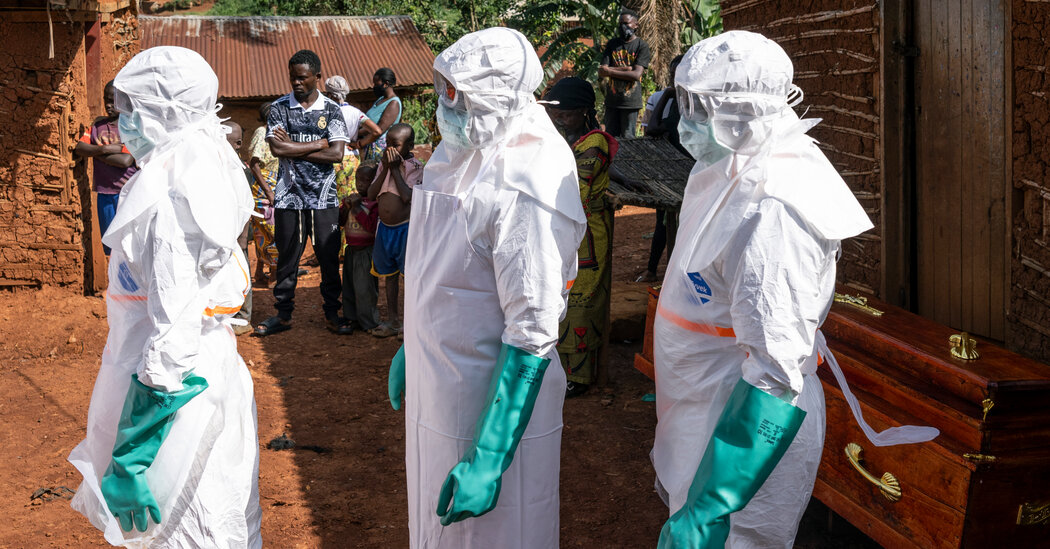
Reports from the front lines, including those by journalist Declan Walsh, have documented challenges faced by health workers attempting to contain the virus, noting deficiencies in access to basic protective equipment crucial for preventing its spread.
A second area of criticism concerns the Trump administration’s stance toward the World Health Organization (WHO). The United States initiated a process to withdraw from the WHO, a move that drew significant international attention. Additionally, reports indicated that the administration allegedly restricted some American health officials from communicating directly with their counterparts at the WHO.
Dr. Frieden commented on the organization’s importance, stating, “For all its weaknesses, W.H.O. is essential. The stronger W.H.O. is, the safer we are.” Historically, the U.S. and WHO maintained a collaborative relationship, facilitating the sharing of expertise and resources. However, in the context of the current outbreak, WHO officials were deployed to Ituri, while the United States reportedly became aware of the outbreak nine days after the WHO.
A third point of contention involves the administration’s perceived approach to public health preparedness. According to Stat News, the outgoing Biden administration had prepared extensive planning documents, totaling several hundred pages, detailing strategies for managing an infectious disease outbreak, which were provided to incoming Trump administration officials. However, these materials were reportedly not utilized by the new administration.
Critics also highlight that the Trump administration left several key positions related to disease preparedness unfilled. Furthermore, funding for GAVI, the Vaccine Alliance, an organization actively involved in developing vaccines for various diseases, including potentially for strains of Ebola, was reduced. Secretary of State Marco Rubio subsequently indicated that the State Department intended to “re-engage on the issue of GAVI,” though the specific details and timeline for this re-engagement remained undefined.
Reports also suggested the administration’s intent to further reduce funding for global HIV/AIDS programs, specifically targeting the President’s Emergency Plan for AIDS Relief (PEPFAR), an initiative credited with saving over 26 million lives to date. A joint essay penned by eight former directors of the CDC warned that such proposed cuts could diminish global surveillance capabilities for diseases like Ebola and would “destroy PEPFAR and undermine health security.”
Despite the criticisms, one action by the Trump administration that received positive acknowledgment was its effort to de-escalate conflict in Eastern Congo. The ongoing conflict in the region has historically impeded the detection and response to disease outbreaks. Specifically, the administration imposed sanctions on Rwanda’s military, citing its involvement in the conflict. However, some analysts contend that reductions in foreign aid can inadvertently contribute to instability. A recent study indicated that in African regions previously receiving substantial assistance, an abrupt cessation of USAID programs correlated with an approximate 10 percent increase in violence, encompassing riots and combat fatalities.
Ebola virus disease is characterized by severe symptoms, typically beginning with fever, muscle aches, and headaches, progressing to vomiting, diarrhea, and frequently, internal and external bleeding, leading to death. The virus is transmitted through direct contact with bodily fluids from infected individuals or contaminated objects. Transmission often occurs in contexts of caregiving, such as when individuals tend to sick loved ones or participate in traditional burial practices involving contact with the deceased.
The dedication of healthcare professionals, nurses, aid workers, and burial teams in regions like Congo, who often operate with limited resources while risking their lives to contain the outbreak, stands in contrast to the policy decisions made by officials regarding program funding. Critics argue that reductions in USAID funding have had severe consequences, citing instances where basic interventions, such as mosquito bed nets for malaria prevention or nutritional supplements for starvation, were curtailed.
A researcher from Boston University has estimated that the global impact of these aid reductions has resulted in the loss of over 750,000 lives worldwide.
Advocates for USAID emphasize that the agency serves both humanitarian principles and strategic national interests, particularly in the realm of global health security through the combatting of infectious diseases like tuberculosis and Ebola.
Commentators suggest that the real-world consequences of these policy decisions demonstrate the multifaceted importance of USAID’s work. Critics argue that the cumulative effect of these actions, associated with figures like Elon Musk, former President Donald Trump, and Secretary of State Marco Rubio, has contributed to a significant number of preventable deaths globally and potentially exacerbated the current Ebola outbreak, thereby diminishing global and national security.
Why This Matters
The ongoing Ebola outbreak in the Democratic Republic of Congo and the debate surrounding the effectiveness and funding of global health programs underscore several critical issues with far-reaching implications. First, global health security is intrinsically linked to national security. Infectious diseases do not respect borders; an outbreak unchecked in one region can rapidly spread globally, posing a direct threat to public health and economic stability in developed nations. The ability to detect, monitor, and respond to diseases like Ebola at their source is a primary defense mechanism against pandemics.
Second, international cooperation and sustained investment in organizations like USAID, the WHO, and GAVI are vital. These bodies provide essential infrastructure, expertise, and resources for disease surveillance, vaccination campaigns, emergency response, and public health capacity building in vulnerable regions. Reductions in funding or engagement can create voids that delay response times, weaken early warning systems, and ultimately allow diseases to gain a foothold, making them harder and more costly to contain in the long run.
Third, the discussion highlights the humanitarian impact of foreign aid. Beyond strategic interests, these programs save lives, alleviate suffering, and foster stability in communities often grappling with poverty, conflict, and inadequate healthcare. The loss of life due to preventable diseases or lack of basic medical supplies represents a profound human cost. Furthermore, a stable global environment, supported by effective humanitarian and health initiatives, generally reduces the conditions that breed conflict and mass migration, factors that can have indirect but significant impacts on international relations and resource allocation.
Finally, the episode serves as a reminder of the complex interplay between political rhetoric, policy decisions, and tangible outcomes on the ground. The effectiveness of global health initiatives relies on consistent commitment and understanding from leadership. Debates over the utility of such programs, particularly when leading to significant cuts, can have immediate and severe consequences, affecting not only the well-being of distant populations but also the collective security of the global community.