
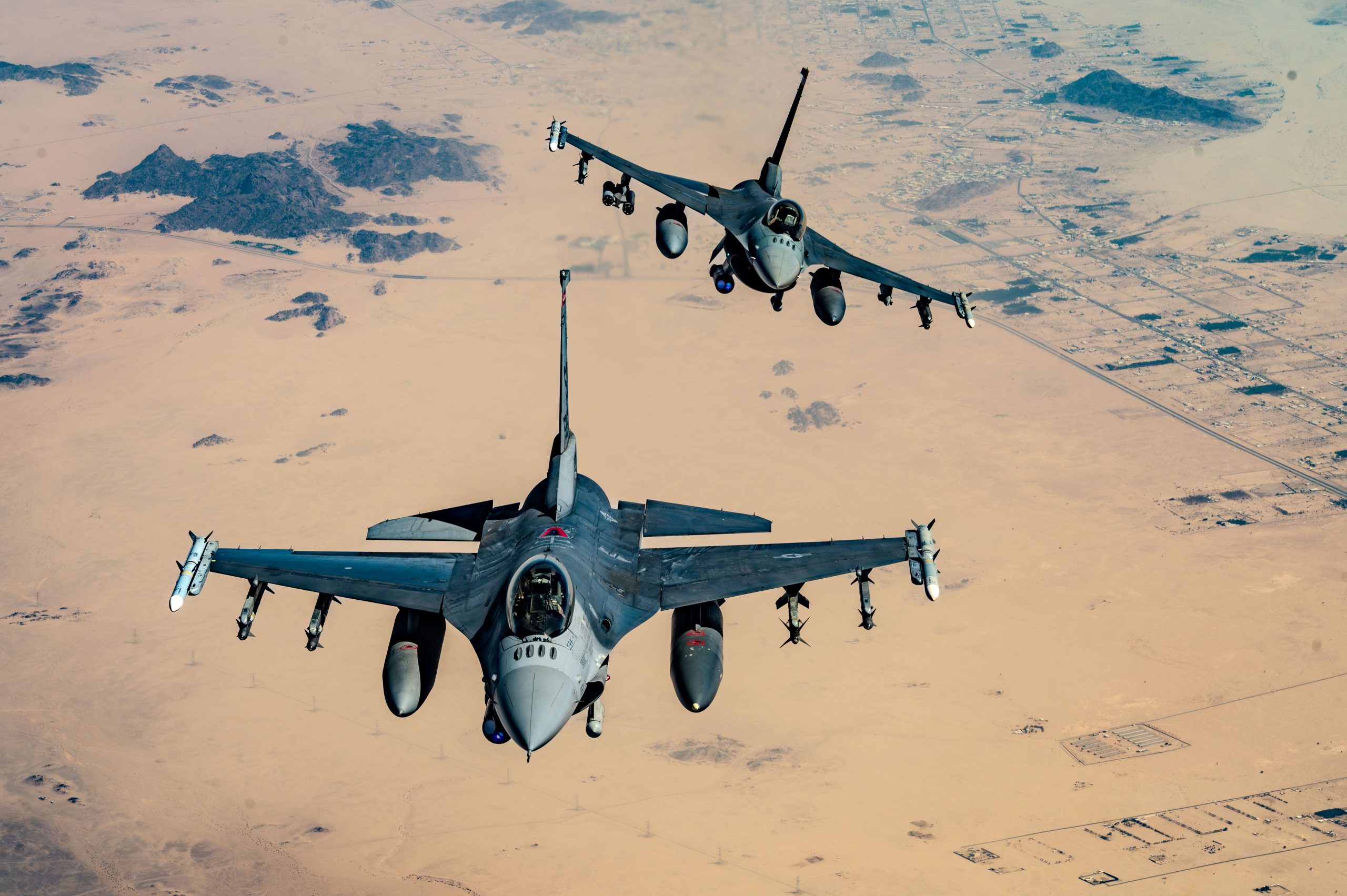
The U.S. Air Force is actively exploring the acquisition of new F-16 Fighting Falcon jets, a move that would mark the first such purchase in over two decades, multiple sources familiar with internal discussions have confirmed. This consideration comes as the service grapples with significant capacity shortfalls within its aging fighter fleet and works to finalize its proposed fiscal year 2028 budget and accompanying five-year spending plan.
The potential decision to procure new F-16s is viewed as a pragmatic strategy to rapidly bolster the Air Force’s fighter inventory. Lockheed Martin, the manufacturer of the F-16, currently maintains an active production line for the aircraft, a factor that could facilitate quicker delivery compared to developing entirely new platforms. This approach draws parallels to the Air Force’s earlier decision to acquire F-15EX Eagle IIs from Boeing, which similarly followed a prolonged period without U.S. Air Force purchases of that particular model.
Discussions around these new F-16s, which could potentially be designated “F-16G” to denote significant upgrades from the existing F-16C and D models, are expected to be a key agenda item when top service officials gather for the Air Force’s “Corona” meeting later this fall. This gathering serves as a critical forum for senior leadership to deliberate on future strategic directions and budgetary priorities.
When queried about the potential acquisition, Lockheed Martin directed inquiries to the U.S. government. In a statement, the company affirmed its readiness to support the U.S. Air Force’s mission requirements, emphasizing that its “proven products are the backbone of the USAF fleet and provide the most advanced and versatile capabilities to ensure air dominance now and decades to come.”
The Air Force, in its own written response, acknowledged that it is in the preliminary stages of evaluating various options for its next Future Years Defense Program (FYDP). A spokesperson stated, “At this stage, we have neither defined the precise mission requirements nor the spectrum of options that could fill it,” indicating that while discussions are underway, no definitive decisions have been made regarding specific aircraft types or quantities.
Lockheed Martin currently produces F-16E (single-seat) and F (dual-seat) variants, specifically the advanced Block 70 configuration, for international customers such as the United Arab Emirates. In 2019, the company relocated its F-16 production line from Fort Worth, Texas, to Greenville, South Carolina. Should the Air Force proceed with new F-16 orders, it would likely ensure the continued operation of this Greenville production facility. The proposed upgraded F-16 for the U.S. Air Force is already being referred to as an “F-16G” by those familiar with the ongoing deliberations, suggesting a variant significantly enhanced beyond current international models.
Reports from Inside Defense in December 2025 had previously indicated that the Air Force had initiated inquiries with Lockheed Martin regarding the pricing structure for new F-16 aircraft, signaling early interest in the potential acquisition program.
The current U.S. Air Force inventory comprises 826 F-16s, with 484 of these actively operated by the active-duty force. However, the fleet’s average age stands at a considerable 34 years, with the newest F-16s having entered service in 2005. These “Vipers,” as they are colloquially known, perform a diverse range of critical missions, including air-to-air combat, precision air-to-ground strikes, and specialized Suppression of Enemy Air Defense (SEAD) roles, often referred to as “Wild Weasel” missions. F-16s have notably been heavily deployed in operations against adversaries such as Iran, highlighting their enduring operational relevance.
A new F-16 acquisition program would have significant ripple effects across the defense industrial base. Both Pratt & Whitney (an RTX subsidiary) and GE Aerospace, major manufacturers of engines for the F-16, would likely see increased demand. Pratt & Whitney recently announced a licensing agreement with Hermeus on September 15, allowing the latter to manufacture its F100-PW-229 engine, also used in the F-15. This move aims to strengthen the U.S. defense industrial base by diversifying the supply chain for these widely used powerplants.
Northrop Grumman, a key subcontractor, would also stand to benefit. The company is currently developing two major upgrade packages for existing F-16s: the Integrated Viper Electronic Warfare Suite (IVEWS), also known as AN/ALQ-257, and an enhanced large aperture targeting pod called LITENING LA. IVEWS is an advanced electronic warfare system designed to provide comprehensive radar warning, active jamming, and precise detection, identification, and localization of potential threats. It is highly probable that any new “F-16G” models would integrate these cutting-edge capabilities from the outset.
A source familiar with the issue, who requested anonymity to discuss sensitive internal deliberations, elaborated on the nature of these potential new aircraft. “If the Air Force were to buy a new F-16, this would not be your grandfather’s F-16,” the source stated. “This would be more akin to buying an F-15EX,” referencing the F-15EX Eagle II, which incorporates modern avionics and capabilities into a proven airframe. The source indicated that a new F-16G would likely feature IVEWS and numerous other advanced systems, positioning it well beyond the capabilities of both legacy F-16C/D fighters and even the Block 70 models currently in production for international partners.
The rationale for acquiring more F-16s is further underpinned by existing production constraints affecting other key fighter programs. Both Lockheed Martin and Boeing are reportedly facing limitations in the number of F-35As and F-15EXs, respectively, they can produce annually. Concurrently, the Air Force’s current F-16 fleet has undergone extensive operational deployment in recent decades, particularly in prolonged conflicts. The anonymous source emphasized the physical limitations of aging aircraft: “There’s only so many times you can do a service life extension program before you begin to lose the strength and integrity of the airframe itself,” underscoring the necessity for new airframes rather than perpetually refurbishing older ones.
Why This Matters
The potential acquisition of new F-16 Fighting Falcons by the U.S. Air Force represents a significant pivot in defense procurement strategy with wide-ranging implications:
Global Geopolitical Stability and Air Superiority:The F-16 has been a cornerstone of U.S. and allied air power for decades. Renewing this fleet ensures the U.S. can maintain its air superiority and project power effectively across various theaters. In an era of escalating global tensions, particularly with near-peer adversaries, maintaining a robust and capable fighter fleet is paramount for deterrence and defense. A diminished or aging fleet could embolden potential adversaries and degrade the U.S.’s ability to respond to crises or support allies.
U.S. Military Readiness and Capacity:The existing F-16 fleet, averaging 34 years old, is nearing the end of its projected service life despite multiple life extension programs. Capacity shortfalls mean fewer aircraft are available for training, operations, and deployment. New, advanced F-16s would directly address this gap, ensuring that the Air Force has enough modern aircraft to fulfill its global commitments, from homeland defense to expeditionary operations. This directly impacts the readiness of airmen and the overall effectiveness of the U.S. military.
Economic Impact and Industrial Base Strength:A U.S. Air Force order for new F-16s would provide a substantial boost to the American defense industrial base. It would secure jobs at Lockheed Martin’s Greenville production facility and across a vast network of suppliers, including engine manufacturers like Pratt & Whitney and GE Aerospace, and avionics specialists like Northrop Grumman. This sustained demand helps maintain critical manufacturing skills, fosters innovation, and strengthens the nation’s ability to produce advanced defense systems domestically, reducing reliance on foreign supply chains.
Technological Modernization and Cost-Effectiveness:The proposed “F-16G” would integrate cutting-edge technologies, including advanced electronic warfare systems (IVEWS) and targeting pods (LITENING LA), making it significantly more capable than older variants. This strategy allows the Air Force to acquire advanced capabilities using a proven, less costly airframe, rather than exclusively relying on more expensive, next-generation platforms like the F-35. It offers a potentially cost-effective way to modernize a significant portion of the fighter fleet, freeing up resources for other critical defense investments while still maintaining a technological edge.
Interoperability with Allies:The F-16 is one of the most widely operated fighter jets globally, forming the backbone of numerous allied air forces. New U.S. F-16s, particularly if they incorporate common upgrades, would enhance interoperability with NATO and other partner nations. This commonality simplifies joint training, logistics, and maintenance, fostering stronger alliances and more effective coalition operations in an increasingly complex global security environment.