
U.S. Air Force Conducts Major Air and Missile Defense Exercise Astral Knight 26 Over North Sea and United Kingdom
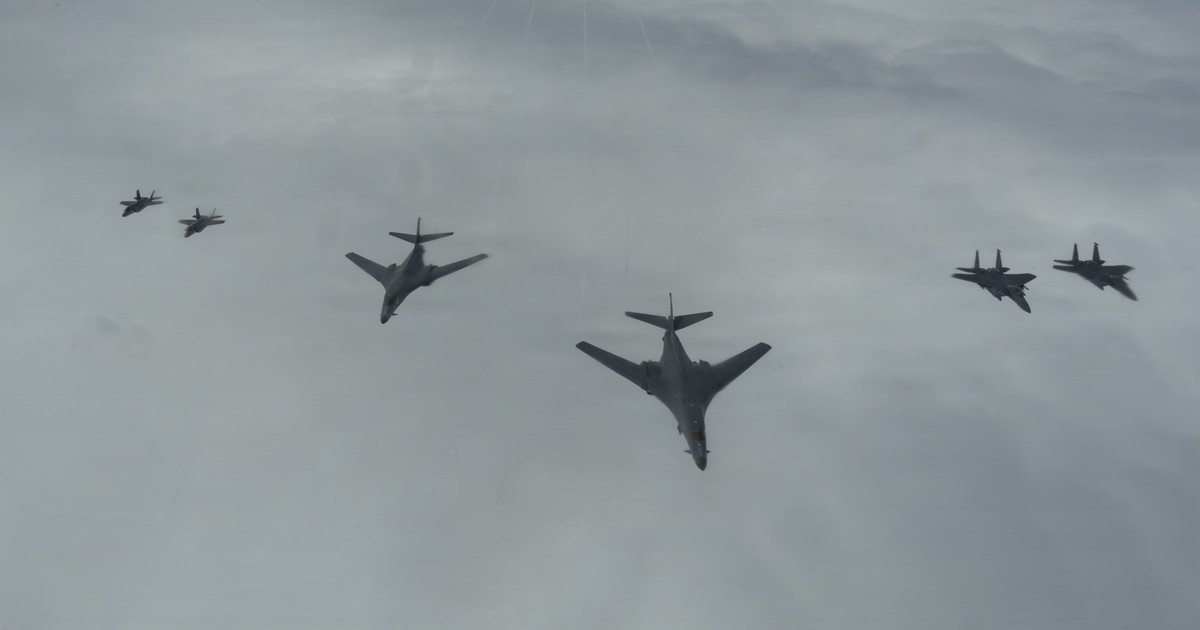
The United States Air Force recently conducted a significant training mission over the North Sea, featuring a coordinated flight of B-1B Lancer strategic bombers alongside F-15E Strike Eagle and F-35A Lightning II fighter jets. This exercise, which took place on June 8, was part of Astral Knight 26, a broader U.S. European Command initiative focused on integrated air and missile defense across the United Kingdom and continental Europe. The mission, involving bombers and both fourth and fifth-generation fighter aircraft, aimed to enhance the integration and interoperability of advanced air assets.
Astral Knight 26 serves as US European Command’s premier exercise for integrated air and missile defense (IAMD), designed to enhance the ability of allied forces to defend shared airspace and execute precision strikes against simulated hostile forces. The exercise draws together aircraft stationed in the United Kingdom and other locations across the European continent, facilitating a comprehensive rehearsal of defensive and offensive air capabilities. This complex training scenario allows participants to practice the detection, tracking, and interception of various airborne threats, as well as coordinating offensive actions in a contested environment.
A critical component of this training involved extensive aerial refueling operations, as highlighted by the U.S. Air Force. Such operations are essential for extending the range and endurance of combat aircraft, allowing them to remain airborne for significantly longer durations. This capability is vital for sustaining tactical integrated air and missile defense operations and maintaining effective tactical command and control throughout exercises like Astral Knight 26. By enabling fighters and bombers to operate for extended periods without needing to return to base, aerial refueling ensures they can be marshaled together as a cohesive and coordinated force. This integrated approach is crucial for responding effectively to complex, multi-layered threats that require sustained presence and combined capabilities, rather than individual aircraft operating in isolation.
The aircraft involved each bring distinct and complementary strengths to the combined formation, representing a comprehensive package of air power. The B-1B Lancer is a supersonic, long-range heavy bomber known for its ability to carry a substantial payload of conventional weapons. Its participation in the formation adds significant long-range strike capability and the capacity to project power. Complementing this, the F-15E Strike Eagle provides robust multi-role capabilities, functioning as both an air-superiority fighter and a precision ground-attack aircraft, offering essential fighter escort and precision strike options. The F-35A Lightning II, a fifth-generation stealth fighter, contributes advanced sensor fusion, stealth characteristics, and sophisticated networked capabilities, significantly enhancing situational awareness and survivability within contested airspace. Together, these platforms exemplify the kind of high-end, multi-aircraft integration that exercises like Astral Knight 26 are meticulously designed to test and refine.
The scope of Astral Knight 26 extends beyond the singular North Sea mission, encompassing a wide range of operations across the region. The exercise has seen the F-35As and F-15Es of the 48th Fighter Wing, based at RAF Lakenheath in the UK, operating extensively from their home station. These fighter aircraft have been working in conjunction with KC-135 Stratotanker aerial refueling aircraft from the 100th Air Refueling Wing at RAF Mildenhall, another key U.S. Air Force installation in the United Kingdom, demonstrating the logistical backbone required for sustained air operations.
Adding further layers of realism and complexity to the training, forces from allied nations have also been integral to the exercise. The 606th Air Control Squadron, deployed from Italy, has played a crucial role in tactical command and control, coordinating aircraft movements and responses across the expansive exercise area. Simultaneously, the 19th Electronic Warfare Squadron from Germany has been actively simulating adversary air defenses and jamming threats. This realistic simulation is critical for challenging participating aircrews, sharpening their electronic warfare countermeasure skills, and ensuring they can operate effectively in environments where communication and sensor systems may be degraded or targeted by sophisticated electronic attacks.
The comprehensive nature of Astral Knight 26, involving diverse aircraft types, complex operational scenarios, and multinational participation, underscores its importance in maintaining a high level of readiness and interoperability among U.S. and allied forces in the European theater. It allows for the practical application of integrated defense strategies, testing the entire chain of command from initial detection and tracking of threats to engagement and damage assessment against a simulated, advanced adversary. Such exercises are foundational for ensuring collective defense capabilities are robust and adaptable to emerging security challenges.
Why This Matters
Exercises such as Astral Knight 26 are crucial for several reasons, extending beyond mere military training to broader geopolitical implications and the stability of the Euro-Atlantic region.
Firstly, **Deterrence and Assurance**: In an evolving global security landscape, particularly given heightened geopolitical tensions in Europe, large-scale exercises like this serve as a powerful signal of readiness and resolve. They demonstrate the collective ability of the United States and its allies to project power, defend shared interests, and respond effectively to potential aggression. This acts as a clear deterrent to any potential adversaries, signaling that the alliance is prepared and capable of defending its territory and values. Simultaneously, it reassures allied nations of mutual defense commitments and the strength of the transatlantic bond.
Secondly, **Interoperability and Collective Defense**: Modern warfare is highly complex and requires seamless coordination among multiple nations and diverse military assets. Astral Knight 26 specifically focuses on “integrated air and missile defense” and “multi-aircraft integration.” This means ensuring that different aircraft types, ground control units, and personnel from various countries can communicate, share information, and operate together effectively as a single, cohesive force. This interoperability is foundational for the North Atlantic Treaty Organization (NATO)’s collective defense strategy, ensuring that allies can stand together and respond in a coordinated manner during a crisis. The exercise hones the practical aspects of working together, from shared tactics to common communication protocols.
Thirdly, **Readiness and Adaptation to New Threats**: The inclusion of electronic warfare simulation and the integration of fourth and fifth-generation aircraft (like the F-35A) highlight the exercise’s focus on preparing for sophisticated, contemporary threats. Modern adversaries possess advanced air defense systems, electronic warfare capabilities, and long-range precision weapons. Training in such realistic, contested environments ensures that aircrews and support personnel are equipped with the tactics, techniques, and procedures necessary to overcome these challenges, keeping military forces at the cutting edge of defensive and offensive capabilities. It allows for the testing and validation of new operational concepts against current and projected threats.
Finally, **Technological Advancement and Doctrine Development**: These exercises are vital proving grounds for new technologies, operational concepts, and military doctrines. By bringing together advanced platforms like the F-35 with legacy systems and strategic bombers, the U.S. Air Force and its allies can refine how these diverse assets work in concert, maximizing their combined effectiveness. This continuous cycle of testing, learning, and adapting is essential for maintaining a qualitative military advantage and ensuring that defense strategies remain effective against evolving threats in the air and missile domains. The North Sea, a strategically significant area, provides an ideal environment to test these capabilities in a realistic maritime and aerial setting, further enhancing the credibility of the forces involved.