
UK Armed Forces Shrink to Less Than Half 1980s Strength, Opposition Raises Alarm
New analysis, commissioned by the Scottish National Party (SNP) and conducted by the House of Commons Library, indicates that the United Kingdom’s armed forces have reduced to less than half their size compared to the 1980s. This significant contraction in military strength has occurred over decades, spanning the tenures of successive Labour and Conservative governments. The report’s release coincides with the UK’s Armed Forces Week, bringing into sharp focus the long-term trends in personnel and equipment reductions.
The SNP utilized these findings to underpin its criticism of the current UK government’s defence plan, which the party asserts is both delayed and inadequately funded. Furthermore, the SNP expressed concerns that ongoing political dynamics, including recent leadership discussions and challenges within the opposition Labour Party concerning defence policy, could potentially introduce further obstacles to the government’s strategic defence initiatives.
Decades of Personnel Reductions
The comprehensive analysis details a substantial and continuous decline in the total number of active personnel within the UK’s armed forces over more than five decades. In 1979, the total active military personnel stood at approximately 315,000. This figure saw a significant reduction to 210,800 by 1997 and further decreased to 191,710 in 2010. The downward trend continued, with the total reaching 138,121 in 2024, and a slight further reduction reported to 137,966 as of April 1st of the current year. These statistics clearly illustrate a consistent and profound downsizing of the UK’s military human resources.
Each of the three main branches of the armed forces has experienced notable proportional reductions during this period. The British Army, which commenced with 156,000 personnel in 1979, has seen its strength fall to 74,368. The Royal Navy, originally comprising 73,000 personnel, now reports 32,516 active members. Similarly, the Royal Air Force (RAF) has diminished from an initial strength of 86,000 to its current figure of 31,082. These parallel reductions across all services underscore a systemic shift in the overall scale and structure of the UK’s defence establishment.
Impact on Scottish Military Presence and Heritage
The analysis also provided specific figures concerning military personnel stationed in Scotland, revealing a similar pattern of decline. In 1979, over 19,000 armed forces personnel were based in Scotland. This number has steadily decreased, reaching just over 10,000 by 2024, with a further projected reduction to 9,740 by April 2025. The SNP highlighted that this trend has coincided with the reduction and amalgamation of several historic Scottish regiments. A notable example cited was the Black Watch, which has now been integrated into the Royal Regiment of Scotland, prompting discussions about the impact on local military presence and historical regimental identities within Scotland.
Decline in Naval Equipment and Capabilities
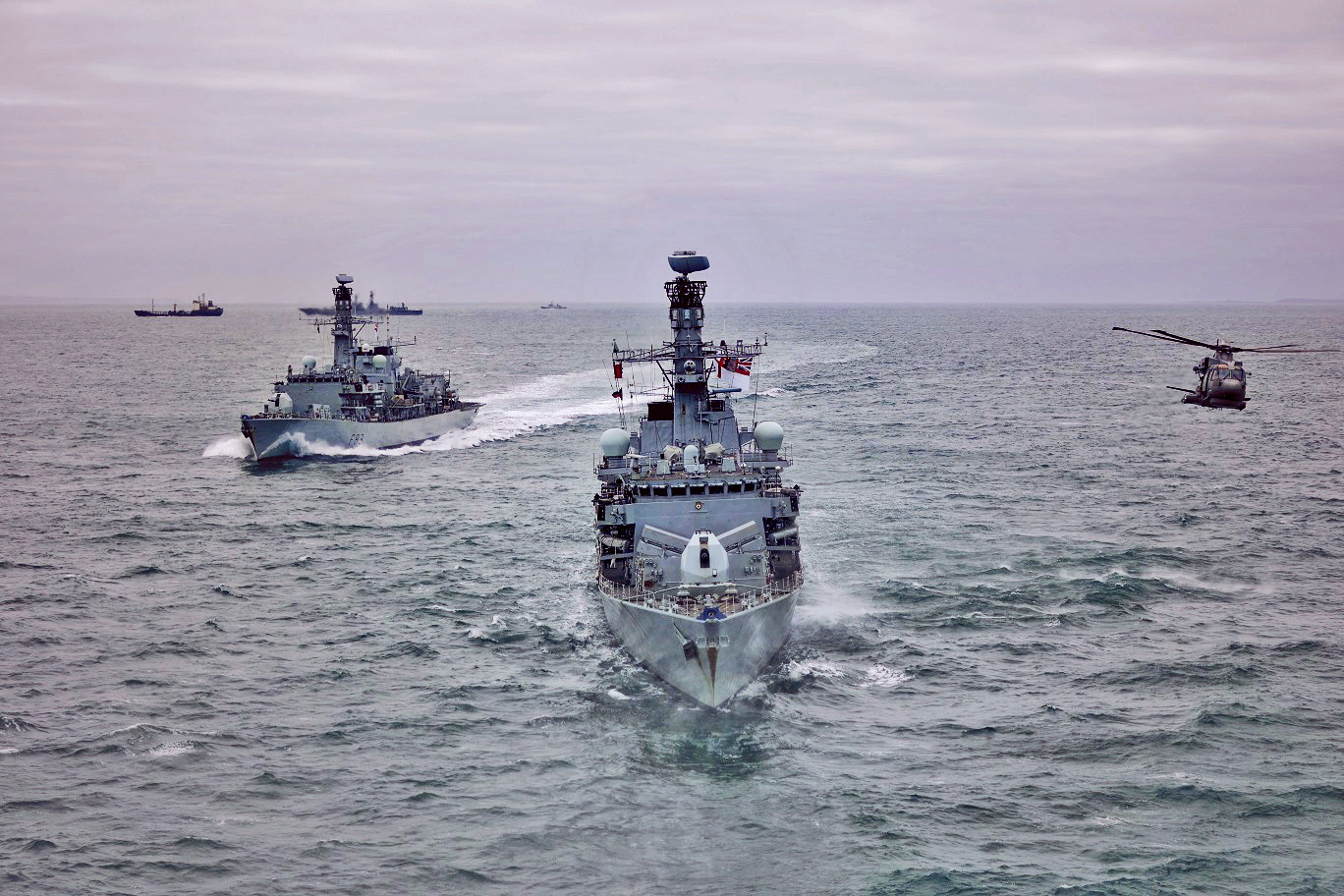
Beyond personnel, the report meticulously details significant reductions in the UK’s military equipment, particularly within the Royal Navy. The size of the Royal Navy’s fleet has notably contracted since the turn of the millennium. Around the year 2000, the Royal Navy operated approximately 89 vessels. This number is projected to fall to 57 by 2025. The reduction is also evident across specific classifications of naval vessels, impacting the Navy’s power projection capabilities:
- Destroyers:The number of destroyers has decreased from 11 to 6.
- Frigates:The fleet of frigates has been reduced from 21 to 11.
- Submarines:The submarine force has fallen from 16 to 9.
These figures indicate a substantial scaling back of the UK’s naval assets, which are critical for maritime security, international deterrence, and global reach.
Defence Spending as a Proportion of Economic Output
The analysis further scrutinizes defence spending as a proportion of the United Kingdom’s Gross Domestic Product (GDP), revealing a long-term decline. In 1979, defence expenditure constituted 4.6% of GDP. This proportion decreased to 2.7% by 1997 and further to 2.5% in 2010. The most recent projection for 2025 places defence spending at 2.4% of GDP. While the UK remains one of the world’s top defence spenders in absolute terms and generally adheres to NATO’s benchmark of 2% of GDP, the SNP underscored this relative decline as evidence of insufficient long-term investment in national defence capabilities.
SNP’s Advocacy for Enhanced Investment
Dave Doogan MP, the SNP’s Westminster leader, issued a strong critique following the release of the analysis. He asserted that the current government is not adequately prioritizing national security, arguing that “decades of Westminster cuts to our armed forces… have left the UK increasingly vulnerable.”
Doogan specifically criticized the perceived lack of investment, stating that it “is putting Scotland’s safety at risk.” He connected these concerns to recent political events, noting that Keir Starmer, the Leader of the Opposition, had experienced challenges regarding his party’s defence proposals and had seen the resignation of key defence shadow ministers. Doogan urged the incoming UK Prime Minister to “urgently get a grip, delivers the investment required and ensures Scotland gets its fair share.”
The SNP leader reiterated his party’s consistent calls for greater investment in conventional defence capabilities and enhanced support for the armed forces, accusing Westminster of having “decimated them.” He concluded by emphasizing the importance of the UK government providing the necessary funding for the armed forces, particularly during Armed Forces Week, to rectify what the SNP identifies as critical deficiencies in the nation’s defence posture.
Why This Matters
The long-term and substantial reduction in the UK’s armed forces, as highlighted by the SNP-commissioned analysis, carries profound implications for the nation’s security, its international standing, and its ability to respond to a complex global landscape. Understanding these trends is crucial for several key reasons:
- National Security and Defence Capabilities:A military with fewer personnel and reduced equipment inherently possesses a diminished capacity to defend national interests, project power, or deter potential adversaries. In an era characterized by geopolitical instability, including ongoing conflicts in Ukraine, tensions in the Middle East, and evolving challenges from state and non-state actors, the ability to protect sovereignty and respond effectively to threats is paramount. These reductions raise critical questions about the UK’s readiness and resilience against future security challenges.
- International Commitments and Alliances:The UK is a permanent member of the UN Security Council, a foundational member of NATO, and a crucial ally to numerous nations globally. A significant contraction in its military capabilities could impede its ability to fulfill these international responsibilities, contribute effectively to collective security operations, and maintain its influence in global diplomacy. The capacity and willingness of a nation to uphold its security commitments are closely observed by allies and rivals alike.
- Economic Impact:The defence sector is a substantial contributor to the UK economy, supporting high-tech manufacturing, advanced research, and development, and providing skilled employment. Cuts to personnel numbers and equipment procurement can lead to job losses, impact regional economies, and erode the nation’s industrial and technological base. Conversely, strategic investment in defence can stimulate economic growth, foster innovation, and maintain crucial industrial capabilities.
- Geopolitical Role and Influence:A nation’s military strength and credible defence posture often correlate directly with its diplomatic leverage and international prestige. A smaller, less capable military could diminish the UK’s ‘hard power’ influence, affecting its ability to shape global events, negotiate from a position of strength, and safeguard its citizens and interests abroad. The aspiration of a ‘Global Britain’ is inextricably linked to robust and flexible military capabilities.
- Political Debate and Public Trust:Defence policy is a core responsibility of any government, and decisions regarding military spending and size are subjects of intense public and political scrutiny. The SNP’s report contributes significantly to an ongoing cross-party debate about the adequacy of defence investment, potentially influencing public trust in governmental defence strategies and becoming a salient issue in future electoral contests.
- Impact on Service Personnel and Veterans:Cuts and restructurings within the armed forces inevitably affect the lives, careers, and morale of serving personnel and their families, potentially impacting recruitment and retention. Furthermore, the provision of adequate support and resources for veterans can be strained when the overall defence budget is constrained, highlighting the social and ethical responsibilities inherent in defence policy.
In conclusion, the documented decline in the UK’s armed forces capacity is far more than a statistical exercise; it is a multifaceted issue with profound and interconnected implications for the nation’s security, economic vitality, international standing, and societal well-being in an increasingly complex and unpredictable world.