
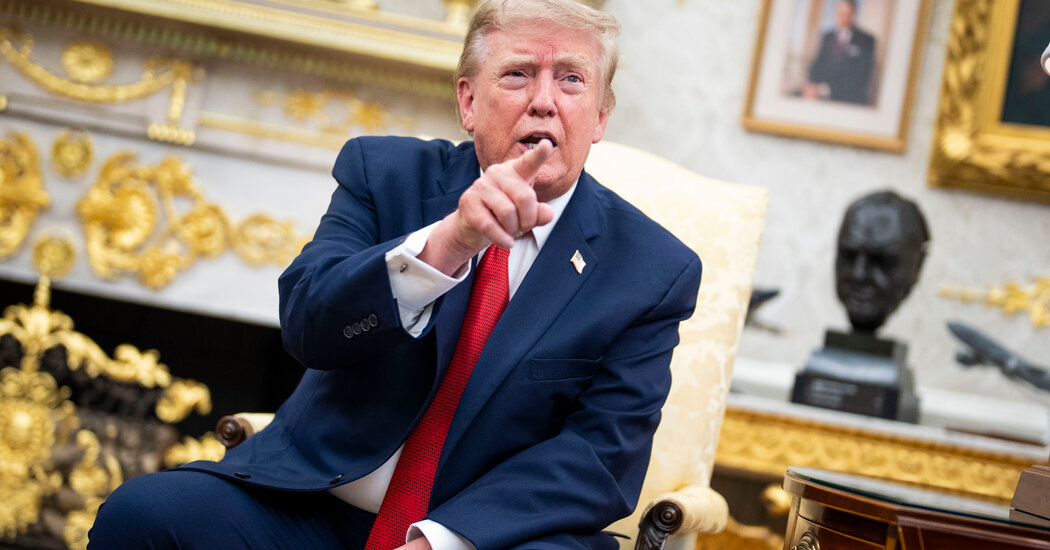
President Trump has recently articulated positions regarding international partners and adversaries, encompassing potential tariffs, military considerations, and diplomatic engagements. This approach has prompted renewed discussion regarding the United States’ role in the global order, which it has played a significant part in shaping for decades.
A decade after President Trump first entered the White House under the “America First” slogan, his foreign policy framework has consistently prioritized a reevaluation of traditional alliances and an increased engagement with nations previously considered adversaries. This strategy has reportedly led to strains in long-standing partnerships across Europe, Asia, and the Middle East, while simultaneously seeing the President pursue closer ties with other states.
Recent statements by President Trump have further underscored his foreign policy orientation. Mr. Trump reportedly declared a willingness to consider military action against Oman, a nation that has historically maintained diplomatic relations with the U.S. in the Middle East, if he perceives it as obstructing U.S. objectives concerning Iran. Concurrently, his administration was reportedly preparing to impose new tariffs on Canada, a country traditionally regarded as one of the United States’ closest allies. Additionally, Mr. Trump announced intentions to scale back military support for South Korea, a key component of the U.S. network of partners in the Asia-Pacific region.
At the same time, President Trump has reiterated expressions of positive sentiment towards North Korean leader Kim Jong-un, recalling his prior statement of “falling in love” with him during his first term. Despite Mr. Trump’s initial declarations that Mr. Kim would denuclearize, North Korea has reportedly continued to expand its nuclear arsenal. Nevertheless, Mr. Trump has maintained his pursuit of diplomatic engagement with the North Korean leader.
James J. Blanchard, a former ambassador to Canada and Democratic governor of Michigan, commented on the situation, stating, “He dumps on our friends and cozies up to our enemies.” Blanchard further remarked, “If someone once told me that Russia is our friend and Canada is our enemy, I’d have told you we’re in an upside-down world.”
Richard Fontaine, the chief executive of the Center for a New American Security and a former adviser to Senator John McCain, Republican of Arizona, noted that while the assertive rhetoric from President Trump is not new, he has not consistently followed through on all such statements. Fontaine pointed out that the United States has not withdrawn from NATO, abandoned South Korea, engaged in military action against Oman, or taken control of Canada or Greenland.
“Increasingly, the bullying rhetoric is being priced in by countries around the world,” Mr. Fontaine said. “They don’t dismiss it, but they don’t take the threats literally either. As more and more unfulfilled threats are issued, people listen less. It undermines the president’s credibility.”
President Trump has consistently maintained that his foreign policy approach, while departing from traditional norms, serves the best interests of the United States. He has argued that under previous administrations, allies benefited disproportionately from U.S. security commitments and trade agreements without adequate reciprocal contributions. Specifically, he cites trade deficits and the levels of military spending by NATO members as evidence that certain allied nations have not carried their fair share.
Regarding engagement with North Korea, China, Russia, and other long-standing adversaries, Mr. Trump argues that past confrontational policies were ineffective and that increased diplomacy offers a more viable path forward. He has expressed aspirations to achieve a nuclear accord with North Korea, finalize a comprehensive trade deal with China, and reestablish full ties with Russia by brokering an end to Russia’s ongoing conflict in Ukraine. Reports from The Wall Street Journal indicate that he has urged aides to arrange a meeting with Mr. Kim this fall.
Recent tensions concerning Iran have influenced President Trump’s assessment of allied support. Nations that have not facilitated military operations against Tehran or contributed force to secure passage through the Strait of Hormuz are, in his perspective, failing to adequately support the United States. Following critical remarks directed at European nations like Britain, France, Spain, and Italy for their perceived lack of assistance regarding Iran, Mr. Trump has recently expressed similar sentiments towards South Korea.
“We have 39,000 soldiers over there guarding you from Kim Jong-un, your next-door neighbor, and you’re not going to help us on a very easy military operation in Iran?” he said this week after announcing that he would scale back joint exercises with South Korea.
By contrast, he continued, “Kim Jong-un has always treated me with great respect, and we’ve met on numerous occasions, actually, two primary occasions — spoken and spent time. I understand him. He understands me.”
This perspective contrasts with the reported difficulty some European and Asian allies have in interpreting President Trump’s approach, despite becoming accustomed to his often unpredictable rhetoric. Historically, U.S. presidents from both major parties have emphasized the importance of alliances, generally working to manage tensions to prevent significant deterioration of relationships.
Currently, allies are reportedly attempting to avoid exacerbating the situation. Victor D. Cha, the president of the Geopolitics and Foreign Policy Department at the Center for Strategic and International Studies, observed, “They grit their teeth and bear it because in the end they do not want to see irreparable damage done to the alliance over the next two years.” He added, “In short, allies may like and trust the U.S. less today, but they still need the U.S.”
Mr. Cha, who served as an Asia adviser to President George W. Bush, noted that President Lee Jae Myung of South Korea reportedly maintains a constructive relationship with Mr. Trump and seeks to preserve it. “Lee is also as transactional as Trump, so if Trump’s outreach to Kim Jong-un works, that is very much in South Korea’s interests,” Mr. Cha said.
The long-standing presence of U.S. forces in South Korea, established since the 1950s conflict, has been a frequent point of contention for President Trump, who often frames such arrangements in financial terms. During his first term, he explored options to withdraw troops and cancel military exercises, arguing they were costly and could be seen as provocative towards North Korea. He proposed that South Korea bear a significantly higher financial burden for U.S. protection and often connected security arrangements with his criticisms of Seoul’s trade practices.
President Trump is not the first U.S. president to consider adjusting the military presence in South Korea decades after the Korean War. President Jimmy Carter, for example, pledged to scale down U.S. forces there but reversed course due to resistance from Congress and his own administration. Donald H. Rumsfeld, who was Mr. Bush’s defense secretary, redeployed a brigade to Iraq, which was not subsequently returned to South Korea, surprising South Korean officials at the time. Today, approximately 28,500 U.S. troops remain stationed in South Korea, according to the Congressional Research Service.
“There could be a strategic case for restructuring the U.S. military presence on the peninsula,” said Michael J. Green, the chief executive
Why This Matters
The statements and policies articulated by President Trump regarding traditional allies and adversaries carry significant implications for global stability, international relations, and the future of U.S. foreign policy. The United States has historically anchored a rules-based international order, built on a network of alliances and multilateral agreements. Any perceived shift in this foundation can have cascading effects worldwide.
First, the reevaluation of alliances, particularly with long-standing partners like Canada and South Korea, could weaken collective security frameworks. For South Korea, a reduction in U.S. military support or joint exercises could alter the regional power balance, potentially encouraging North Korea or other regional actors to assert themselves. For Canada, new tariffs or strained relations could disrupt critical economic ties and supply chains, affecting industries and consumers in both countries. More broadly, if allies perceive U.S. commitments as unreliable, they may seek alternative security arrangements or develop independent defense capabilities, leading to fragmentation rather than cohesion in global security efforts.
Second, the pursuit of diplomatic engagement with leaders like Kim Jong-un, despite North Korea’s continued nuclear expansion, challenges traditional U.S. policy which has often emphasized sanctions and pressure against states developing weapons of mass destruction. While proponents argue this approach may lead to breakthroughs, critics contend it risks legitimizing authoritarian regimes and undermining non-proliferation efforts. The outcomes of such diplomacy have direct consequences for regional stability in East Asia and global security against nuclear proliferation.
Third, President Trump’s transactional approach to foreign policy, focusing on perceived financial inequities and reciprocal benefits, signals a fundamental departure from post-World War II diplomacy. This shift could lead other nations to adopt similar transactional approaches, potentially eroding norms of cooperation and shared responsibility in addressing global challenges such as climate change, pandemics, and economic crises. The U.S. posture towards the Strait of Hormuz and Iran, for example, highlights how a demand for direct allied military contributions can strain relationships, even as it aims to secure perceived U.S. interests.
Finally, the long-term credibility of U.S. foreign policy and its standing on the world stage are at stake. If allies increasingly “price in” unpredictable rhetoric, as some analysts suggest, it could diminish the effectiveness of U.S. diplomatic leverage and influence. Conversely, if President Trump’s unconventional methods yield tangible results in areas like denuclearization or trade rebalancing, it could reshape future diplomatic strategies. The evolving dynamics underscore a period of significant uncertainty and potential reordering in international relations, with profound implications for peace, security, and prosperity worldwide.
U.S. President Intensifies Rhetoric Towards Allies and Adversaries Amidst Geopolitical Pressures
Washington D.C. – In recent days, U.S. President Donald Trump has escalated his rhetoric and policy directives towards several key nations, including critical allies Canada and Oman, while also engaging with North Korea amidst ongoing tensions. These developments, marked by threats of military action and significant trade tariffs, appear to be unfolding against a backdrop of prolonged geopolitical challenges, particularly concerning Iran and the Strait of Hormuz.
The President’s statements and actions have drawn scrutiny from international observers and policy experts, who point to potential long-term implications for global stability, alliance structures, and U.S. foreign policy interests. The current spate of diplomatic friction seems to be rooted, in part, in the administration’s perceived inability to resolve a protracted standoff with Iran, according to some analyses.
Escalating Tensions with Oman and Iran
Oman, a longstanding strategic partner and an important interlocutor between the United States and Iran, has found itself subjected to increasingly severe threats from President Trump. For years, the Sultanate has played a crucial role in facilitating dialogue between Washington and Tehran, leveraging its neutral stance and diplomatic channels to bridge divides when both sides were open to talks. This mediation has often focused on de-escalation in the highly sensitive Persian Gulf region.
However, President Trump has expressed growing aggravation with Oman’s ongoing efforts to broker a deal with Iran regarding control over the Strait of Hormuz. This vital waterway, through which a significant portion of the world’s oil supply passes, is a critical choke point for global trade and security. The U.S. views free navigation through the Strait as paramount, while Iran has, at times, threatened to restrict access in response to sanctions or perceived provocations.
The President’s frustration manifested in a stark warning in May, when he reportedly threatened to mount an unprovoked war on the sultanate, stating, “Oman will behave just like everybody else or we’ll have to blow them up.” This aggressive posture was reiterated more recently. On Monday, he declared that if Oman “gets in the way” of his administration’s efforts to reach an agreement with Iran, “we’ll bomb the shit out of them.” These statements represent a significant departure from traditional U.S. diplomatic language towards an ally and underscore the heightened pressure the administration is placing on regional actors concerning Iran.
Trade Disputes and Rhetorical Hostility Towards Canada
Canada, the United States’ largest trading partner and a close NATO ally, faces a different, though equally concerning, form of hostility from the Trump administration. President Trump has vowed to implement new tariffs of 50 percent on more than 500 Canadian goods, including iconic items such as hockey sticks and various dairy products, effective Tuesday at midnight. Such tariffs, if enacted, would represent a substantial escalation in trade tensions between the two nations, potentially impacting numerous industries and consumers on both sides of the border.
As of Tuesday afternoon, Canadian officials were reportedly engaged in last-ditch efforts to avert the impending tariffs, offering a range of trade concessions designed to appeal to President Trump’s demands. The negotiation underscores the economic stakes involved and Canada’s commitment to preserving the extensive bilateral trade relationship.
Beyond trade disputes, the relationship has been further strained by President Trump’s oft-expressed ambition to incorporate Canada as “the 51st state,” a rhetorical stance that has been widely seen as provocative and dismissive of Canadian sovereignty. Additionally, practical grievances have surfaced, exemplified by a recent delay in the opening of the new Gordie Howe International Bridge, a crucial infrastructure project linking Detroit with Windsor, Ontario. The delay, lasting for weeks, was attributed to various grievances the U.S. President reportedly held with Canada, highlighting the ripple effects of the strained relationship on cooperative projects.
North Korea and Shifting Geopolitical Dynamics
Amidst these developments, President Trump has also extended an invitation for a summit with North Korean leader Kim Jong Un, despite ongoing concerns about North Korea’s weapons programs and human rights record. This invitation comes at a time when North Korea’s military capabilities are viewed as having significantly advanced. According to Professor Peter Blanchard of the United States Studies Centre at the University of Sydney, there are legitimate reasons for engaging with North Korea to prevent war.
However, Professor Blanchard criticizes the perceived use of North Korea as “a pawn in a flirtation with the world’s cruelest dictator,” particularly given the current context. He notes that North Korean soldiers are “coming back from the Ukraine war battle hardened and backed by a larger missile inventory than they had in 2018.” This assessment suggests a more formidable North Korean military, potentially influenced by combat experience and expanded armaments, adding a layer of complexity to any diplomatic engagement.
The implied use of North Korea as a “pawn” in a broader geopolitical strategy, rather than a direct and consistent pursuit of denuclearization, raises questions about the long-term effectiveness and strategic wisdom of the U.S. approach to the Korean Peninsula. Past summits between President Trump and Chairman Kim have yielded limited concrete progress on denuclearization, making the implications of another meeting subject to intense debate.
Expert Commentary and Broader Implications
The recent intensification of rhetoric and policy actions against both allies and adversaries has prompted significant commentary from foreign policy experts. Mr. Blanchard suggested that these latest “eruptions” against Canada and other U.S. allies may stem from President Trump’s inability to definitively resolve the ongoing geopolitical standoff with Iran. He notes that neither military threats (referred to as “bombing”) nor negotiations have compelled Iran to relinquish control of the Strait of Hormuz or make verifiable commitments to abandon its nuclear program, leaving the President seemingly “stuck in a geopolitical trap without a clear path forward.”
Mr. Fontaine, another expert, underscored the potential harm of the administration’s approach to U.S. interests. “There should be benefits to being a friend of America, and costs for being an enemy,” he stated, “not the other way around.” This critique highlights a perception that the administration’s policies may be inadvertently alienating traditional allies while failing to extract concessions from adversaries, thereby undermining the foundational principles of U.S. foreign policy and global leadership.
Why This Matters
The recent actions and statements by President Trump carry significant weight for global stability, international relations, and economic prosperity. The willingness to threaten military action against a longstanding ally like Oman, or impose substantial tariffs on Canada, America’s closest neighbor and largest trading partner, can profoundly reshape alliance structures and trust in U.S. leadership. Such moves risk alienating key partners whose cooperation is often vital for addressing complex global challenges, from counter-terrorism to climate change. The unpredictability inherent in these tactics can foster instability, making it harder for other nations to anticipate U.S. policy and plan accordingly, potentially leading to a more fragmented international order.
Economically, the imposition of tariffs on Canadian goods could trigger retaliatory measures, escalating into broader trade wars that harm businesses, supply chains, and consumers in both countries and beyond. The disruption to established trade relationships undermines global economic growth and can lead to higher prices, reduced competitiveness, and job losses. Furthermore, the politicization of critical infrastructure projects, like the Gordie Howe International Bridge, demonstrates how diplomatic friction can impede economic development and cross-border cooperation.
In the context of North Korea, the approach of simultaneous engagement and the expert assessment of North Korea’s enhanced military capabilities, particularly “battle-hardened” troops and a larger missile inventory, introduce a dangerous dynamic. If diplomatic overtures are perceived as merely tactical or lacking a clear strategy for verifiable denuclearization, they could inadvertently legitimize North Korea’s regime or provide it with more time to advance its weapons programs. The potential for miscalculation or unintended escalation on the Korean Peninsula remains a significant concern, with implications for regional and global security.
Ultimately, the current trajectory of U.S. foreign policy, as described by experts, raises fundamental questions about the long-term effectiveness and strategic coherence of the administration’s approach. If allies perceive more “costs” than “benefits” in their relationship with the U.S., it could erode the network of alliances that has underpinned American power and global security for decades. This could empower rival powers, destabilize regions, and make it more challenging to forge consensus on critical global issues, impacting the security and prosperity of nations worldwide.