
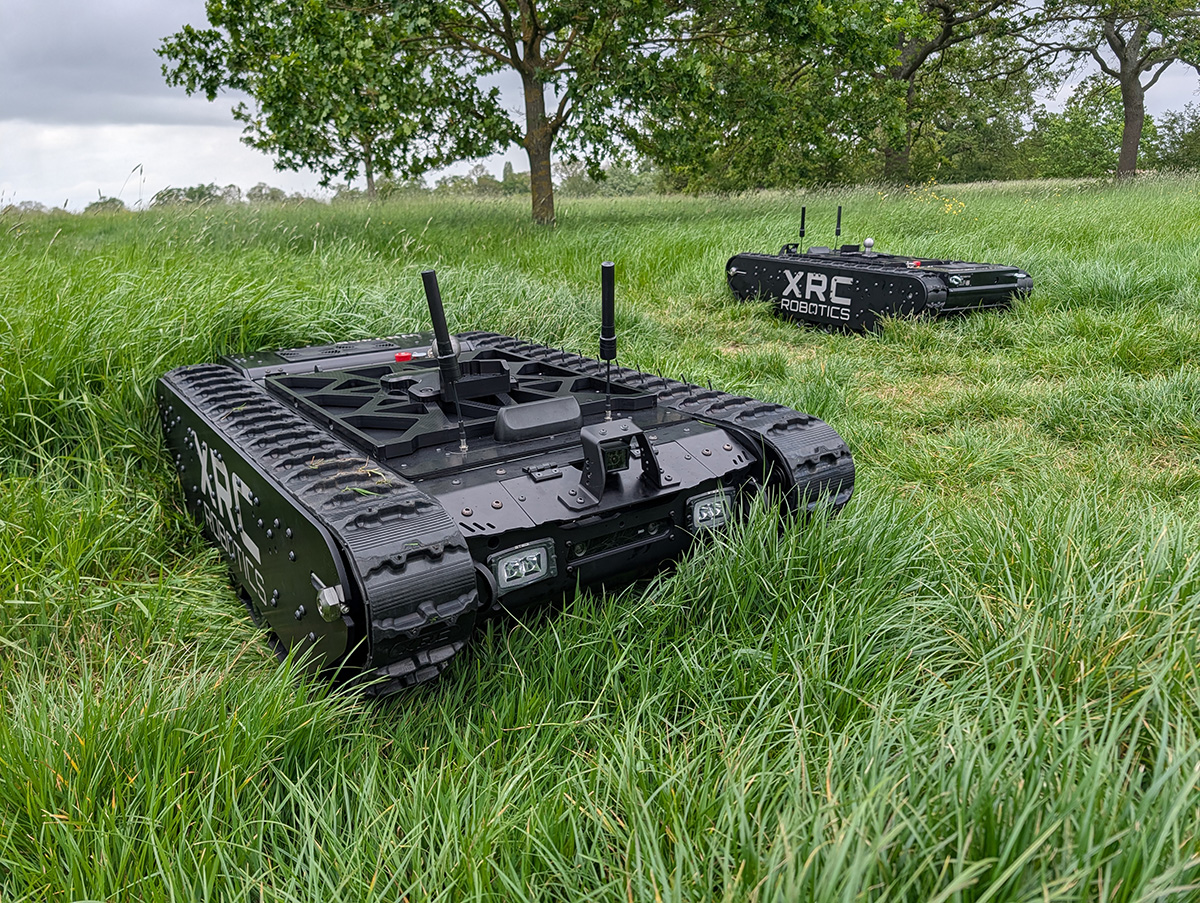
UK Ministry of Defence Awards Key Contract to XRC Robotics for Advanced Uncrewed Ground Vehicle, Signalling Shift in Defence Innovation
Windsor, UK – The United Kingdom’s Ministry of Defence (MoD) has awarded a significant contract to Windsor-based XRC Robotics for its RHINO uncrewed ground vehicle (UGV) platform. This agreement, secured in February 2026, marks what the company describes as a pivotal moment in British defence procurement, being the first instance of the MoD reportedly fast-tracking a robotic system directly into frontline experimentation programmes. The move underscores a strategic acceleration in integrating advanced autonomous capabilities into the British Army’s operational framework.
The RHINO platform is engineered for versatility and resilience in challenging, contested environments. Its design emphasizes high-speed performance combined with a modular chassis that supports long-range missions and substantial payload capacities. This adaptability allows the system to be rapidly reconfigured in the field, transitioning seamlessly between critical roles such as intelligence, surveillance, and reconnaissance (ISR), logistics support, and casualty evacuation. XRC Robotics highlights the platform’s user-friendly design, asserting that operators can conduct repairs or mission reconfigurations within minutes, enhancing operational readiness and reducing downtime in dynamic operational settings.
The reported fast-tracking of RHINO into frontline experimentation represents a notable shift in the UK’s defence acquisition strategy. Traditionally, military procurement processes are lengthy, involving extensive testing and validation cycles that can span years. By accelerating the RHINO’s integration, the MoD appears to be prioritizing rapid technological adaptation, a response likely influenced by the evolving nature of modern warfare and the imperative to maintain a competitive edge. This approach aims to bridge the gap between emerging technologies and operational deployment more swiftly, allowing the British Army to experiment with and refine advanced robotic capabilities in realistic scenarios sooner than conventional timelines would permit.
Cam Knighton, Founder of XRC Robotics, emphasized the contract’s significance as a testament to indigenous defence innovation. “This contract award is a defining moment for British defence innovation,” Knighton stated. “By partnering with the British Army, we are proving that the UK does not need to look abroad for world-class robotics. XRC is delivering a British solution for a British problem, ensuring our Armed Forces have the home-grown technological edge they need to prevail in modern conflict.” This statement underscores a broader national ambition to cultivate self-sufficiency in critical defence technologies.
XRC Robotics positions its offering as a fully sovereign solution, highlighting its in-house control over the entire engineering, development, and manufacturing lifecycle. The company maintains that this approach ensures intellectual property (IP) and supply chain security remain entirely within the UK, mitigating risks associated with foreign dependencies, potential export restrictions, or geopolitical instability. Located in Windsor, the firm states it controls all aspects from conception to production, aiming to bolster the national defence industrial base. Beyond direct military application, the contract is expected to stimulate economic growth and job creation, particularly in high-skill sectors such as mechatronics, artificial intelligence (AI), and advanced manufacturing, contributing to the UK’s technological workforce.
This award aligns with the British Army’s ongoing efforts to modernize its capabilities, with a particular focus on uncrewed ground systems. The MoD has been actively expanding its experimentation programmes across various domains – air, sea, and land – to integrate autonomous and robotic platforms. Ground systems, in particular, are gaining increased prominence due to their perceived relevance in the kind of attritional, contested warfare observed in recent conflicts, notably in Ukraine. The conflict in Eastern Europe has provided stark lessons on the effectiveness of remotely operated and autonomous systems in reducing risk to personnel, enhancing persistent surveillance, and supporting logistical operations in high-threat environments. The integration of UGVs like RHINO is seen as crucial for improving operational efficiency, increasing force protection, and potentially altering the dynamics of future battlefields by augmenting human capabilities with robotic endurance and precision, thereby enhancing the overall resilience and effectiveness of military operations.
Why This Matters
The contract between the UK Ministry of Defence and XRC Robotics for the RHINO uncrewed ground vehicle represents more than just a procurement deal; it signifies several critical shifts in defence strategy, industrial policy, and the future of warfare.
1. Acceleration of Robotic Integration and Future Warfare:The “fast-tracking” aspect is particularly noteworthy. It indicates a deliberate strategy by the UK MoD to accelerate the adoption of cutting-edge robotic technologies. In an era where technological advantage can be fleeting, reducing the typical lengthy procurement cycles is paramount. This move suggests that the British Army is keen to quickly experiment with and adapt to the capabilities offered by UGVs, learning on the fly and integrating them into operational doctrine. The experience of the war in Ukraine has highlighted the indispensable role of uncrewed systems – both aerial and ground – in modern, attritional warfare. UGVs can perform “dull, dirty, and dangerous” tasks, reducing human exposure to risk in contested zones. They offer persistent presence for intelligence gathering, can carry supplies over treacherous terrain, and could potentially assist in the crucial and perilous task of casualty evacuation, transforming logistics and force protection strategies. This contract is a tangible step towards a more autonomous and resilient British Army, capable of operating effectively in complex and high-threat environments.
2. Bolstering Sovereign Defence Capabilities and Industrial Resilience:XRC Robotics’ emphasis on a “fully sovereign solution” is strategically significant for the UK. In an increasingly unstable global landscape, maintaining control over critical defence technologies, intellectual property, and supply chains is a national security imperative. Relying on domestic innovation reduces vulnerability to geopolitical pressures, export restrictions, and supply chain disruptions that could arise from international dependencies. This contract not only supports the immediate operational needs of the British Army but also reinforces the UK’s defence industrial base. It fosters a domestic ecosystem of specialized skills and manufacturing capabilities in high-tech fields like mechatronics, AI, and advanced manufacturing. Such investments are crucial for ensuring the UK remains a leader in defence innovation, capable of developing bespoke solutions tailored to its unique security challenges and contributing to economic growth through high-value job creation and technological advancement.
3. Economic Impact and Technological Leadership:Beyond military applications, this contract contributes to the UK’s broader economic and technological landscape. The creation of skilled jobs in advanced sectors like AI and robotics strengthens the national workforce and positions the UK as a hub for future-defining technologies. Government contracts, especially in defence, often act as powerful catalysts for innovation, driving research and development that can have spill-over effects into civilian sectors. Success in developing and deploying advanced robotic platforms can enhance the UK’s reputation as a leader in technological innovation, potentially attracting further investment and talent. This not only bolsters economic resilience but also ensures the UK remains competitive on the global stage, where technological prowess is increasingly intertwined with national power and influence.
4. Evolving Nature of Defence Procurement and Innovation:The “fast-tracking” approach signals a potential paradigm shift in how the UK MoD procures and integrates new technologies. It suggests a move away from long, rigid development cycles towards more agile, iterative processes that embrace experimentation and rapid iteration. This could encourage smaller, innovative companies like XRC Robotics to engage more readily with defence needs, fostering a dynamic environment for defence tech startups. This model, often seen in the private sector, allows for quicker adaptation to emerging threats and technological advancements, ensuring that the armed forces are equipped with the most current and effective tools available. It represents an understanding that future conflicts demand not just superior technology, but also superior processes for acquiring and deploying that technology, making the UK’s defence ecosystem more responsive and adaptable.