
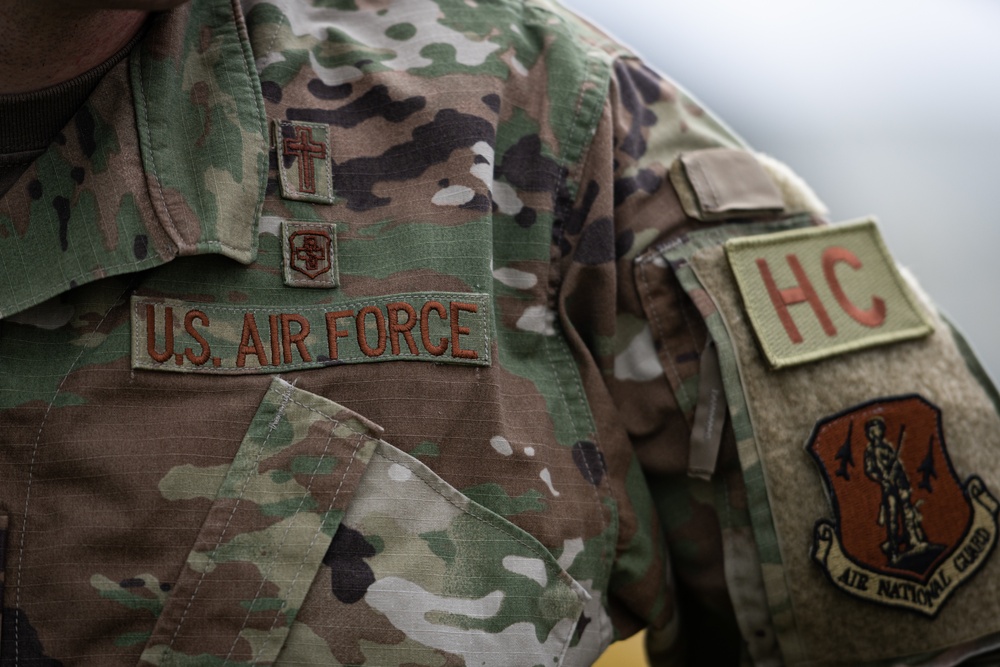
The United States Department of Defense has significantly reduced the number of Religious Affiliation Codes used to categorize service members’ religious preferences. This change, announced by Pentagon spokesman Sean Parnell on June 5, reduces the official list from over 200 categories to just 31. The stated purpose of this streamlining is to enhance the delivery of targeted religious support from the Chaplaincy.
The revised list, which became effective following a May 20 memo from Undersecretary for Personnel and Readiness Anthony J. Tata, aims to simplify the collection of religious preferences. Key adjustments include consolidating numerous Christian denominations into 21 distinct categories and removing several nontraditional faiths, such as Paganism and Wicca, from the primary tracking list. While these specific faiths are no longer tracked as separate categories, individual service members retain the ability to list their personal religious preference on their identification tags, commonly known as dog tags. These tags can be crucial for chaplains providing spiritual care, especially to wounded personnel in combat zones.
According to Parnell, the changes are “long overdue” and are designed to provide chaplains with a clearer understanding of the religious composition of their units. This consolidated data is intended to help chaplains more effectively structure resources and allocate support to meet the spiritual needs of military personnel from various faith groups. The new list encompasses major world religions, including Buddhism, Hinduism, Islam, and Judaism, in addition to the 21 Christian denominations. Faiths not explicitly listed will now fall under broader categories, or potentially “Other Religions.”
The reduction in codes follows public comments made by Defense Secretary Pete Hegseth last September, where he specifically addressed the issue of religious exemptions for beards, referencing Paganism. Speaking to general officers at Quantico, Va., Hegseth stated, “If you want a beard, you can join Special Forces. If not, then shave. We don’t have a military full of Nordic pagans, but unfortunately, we have had leaders who either refuse to call BS and enforce standards, or leaders who felt like they were not allowed to enforce standards.” This commentary preceded the official policy change concerning the religious codes.
The decision has drawn varied reactions from former military religious leaders. Retired Maj. Gen. Randall E. Kitchens, a former Air Force Chief of Chaplains, commented that the new list “appears to represent major faith groups” and described the previous system of Faith and Belief Codes as having “become difficult to manage.” He suggested that the new approach, while potentially imperfect, offers a more unified process for representing religious affiliations in broader categories, with a mechanism to add new categories if a widespread need emerges.
Similarly, retired Maj. Gen. Steven Schaick, another former Chief of Chaplains, noted the complexity of the previous system, particularly for new recruits. “We’ve made the ‘religious preference’ choices exceedingly difficult for a generation that cannot distinguish the term Protestant from Lutheran,” Schaick remarked. He pointed out that while the new consolidation, such as having a single Presbyterian category instead of multiple branches, might simplify administrative processes, it could also lead to a sense of marginalization for endorsers of smaller faith groups whose specific numbers will no longer be closely tracked.
While the Pentagon’s intention is to streamline support, some ambiguities remain regarding the practical implications for service members whose religious preferences may now be subsumed into broader or “Other Religions” categories. It is also not immediately clear how this change might affect the diversity within the military’s chaplain corps, particularly if there are chaplains whose faiths are no longer individually listed but are now grouped under a general category.
The Pentagon clarified in a June 8 social media post that the previous list “included redundant and unnecessary labeling, and the mistake has been fixed.” Although the Department of Defense did not publicly provide the full old list for direct comparison, a March 2017 memo from the Armed Forces Chaplains Board detailed 216 codes. Of these, approximately 170 were variations of Christianity, 40 covered popular non-Christian religions like Judaism, Islam, Buddhism, Hinduism, Sikhism, and Baha’i, and about a dozen represented nontraditional religions. The previous list included specific designations for faiths such as Asatru, Church Of The Spiral Tree, Dian Wi (Dianic Wicca), Druid, Gardnerian Wicca, Heathen, Pagan, Sacred Well Congregation, Seax Wi (Seax Wicca), Shaman, and Troth—all of which are no longer individually identified on the consolidated list.
Parnell emphasized that the Pentagon’s adjustments to the list do not make “claims on the legitimacy of any faith or religious belief, nor is it intended to provide a list of ‘officially approved’ religions.” He reaffirmed the Pentagon’s commitment to the First Amendment and the free exercise of religion, stating that the primary goal is to provide better data for chaplains to support the spiritual care and well-being of military members.
Why This Matters
The Pentagon’s decision to drastically reduce its list of recognized religious affiliation codes carries several significant implications for military personnel, the chaplain corps, and the broader principle of religious freedom within the armed forces.
Firstly, for **service members**, this change directly impacts how their individual religious identities are formally acknowledged and how they might access specific religious support. While the military asserts that individuals can still identify their religion on dog tags, the removal of specific categories from the official tracking list could lead to a perception of marginalization for adherents of faiths now subsumed under broader labels like “Other Religions.” This is particularly pertinent for followers of nontraditional faiths, who may rely on specific rituals, dietary requirements, or spiritual guidance that differs significantly from mainstream religions. The clarity of official recognition often underpins the provision of accommodations and specialized support, and a less granular tracking system could complicate these efforts.
Secondly, the **Chaplain Corps**, whose mission is to provide comprehensive religious support to a diverse force, faces new challenges and opportunities. While the stated goal is to “enhance the delivery of targeted religious support” through streamlined data, the effectiveness of this approach will depend on how chaplains are trained and resourced to understand and support the full spectrum of beliefs now grouped together. A chaplain trained primarily in traditional faiths may require additional resources or education to adequately serve a service member practicing a less common, now unlisted, faith. Furthermore, the diversity of the chaplain corps itself could be impacted, potentially influencing recruitment and retention of chaplains from smaller religious traditions.
Thirdly, this policy touches upon the delicate balance between **military uniformity and individual religious freedom**. The U.S. military has historically grappled with how to uphold constitutional guarantees of religious exercise while maintaining operational readiness and unit cohesion. Secretary Hegseth’s previous comments regarding beards and Paganism highlight this tension. While the Pentagon maintains that the change is purely administrative and not a judgment on faith legitimacy, some may interpret the removal of specific categories as de-prioritizing certain religious expressions, potentially chilling the environment for religious diversity.
Finally, this development resonates with the **public discourse on religious pluralism and inclusion**. How the military manages religious diversity is often viewed as a barometer for its commitment to civil liberties. Advocacy groups and religious organizations will likely scrutinize the practical effects of this policy, ensuring that the changes do not inadvertently create barriers to religious practice or foster an environment where some faiths feel less valued than others within the armed forces. The ongoing implementation and subsequent impact of these revised codes will be a critical area to monitor for those concerned with religious rights and military welfare.