
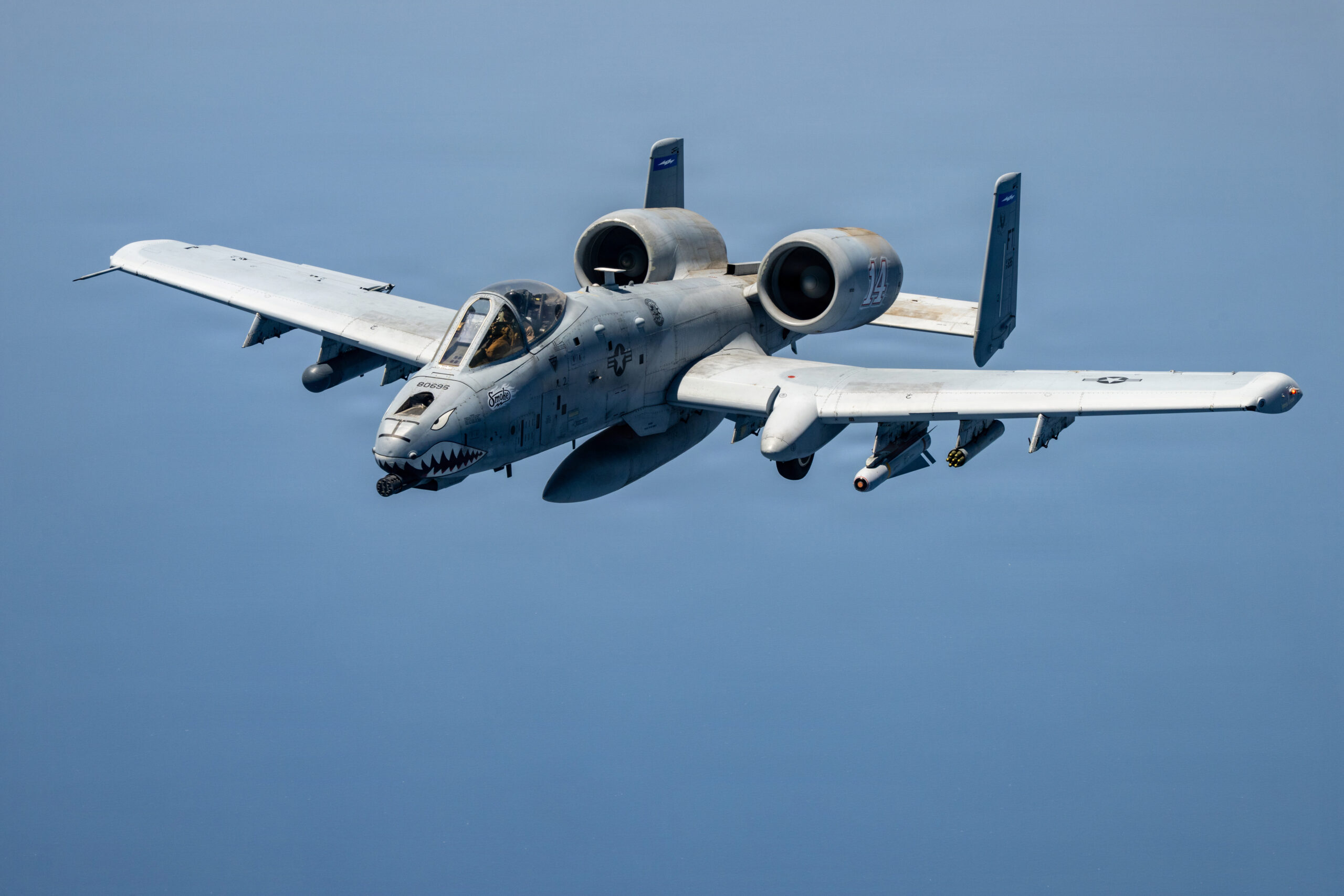
An Iranian ballistic missile attack on a critical U.S. air base in Jordan on September 8, Eastern Time, resulted in damage to multiple American warplanes, according to individuals familiar with the incident. This strike followed U.S. actions against five Iranian tankers earlier the same day, marking another escalation in regional tensions.
The attack, which targeted Muwaffaq Salti Air Base (MSAB) near Azraq, Jordan, caused significant damage to one A-10 Thunderbolt II attack aircraft, which sustained a severely damaged wing. Additionally, approximately eight F-15E Strike Eagle fighter jets incurred lighter damage but are considered serviceable, meaning they can be repaired and returned to operational status. The extent of the damage to U.S. aircraft was initially reported by CBS News and subsequently confirmed by sources to Air & Space Forces Magazine.
Following the strike, a spokesman for U.S. Central Command did not immediately respond to requests for comment regarding the incident. However, U.S. officials confirmed that no American personnel were killed during the September 8 missile attack, despite the harm inflicted upon military materiel.
The sequence of events leading to the missile strike began with U.S. forces conducting operations against five Iranian tankers. In retaliation, Iran’s Islamic Revolutionary Guard Corps (IRGC) launched scores of ballistic missiles toward MSAB. U.S. and Jordanian forces, operating in concert, responded by launching dozens of interceptors in an attempt to neutralize the incoming threat. While many missiles were intercepted, some evidently reached the base, causing the reported damage to aircraft.
In the hours following the assault, the IRGC publicly claimed responsibility, asserting that its forces had successfully damaged U.S. aircraft at the base. This claim aligns with the confirmed damage reports, underscoring Iran’s intent and capability to target U.S. assets in the region.
Muwaffaq Salti Air Base serves as a pivotal airpower hub for U.S. operations in the Middle East, particularly those aimed at countering Iranian influence and activities. It hosts dozens of U.S. warplanes and personnel, supporting a range of missions including intelligence, surveillance, reconnaissance, and strike operations across the region. Its strategic location makes it a frequent target in the ongoing regional conflict.
The base has been subjected to numerous attacks since the broader regional conflict intensified in February. These attacks are often attributed to Iranian-backed proxy groups, but the September 8 incident stands out due to the direct involvement of Iran’s IRGC and the use of ballistic missiles, demonstrating a higher level of intent and capability. This direct confrontation signifies a potentially more dangerous phase in the U.S.-Iran shadow war.
Prior to this incident, MSAB was the site of a deadly missile attack in July, which resulted in the deaths of three U.S. Army Soldiers. That earlier strike underscored the persistent threats faced by U.S. forces stationed in the region and the vulnerabilities of even well-defended installations to determined adversaries. The repeated targeting of MSAB highlights its perceived importance to both U.S. military strategy and Iranian efforts to challenge that presence.
The damage to the A-10 Thunderbolt II, known for its close air support capabilities, and the F-15E Strike Eagles, versatile multirole fighters, represents a tangible cost of the ongoing tensions. While the F-15Es were only “lightly damaged” and remain “serviceable,” requiring repairs that could temporarily reduce their operational availability, the “severely damaged wing” of the A-10 suggests a more extensive and costly repair, potentially sidelining the aircraft for an extended period or even rendering it irreparable, depending on the full assessment. Such damage necessitates significant logistical effort, resources, and time for repair, impacting immediate operational readiness and imposing financial burdens.
The incident also raises questions about the effectiveness of air defense systems against sophisticated ballistic missile salvos. While dozens of interceptors were launched, the fact that some missiles still impacted the base and caused damage indicates the challenges inherent in achieving a perfect defense against a large-scale, coordinated attack. This highlights an ongoing arms race between offensive missile capabilities and defensive interception technologies in contested regions.
The direct nature of Iran’s retaliation following U.S. strikes against its tankers suggests a tit-for-tat escalation dynamic. This pattern of action and counter-action risks spiraling into a wider, more direct conflict, moving beyond proxy warfare and into open military engagement between state actors. The choice of ballistic missiles, capable of traveling long distances and delivering significant payloads, further underscores the seriousness of Iran’s response.
Jordan, a key U.S. ally and a country vital to regional stability, finds itself increasingly drawn into these escalating tensions. Hosting a significant U.S. military presence, Jordan provides critical logistical and operational support for U.S. missions. The repeated attacks on its territory, even if aimed at U.S. assets, pose risks to its sovereignty and security, complicating its delicate balancing act in a volatile neighborhood.
This event serves as a stark reminder of the volatile security environment in the Middle East and the complex challenges faced by international forces operating there. The interplay of regional rivalries, the proliferation of advanced weaponry, and the readiness of various actors to engage in military action create a persistent state of tension and the constant threat of escalation.
Why This Matters
This Iranian ballistic missile attack on Muwaffaq Salti Air Base in Jordan carries significant implications for regional stability, U.S. foreign policy, and the dynamics of conflict in the Middle East:
- Escalation of Direct Conflict:The incident marks a concerning escalation in the ongoing tensions between the United States and Iran. While both nations have long engaged in a “shadow war” through proxies, direct Iranian ballistic missile strikes on a U.S. military installation, following U.S. strikes on Iranian assets, signal a dangerous shift towards more overt and direct military confrontation. This tit-for-tat dynamic increases the risk of miscalculation and a broader, unintended regional war.
- Challenge to U.S. Force Protection and Deterrence:Despite U.S. and Jordanian defensive efforts, ballistic missiles successfully impacted the base, damaging valuable military aircraft. This demonstrates Iran’s willingness and capability to strike U.S. assets, challenging the effectiveness of current U.S. deterrence strategies and raising questions about the resilience of air defenses against sophisticated missile salvos. It highlights the inherent difficulty and cost of protecting forces in a high-threat environment.
- Impact on U.S. Operational Readiness and Costs:The damage to an A-10 Thunderbolt II and multiple F-15E Strike Eagles, even if some are lightly damaged, impacts U.S. operational readiness. These aircraft require significant time and resources for repair, diverting personnel and funds that could be used elsewhere. This imposes a tangible cost on U.S. military operations in the region and could temporarily reduce the available airpower for critical missions.
- Regional Stability and Alliance Dynamics:Jordan, a crucial U.S. ally, is increasingly being drawn into these confrontations. Repeated attacks on its territory, even if targeting U.S. assets, threaten its sovereignty and security, potentially destabilizing a relatively stable nation in a volatile region. This puts pressure on Jordan’s government and could complicate its strategic alliances. Other regional partners will also closely watch the U.S. response and its ability to protect its assets and allies.
- Demonstration of Iranian Capability and Resolve:The use of ballistic missiles by the IRGC demonstrates Iran’s advanced military capabilities and its resolve to retaliate directly against perceived U.S. aggressions. This sends a strong message that Iran is prepared to absorb costs and elevate responses, potentially influencing future U.S. decision-making regarding operations targeting Iranian interests.
- Implications for Global Energy Markets:Any significant escalation in the Middle East, particularly involving major oil producers like Iran, carries the risk of disrupting global oil supplies and shipping lanes in vital waterways such as the Strait of Hormuz. While this specific incident didn’t directly target oil infrastructure, the increasing military activity raises the specter of broader economic destabilization.
The event underscores the urgent need for diplomatic efforts to de-escalate tensions and prevent the ongoing cycle of retaliation from spiraling out of control. Without a clear path to de-escalation, the region faces an increasing risk of a wider and more destructive conflict with global consequences.