
US Navy Advances Unmanned Fleet with $1.2 Billion Medium Unmanned Surface Vessel Acquisition
The United States Navy has announced plans to acquire 30 Medium Unmanned Surface Vessels (MUSVs), a significant step towards integrating autonomous technology into its fleet. This acquisition follows the successful completion of an initial at-sea testing phase, with the first deliveries anticipated before the end of fiscal year 2027.
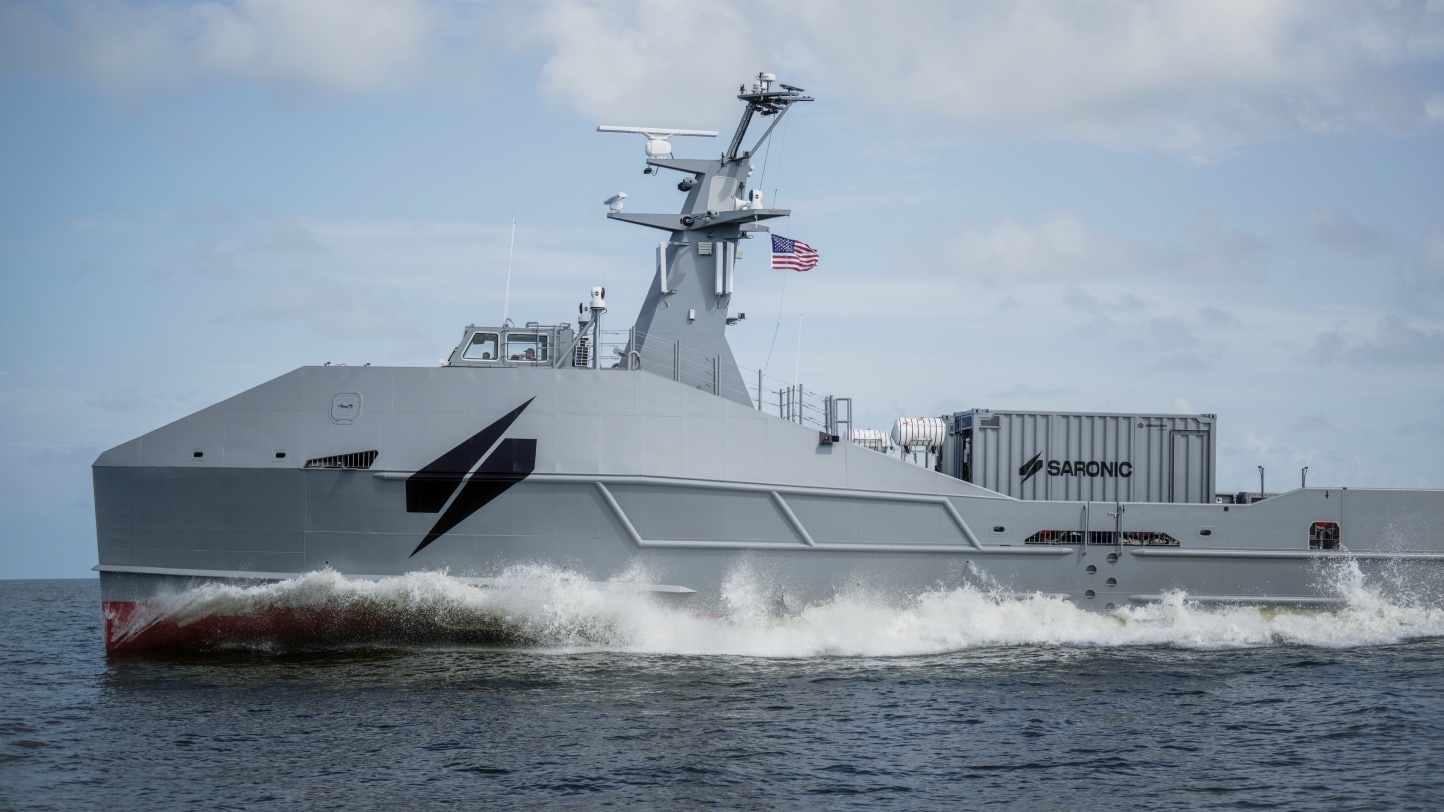
Production agreements, formalized through Other Transaction Authority (OTA) contracts, have been awarded to three companies: Galliano Marine Services, HII, and Saronic Technologies. Each firm is slated to produce 10 vessels, bringing the total procurement to 30 MUSVs. The agreements average an acquisition cost of $40 million per boat, culminating in an approximate total value of $1.2 billion across the three contracts. An Other Transaction Authority is a special contracting vehicle used by federal agencies to streamline the acquisition of research and development prototypes and to facilitate follow-on production, often allowing for faster development cycles and greater flexibility compared to traditional procurement methods.
In addition to these production awards, three other companies that participated in the prototype development phase—Leidos, PAC MAR, and Sea Machines—have been recognized for completing their contractual obligations. Each of these firms will receive a $15 million award, consistent with their previously agreed terms. This acknowledges their contributions to the foundational research and development efforts that paved the way for the current production phase and the subsequent transition to full-scale production contracts.
All six companies involved in either the prototype or production phases will be listed on the Maritime Marketplace, an online platform hosted by Drones.mil. This inclusion makes them eligible for potential future production agreements from various acquisition authorities across the Department of Defense, fostering continued innovation and competition within the defense industrial base for unmanned systems. The marketplace aims to provide a centralized hub for defense agencies to identify and procure advanced unmanned maritime solutions.
Further demonstrating its commitment to expanding its unmanned capabilities, the Navy issued a “Phase II Integration and Testing Call for Solutions” on September 23. This initiative is designed to broaden the pool of technological offerings and ensure that future MUSV designs can meet evolving mission requirements and operational demands. This continuous engagement with the industrial sector aims to prevent technological stagnation and rapidly incorporate cutting-edge advancements, ensuring the Navy’s autonomous fleet remains at the forefront of maritime technology.
The initial phase of at-sea testing rigorously evaluated several critical capabilities of the MUSVs. These assessments included the vessels’ ability to accurately perceive and interpret their surrounding maritime environment using a suite of sensors, their proficiency in autonomous navigation in strict adherence to the International Regulations for Preventing Collisions at Sea (COLREGs), and their capacity for undertaking extended, long-duration missions without direct human intervention. These tests are vital for proving the reliability and safety of autonomous operations in complex real-world maritime scenarios.
Acting Secretary of the Navy Hung Cao underscored the urgency driving this acquisition strategy in an official release. Cao stated that the process aims to deliver capabilities to warfighters swiftly, emphasizing the need for speed and efficiency in defense procurement. He further conveyed a clear message to the defense industrial base: to “build fast, deliver on time, and match the urgency of the threat.” Cao highlighted the MUSV award as an example of how the Navy is “streamlining acquisitions to ensure our Sailors and Marines have the capabilities they need to fight, win, and come home safe.” This statement reflects a strategic shift towards more agile and responsive acquisition processes to counter emerging global threats and maintain a competitive edge.
The Navy’s pursuit of medium-sized uncrewed surface vessels is not a recent development, with its interest spanning several years. Previous significant endeavors in this domain include the Defense Advanced Research Projects Agency’s (DARPA) Sea Hunter program, which explored long-range autonomous anti-submarine warfare, the Overlord program which converted commercial vessels into unmanned prototypes to test various payloads and autonomy solutions, and a 2020 MUSV prototype contract previously awarded to L3Harris. These preceding efforts have laid crucial groundwork, informing the design and operational concepts for the current generation of MUSVs and demonstrating a persistent commitment to unmanned systems.
The three companies selected for production contracts bring diverse expertise to the program. HII, a major defense contractor and one of the largest shipbuilders in the U.S., has developed its ROMULUS family of autonomous vessels, showcasing its established capabilities in naval shipbuilding and advanced systems integration. Saronic Technologies, an emerging player in the autonomous marine space, initially known for smaller autonomous boats, has expanded its focus towards larger, more complex uncrewed designs suitable for defense applications. Galliano Marine Services, originating from the Gulf Coast offshore vessel sector, contributes specialized knowledge in robust maritime construction and operations suitable for demanding sea conditions, leveraging its experience in building rugged, reliable vessels.
The Chief of Naval Operations (CNO) articulated the strategic importance of MUSVs within the service’s broader “hedge strategy,” as outlined in its Fighting Instructions. The CNO explained that these vessels “give commanders a Tailored Offset — additional capacity and capability that can be rapidly adapted to the threat, distributed across the battlespace, and placed at risk without placing Sailors at unnecessary risk.” This perspective frames MUSVs as a means to augment the fleet’s operational reach and flexibility while minimizing human exposure to danger in contested areas. Furthermore, the CNO highlighted their utility as a “platform for rapidly integrating new sensors, weapons, and other mission payloads as technology and operational requirements change.” This emphasizes the MUSVs’ role as adaptable testbeds for future naval technologies, signifying a move beyond mere experimentation to deploy “reliable, combat-relevant capability into the hands of our Sailors at the speed the Fleet requires.”
The fielding and operational integration of these new vessels will be overseen by the Direct Reporting Program Manager for Robotic and Autonomous Systems. This office will collaborate closely with the Robotic and Autonomous Systems Warfighting Development Center, which bears the responsibility for developing the necessary tactics, training protocols, and operational experience to effectively employ these uncrewed assets in various mission scenarios. A key component of the Navy’s strategy is its “Containerized Capability Campaign,” which promotes the use of modular payloads. This approach allows commanders to customize MUSVs with specific sensors, weapons, and other mission-essential equipment through standardized containerized units, tailoring each vessel to the precise requirements of a given task or operational environment, thereby maximizing versatility and mission effectiveness across the fleet.
Why This Matters
The US Navy’s substantial investment in Medium Unmanned Surface Vessels (MUSVs) marks a pivotal moment in the evolution of naval warfare, signaling a decisive shift towards a more autonomous and distributed fleet. This $1.2 billion acquisition is not merely about adding new boats; it represents a strategic imperative driven by geopolitical realities and technological advancements, with far-reaching implications for global security and naval operations.
Firstly, the deployment of MUSVs is a direct response to the increasing sophistication of potential adversaries and the challenges posed by contested maritime environments. By providing a “Tailored Offset,” these uncrewed vessels augment the Navy’s capacity and capability, allowing for a broader distribution of assets across vast operational areas. This distribution complicates an adversary’s targeting calculus and enhances the resilience of the fleet. MUSVs can perform “dull, dirty, or dangerous” missions—such as persistent surveillance, intelligence gathering, mine countermeasures, and even acting as decoys—thereby reducing the risk to human personnel in high-threat zones. This shift protects valuable human capital while maintaining a robust and persistent presence in strategic waters.
Secondly, this procurement accelerates the integration of cutting-edge technology into frontline operations. The emphasis on MUSVs as platforms for “rapidly integrating new sensors, weapons, and other mission payloads” highlights their role as adaptable assets. This modularity ensures that the Navy can quickly incorporate emerging technologies and adapt to evolving threats without the lengthy and costly process of designing and building entirely new crewed warships. It fosters an ecosystem of continuous innovation within the defense industrial base, encouraging companies to develop agile and versatile solutions for future naval challenges, thereby maintaining technological superiority.
Thirdly, the acquisition strategy itself reflects a broader institutional change within the Navy. The use of Other Transaction Authority agreements and the creation of a Maritime Marketplace demonstrate an effort to streamline procurement processes, bypass traditional bureaucratic hurdles, and engage a wider array of companies—including those from commercial sectors—that might not typically participate in defense contracting. This agile approach aims to deliver capabilities to the fleet at a faster pace, aligning with the urgency articulated by Navy leadership to counter adversaries who are rapidly modernizing their forces, and enabling the U.S. to maintain its strategic advantage.
Finally, the long-term implications are profound for the future of naval power and global maritime security. A fleet increasingly reliant on unmanned systems will require new operational doctrines, training methodologies, and sophisticated command-and-control structures. The establishment of the Robotic and Autonomous Systems Warfighting Development Center is crucial for developing these new tactics and integrating these vessels seamlessly into existing and future naval operations. This move could redefine the composition of naval forces, potentially leading to a smaller footprint for crewed warships while expanding the overall reach, persistence, and expendability of the fleet, ultimately reshaping the dynamics of maritime power projection in the 21st century and potentially influencing naval strategies worldwide.