
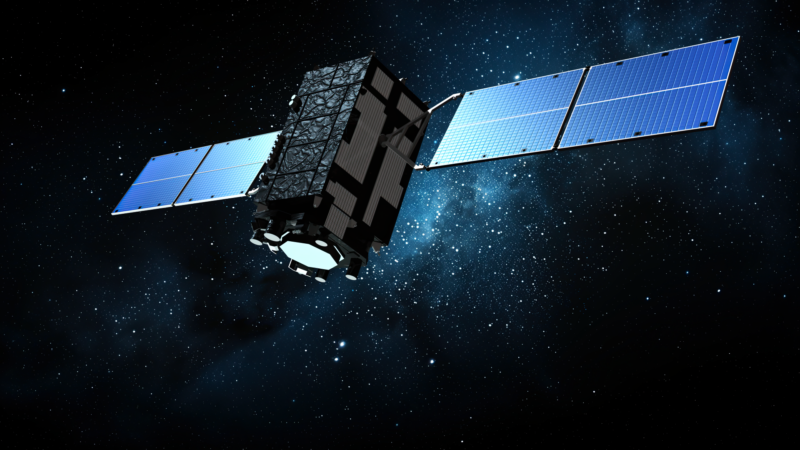
A significant milestone in U.S.-Japanese space cooperation was achieved last week with the successful launch of a Japanese navigation satellite carrying a U.S. Space Force payload. The event marks a further integration of the two nations’ capabilities in the increasingly critical domain of space, completing a novel program to enhance space domain awareness.
The QZS-7 satellite, part of Japan’s Quasi-Zenith Satellite System (QZSS), lifted off on August 10 aboard a Japanese H3 rocket from the Tanegashima Space Center, located on an island in southern Japan. This launch represents the second instance of a U.S. Space Force (USSF) hosted payload integrated onto a QZSS satellite, underscoring a deepening partnership aimed at strengthening regional security and monitoring activities in Earth’s orbit.
Operated by Japan, the QZS-7 satellite is designed to augment the Global Positioning System (GPS) constellation, providing enhanced navigation and timing services primarily across the Asia-Pacific region. This improved accuracy and reliability are crucial for a wide array of applications, ranging from civilian navigation and disaster response to precise military operations and infrastructure management.
The U.S.-hosted payload aboard QZS-7 is specifically engineered to provide “near real-time data” on objects in geosynchronous orbit (GEO) above the Pacific Ocean. Geosynchronous orbit, situated approximately 36,000 kilometers (22,369 miles) above Earth’s equator, is a vital zone for numerous critical satellites, including those used for communication, weather forecasting, and intelligence gathering. The ability to monitor this region comprehensively is essential for identifying potential threats, tracking debris, and ensuring the safety and security of space operations for all users.
This recent deployment follows a prior integration, which saw the first USSF payload launch on a QZSS satellite in February 2025. Both hosted payloads are under the operational control of the Space Force’s Mission Delta 2, an entity specifically tasked with space domain awareness (SDA). SDA encompasses the comprehensive understanding of all objects in space, their locations, trajectories, and potential capabilities—a task that has grown exponentially in complexity due to the increasing congestion of Earth’s orbits.
Col. Gina Peterson, deputy commander of Mission Delta 2, emphasized the strategic importance of the program. In a statement, she noted that the hosted payload initiative “is a key contributor to help us meet the threat of peer adversaries in space and build towards resilient capabilities to detect, understand, and maintain custody of objects in deep space.” Her remarks highlight the dual objectives of monitoring potential threats and building a more robust and responsive space infrastructure for the United States and its allies.
The genesis of this collaborative program dates back to December 2020, when the U.S. Space Force and Japan’s Office of National Space Policy formalized their intent through a Memorandum of Understanding. In the years since this agreement, U.S. space leaders have consistently stressed the urgent need for more robust space domain awareness capabilities, citing the rapid expansion and evolving nature of activities in space by other nations.
The imperative for enhanced space monitoring is largely driven by the rapid growth of capabilities from nations such as the People’s Republic of China, which has significantly expanded its satellite fleet, launching hundreds of satellites across various orbits. U.S. Space Force officials have specifically raised concerns over observed behaviors, including what they describe as “dogfighting” maneuvers – complex orbital operations that could simulate aggressive actions or demonstrate anti-satellite capabilities. Such developments raise significant questions about space stability and the potential for conflict in orbit, making the ability to accurately track and characterize objects in space paramount for military readiness and global space governance.
Beyond its direct contribution to the Pentagon’s Space Surveillance Network, this joint initiative serves as a powerful testament to the enduring strength and evolving nature of the U.S.-Japan alliance. The collaboration moves beyond traditional military partnerships, extending into the high-tech frontier of space, fostering deeper trust and interoperability between the two nations.
Brig. Gen. Brian Denaro, commander of U.S. Space Forces Pacific, emphasized the multifaceted benefits of such cooperation. He stated, “From design through launch, this milestone reflects years of collaboration that strengthen our resilience, enhance interoperability, and reinforce the alliance’s ability to deliver operational advantage across our combined and joint forces.” He further articulated that “Partnerships like this don’t simply produce new capabilities, they build the trust, integration, and readiness that strengthen deterrence, reinforce our collective security, and preserve freedom of action in, from, and to space.” This sentiment underscores that the value of the program extends beyond the technical data acquired; it lies equally in the shared trust, integrated operations, and collective resolve it fosters between two key allies in the Indo-Pacific region.
The integration of U.S. military payloads onto allied satellites is part of a broader strategy by the United States to enhance its global space capabilities through international cooperation. This approach diversifies assets, reduces single points of failure, and shares the burden of maintaining space domain awareness and critical services. Another notable example of this strategy includes the launch of two satellites procured by Space Norway in August 2024. These satellites carry U.S. Space Force payloads designed to provide crucial Arctic communications, demonstrating a similar commitment to leveraging allied platforms for shared strategic objectives in different geographic and orbital regions, thereby enhancing global coverage and resilience.
Why This Matters
The successful integration of U.S. Space Force payloads onto Japanese satellites represents a significant advancement for several critical reasons:
- Strengthening Strategic Alliances:This collaboration deepens the U.S.-Japan alliance, extending it into the vital domain of space. It demonstrates a shared commitment to regional security and stability in the Indo-Pacific, sending a clear signal of unity and integrated defense capabilities to potential adversaries. This partnership fosters greater interoperability, allowing the combined forces of both nations to operate more effectively in a complex and contested environment.
- Enhancing Space Domain Awareness (SDA):The new payloads significantly boost the ability to monitor geosynchronous orbit over the Pacific. This enhanced SDA is crucial for tracking objects, identifying potential threats, and understanding the activities of other space actors. In an era where space assets are increasingly vital for military and civilian infrastructure, accurate and real-time monitoring is essential to prevent conflict, deter aggression, and ensure the safety and sustainability of space operations.
- Deterring Adversaries and Maintaining Stability:By improving the ability to detect and track objects, the U.S. and Japan enhance their capacity to attribute actions in space, making it harder for any nation to conduct aggressive or destabilizing maneuvers without being observed. This transparency and capability contribute to strategic deterrence and help maintain stability in a domain where the rules of engagement are still evolving. The ability to monitor activities like “dogfighting” maneuvers directly addresses concerns about the potential weaponization of space.
- Building Resilient Space Architectures:Hosting payloads on allied satellites diversifies the assets and reduces reliance on single-point systems, making the overall space architecture more resilient against potential attacks or failures. This approach is a key part of developing a distributed and robust space infrastructure, which is vital for ensuring continuous access to critical space-based services even in contested environments.
- Protecting Global Infrastructure:Satellites in geosynchronous orbit provide essential services for the global economy and daily life, including GPS navigation, telecommunications, weather forecasting, and disaster management. By improving the ability to safeguard this critical orbital region, the U.S. and Japan are contributing to the protection of infrastructure that underpins modern society worldwide.
- Setting Norms for Responsible Space Behavior:Collaborative efforts like this also implicitly promote norms of responsible behavior in space. By working together to enhance transparency and monitoring capabilities, the U.S. and Japan advocate for an open and secure space environment, encouraging other nations to adhere to principles that prevent the weaponization of space and protect its long-term sustainability.