
Greetings to the 2026 collegiate baseball campaign!
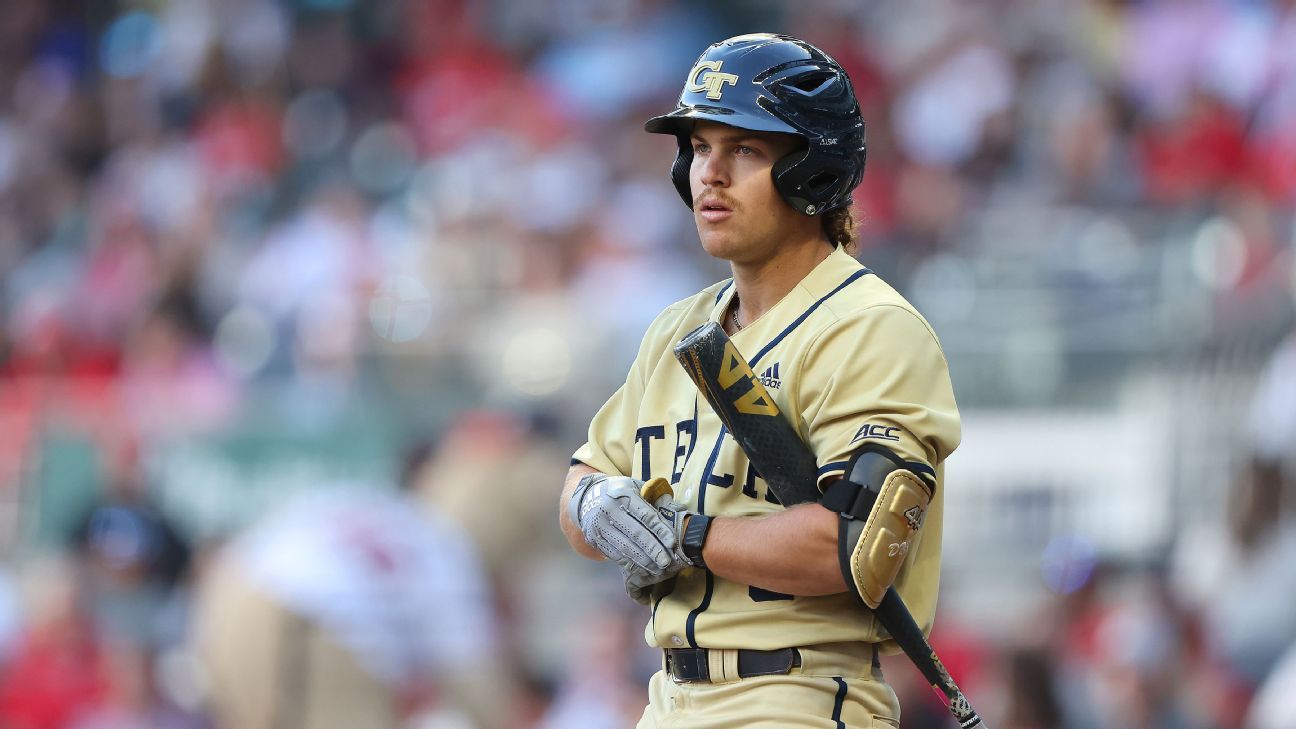
Featuring exceptional athletes across the nation, this inaugural weekend promises unparalleled excitement. The formidable No. 1 UCLA Bruins team is spearheaded by shortstop Roch Cholowsky; meanwhile, Alabama’s Justin Lebron appears to be the SEC’s foremost competitor, and Drew Burress of Georgia Tech could continue accumulating astonishing statistics.
Furthermore, numerous fresh head coaches at elite institutions aim to establish their influence promptly, exemplified by Josh Elander at Tennessee and Chris Pollard at Virginia. Consequently, what other aspects of this season pique our interest? Our collegiate baseball specialists provide a comprehensive analysis, along with some exceedingly premature forecasts for the year’s conclusion.
Navigate to:
Key narratives | Squads to observe
Lesser-known contenders | Player of the Year selections
MCWS predictions
What generates the greatest anticipation for the 2026 season?
Ryan McGee:Consider the influx of fresh head coaches occupying prominent positions! Last autumn, we broadcasted Marty & McGee from Starkville, Mississippi, where I joined approximately 15,000 companions at The Dude; witnessing Brian O’Connor adorned in maroon and white was truly a surreal experience. Chris Pollard at Virginia, alongside Josh Elander and James Ramsey receiving significant advancements at Tennessee and Georgia Tech, respectively—this signifies considerable change within organizations well-acquainted with the path to Omaha.
Chris Burke:As the 2026 college baseball season prepares to commence, numerous compelling narratives emerge, though two stand out prominently. Initially, is UCLA capable of preventing the SEC from securing a seventh consecutive national title? While historical trends have been unfavorable to preseason top-ranked squads, UCLA possesses the exceptional talent and seasoned proficiency to contend vigorously. Will the Bruins meet expectations? Secondly, regarding UCLA’s exceptional talent, its most prominent figure is the widely anticipated No. 1 overall draft pick, shortstop Roch Cholowsky. He spearheads a contingent of three shortstops, each with the potential to be selected among the top five in this summer’s MLB draft. Justin Lebron from Alabama and Tyler Bell of Kentucky represent two other standout individuals deserving attention. This triumvirate might constitute the most impressive collection of collegiate shortstops witnessed in an extended period!
David Dellucci:Multiple prominent teams within the preseason top 25 rankings have yet to secure a national championship. Historically among the most successful, No. 16 Florida State heads this compilation, boasting numerous appearances in the Men’s College World Series, yet holding no championships. Additional ranked teams that have never claimed the championship prize include No. 5 Georgia Tech, No. 7 Arkansas, No. 8 Louisville, No. 9 Auburn, No. 10 TCU, No. 11 North Carolina, No. 17 NC State, No. 20 Southern Miss, and No. 25 Texas A&M. Each possesses impressive legacies, significant playoff advancements, and close calls, but lacks actual trophies. Following Indiana’s landmark national championship football season, these squads must surely be contemplating that this could be their opportune moment for a breakthrough.
Kiley McDaniel:Considering my primary interest in the draft, I will closely observe the competition between Cholowsky and Lebron (at present) for the draft’s premier selection. Cholowsky currently holds an initial advantage as the undisputed leading prospect, attributed to four of his five fundamental skills being rated as exceptional; however, Lebron possesses the capabilities to surpass him should he achieve more reliable contact this spring. Should he succeed, Lebron could potentially exhibit all five skills at an elite level.
Mike Rooney:Skip Bertman established the initial LSU baseball dynasty, claiming an impressive five national championships between 1991 and 2000. Presently, Jay Johnson and the contemporary version of the Tigers have secured two titles within the last three years. Given Tony Vitello’s departure from Tennessee to join the San Francisco Giants, has this development cleared the path for an upgraded, second iteration of LSU’s supremacy in collegiate baseball? The preseason No. 1 UCLA squad would certainly have something to say about that… as would Mississippi State, under its new leader, Brian O’Connor. Nevertheless, the LSU Tigers currently stand as the premier program in the sport.
Which squads merit our attention?
McGee:The UCLA Bruins truly captivate my interest. They performed exceptionally well. Subsequently, their performance declined significantly. Then, the prevailing sentiment was, “They’ll continue to lose athletes to NIL opportunities at other institutions.” Following that, they became members of the Big Ten. Next, they almost forfeited their home stadium. Presently, they have once again achieved remarkable proficiency—ranked preseason No. 1, with the prowess of a top MLB draft selection. I am enthralled, and such intrigue should be universal.
Burke:Several squads I will observe closely at the outset will command my focus due to recent alterations in their leadership. Among the top 14 teams in the preseason survey, three feature newly appointed head coaches. Fourth-ranked Mississippi State, fifth-ranked Georgia Tech, and fourteenth-ranked Tennessee will each approach the season with elevated hopes, introducing new leaders. Mississippi State is guided by O’Connor, one of baseball’s most distinguished coaches, who departed the national championship-winning program he established at Virginia to relocate to Starkville, aiming to restore that legendary organization to Omaha. Concurrently, Georgia Tech and Tennessee have entrusted the direction of their teams to their former recruiting coordinators, as Ramsey and Elander assume command amidst immense anticipation. Observing their stewardship of these player rosters promises to be engrossing.
Dellucci:Mississippi State and Georgia Tech find themselves in analogous circumstances: venerable institutions whose last two seasons concluded with defeats in regional road games, both possessing supporters who prioritize triumphing over local adversaries equally with journeys to Omaha. Despite State’s head coach O’Connor and Tech’s Ramsey commencing their inaugural year, their teams boast two of the most gifted rosters in collegiate baseball. The Jackets are set to deploy the nation’s premier positional player contingent, spearheaded by top-ranked outfielder Drew Burress, second-ranked second baseman Jarren Advincula, and catcher Vahn Lackey; conversely, the Bulldogs’ batting order showcases a formidable attack, including preseason All-Americans Ace Reese and Noah Sullivan, complemented by the highly praised freshman Jacob Parker.
McDaniel:With Cholowsky as its foundation, UCLA stands as the dominant force in the west, alongside Oregon State; Coastal Carolina represents a significant mid-major challenger, and TCU sets the pace in the Big 12. Essentially, every other squad requiring scrutiny for their prospects of reaching Omaha resides within the SEC and ACC conferences. Established powerhouses such as LSU, Texas, Arkansas, Florida, Tennessee, and a revitalized Mississippi State spearhead the SEC, whereas Georgia Tech, Louisville, and North Carolina emerge as the most formidable contenders in the ACC.
Rooney:UCLA brought back most of its core roster from Omaha. Subsequently, the team excelled during the offseason by securing transfer pitching ace Logan Reddemann (from San Diego), center fielder Will Gasparino (from Texas), and high school right-handed pitcher Angel Cervantes. Cervantes, chosen 50th overall by the Pittsburgh Pirates, represented the highest-drafted player to enroll at a university. Potential challenges for the Bruins encompass an LSU program boasting considerable impetus, a Texas squad possessing extensive pitching depth, and both Auburn and TCU, which arguably feature the sport’s most impressive sophomore contingents.
What or whom might be an overlooked element or individual worth monitoring?
McGee:Perhaps due to my father’s past as an East Carolina pitcher, I possess a slight personal bias, yet annually, I find myself utilizing this platform to highlight the Pirates. They remain the most distinguished baseball squad yet to reach Omaha. Following an admirable effort overcoming significant transitional challenges a year prior, could this finally be their passage to navigate that buccaneer vessel up the Missouri River?
Burke:A noteworthy, yet overlooked, team to observe is Kansas. Indeed, I mentioned Kansas. Should it have escaped your attention, Dan Fitzgerald has transformed Kansas into a credible NCAA regional competitor, boasting one of the nation’s most gifted batters at the helm this season. Brady Ballinger, a junior first baseman, plays for the Jayhawks. He recorded a 1.164 OPS last year, complemented by 16 home runs. It would be unsurprising if, by year’s end, KU participates in the tournament and Ballinger is crowned Big 12 player of the year.
Dellucci:Vanderbilt hurler Connor Fennell warrants close observation. Fennell challenges the contemporary starting pitcher archetype with his slender physique and fastball below 90 mph. His deficiencies in modern analytical metrics are compensated by his exquisite precision, self-assurance, and competitive drive. Fennell’s performance elevated from a 4-4 record with a 4.74 ERA at Dayton to a 6-0 record and 2.53 ERA at Vanderbilt, placing him among national leaders in strikeout percentage, accumulating 84 strikeouts against 11 walks over 53.1 innings. He even restricted the skilled batters of the SEC to a mere .174 batting average.
Arkansas Little Rock concluded the regular season by dropping 13 of its final 14 contests before dominating the Ohio Valley Conference tournament, securing an automatic entry to regionals, where they bested Dallas Baptist for the program’s inaugural regional victory. Capitalizing on their momentum, the Trojans subsequently defeated LSU prior to being narrowly defeated in a decisive rematch, which propelled LSU into the super regionals.
Coach Chris Curry’s five-year contract prolongation demonstrates Little Rock’s dedication to its burgeoning program; its immediate impact was retaining seasoned players such as Angel Cano, who secured Baton Rouge Regional MVP laurels after connecting for three home runs and 14 RBIs, Ty Rhoades, and Malcolm Brown, alongside attracting a proficient group from the transfer portal, featuring four athletes from the SEC.
McDaniel:Southern Miss consistently poses a threat from the mid-major tiers, yet can be overshadowed by the fervor surrounding Coastal Carolina. Texas A&M appears poised to rebound following a subpar 2025 campaign. Shane Sdao and Weston Moss are capable of fortifying the weekend pitching staff, concurrently, Gavin Grahovac is recuperating from injury to rejoin the batting order, Chris Hacopian stands among the nation’s premier transfers, and Nico Partida might emerge as one of the country’s more promising first-year players.
Rooney:Unranked Cal Poly and Arizona State present as highly intriguing, unranked, squads along the West Coast. The Mustangs are returning almost 70% of their offensive output from the previous season, and that contingent had reached a regional final. Shortstop Nate Castellon (.888 OPS) and third baseman Alejandro Garza (.889) could constitute the finest infield pairing on the West Coast. Arizona State significantly leveraged the transfer portal, and this institution already saw the return of a top-tier southpaw in Cole Carlon and one of the Big 12’s most potent hitters in Landon Hairston. Outfielder Dean Toigo (UNLV), a transfer, shared the Mountain West co-MVP title last season, and the Sun Devils’ relief corps is brimming with velocity and effective out-pitches.
Who are your initial choices for player-of-the-year?
McGee:That universally acknowledged No. 1 MLB draft selection: Cholowsky. He is genuinely exceptional. Furthermore, during last summer’s Omaha series, the nation witnessed the formidable prowess of Coastal Carolina’s Cameron Flukey. He fanned 117 opposing batters a year prior.
Burke:Cholowsky presents too straightforward a response here, thus I will opt for Mississippi State’s Reese. The powerful third baseman recorded a .352 batting average, 21 home runs, and 66 RBIs last year, reserving his most impressive performances for conference competition. Should MSU reclaim its premier position this year, Reese will be a pivotal factor.
Dellucci:Cholowsky experienced an unforgettable 2025, guiding the Bruins to their inaugural Men’s College World Series appearance since 2013 and garnering almost every accolade, including the Dick Howser Trophy. However, despite compiling an admirable statistical record of .353 batting average, 25 home runs, and 74 RBIs, the national championship and Golden Spikes Award remained beyond his grasp. Having achieved only one hit and one victory in Omaha, he will possess ample motivation to exceed both his individual statistics and the squad’s achievements from the previous season.
Burress’ commencement to his collegiate career was so commanding, boasting a .381 batting average, 25 home runs, and 67 RBIs, that I surmise last season’s statistical output of .333, 19 home runs, and 62 RBIs might be viewed as a sophomore downturn. Both displays secured him a spot on the Golden Spikes semifinalist roster for two consecutive years. In addition to being one of college baseball’s most formidable sluggers, Burress is a living highlight film in center field, possessing transformative speed.
McDaniel:Cholowsky is the straightforward selection, with Lebron also being weighed, though it would not astonish me if Burress enjoys an exceptional spring and ultimately claims the award. One might dispute his professional prospects considering his physique, yet his performance undeniably succeeds at the pinnacle of collegiate play. I incline to believe it will also prove effective in the major leagues.
Rooney:Burress is a compact outfielder whose hands unleash power, and someone will need to contend vigorously to seize Player of the Year accolades from him. Nevertheless, this season is marked by the prominence of shortstops in college baseball. Cholowsky, Lebron, and Bell constitute the formidable trio, and all are anticipated to be top-10 draft selections. Eric Becker (Virginia), Steven “Monster” Milam (LSU), and Maddox Molony (Oregon) would rank as Tier 1 talents in a typical year. And an abundance of similar talent exists.
Provide your excessively premature Men’s College World Series forecast!
McGee:LSU perpetuates its contemporary dynasty, though it will need to prevail in an epic SEC versus Pac-12, or rather, Big Ten confrontation against UCLA to achieve this.
Burke:Selecting the Omaha participants at this juncture is unfeasible, so I will confine my forecast to conferences. The SEC will contribute three, the ACC two, UCLA will be present, leaving two berths for teams from the remaining contenders… Coastal Carolina? TCU? That would not surprise me! Onward!
Dellucci:My preliminary forecast: Should the bracket be suitably structured, LSU will narrowly defeat UCLA in Game 3 of the Men’s College World Series finals, thus becoming the first consecutive champions since South Carolina, and marking the second repeat in program annals following the Tigers’ commanding 1996-97 streak.
McDaniel:I favor LSU to triumph over UCLA. UCLA possesses elite talent, substantial depth, and experience, however, I am concerned that their profundity of high-caliber experience from professional-level pitchers may not be sufficient to contend with LSU’s. Annually, it appears the squad boasting a rich supply of powerful pitchers navigates successfully through the arduous postseason.
Rooney:We have observed consecutive atypical fields in the MCWS: merely two conferences represented in 2024, followed by an impressive seven last season. For 2026, I anticipate an ACC team will advance to the MCWS finals for the initial time since 2015. Clemson, Arizona State, Oklahoma State, and Georgia are also prominent programs, recognized as past Omaha mainstays who have been absent for a while. Numerous among them have endured significant postseason setbacks. Two of these four will make their comeback to Nebraska this June. Ultimately, the Big West will dispatch a team to the esteemed realm of college baseball in 2026. Let the contests commence.