
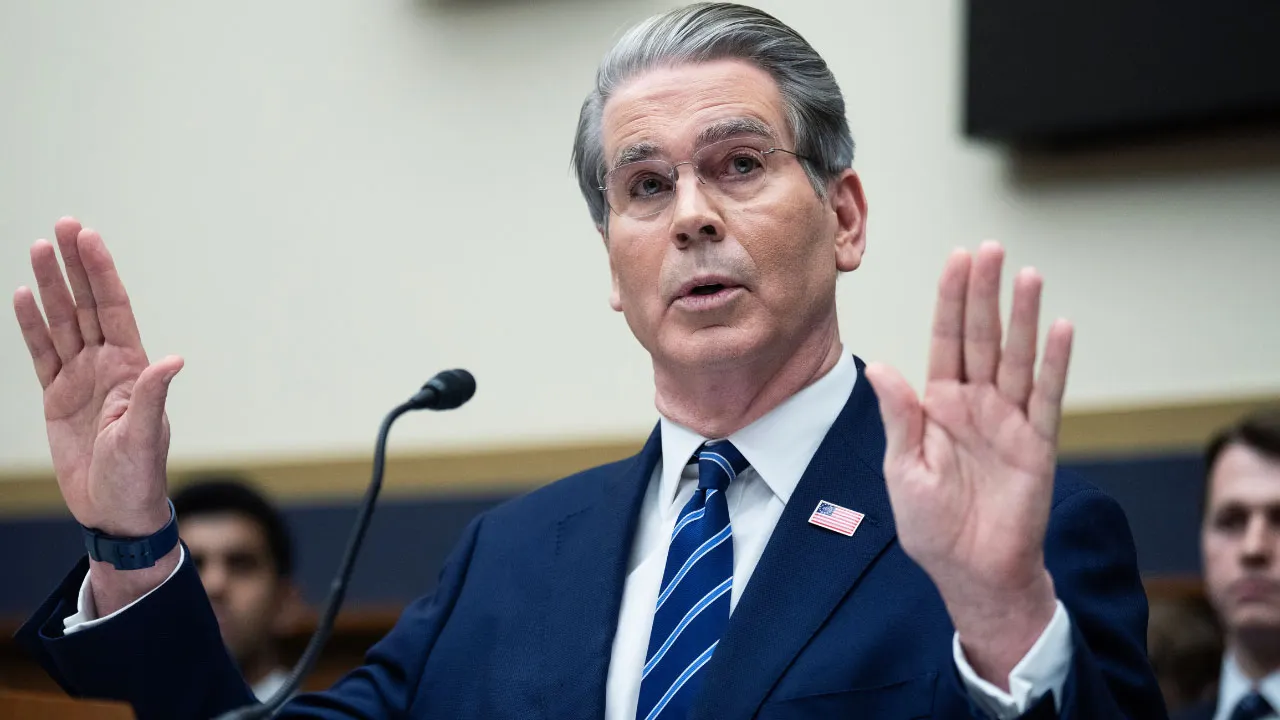
U.S. Treasury Secretary Scott Bessent details the United States’ economic pressure campaign on Iran, known as Operation Economic Fury, on ‘Kudlow.’
Key Takeaways:
- **Digital Asset Scrutiny Intensifies:** The unprecedented seizure of $1 billion in Iranian cryptocurrency assets sets a significant precedent, underscoring heightened regulatory risk for digital currencies and potentially influencing future sovereign use of crypto to circumvent sanctions.
- **Geopolitical Risk Premium on Oil Markets:** Escalating tensions in the Persian Gulf and the naval blockade of the Strait of Hormuz inject a substantial geopolitical risk premium into global oil prices, threatening supply stability and increasing shipping costs.
- **Sanctions Efficacy and Emerging Market Fragility:** Operation Economic Fury’s reported success in crippling the Iranian economy highlights the potent, albeit severe, impact of targeted sanctions, serving as a stark reminder of economic vulnerability for nations facing isolation.
U.S. Escalates Economic Warfare Against Iran, Seizing $1 Billion in Crypto and Fueling Market Uncertainty
U.S. Treasury Secretary Scott Bessent announced a significant escalation in the economic pressure campaign against Iran, revealing the seizure of approximately $1 billion in Iranian cryptocurrency assets. Speaking on ‘Kudlow’ from the Reagan National Economic Forum, Bessent asserted that the Iranian economy is rapidly approaching a breaking point, a development poised to ripple through global markets.
“We have seized about a billion dollars of their crypto,” Bessent told FOX Business, emphasizing the direct action taken. “Just outright grabbed the wallets.” This unprecedented move against a sovereign nation’s digital holdings marks a critical juncture for both international finance and the burgeoning cryptocurrency market, signaling a new front in economic warfare and raising questions about the fungibility and security of digital assets under such circumstances. Investors in the crypto space may interpret this as a heightened regulatory risk, potentially leading to increased scrutiny on decentralized exchanges and cross-border transactions, while also setting a challenging precedent for other nations seeking to use digital currencies to bypass traditional financial systems.
Bessent detailed the scope of “Operation Economic Fury,” the United States’ comprehensive economic pressure campaign on Iran, launched in March 2025. He stated the campaign, coupled with a successful military offensive, has plunged the Iranian regime into a profound “crisis.” “I think between five and a half-six weeks of an incredibly successful military campaign and then Operation Economic Fury, where we have really cut them off…they are at the end of their tether now financially,” he elaborated.
TRUMP’S IRAN CRACKDOWN ‘SUFFOCATING’ REGIME AS OIL WELLS COULD SHUT WITHIN DAYS, BESSENT SAYS
Bessent said roughly $1 billion in Iranian cryptocurrency assets has been seized by the U.S. Treasury Department.(Getty Images)
The economic fallout within Iran is severe, with Bessent citing dire statistics: “I think 40 or 50% of the [Iranian] troops aren’t getting paid. Police aren’t reporting to the station.Inflationis probably over 200%. They’re having to give out food vouchers. They have turned off the internet.” Such internal instability, characterized by rampant inflation and widespread economic distress, can have broader implications for regional stability, potentially triggering humanitarian crises or mass migrations. From a market perspective, a nation experiencing 200%+ inflation represents a collapse in purchasing power and a complete erosion of investor confidence, signaling extreme systemic risk. International businesses with any remaining indirect exposure to Iran, however minimal, are likely re-evaluating their positions given the escalating risks.
Operation Economic Fury has systematically targeted Tehran’s financial lifelines, freezing bank accounts, seizing assets, and leveraging diplomatic pressure on foreign governments to sever ties. “We are working with our allies all overEuropeto grab villas and houses and properties,” Bessent explained, underscoring the global reach of the sanctions. “And this is money that’s stolen from the Iranian people.” This aggressive pursuit of illicit assets on an international scale highlights the increasing focus on anti-money laundering (AML) and counter-terrorist financing (CTF) efforts, prompting financial institutions worldwide to enhance their due diligence and compliance frameworks, particularly for high-net-worth individuals and entities linked to sanctioned regimes.
Before the Treasury Department’s intervention, Bessent claimed the Iranian regime wassiphoning $400 to $500 millionevery month, distributing profits among its leadership. Disrupting such significant illicit financial flows not only weakens the regime’s capacity to fund its activities but also sends a strong message to other state and non-state actors engaged in similar practices, potentially tightening global financial controls.
TRUMP CLAIMS IRAN ‘STARVING FOR CASH,’ ‘COLLAPSING FINANCIALLY’ AFTER EXTENDING CEASEFIRE
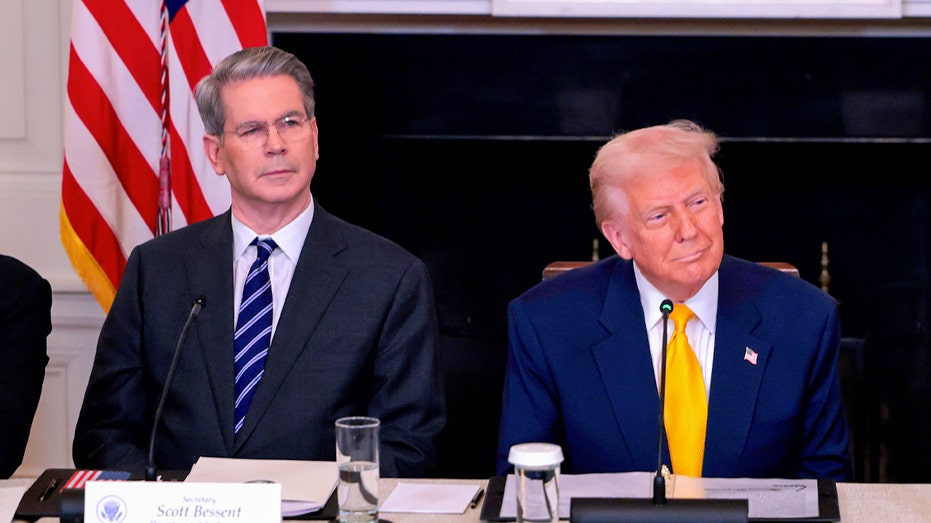
President Donald Trump speaks alongside Treasury Secretary Scott Bessent at the White House Digital Assets Summit at the White House on March 07, 2025, in Washington, D.C.(Anna Moneymaker/Getty Images / Getty Images)
The Treasury secretary also addressed ongoing, complex negotiations between the U.S. and Iran, noting significant internal shifts within Iran’s leadership. PresidentDonald Trumpheld a White House meeting Friday to make a “final determination” on Iran. “We did not have regime change, but we changed the regime,” Bessent stated, referring to the reported “decapitation” of first and second-tier leaders. This political vacuum and the struggle between “a theocracy with the clerics” and a “thug autocracy with the IRGC” adds another layer of geopolitical uncertainty, making any resolution highly precarious and potentially contributing to sustained regional instability, which typically dampens investor confidence in the broader Middle East.
TRUMP SAYS IRAN’S SUCCESSION BENCH WIPED OUT AS ISRAELI STRIKE HITS LEADERSHIP DELIBERATIONS
Bessent further highlighted Iran’s “very big” mistake inattacking countries in the Persian Gulf, asserting that these actions have inadvertently bolstered the U.S. position. The IRGC’s drone and missile attacks against all six GCC states have profoundly impacted regional dynamics.
Fox News senior strategic analyst Gen. Jack Keane (ret.) joins ‘Mornings with Maria’ to assess US strikes on Iran, tensions in the Strait of Hormuz and President Donald Trump’s next move.
“They made my job so much easier because before, many of our great GCC Gulf allies were a little less than transparent about their banking system, that, ‘Oh no, we don’t have any Iranian oil,’” Bessent noted. Following the Iranian strikes, he observed that GCC states became more forthcoming about their ties toIranian-supplied oil. This increased transparency could lead to a more accurate understanding of global oil supply dynamics, reducing the ‘dark market’ component of oil trade and allowing for more efficient price discovery. However, the overarching risk of Strait of Hormuz disruption remains a critical concern for energy markets, as approximately 20% of the world’s total petroleum liquids pass through this choke point. Any significant escalation could trigger a major oil price spike and global economic disruption.
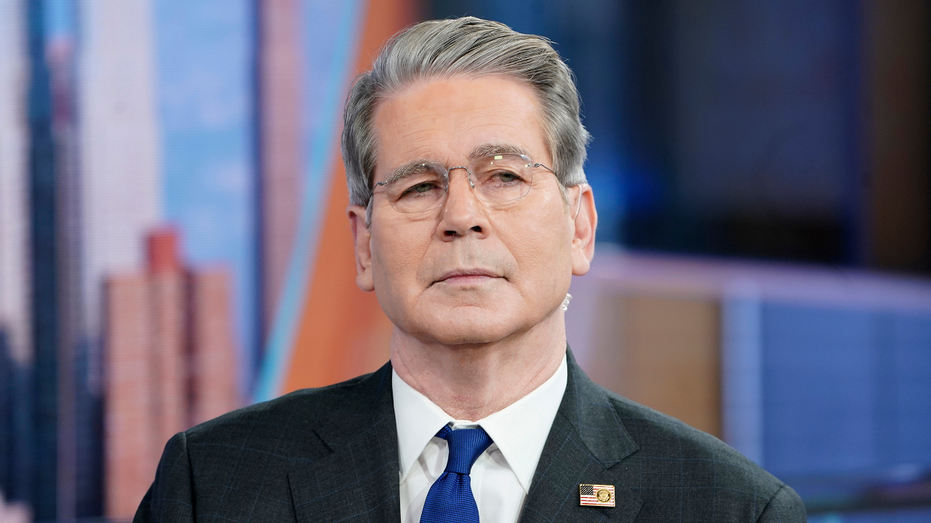
U.S. Treasury Secretary Scott Bessent visits “FOX & Friends” at Fox News Channel Studios on November 12, 2025, in New York City.(John Lamparski/Getty Images / Getty Images)
CLICK HERE TO DOWNLOAD THE FOX NEWS APP
Bessent concluded by commending the young U.S. service members enforcing thenaval blockade on Iranian portsin the Strait of Hormuz, highlighting their resolve. “They’ve done an incredible job,” he told FOX Business. “When I talked to General Caine and Secretary Hegseth, they said, ‘Look, these young people aren’t afraid. They want to fight… This is what they signed up for.’” This military presence, while securing the blockade, simultaneously maintains a high level of geopolitical tension, underscoring the delicate balance between economic pressure and the risk of outright conflict.
Market Impact:
The latest aggressive measures against Iran, particularly the unprecedented crypto seizure and the sustained “Operation Economic Fury,” are sending clear signals across several key market segments. The digital asset market faces increased regulatory uncertainty and scrutiny, prompting investors to re-evaluate the risk profiles of various cryptocurrencies and platforms. Energy markets, already sensitive to Middle Eastern geopolitics, will likely continue to price in a substantial risk premium for crude oil due to the ongoing naval blockade and threats to the Strait of Hormuz, potentially leading to increased volatility and higher prices. Shipping and insurance sectors operating in the Gulf region will also contend with elevated costs and logistical challenges. Furthermore, the severe economic distress within Iran, if sustained, could contribute to broader regional instability, impacting investor sentiment towards emerging markets in the Middle East and beyond. Financial institutions globally are bracing for intensified AML/CTF compliance requirements as governments pursue illicit financial flows more aggressively, while a potential resolution or further escalation of the conflict remains a primary determinant for market direction in the coming months.