
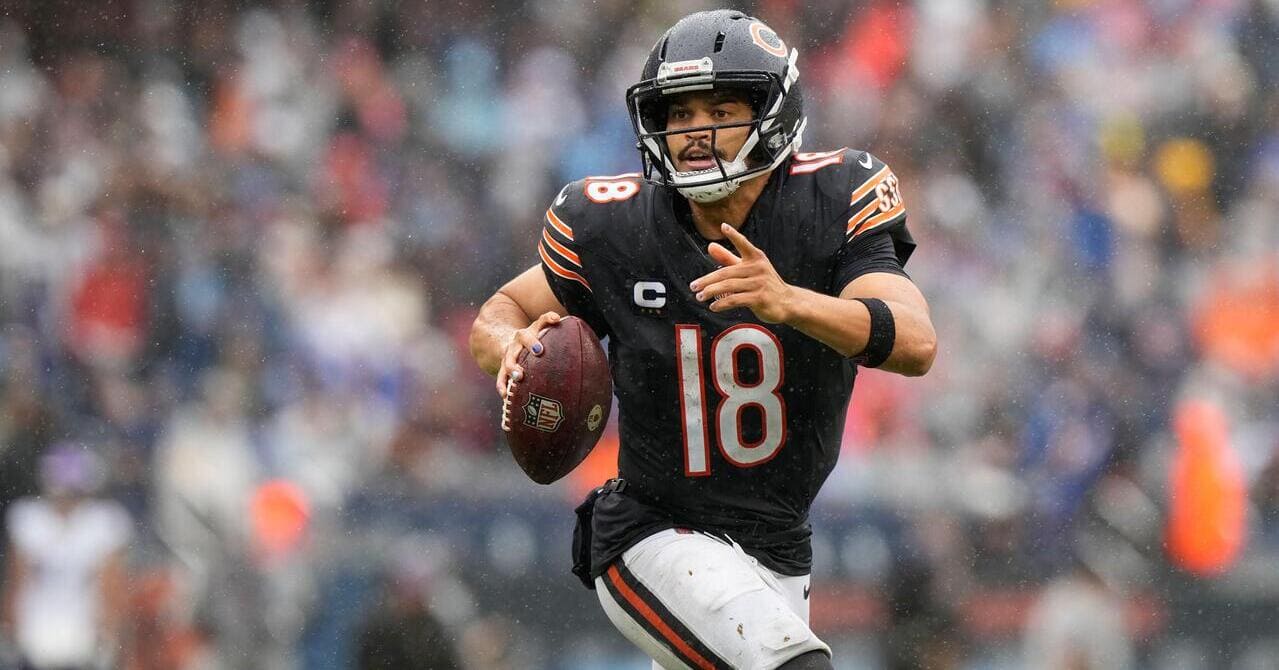
The football world held its breath, and then collectively exhaled. What appeared to be a season-ending catastrophe for the Chicago Bears’ franchise savior, Caleb Williams, now seems to be a significant, but perhaps not devastating, setback. Head Coach Ben Johnson, speaking with a palpable sense of relief to ESPN 1000 in Chicago, confirmed that the initial fears regarding Williams’ non-contact hamstring injury were thankfully overblown. The dramatic scenes from Sunday’s brutal 9-3 loss to the Minnesota Vikings – Williams writhing in pain, a towel draped over his head, carted off the field – painted a grim picture. But in the often-unforgiving arena of professional sports, sometimes a “dodged bullet” is the best news you can get.
“It sounds like it’s gonna be a week-to-week deal for him,” Johnson stated, offering a glimmer of hope that had been absent just hours prior. While the full medical assessment was still pending, the initial prognosis suggests a recovery timeline that, while uncertain, is far more optimistic than the torn ACL or Achilles many had feared. “I gotta still talk with our trainer here, we’ll do that here shortly, and I’ll have the lowdown from him, but it sounds like it’s week-to-week but will likely miss some time.” This “some time” is precisely what every Bears fan will be scrutinizing, as the dynamic rookie quarterback’s presence has been the primary spark for a team still finding its identity. Missing Week 3’s clash against the formidable Philadelphia Eagles seems almost a certainty, casting a long shadow over Soldier Field.
When pressed on whether the Bears had indeed “dodged a bullet” with their first overall pick, Johnson’s response was cautiously optimistic: “Yeah, potentially. We’ll see. He’s tough and he comes back from these types of things better than the average human, so we’ll see.” This speaks volumes about Williams’ legendary competitive drive and resilience, traits that have defined his meteoric rise from collegiate phenom to the top of the NFL Draft. However, even for an athlete of Williams’ caliber, hamstring injuries are notoriously fickle. They can linger, re-aggravate, and sap explosiveness – a critical component of his improvisational, playmaking style. The Bears’ medical staff will face immense pressure to manage his recovery with the utmost care, prioritizing his long-term health over any short-term gains, especially with an entire season and potential franchise legacy at stake.
The immediate consequence of Williams’ expected absence is the anointing of Tyson Bagent as the starting quarterback for the crucial Week 3 encounter with the Eagles. Bagent, an undrafted free agent from 2023, found himself thrust into the spotlight during his rookie campaign, starting four games and guiding the Bears to a respectable 2-2 record under center. While his arm talent may not rival Williams’, Bagent demonstrated a surprising level of poise, game management, and gritty determination. His brief stint provided a tantalizing glimpse into his capabilities, showcasing an ability to protect the ball and execute the offense efficiently. Now, against one of the NFC’s perennial contenders, Bagent faces a far stiffer test, inheriting the reins of an offense that has struggled for consistency, even with its star rookie at the helm.
Game Highlights: A Defensive Grind and a Crushing Blow
The 9-3 defeat to the Minnesota Vikings wasn’t just a loss on the scoreboard; it was a brutal, physical slugfest that epitomized the early-season struggles of the Bears offense. From the opening whistle, both defenses asserted their dominance, turning the contest into a trench warfare spectacle. The Bears’ defensive unit, often lauded for its tenacity, largely held its ground, keeping Kirk Cousins and the Vikings’ potent attack in check for significant stretches. Early in the first quarter, rookie cornerback Kyler Gordon showcased his burgeoning talent with a crucial pass breakup in the end zone, forcing a Vikings field goal and keeping Chicago within striking distance.
However, offensive rhythm remained elusive for the Bears. Caleb Williams, despite several dazzling escapes from pressure, found little consistency with his receiving corps. A promising drive in the second quarter stalled deep in Vikings territory, forcing a field goal and accounting for Chicago’s only points of the afternoon. Williams displayed flashes of his electrifying playmaking ability, scrambling for a critical first down on a third-and-long, keeping hope alive. Yet, the persistent pressure from the Vikings’ defensive front often disrupted timing and forced hurried throws, leaving the Bears offense struggling to sustain drives or convert in the red zone.
The decisive blow came in the third quarter. After the Vikings managed to punch in a short touchdown run following a costly Bears turnover deep in their own half – a testament to the unforgiving nature of NFL mistakes – the score moved to 9-3. With time winding down in the quarter and the Bears desperately trying to mount a comeback, Williams dropped back in the pocket. Under duress, he attempted to shift his weight, and in a gut-wrenching moment that silenced the raucous Soldier Field crowd, he collapsed to the turf, clutching his hamstring. The non-contact nature of the injury immediately signaled the worst, and the sight of Williams in agony, surrounded by trainers, overshadowed every other play of the entire afternoon. The game, already a low-scoring affair, lost its competitive spirit for many in attendance, as the fate of the team’s future became the paramount concern.
The remaining minutes saw both teams trading punts, with the Bears offense looking shell-shocked and unable to generate any meaningful threat without their leader. The game ended not with a bang, but with a whimper, leaving behind questions about offensive execution, and now, the profound uncertainty surrounding their prized quarterback. It was a game defined by defensive might, offensive futility, and ultimately, the devastating injury that now shapes the narrative of the Bears’ early season.
Looking Ahead: The Bagent Test Against the Eagles
The Bears now face a monumental challenge. The Philadelphia Eagles, a team perennially vying for Super Bowl contention, present a nightmarish matchup for an offense missing its primary playmaker and potentially operating with a less experienced signal-caller. The Eagles’ defensive line, a unit known for its relentless pass rush and ability to generate pressure, will undoubtedly feast on the opportunity to face a quarterback who hasn’t seen extended action since last year. This isn’t just a game; it’s a litmus test for the entire Bears roster and coaching staff. Can the defense step up even further? Can the running game establish dominance to alleviate pressure on Bagent? Will offensive coordinator Luke Getsy simplify the playbook, relying on quick passes and a strong ground attack?
Tyson Bagent’s previous starts offered a blueprint: efficient, low-mistake football. He completed over 65% of his passes last year, throwing for 649 yards, three touchdowns, and six interceptions. While the interception count is a concern, many came in high-leverage situations where he was forced to press. Against the Eagles, Ball control and time of possession will be paramount. Bagent must avoid turnovers at all costs, as Philadelphia’s opportunistic defense thrives on creating short fields for their high-powered offense. This will require a disciplined approach, strong communication, and a clear understanding of the game plan from every player on the field. The stage is set for an underdog story, or a harsh dose of reality for a team still finding its way.
Prediction
While the news on Caleb Williams’ hamstring is a relief, his likely absence against the Philadelphia Eagles casts a long shadow over Chicago’s Week 3 prospects. Tyson Bagent showed flashes last season, but facing an elite Eagles defense on a short week without the benefit of a full Williams-led training camp is an entirely different beast. Expect the Bears’ defense to fight valiantly and keep the game closer than some anticipate, but the offensive struggles, compounded by Williams’ injury, will prove too much to overcome. The Eagles’ potent offense and relentless pass rush will wear down Chicago’s defense, and Bagent will likely face immense pressure. The Bears will fall to 0-3. As for Williams, a “week-to-week” diagnosis often translates to 3-4 weeks for a hamstring, putting him on track for a potential return around Week 6 or 7, giving him crucial time to heal without rushing back prematurely.