
BAHRAIN — Formula 1’s latest generation of automobiles has yet to complete a single competitive circuit, but has already garnered strong disapproval from the sport’s leading drivers.
F1’s meticulously managed communication about its entirely novel cars was shattered merely a week into the inaugural official preseason trials this month. Seven-time world champion Lewis Hamilton remarked that they are so intricate “you require a qualification to fully grasp it all.” Four-time world champion Max Verstappen likened them to the all-electric series Formula E “on steroids.” Verstappen has since reiterated those observations this week.
The critique has expanded beyond the two title adversaries from 2021. Two-time world champion Fernando Alonso suggested that the energy management demanded by the new cars — which feature an almost 50-50 division between internal combustion and electric power — makes navigating certain corners so effortless that media members or Aston Martin’s culinary expert could accomplish it without difficulty. Ferrari’s Charles Leclerc has voiced worries about the challenge of overtaking. Recent world champion Lando Norris had initially defended the new cars during the initial week of testing, only to strangely retract that stance on Thursday, stating he only championed the new cars to observe reactions to his dissenting opinion, asserting they do not provide a genuine racing experience.
It has been an awkward prelude to what Formula 1 had hoped would usher in a magnificent new epoch. F1’s 2026 machines incorporate extensive modifications to the aerodynamic configurations of the vehicle and its power unit. Visually, the outcome has been striking, with cars appearing much more akin in design to the mid-2000s, as much of the elaborate aerodynamics of more recent periods have been removed in an effort to foster greater opportunities for close wheel-to-wheel competition.
It is the sophisticated technology beneath the impressive new exterior that forms the core of the harsh rebukes directed at the new cars this month. The intricacy of F1’s revised formula has dominated preseason discussions thus far, with Hamilton’s remarks capturing considerable attention during the opening week in Bahrain.
“I don’t believe any of the spectators will comprehend it,” the Ferrari driver stated. “It’s absurdly convoluted. I attended a meeting recently where they were explaining it to us. It’s as if you need a specialized degree to fully understand it.”
F1’s updated power units — the F1 paddock’s term for engines incorporating a hybrid element — represent an unprecedented advancement for motor racing’s premier category. The equitable 50-50 division between internal combustion and electric power has intensely emphasized energy management and battery regeneration across each lap. Two novel battery-based power modes now exist: Overtake mode, which supplants the drag reduction system (DRS) as a dedicated overtaking aid accessible to drivers within a second of the preceding car, and the distinct boost mode, which can be deployed at a driver’s discretion throughout the circuit.
This shift toward a balanced division of power outputs has not only expanded the demands placed on a driver within the cockpit but has also introduced peculiar new terminology into F1’s vocabulary.
Alonso’s comment about the Aston chef being capable of driving through Bahrain’s Turn 12 referred to the method by which cars now recuperate energy through braking, implying many drivers are navigating corners significantly slower in an effort to ensure their batteries are fully replenished to attack down the straightaway. These same electric components have given rise to new phenomena such as “super clipping,” which is poised to become a significant discussion point during the initial races. This expression denotes an odd effect of hybrid engines — in certain scenarios, when a driver is at full throttle, the engine component responsible for managing kinetic energy recovery during the lap essentially intervenes to manage the power unit. This effectively counteracts the existing power, causing the car’s speed to diminish despite the accelerator pedal being firmly pressed to the floor.
Super clipping is one of several peculiar and highly technical discussion points that have dominated the lead-up to the season-opening Australian Grand Prix, scheduled to occur at Melbourne’s Albert Park on March 8. Hamilton has not been the sole individual left perplexed by various meetings. ESPN has been informed by several prominent figures in broadcasting that they have sat through lengthy presentations concerning the new cars that have left even the most seasoned media members scratching their heads.
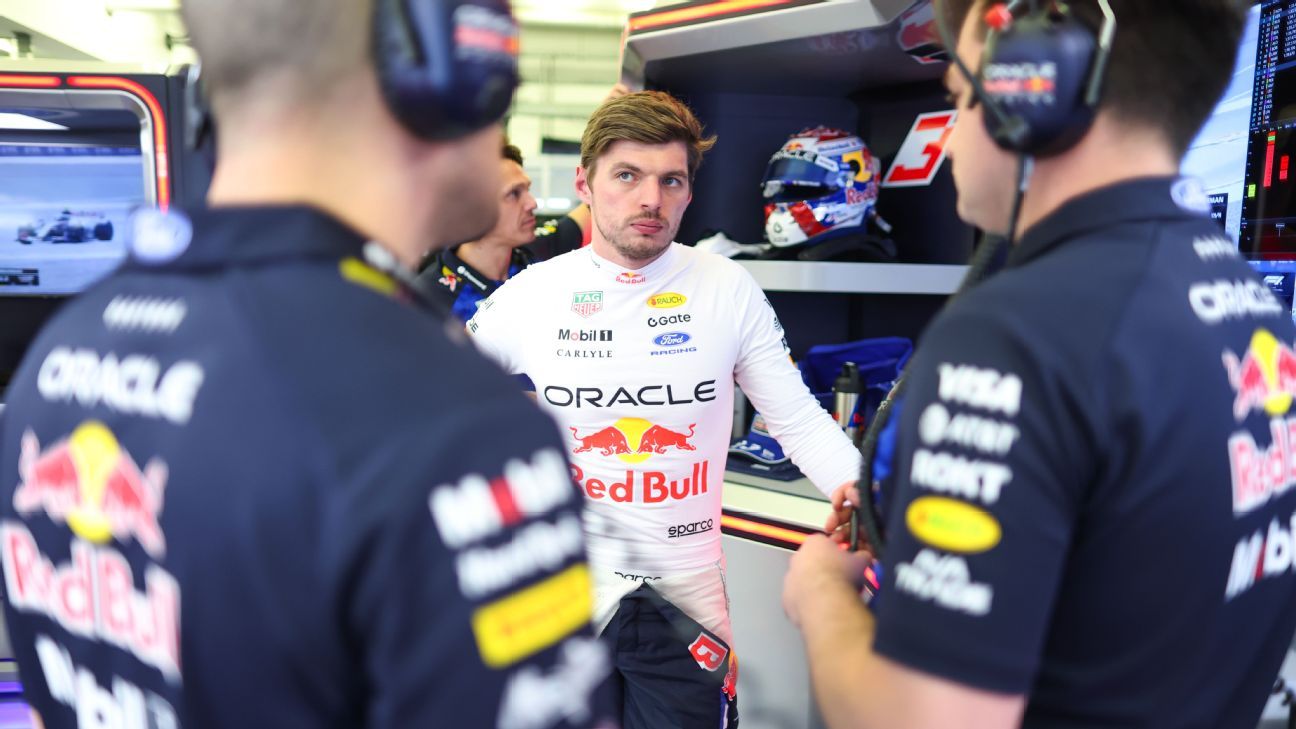
Verstappen, who has consistently stated his own participation in Formula 1 will be determined by his enjoyment of racing this particular generation of cars, reaffirmed his initial Formula E comparison this week, declaring he would completely eliminate the electrical components.
“I want us to genuinely avoid that and remain Formula 1,” he asserted. “So, do not increase the battery; actually, remove it and concentrate on a quality engine and let Formula E be Formula E, because that is their focus. I am confident that with the new car, from what I have observed and discussed with some of my associates there, that will also be a truly excellent car. But allow them to be Formula E. We ought to remain Formula 1, and let’s strive not to conflate the two.”
F1 and the FIA are also experimenting with an adjustment to the start procedure to address safety concerns arising from how much longer it takes for the turbocharged gasoline engines to rev up sufficiently to move from a stationary position. A new five-second pause is likely to be appended to the usual start moment on the grid before the standard five lights illuminate sequentially.
Rule modifications might not be restricted solely to the start. Teams, F1, and the FIA are currently engaged in discussions regarding whether to alter the quantum of electrical deployment available to each individual driver to mitigate many of the lingering anxieties about the new vehicles.
With growing criticism of F1’s new cars, series CEO Stefano Domenicali addressed the media on Thursday in a Teams call that spanned nearly a full hour. “Maintain composure” was the predominant message from the former Ferrari principal.
“I do not perceive this apprehension; we must remain calm,” Domenicali remarked. “As is always the case when a new regulation is introduced, there is invariably doubt that everything is flawed. I recall [the same] in 2014, I recall in 2020, I recall in 2021. As always, F1 as a system has consistently demonstrated that technical remedies have invariably assisted teams in achieving speed and drivers in performing optimally, so I am entirely optimistic about that.”
Domenicali dedicated a considerable portion of this week to conversing with drivers about their reservations. F1’s CEO assured the media that he was confident Verstappen would not be compelled to permanently retire by the cars, despite the Dutchman having characterized them as “anti-racing.”
“I assure you that Max desires [to stay] and cares about Formula 1 more than anyone else,” Domenicali stated. “He has a particular manner of articulating his point that he wishes to convey. But we had a very productive meeting, and he will also have a very constructive meeting with the federation and the teams to emphasize his perspectives on what he believes needs to be done to sustain the driving
style at the core, without, for instance, altering the methodology.”
Adjustments remain an option. Formula 1, its overseeing body the FIA, the participating teams, and the vehicle producers are engaged in ongoing discussions regarding potential modifications that could be implemented before and following the Australian Grand Prix, aiming to mitigate some of the more alarming aspects of the updated regulations. The extent to which this alleviates the worries of Verstappen and his competitors is yet to be determined.
Domenicali concluded his discussion with a definitive rallying cry: “There’s no need to fret over the energy regulation. We will address that … if it truly requires addressing, incidentally.”
What series of events led F1 here?
It appears F1 anticipated a less-than-positive response right from the outset.
The initial trial period for the teams took place during January’s informal shakedown session in Barcelona, an occasion from which journalists and spectators were prohibited. F1 stated that the teams had particularly asked for both the supplementary trial and its private nature, yet F1 also rigorously restricted the material teams were permitted to disseminate to the public during those gatherings. Managing the storyline seemed to be the primary objective early in the year, but the remarks from drivers as prominent as Hamilton and Verstappen utterly undermined that effort the instant either of them encountered the press after operating the vehicles.
A rationale underpins the shift towards an equitable 50-50 division.
The updated regulations, representing a distinct progression towards road-applicable technology, proved crucial in attracting entities such as Audi into the discipline as a complete engine-producing constructor. The integration of electric power into the mandates also persuaded Honda to revoke its 2021 resolution to depart the sport. Ford, too, has amplified its participation in Red Bull’s recent engine initiative, while General Motors has pledged to construct its own power units for the nascent Cadillac squad by 2028 or 2029. Thus, theoretically, an incontestable and immediate triumph.
The general well-being of Formula 1 has frequently been assessed by the number of distinct constructors participating, but it is equally accurate that the automotive sector is progressively distancing itself from the boisterous internal combustion engines of bygone eras. For numerous individuals who long for the resurgence of the roaring V12 or V10 powerplants from previous decades, the accumulating critiques of F1’s newest framework merely substantiate their proposal — the identical one championed by Verstappen — that the sport ought to deviate from, rather than align with, developments in the car manufacturing sector.
Formula E CEO Jeff Dodds last week capitalized on Verstappen’s reference to his championship by extending an invitation to the Dutch driver to trial one of their vehicles. Dodds further posited that F1’s primary challenge in reaching this juncture stems from the regulations being, in essence, suspended midway between two diametrically opposed positions.
“I believe Max and Lewis and these individuals have been quite candid in their apprehension regarding the outcome when one is essentially undermining the technology, retaining internal combustion systems, incorporating electric powertrain technology, and failing to select a clear direction,” Dodds conveyed to ESPN.
This perspective is reasonable: F1’s latest regulations appear somewhat like a blend of disparate elements, caught between two polar opposites. Nikolas Tombazis, the FIA’s director of single-seater competitions, alluded to the complexity involved in the drive towards electrification, particularly in satisfying all parties with each successive regulatory alteration in F1.
“I believe we must always bear in mind that the sport encompasses numerous interested parties, and drivers, naturally, hold immense significance,” Tombazis informed ESPN and chosen media on Thursday when questioned about Verstappen’s proposition that the sport ought to abandon electrification entirely. “Pilots are the luminaries, yet we must also recall that the sport draws in major automotive producers such as Mercedes, Audi, Ferrari, Cadillac, General Motors, and others, all of whom have motivations for their involvement in the sport.
“And during the deliberation of these mandates, they were unequivocally resolute regarding these criteria. And presently … existence would be simpler for everyone if we simply operated with a singular power unit and didn’t have to concern ourselves with all those complexities. I am by no means refuting that.”
The FIA is investigating the feasibility of adjusting the necessary energy output magnitudes, with the aim of diminishing phenomena like super clipping. Nevertheless, this will not be an immediate undertaking. Formula 1 has initiated a five-year regulatory period, and there is a distinct inclination from the overseeing authority to refrain from impulsive responses until a substantial amount of genuine race data is available upon which to base judgments.
To what extent will the actual racing be compromised?
Multiple informants within the F1 and FIA spheres conveyed an analogous (and valid) observation to ESPN while advocating prudence concerning the updated formula: All of this is unfolding during the preseason. The indication lies within the term itself: trials. The heightened visibility accorded to preseason evaluations in recent times has merely intensified the adverse sentiment surrounding the vehicles beyond what would have occurred approximately ten years prior.
Not so long ago, trials were conducted before a limited number of journalists, but it has now transformed into a comprehensively televised spectacle with drivers addressing television and print media on numerous instances within a condensed period. A discernible outcome of the Drive to Survive period we currently inhabit is that both drivers and team principals have ascended to unparalleled heights of renown by expressing themselves candidly and, occasionally, contentiously.
It would be uncommon in other athletic disciplines for reporters and supporters to dedicate extended periods to condemning a missed penalty observed during practice or an interception delivered in a scrimmage. Should such occurrences persist into actual competitive play, the disapproval becomes increasingly justified.
Formula 1 has perpetually ranked among the most intricate sports globally, and it has frequently observed that ingenuity and advancement have rapidly emerged when challenges have surfaced historically. Comparable adverse sentiment encompassed the debut of the “halo” cockpit apparatus in 2017, to offer a contemporary illustration, yet enthusiasts now regard it without a moment’s hesitation.
F1’s updated regulations are undeniably complex, and the initial reservations expressed by drivers appear legitimate, but until the starting lineup assembles for the Australian Grand Prix, it is unfeasible to ascertain precisely whether they are merely challenging to comprehend at first or perhaps the objections presented this month have indeed been well-founded.