
The World Cup for Sale? FIFA’s Soul on the Auction Block in a High-Stakes Power Play
Strap yourselves in, football fanatics, because the beautiful game is facing its most audacious and potentially soul-destroying challenge yet. FIFA, the global custodian of our beloved sport, has unfurled a controversial plan that threatens to rewrite the very DNA of the World Cup, morphing it from a cultural beacon into a corporate cash cow. The outcry is deafening, the stakes immeasurable, and the future of football as we know it hangs precariously in the balance.
In a move that has sent shockwaves from Zurich to São Paulo, FIFA confirmed its intention to sell significant stakes in its crown jewels – the men’s and women’s World Cups, alongside the Club World Cup – to private investors. This isn’t just about tweaking sponsorship deals; this is about fundamentally altering the ownership and governance structure of football’s most revered tournaments. Under the proposed scheme, a new entity, the FIFA Forward Enterprise (FFE), would be established, a corporate behemoth designed to oversee these competitions. And at the heart of this audacious gambit? The potential for current FIFA President Gianni Infantino to cement his legacy, or perhaps, his personal fortune, for decades to come.
The numbers are staggering, almost dizzying in their ambition. Infantino, already poised for re-election unopposed until 2031, is reportedly eyeing a post-presidency role as commissioner of the FFE, a position speculated to command a stratospheric salary of $64 million. Yes, you read that right – $64 million. It’s a sum that dwarfs the annual budgets of many national football associations and underscores the sheer scale of the financial interests at play. The plan also dangles the tantalizing, yet alarming, prospect of more frequent World Cups, potentially eroding the mystique and specialness of an event currently cherished for its quadrennial rarity.
The proposed ownership structure is a delicate, yet deeply problematic, balancing act. While FIFA would retain a majority stake in FFE, private investors would snap up a substantial 20 to 30 percent. Enter Joshua Kushner, brother of Donald Trump’s son-in-law Jared, reportedly positioned as the lead investor. The involvement of such high-profile private equity figures instantly raises questions about transparency, corporate influence, and the ultimate beneficiaries of football’s commercialization. Adding another layer of complexity, FIFA’s 211 member associations would each receive a small stake, which they could either hold onto or cash in – a clever, almost irresistible, sweetener to garner support.
Infantino, ever the astute political operator, wasted no time in leveraging this incentive. He dispatched a letter to all member associations, outlining an extraordinary offer: $40 million (£30 million) for their support, with a chunky £20 million immediately accessible on January 1 next year. But here’s the kicker – they have until September 19 to accept this one-time offer, a strategic deadline designed to force quick decisions and quell dissent before it can truly gather momentum. It’s a classic power play, offering immediate gratification in exchange for long-term commitment to a potentially irreversible restructuring of the sport.
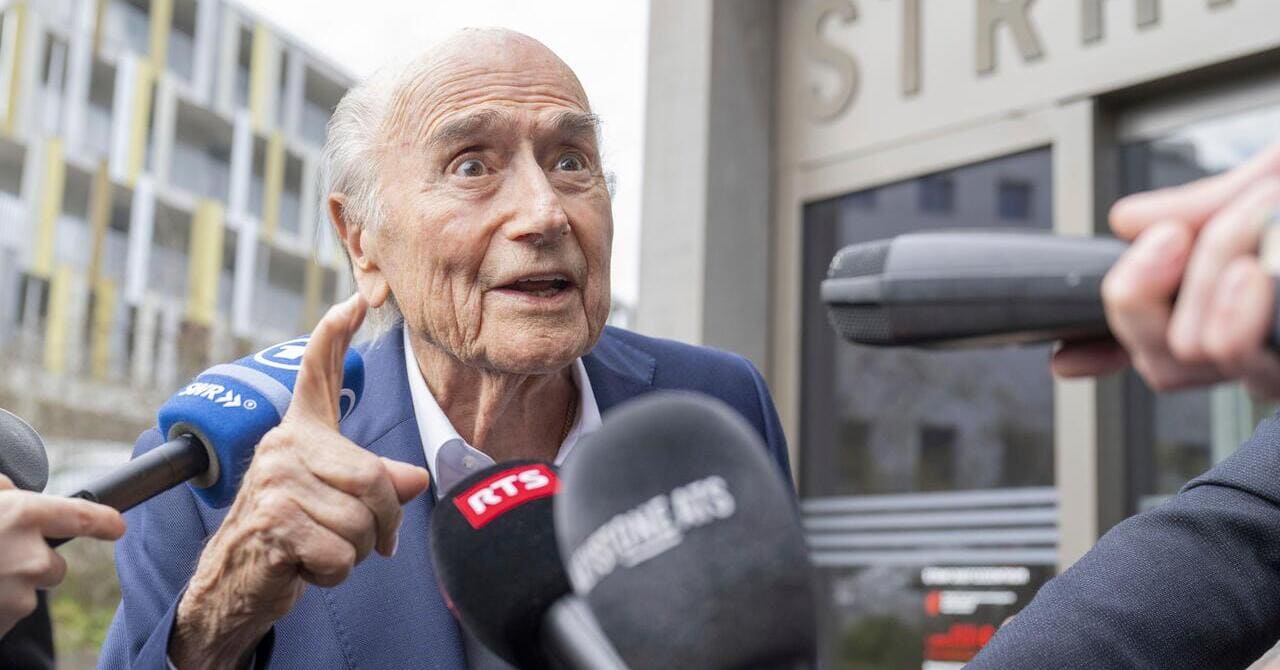
Unsurprisingly, the guardians of European football are seething. UEFA, led by its President Aleksander Čeferin, has launched a scathing critique, declaring that the plans cross “a line that football’s governing institutions should never cross.” This isn’t just a squabble over administrative details; it’s a ideological battle for the very soul of the game, pitting corporate ambition against traditional values and institutional integrity. And adding his powerful, albeit somewhat ironic, voice to the chorus of condemnation is none other than Sepp Blatter, Infantino’s disgraced predecessor. Blatter, banned for eight years amid his own corruption scandal, has warned that FIFA would “lose its soul” if it transforms into a “profit-oriented corporate structure.”
“Football belongs to no individual and to no institution. It belongs to the people,” Blatter asserted. “The FIFA World Cup is not a commercial asset that belongs to a handful of executives. It is part of the cultural heritage of world football. FIFA is the guardian of the World Cup, not its owner. There is a fundamental difference.” His words, while coming from a figure synonymous with past FIFA controversies, resonate deeply with fans and purists who fear the commodification of their beloved sport. He argues that the beneficiaries should be “the game itself — from grassroots football to the highest international level — not outside investors seeking returns.” This sentiment encapsulates the moral dilemma at the heart of Infantino’s bold, some would say reckless, venture.
Game Highlights: The Unfolding Drama
This isn’t a match on the pitch, but the “game” of power, influence, and money playing out at FIFA’s highest levels has its own dramatic moments. Here’s a quick recap of the key plays:
- Kick-Off (Tuesday):FIFA officially confirms the controversial plan to create FIFA Forward Enterprise (FFE), a corporate entity to oversee top competitions, including the World Cup.
- The Strategic Play:Infantino’s potential post-presidency salary of $64 million as FFE commissioner comes to light, raising eyebrows and questions of personal gain.
- The Golden Pass (Infantino to Members):President Infantino sends a letter to all 211 member associations, offering a staggering $40 million incentive for their support, with $20 million immediately available.
- The Deadline Pressure:A strict deadline of September 19 is imposed for member associations to accept the lucrative offer, a move designed to stifle prolonged debate and opposition.
- UEFA’s Block:European football’s governing body, UEFA, issues a strong condemnation, declaring the plans cross “a line that football’s governing institutions should never cross,” signaling fierce resistance.
- The Veteran’s Intervention:Former FIFA President Sepp Blatter, despite his controversial past, joins the chorus of dissent, warning that FIFA risks losing its “soul” by becoming a “profit-oriented corporate structure.”
- The Private Equity Link:Joshua Kushner, a prominent private investor, is identified as the proposed lead investor, bringing a new dimension of corporate finance to the fore.
Analysis: A Crossroads for Football’s Future
The proposed FFE scheme represents a critical juncture for world football. On one side stands the allure of immediate financial injection, promising substantial resources for member associations, many of whom operate on tight budgets. This could fund grassroots projects, improve infrastructure, and develop talent in underserved regions – an undeniably powerful temptation. Infantino’s strategy is clear: secure the votes by making it too costly for smaller nations to refuse.
On the other side, however, lies a profound threat to the core values of the sport. Handing significant control and profit shares of the World Cup to private investors risks commodifying an event that transcends mere commerce. The World Cup is a global festival, a unifying cultural phenomenon, and a symbol of national pride. Its value is not solely, or even primarily, financial. Introducing private equity, with its inherent drive for maximum returns and frequent dividends, could lead to decisions driven purely by profit, rather than the long-term health, tradition, or spirit of the game. More frequent World Cups, for example, while lucrative, would almost certainly dilute the tournament’s prestige and impact, overburden players, and exhaust fans.
The irony of Blatter’s intervention cannot be overstated, yet his words about the World Cup being a “cultural heritage” and FIFA its “guardian, not its owner” strike a resonant chord. The battle lines are drawn: short-term financial gain versus long-term integrity; corporate influence versus sporting autonomy. This isn’t just about FIFA’s governance; it’s about defining the very identity of global football in the 21st century.
Prediction: A Pyrrhic Victory, or a Narrow Escape?
Given the immense financial incentives dangled before the 211 member associations, particularly those in less wealthy federations, it is highly probable that President Infantino will garner enough support to push this plan through, at least in some form. The $40 million offer, with a significant chunk immediately available, is a powerful persuader that many small footballing nations will find impossible to resist, regardless of long-term philosophical concerns. The tight deadline further limits organized opposition.
However, the fierce resistance from UEFA and other major footballing powers means that this will not be a clean, unanimous victory. There will be ongoing legal and political challenges, and the controversy will undoubtedly cast a long shadow over Infantino’s remaining tenure. While the FFE might come into existence, its implementation will likely be fraught with friction, and the image of FIFA as a truly neutral guardian of the sport will be further eroded. The “soul” of football, as Blatter warned, might not be entirely lost, but it will certainly bear the scars of this intense commercial battle, forever altered by the indelible mark of private interests on its most sacred stage.