
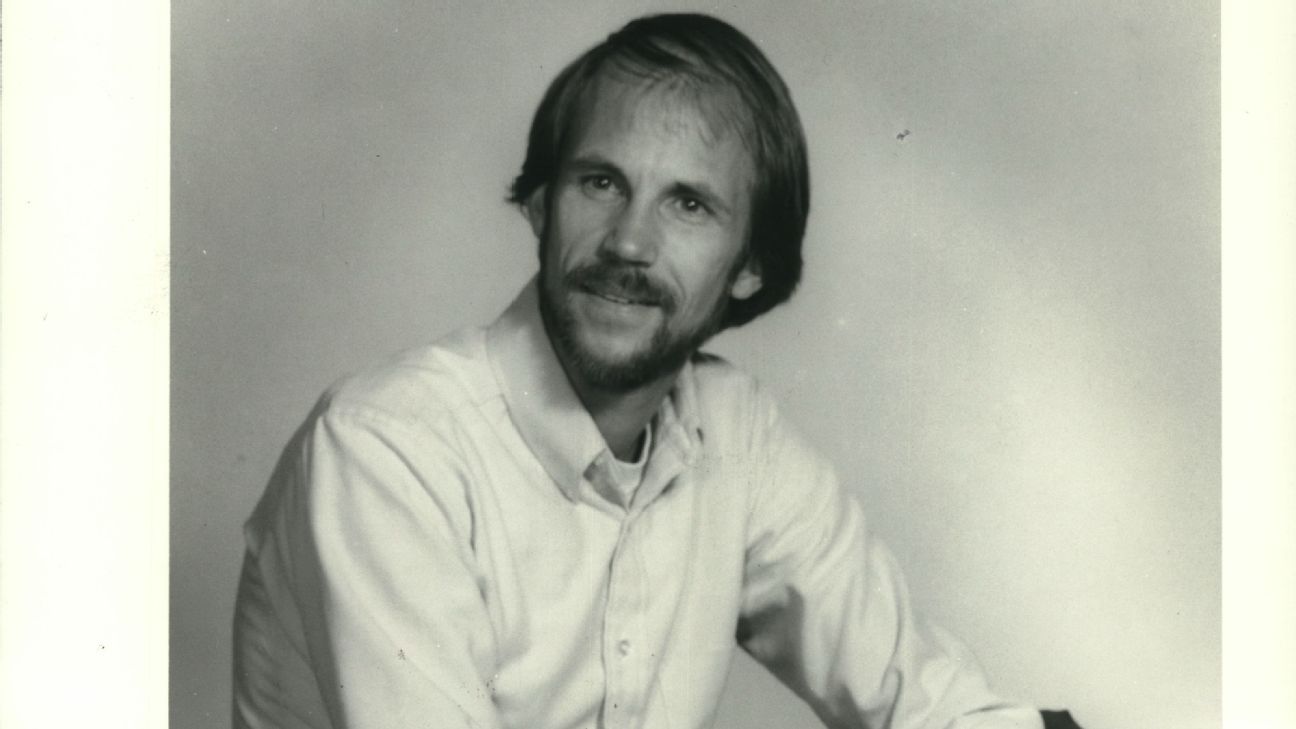
Jeff Galloway, a participant in the 1972 U.S. Olympic team who for many years motivated top-tier competitors and countless everyday joggers by championing an alternating run-walk-run method, whether in a long-distance race or just a local stroll, passed away on Wednesday at the age of 80.
Galloway suffered a hemorrhagic stroke and departed life at a medical facility in Pensacola, Florida, as reported by his daughter-in-law, Carissa Galloway.
His profound impact was apparent in the closing moments of his existence: Numerous individuals shared digital tributes online, wishing for Galloway’s recuperation from urgent neurosurgery and expressing gratitude for his counsel, which enhanced their self-assurance and led them to the beginning of races.
Galloway’s family disclosed the operation on Feb. 20 and encouraged the public to offer their backing.
Jim Vance, a leading expert in stamina-based athletics consulting in San Diego, commented that Galloway was a “trailblazer” in persuading people to take up running.
“He eliminated the obstacle to participation, which was primarily psychological,” Vance conveyed to The Associated Press. “Running should not be an ordeal. It ought to be something serene, something pleasurable, so individuals can delight in running and not approach it with apprehension.”
Galloway recovered from a heart condition in 2021 and continued to aspire to complete an additional long-distance race after having completed over 230 throughout his life.
“My objective now, being over 80 years old, is to demonstrate that people can accomplish tasks that are typically unattempted, and can execute them without harm,” he informed The New York Times in December.
Galloway’s run-walk-run approach originated in 1974 when he consented to instruct a running course via Florida State University, two years after participating in the 10,000-meter event at the Olympics. He believed it could draw patrons to Phidippides, his fresh retail establishment dedicated to runners.
“Not a single individual had engaged in any form of running for a minimum of five years. So we commenced by walking, interspersed with brief one-minute running intervals,” Galloway stated on his website.
“I devoted periods with each group, during the runs, to calibrate the regularity of walk breaks so that no one was gasping for air — even at the end,” he recounted. “Walk breaks maintained group cohesion. Everyone successfully completed the ultimate test: concluding either a 5-kilometer or 10-kilometer race with expressions of joy.”
Galloway maintained that incorporating walking intervals during a run lowered the chance of harm, preserved vigor, and sustained self-assurance.
“I’ve been implementing them continuously since then,” he mentioned, “continuing to optimize the proportions of running to walking according to mileage speed and personal requirements.”
And Galloway even possessed his unique formula. He strolled past each hydration point during the 1980 Houston marathon and completed the race in a quicker duration, 2:16:35, than his earlier 26.2-mile (42.1-kilometer) events executed solely by running, the Times reported.
He disseminated his principles on running via publications, digital platforms, and specialized gatherings. Galloway was the authorized coaching adviser for runDisney, a collection of competitive events at Walt Disney Co. resorts, and often joined the participants. Numerous devotees took to the internet to pay homage following his recent operation.
“I had no expectation of becoming a runner. I could not imagine completing a half-marathon,” Karen Bock-Losee of Jacksonville, Florida, expressed in a video. “I’m seven decades of age and I’ve participated in multiple since turning sixty when I encountered Galloway’s running approach. I simply wish to express my gratitude.”
Susan Williams remembered encountering Galloway as she endeavored with difficulty near the conclusion of a half marathon in Murray, Kentucky, in 2011.
“You overtook me, and my muscles were seizing,” she recounted. “You reversed direction and returned. You guided me verbally through the difficulty. It was remarkable.”
Bobby McGee, a Colorado-based athletics trainer, stated that Galloway’s alternating run-walk method rendered running more attainable for the general public.
“When a collection of individuals in any sort of race — from long-distance events to recreational jogs — convene subsequently, they discuss their performance duration,” McGee said. “No one inquires whether they maintained a continuous run throughout.”
Galloway leaves behind two sons and six grandchildren.