
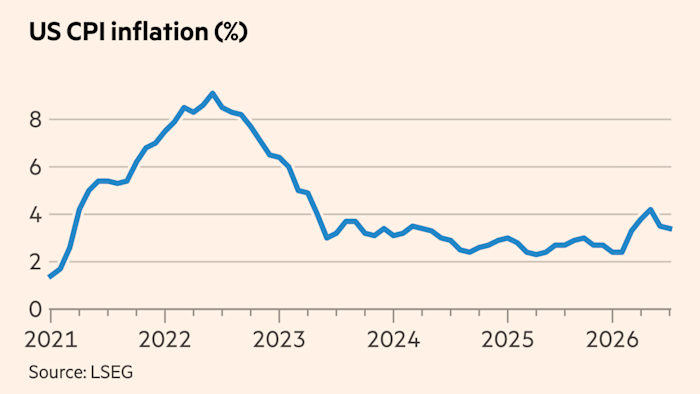
Key Takeaways
- The Federal Reserve’s latest communications signal an unwavering commitment to combating inflation, implying a “higher-for-longer” interest rate environment that has significantly re-anchored market expectations.
- Equity markets, particularly growth and rate-sensitive sectors like technology and real estate, have reacted negatively, while bond yields have surged, reflecting increased cost of capital and dampened risk appetite.
- Investors are repositioning portfolios towards more defensive assets and value stocks, anticipating slower economic growth and increased volatility as the era of ultra-loose monetary policy definitively concludes.
Hawkish Reality Check: Fed’s Unyielding Stance Reshapes Market Expectations
The financial world is recalibrating after the Federal Reserve delivered an unambiguous message: the fight against inflation remains the central bank’s paramount objective, even if it entails a more restrictive monetary policy for an extended period. This resolute stance, solidified in recent statements and the latest ‘dot plot’ projections, has effectively extinguished lingering hopes for an imminent dovish pivot, sending profound ripples across global equity, bond, and currency markets.
The Federal Reserve’s Unflinching Signal
At its most recent Federal Open Market Committee (FOMC) meeting, policymakers reiterated their commitment to bringing inflation back to the 2% target, with Chairman Jerome Powell emphasizing that “restoring price stability is essential for sustained strong labor market conditions.” The updated Summary of Economic Projections (SEP) showcased a higher median forecast for the federal funds rate, indicating that officials anticipate rates will remain elevated for longer than previously projected, with fewer rate cuts in the near-term horizon. This ‘higher-for-longer’ narrative is underpinned by persistent core inflation figures and a surprisingly resilient labor market, which, while positive for employment and wages, also fuels the underlying inflationary pressures the Fed is keen to quell. The market had, arguably, priced in a softer landing and earlier rate cuts, making the Fed’s hawkish consistency a significant reality check for many investors and analysts.
Equities Under Pressure: A Sectoral Shift
The immediate market reaction was swift and pronounced. Major equity indices suffered broad declines, with the tech-heavy Nasdaq Composite experiencing particular pressure as investors unwound positions in high-growth, high-valuation stocks. Companies whose valuations are highly sensitive to future earnings discounted at higher interest rates bore the brunt of the sell-off. Sectors reliant on cheap credit for expansion or those with high debt loads, such as real estate and speculative technology, found themselves in an increasingly challenging environment. Conversely, traditional value sectors, including financials, energy, and certain industrials, showed relative resilience, benefiting from the prospect of wider lending margins, elevated commodity prices, and more stable earnings profiles, respectively. This shift signals an ongoing rotation within portfolios, favoring businesses with strong free cash flows, robust balance sheets, and consistent profitability over speculative growth narratives.
To read this article for free
Register now
Once registered, you can:
• Read free articles
• Get our Editor’s Digest and other newsletters
• Follow topics and set up personalised alerts
• Access Alphaville: our popular markets and finance blog
Bond Market Repercussions and Global Spillover
The fixed-income landscape has been dramatically reshaped by the Fed’s stance. Treasury yields, particularly at the shorter end of the curve, surged to multi-year highs, reflecting investors’ expectations of sustained higher policy rates and increased inflationary risk premium. The inversion of certain parts of the yield curve, often seen as a reliable harbinger of recession, became more pronounced, signaling deep-seated market anxieties about future economic growth prospects. Corporate bond markets saw spreads widen, making it progressively more expensive for companies to borrow and refinance existing debt, directly impacting capital expenditure plans, share buybacks, and M&A activity. Globally, the hawkish Fed stance has put immense pressure on other central banks, forcing many to consider or implement tighter monetary policies to defend their own currencies and curb imported inflation, creating a synchronized global tightening cycle not witnessed in decades and intensifying fears of a global slowdown.
Investor Sentiment and Economic Outlook Adjustments
Investor sentiment has shifted perceptibly from cautious optimism to a more defensive and risk-averse posture. The long-held “buy the dip” mentality, a hallmark of previous market corrections, has largely given way to a focus on capital preservation and robust risk management. Portfolio managers are increasingly scrutinizing corporate earnings quality, balance sheet strength, and dividend sustainability over speculative growth potential. Many are actively re-allocating capital towards defensive sectors, high-quality fixed income, and commodities as potential hedges against both persistent inflation and an impending economic downturn. Economists, in turn, are revising their growth forecasts downwards, with the probability of a “hard landing” or a mild recession gaining significant traction. The housing market, highly sensitive to mortgage rates, is already showing clear signs of cooling, further underscoring the broader economic implications of the Fed’s resolute actions.
Market Impact
The Federal Reserve’s unwavering commitment to restrictive monetary policy marks a fundamental paradigm shift for global financial markets. Investors should anticipate continued, significant volatility across all asset classes, with a persistent bias towards defensive strategies and careful risk assessment. Equity markets will likely favor companies demonstrating robust earnings, strong pricing power, and manageable debt levels, while highly leveraged or speculative growth stocks may face sustained headwinds. Bond yields are expected to remain elevated, offering more attractive income opportunities but also posing increased refinancing risks for corporate and sovereign entities. The strengthening U.S. dollar, a direct consequence of higher rates, will continue to impact international trade, commodity prices, and multinational corporate earnings, creating headwinds for non-U.S. denominated assets. Prudent portfolio construction, focusing on fundamental analysis, strategic diversification, and maintaining a long-term perspective, will be absolutely crucial for navigating this challenging and uncertain economic environment.