
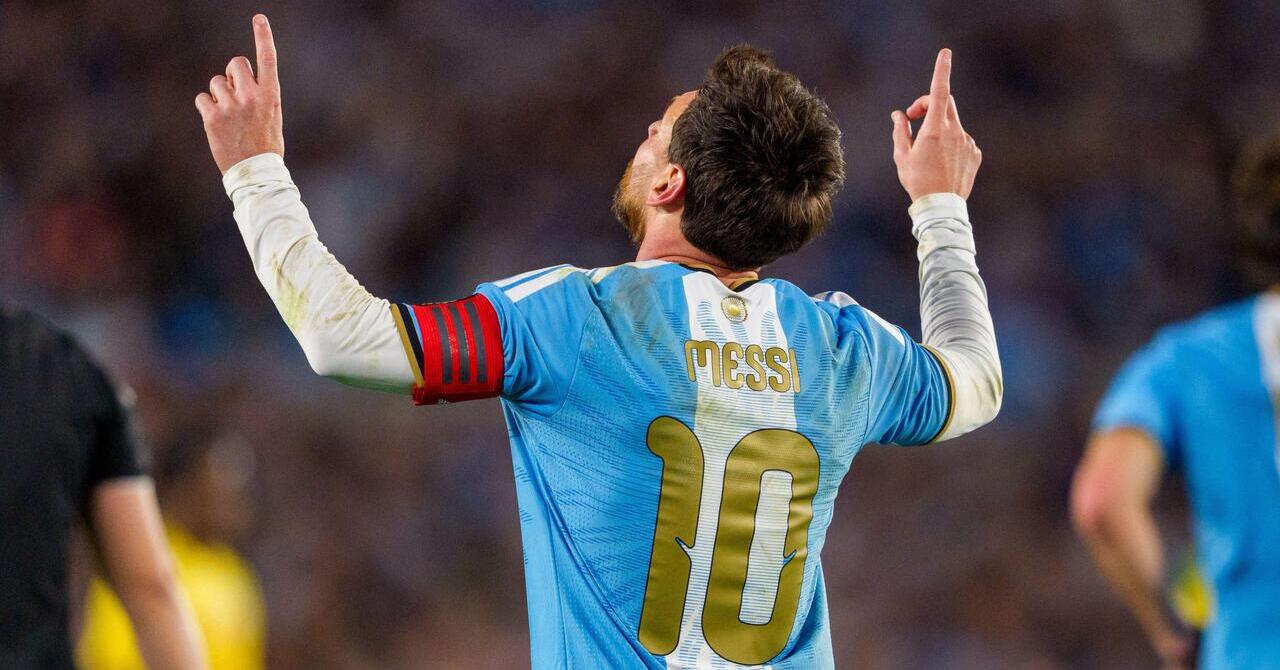
The final whistle blew, but the echoes of a roar, a sigh, and a standing ovation lingered in the air of the Estadio Monumental. Lionel Messi, the maestro who danced on the world stage for two decades, finally bowed out from international football. It was a departure draped in the bittersweet solemnity of an era’s end, marked by a goal, a dazzling display, and an emotional confession: he “didn’t want this moment to end.”
In his 208th and final appearance for Argentina, a 3-0 victory over Benin that often felt more like a celebratory exhibition than a competitive fixture, the 39-year-old virtuoso poured his heart out. His voice, usually reserved for the language of the pitch, trembled with the weight of myriad emotions. “There are so many emotions going through me right now,” Messi admitted, battling to articulate the profound significance of the moment. “I’m surely forgetting many things I would like to say because this is a very difficult moment for me. The first person who comes to my mind is my dad. I leave grateful, proud and at peace. Thank you for everything.” It was a raw, unfiltered glimpse into the soul of a man who had carried the hopes of a football-obsessed nation on his slender shoulders for so long.
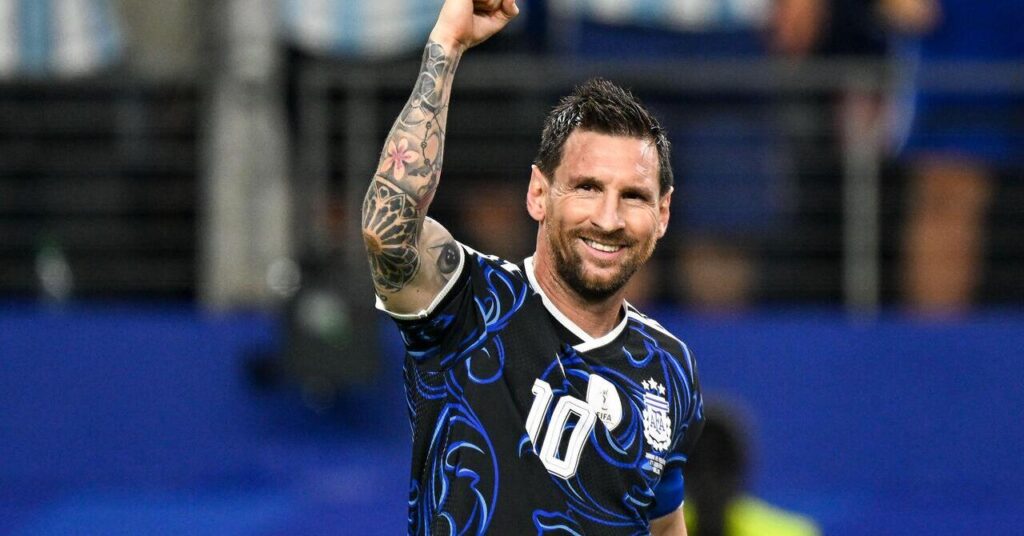
A Farewell Forged in Defeat and Personal Loss
Messi’s decision to finally step away from the iconic Albiceleste jersey came after the heart-wrenching World Cup final defeat to Spain, a loss that amplified the cruelest whispers of destiny. This sporting blow was compounded by the devastating death of his father, Jorge, creating an insurmountable emotional burden. He departs having etched an indelible mark, boasting an incredible 126 goals for Argentina and, crucially, having led his beloved country to lift the coveted World Cup trophy in 2022, alongside two Copa América titles. The narrative, however, wasn’t one of pure triumph in his final chapters.
“I have nothing left to do but thank this shirt,” he added, his gaze sweeping over the tearful faces of his teammates. “For 20 years, even through the worst moments, I never stopped fighting, pushing forward, giving everything I had and wanting to be here. Not coming here any more and no longer being with the Argentina national team is going to hurt a lot. If it were up to me, I would love to be here for my entire life, because playing for Argentina is the most beautiful thing there is.” The sentiment resonated deeply, a testament to his enduring passion despite the toll it had taken. “I think I’m talking more than ever today because I simply don’t want this moment to end. But I think the time has come for me to retire. The last World Cup took a lot out of us after everything we went through. We arrived in the final with just enough left in us, but we fought until the very end, like we always did.” His mention of the 2022 World Cup triumph, where “we had the dream of fulfilling not only my dream, but the dream of an entire country: becoming world champions again. And we did it,” served as a poignant reminder of the pinnacle he reached before this final, soul-crushing defeat to Spain.
Game Highlights: A Final Masterclass Against Benin
Even in his swansong, against admittedly generous opposition, Messi couldn’t resist orchestrating a final symphony of skill. The 3-0 victory over Benin served as a poignant stage for one last dazzling display. The crowd, a sea of blue and white, erupted when a penalty was awarded in the second half. There was no doubt who would step up. With trademark composure, Messi dispatched the spot-kick, sending the goalkeeper the wrong way and the ball nestling into the bottom corner. It was a textbook finish, his 126th international goal, a final flourish to his scoring legacy.
But beyond the goal, it was his vision that truly shone. Messi turned provider twice, weaving through the Benin midfield with hypnotic dribbles before delivering perfectly weighted passes. His first assist came from a jinking run down the right flank, cutting inside and dinking a precise cross that Lautaro Martínez headed home with authority. Later, a sublime through-ball sliced open the defense, finding Ángel Di María in stride, who clinically finished to seal Argentina’s comfortable win. The game, while lacking in competitive tension, offered a final, joyous glimpse of Messi’s unparalleled genius – his ability to dictate play, unlock defenses, and elevate those around him. It was a performance that reminded everyone what they were about to lose.
Messi’s Argentina Tale: A Saga of Perseverance and Redemption
Many of his teammates openly wept as Messi spoke, reflecting on an international career that began with a bewildering red card just a minute into his 2005 debut against Hungary and concluded amidst fervent adoration at the Estadio Monumental. In between, his Argentina journey was a narrative of two distinct halves. The initial years saw him grapple for acceptance from a public that often viewed him with suspicion, a child prodigy who left for Europe at 13 and became synonymous with Barcelona rather than the rugged passion of Argentine football. He struggled under the immense, almost suffocating weight of comparisons to the immortal Diego Maradona.
The nadir arrived in 2016, following a heartbreaking fourth final defeat in nine years, when he missed a crucial penalty in the Copa América final shootout against Chile, prompting an initial, premature retirement from international football. Yet, the siren call of his nation proved too strong. Persuaded to return, his Argentina career truly ignited with the shrewd appointment of Lionel Scaloni as coach. Scaloni, with astute tactical genius, found the missing piece: a system that not only accommodated Messi but built organically around his unique talents, empowering him rather than burdening him. This symbiotic relationship blossomed, leading to two Copa América triumphs and, most significantly, the glorious 2022 FIFA World Cup title.
While the 2022 World Cup brought ultimate glory, its aftermath, particularly Argentina’s behavior in the final, cast a small shadow over their otherwise triumphant run. However, Messi himself shone throughout that tournament, defying his advancing years with performances of breathtaking quality. His journey was a testament to enduring spirit, a story of overcoming criticism, personal heartache, and the immense pressure of national expectation to ultimately achieve the dream.
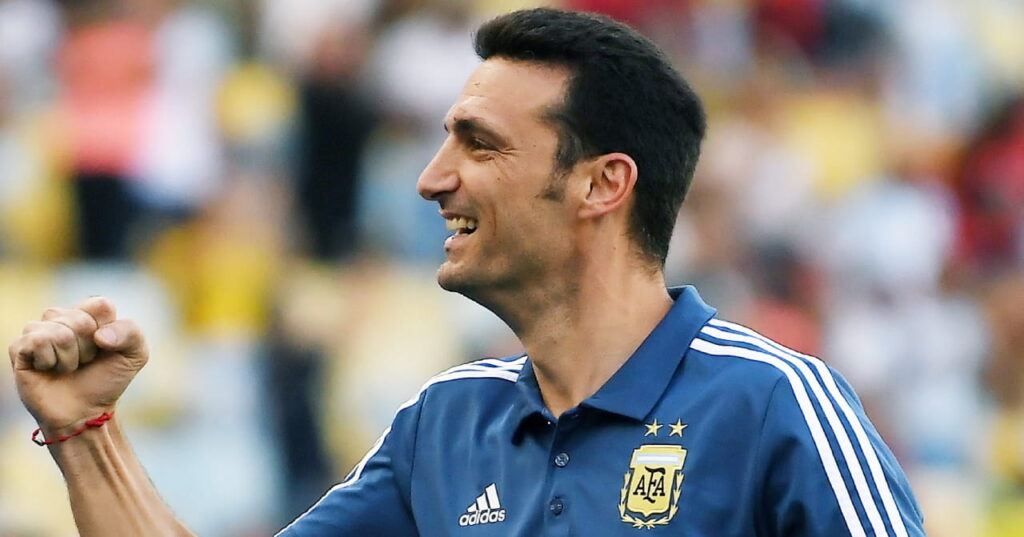
Scaloni Hails Messi as the ‘Best in History’
Amidst the raw emotion, Argentina coach Lionel Scaloni offered a profound tribute to his departing captain. His voice thick with admiration, Scaloni declared: “It’s been a dream come true. I never thought I’d be the coach of the best footballer in history. We are eternally grateful to him for giving us the opportunity to be with him.” His words were not just praise; they were a heartfelt acknowledgment of the transformative impact Messi had on his own career and the entire squad.
The tears in Scaloni’s eyes mirrored those of the fans. “The tears are because so many things are going through my head. Not seeing him any more will be sad. He leaves us with an incredible legacy. The feeling of having him on your side is incomparable. I’ve never seen that aura in anyone else in my life.” It was a powerful statement, underscoring the almost mythical presence Messi commanded, an aura that transcended mere footballing ability. His departure leaves a void that no individual can truly fill, a testament to his unique standing in the pantheon of sporting legends. Messi is expected to make a swift return to the United States, where he is scheduled to play for Inter Miami against DC United on Saturday night, bringing his focus back to club duties.
Prediction: The Dawn of a New Argentine Era
Messi’s departure marks not just the end of an era, but the dawn of a profoundly challenging new chapter for the Argentine national team. The immediate future will undoubtedly feel like navigating uncharted waters. For two decades, every tactical plan, every moment of crisis, every glimmer of hope, revolved around the incomparable number 10. Now, Lionel Scaloni faces the unenviable task of redefining Argentina’s identity without their celestial guiding star.
The void left by Messi’s creativity, leadership, and sheer gravitational pull is immense. Players like Julián Álvarez, Enzo Fernández, and Alexis Mac Allister, who have flourished under his shadow, must now step into the blinding spotlight and shoulder greater responsibility. Their growth and maturity will be paramount. Expect a period of tactical experimentation and perhaps some inconsistent results as Scaloni searches for a new equilibrium. Argentina will likely rely more heavily on collective effort, robust defensive organization, and the raw athleticism of its younger talents. The flair and moments of individual genius that Messi routinely provided will be replaced by a more structured, perhaps even pragmatic, approach.
While the transition will be difficult, Argentina’s talent pool remains rich. They possess a strong spine and a winning mentality forged under Scaloni. However, winning major tournaments like the Copa América or the World Cup without Messi’s magic feels like an uphill battle. My prediction is that Argentina will remain competitive, a force in South America, but the effortless, almost inevitable brilliance that defined the Messi era will be gone. They will qualify for major tournaments, but the expectation of absolute dominance will diminish. The next World Cup cycle will be a true test of their collective resilience and Scaloni’s tactical prowess. The dream of repeating past glories will now rest on a united front, rather than the singular genius of a generational talent. The future is uncertain, but one thing is clear: football will never see another Lionel Messi, and Argentina will forever feel his absence.