
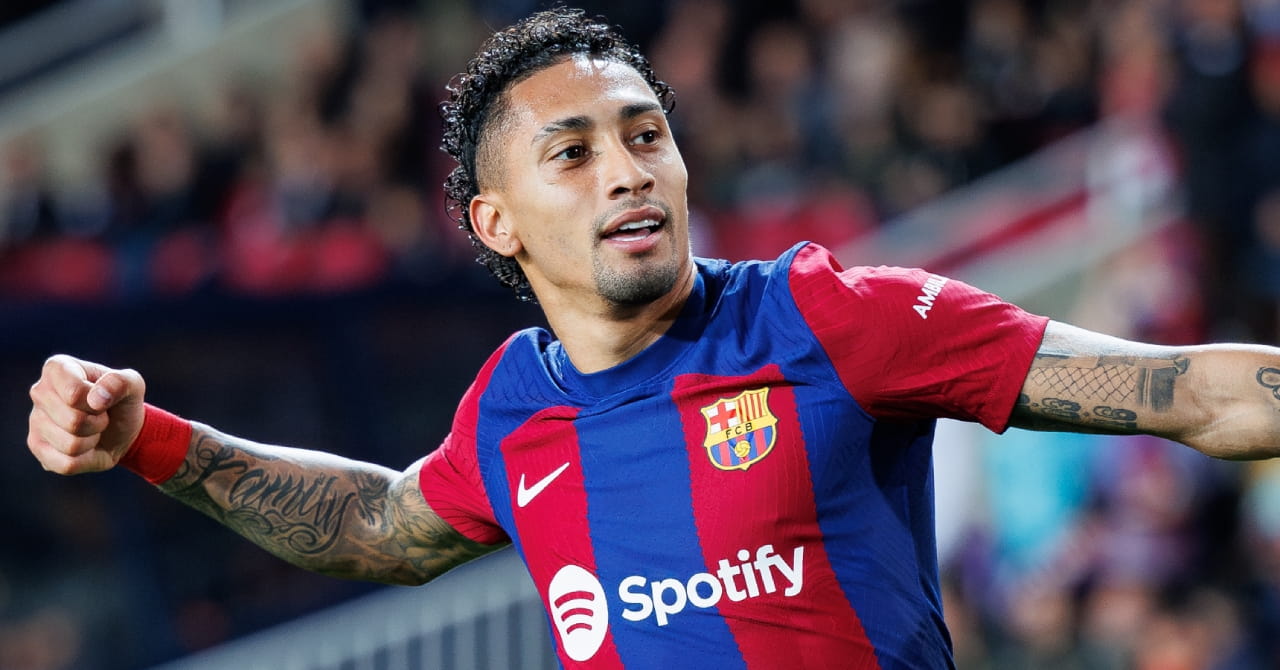
The Estadio Nacional in Singapore crackled with anticipation, but off the pitch, a different kind of storm had been brewing.Brazilian winger, Raphinha, usually celebrated for his electrifying runs and precision finishing, found himself in an unexpected maelstrom of public opinion. His seemingly innocuous comments regarding minute management for the national team, intended as a pragmatic plea for injury prevention, instead ignited a furious debate, questioning his very commitment to the hallowed yellow and green jersey. But as the Seleção prepares to face Japan, the narrative has shifted, revealing a complex tapestry of professional duty, personal sacrifice, and the relentless pressure borne by modern football’s elite.
The 29-year-old Barcelona star, a pivotal figure for both club and country, had merely suggested a dialogue with Brazil boss Carlo Ancelotti to carefully manage his playing time ahead of the international friendlies. What he envisioned as a sensible approach to safeguard his body, especially after a harrowing run of three injuries in the same leg area across previous call-ups, was twisted into a perceived slight against the national team. The reaction from certain quarters in his homeland was swift and unforgiving, painting a picture of a player prioritizing club allegiances over national pride – a cardinal sin in the fiercely patriotic world of Brazilian football.
Speaking to the assembled media in Singapore, the emotional toll of the misunderstanding was palpable. Raphinha, visibly moved, paused, collecting himself before delivering a heartfelt clarification. “At that moment, when they asked me the question and I answered, I thought I was being clear in what I wanted to say; at least in my head it seemed to me that I was,” he explained, his voice tinged with a mix of frustration and raw vulnerability. “Taking into account everything I have been through in the last three international call-ups, with three injuries practically in the same area of the leg, what I meant was, simply, that I had to take care of myself. Obviously, I don’t want to get injured again. I want to be available not only for the national team, but also for Barcelona.” This wasn’t a retreat from duty; it was a desperate plea for understanding from an athlete caught between the demands of relentless schedules and the fragility of the human body.
His commitment, he stressed, has never wavered. “From the first time I put on the national team shirt I have always made my willingness to be here very clear. I never resigned from the Brazilian national team and I always did my best to be present. Sometimes, I haven’t been able to come, but I’ve always done everything in my power to be here and wear the Seleçao shirt. For me, it has always been an honour and a privilege, and always will be. That’s not going to change, regardless of how long I’m here.” This isn’t just rhetoric; it’s the profound connection a Brazilian player feels to the shirt, a feeling intensified by the generational weight of legends who have worn it before him.
Brazil Barbs Stung, Admits Raphinha
The venom of the criticism, Raphinha admitted, had pierced deep. “We are human beings and, no matter how hard we try, some things affect us,” he conceded. “It’s natural. Anyone in my place, receiving criticism knowing that they are giving everything, would be affected. We have to be prepared for criticism, defending Brazil is something very big.” This raw honesty offers a rare glimpse into the mental fortitude required to operate at the pinnacle of professional sports, where every word is scrutinized, and every action judged, often without the full context. To be criticized by your own people, for something you believe is in the best interest of your long-term availability, is a uniquely painful burden.
As he prepares to earn his 43rd cap for Brazil tomorrow, a testament to his enduring presence, Raphinha will do so wearing the captain’s armband – a clear, unequivocal statement of trust from the coaching staff. Yet, he also laid bare his ultimate principle: “Unfortunately, when we are not physically well we cannot play either here or at the club. I also said that, if my body allows me, I will always give my best. When I see that I can’t physically perform, I’ll be the first to retire, because I’m very critical of myself.” This self-awareness, this commitment to excellence, underpins his entire approach. The controversy, he concluded, had an “impact,” but the mission remains unchanged: to serve Brazil with every fiber of his being, as long as his body allows.
Ancelotti’s Masterstroke: Sticking Up for His Captain
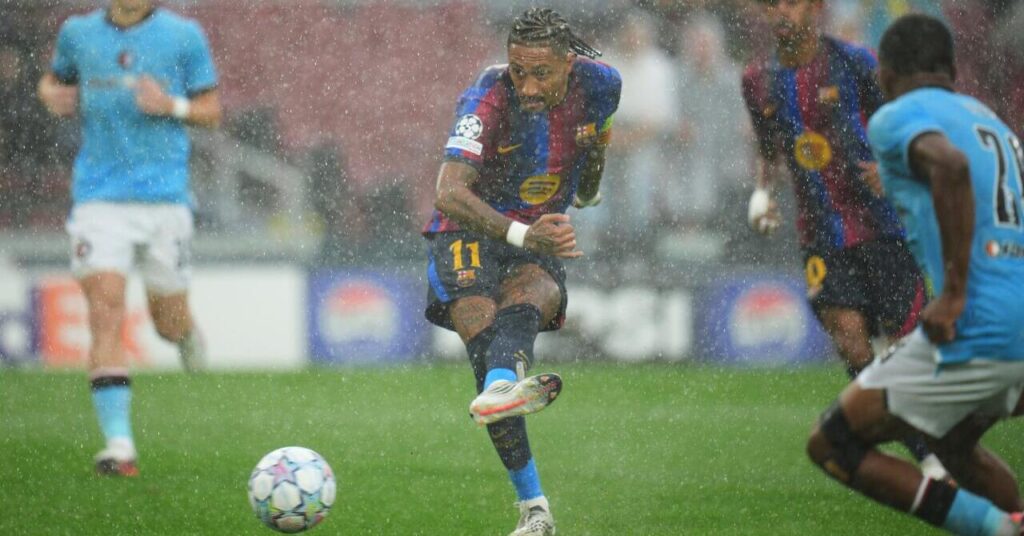
In a powerful show of leadership, Brazil boss Carlo Ancelotti emphatically backed his captain, silencing dissent and reinforcing team unity. “I know the players want to play for the national team and I don’t need to say anything to them to get them out there competing,” Ancelotti stated, his words cutting through the noise. “Brazil is the greatest national team in the world and the fans will be right behind us in every match and will support us. It’s different in other countries.” Ancelotti’s decision to hand Raphinha the armband is a masterful strategic play, a public vote of confidence designed to extinguish the flames of controversy and galvanize his squad. It sends a clear message: the coach trusts his player, and the player is integral to the team’s ambitions.
This unwavering support arrives at a critical juncture, as Raphinha himself is in the midst of a spectacular club renaissance. Under Hansi Flick at Barcelona, the former Leeds man has been repurposed into a prolific number nine, a tactical shift that has unlocked an entirely new dimension to his game. With a staggering 15 goals in just 11 La Liga appearances, Raphinha isn’t just in “blistering form”; he’s spearheading a Blaugrana charge that sees them sitting three points clear atop La Liga, heading into the international break. His newfound predatory instinct and clinical finishing from a central role have transformed Barcelona’s attack, making them a formidable force. The irony, of course, is that this explosive club form is precisely what Raphinha was seeking to protect with his comments – a testament to his desire to maintain peak physical condition for both his club and, crucially, his country.
Game Highlights: Brazil vs. Japan (November 14, 2026)
The humid Singapore night bore witness to a captain’s performance that emphatically answered any lingering doubts. From the first whistle, Raphinha, adorned with the armband, played with a fierce intensity, silencing his critics with every touch. In the 23rd minute, it was his audacious flick over a Japanese defender on the right wing that opened up space, allowing him to deliver a pinpoint cross to the onrushing Vinicius Jr., who headed home Brazil’s opener. Later, in the 68th minute, with Japan pushing for an equalizer, Raphinha himself seized control of the ball just outside the box, unleashing a curling left-footed strike that dipped just under the crossbar, sending the crowd into raptures. It was a goal born of both skill and sheer determination, a moment of individual brilliance that put the game beyond doubt and cemented a commanding 2-0 victory for the Seleção. His jubilant celebration, pointing to the Brazilian crest on his chest, spoke volumes – a powerful affirmation of his undying loyalty.
Prediction: A Season of Triumph and Redefinition
Raphinha’s emotional clarity and commanding performance against Japan have not only reaffirmed his commitment but also set the stage for what promises to be a defining period in his career. With Ancelotti’s unwavering trust and Flick’s tactical genius unleashing his potential at Barcelona, the forward is poised for an extraordinary season. If he can maintain this exceptional physical condition – the very objective of his initial, misunderstood comments – Raphinha will undoubtedly be central to Barcelona’s pursuit of domestic and European glory. For Brazil, his leadership and rediscovered goalscoring prowess will be invaluable as they navigate the upcoming qualifiers and look towards future major tournaments. Expect Raphinha to silence all remaining doubters, proving that prioritizing one’s body is not a weakness, but a strategic necessity for sustained brilliance on the world stage.