

The dust of World Cup heartbreak has barely settled, the raw emotion of defeat still etched on the faces of a nation, but Portuguese football is already bracing for a seismic shift. In a move that sends ripples of intrigue and expectation across the footballing world, Jorge Jesus, the tactical maestro with a proven track record, has been confirmed as the new head coach for Portugal. And for Cristiano Ronaldo, should he choose to continue his unparalleled international journey, it means a familiar, and perhaps comforting, face at the helm.
Widespread reports in Portugal on Tuesday swiftly confirmed Jesus as the successor to Roberto Martinez, whose tenure concluded with the bitter taste of a World Cup exit to fierce rivals Spain. Martinez’s contract, set to expire after the tournament, ends with the Spaniard falling short of the ultimate ambition: delivering a major trophy to Portugal since their glorious Euro 2016 triumph. That monumental task now falls squarely on the shoulders of Jesus, a free agent after a impactful spell with Al-Nassr.
The appointment immediately sparks debate and analysis, particularly concerning its implications for the legendary Cristiano Ronaldo. Jesus, a man who explicitly stated his primary reason for joining the Riyadh club was to help his countryman lift silverware, did just that. Under his guidance, Al-Nassr clinched the Saudi Pro League last season, granting Ronaldo his first major trophy since his move to the Middle East in 2023. This shared success, this unique bond forged in a different footballing landscape, offers a fascinating backdrop to Jesus’s return to the international stage.
“When I received the invitation from [Al Nassr CEO José] Semedo and Cris [Cristiano Ronaldo], I only accepted this challenge to help Cris win titles in Saudi Arabia. That was my purpose,” Jesus famously declared in May. His words resonate with renewed significance now. Every title, he added, is fundamental, especially for what Ronaldo has done for the sport. This isn’t just a coaching appointment; it’s a potential reunion of a manager who understands how to unlock the best from arguably the greatest goalscorer of all time, and a player who knows how to deliver under his tactical guidance. The question is, can this synergy translate from club football to the intense demands of international competition?
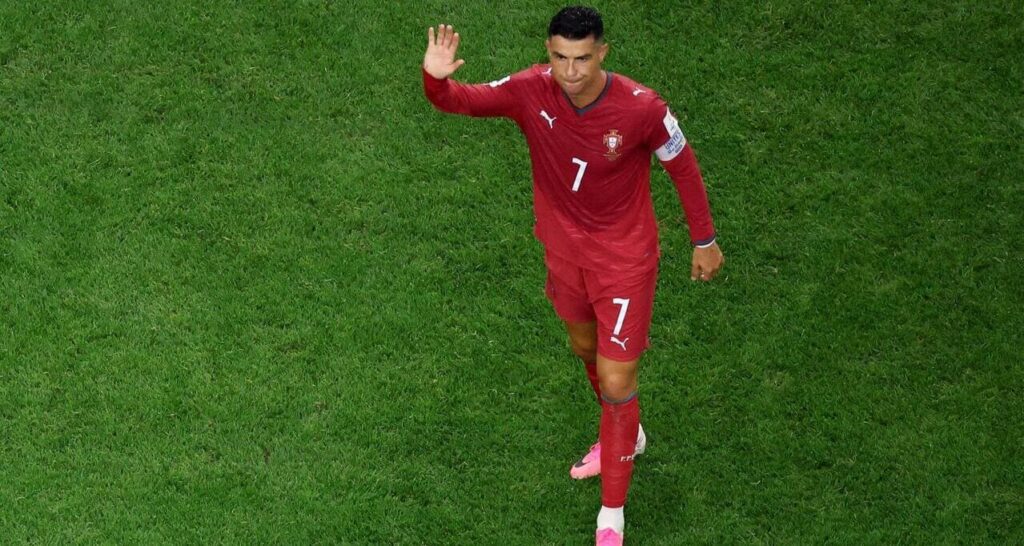
Ronaldo Leaves World Cup Stage with ‘Clear Conscience’ After Portugal Exit
While the managerial uncertainty is resolved, the future of Portugal’s talisman remains shrouded in doubt. Ronaldo’s words, uttered in the immediate aftermath of the crushing defeat, hinted at an end to a remarkable 233-appearance international career. “I’m sad to leave the World Cup this way. As I said yesterday, I gave it my all, and I leave with a clear conscience. That’s the life of a footballer. You have to move forward,” he told reporters. The poignant declaration, “It was my last World Cup, yes,” hung heavy in the air, a definitive statement on his World Cup chapter. But as for the rest, he vowed to take his time, to consult his family, and not make rash decisions “in the heat of the moment.”
This leaves Jesus with his first, and perhaps most defining, challenge: how to navigate the twilight of a legend’s career. Does he persuade Ronaldo to embark on one last mission, leveraging their successful past? Or does he respectfully usher in a new era, allowing the younger generation to fully step into the spotlight? The answer will shape Portugal’s trajectory for years to come.
Martinez Hails ‘Exemplary’ Ronaldo Amidst Exit
The departing Roberto Martinez, despite failing to deliver silverware, remained steadfast in his praise for Ronaldo, defending his controversial decision to stick with the veteran for the full 90 minutes against Spain, rather than introduce the younger, more dynamic Goncalo Ramos. “He’s been an exemplary captain,” Martinez asserted. “I arrived with Portugal at a time with a lot of confusion and doubts about Cristiano, and he’s been a role model, not just with goals and assists, what he does in the box, his commitment, how he experiences football. He’s an example, we have to celebrate him.”
Martinez continued, “We’re talking about an icon in football. There aren’t many Cristiano Ronaldos. We have to be thankful for what he did at this World Cup, he wanted to win it, as a player, a captain, on a human level, we’ll all take it with us forever. An example as the human being who is behind the sportsman.” While noble, these sentiments did little to quell the rising tide of criticism surrounding his tactical choices.
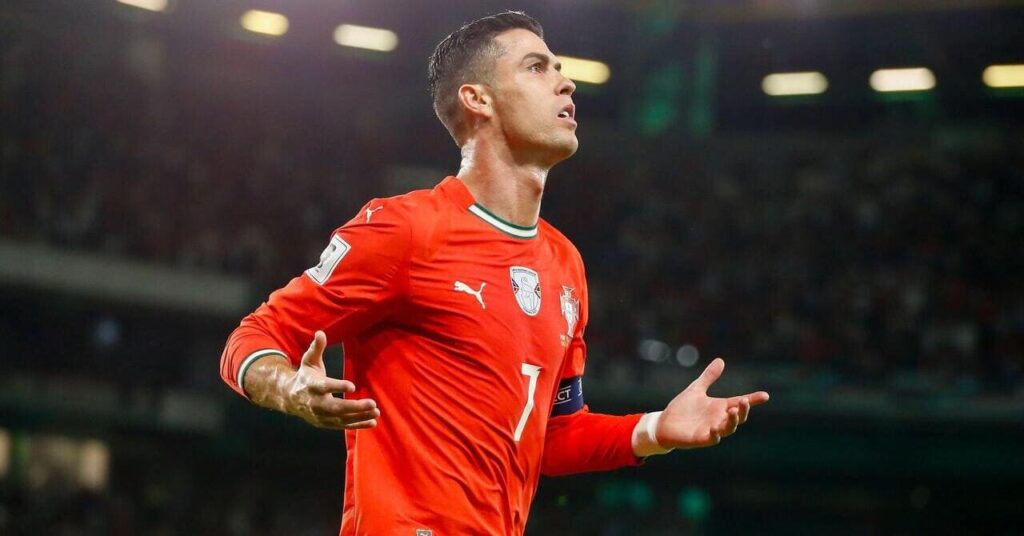
Sutton Hammers Ronaldo and Martinez: A Tactical Blunder?
The post-mortem of Portugal’s World Cup exit has been brutal, and Martinez’s decision-making has come under intense scrutiny. BBC 5 Live pundit Chris Sutton launched a blistering attack, accusing the former Belgium boss of “indulging Ronaldo” and claiming the striker “waddled round the pitch like a grandad.” Sutton’s fiery critique encapsulated the frustration of many who felt Martinez prioritized loyalty over tactical flexibility in a high-stakes encounter.
Martinez, however, stood his ground. “When you’re a team and you need a goal you can’t take Cristiano Ronaldo off,” he argued. “He can play 90 minutes, no problem. He’s a presence, he opens space, a dead-ball situation, anything in the box, it would make no sense. In extra time it probably would have made sense to use Goncalo Ramos. We had to keep the structure, it wasn’t the case to take your top scorer off in the 90 minutes.” Was it unwavering loyalty, a tactical blind spot, or simply a miscalculation under immense pressure? History will judge Martinez’s final decision.
Game Highlights: World Cup Quarter-Final vs. Spain
The atmosphere in Dallas for the World Cup quarter-final against Spain was electric, a cauldron of anticipation and tension. From the opening whistle, it was clear this would be a tactical battle of attrition. Spain, with their customary possession-based dominance, sought to dictate tempo, probing Portugal’s defensive lines. The first half was a cagey affair, punctuated by half-chances and moments of individual brilliance. Joao Felix saw a curling effort tipped over by Spain’s keeper, while Dani Olmo rattled the crossbar with a thunderous strike.
The deadlock was finally broken in the 67th minute. A swift Spanish counter-attack, orchestrated by Rodri, saw the ball played into the feet of Alvaro Morata, who clinically slotted past Diogo Costa, sending the Spanish fans into raptures. Portugal, stung by the goal, pushed for an equalizer. Rafael Leão, introduced off the bench, immediately injected pace and urgency. His dazzling run down the left flank led to a corner, from which Pepe rose highest, heading narrowly wide. Martinez’s decision to keep Ronaldo on raised eyebrows, but the veteran still offered an aerial threat and drawing defenders.
As the clock ticked down, Portugal’s desperation grew. Spain defended resolutely, their midfield stifling any creative spark. In the 88th minute, a moment of individual brilliance from Bruno Fernandes saw him unleash a powerful shot from 25 yards that cannoned off the post. The rebound fell to Bernardo Silva, but his hurried shot flew over. Despite Portugal’s valiant late surge, including a Ronaldo free-kick that sailed harmlessly over, the equalizer never materialized. The final whistle blew, confirming a heartbreaking 1-0 defeat and Portugal’s agonizing exit from the World Cup, a result that ultimately sealed Martinez’s fate and set the stage for Jesus’s arrival.
Prediction: A New Dawn, With or Without CR7?
Jorge Jesus’s appointment signals a new era for Portuguese football, one promising tactical innovation and a clear identity. His immediate challenge will be twofold: to swiftly assess the squad’s strengths and weaknesses, and to definitively resolve the Cristiano Ronaldo dilemma. While Ronaldo’s public statements hint at international retirement, the lure of another major tournament, especially under a coach who understands him, might be tempting. However, the smart money is on Jesus moving towards a more youthful, dynamic setup, gradually transitioning away from an over-reliance on a single superstar.
Expect Jesus to bring discipline, intricate passing, and an aggressive pressing game to the national team. His first significant test will be navigating the Euro 2028 qualifiers, where a blend of seasoned veterans and rising talents like Goncalo Ramos, Rafael Leão, and Vitinha will be crucial. If Jesus can successfully integrate these emerging stars while potentially managing the graceful exit of the old guard, Portugal will emerge from this World Cup disappointment stronger, more cohesive, and with a renewed hunger for silverware. The next major tournament will see a Portugal side reborn, tactically astute, and fiercely competitive, regardless of whether CR7 is still leading the line.